
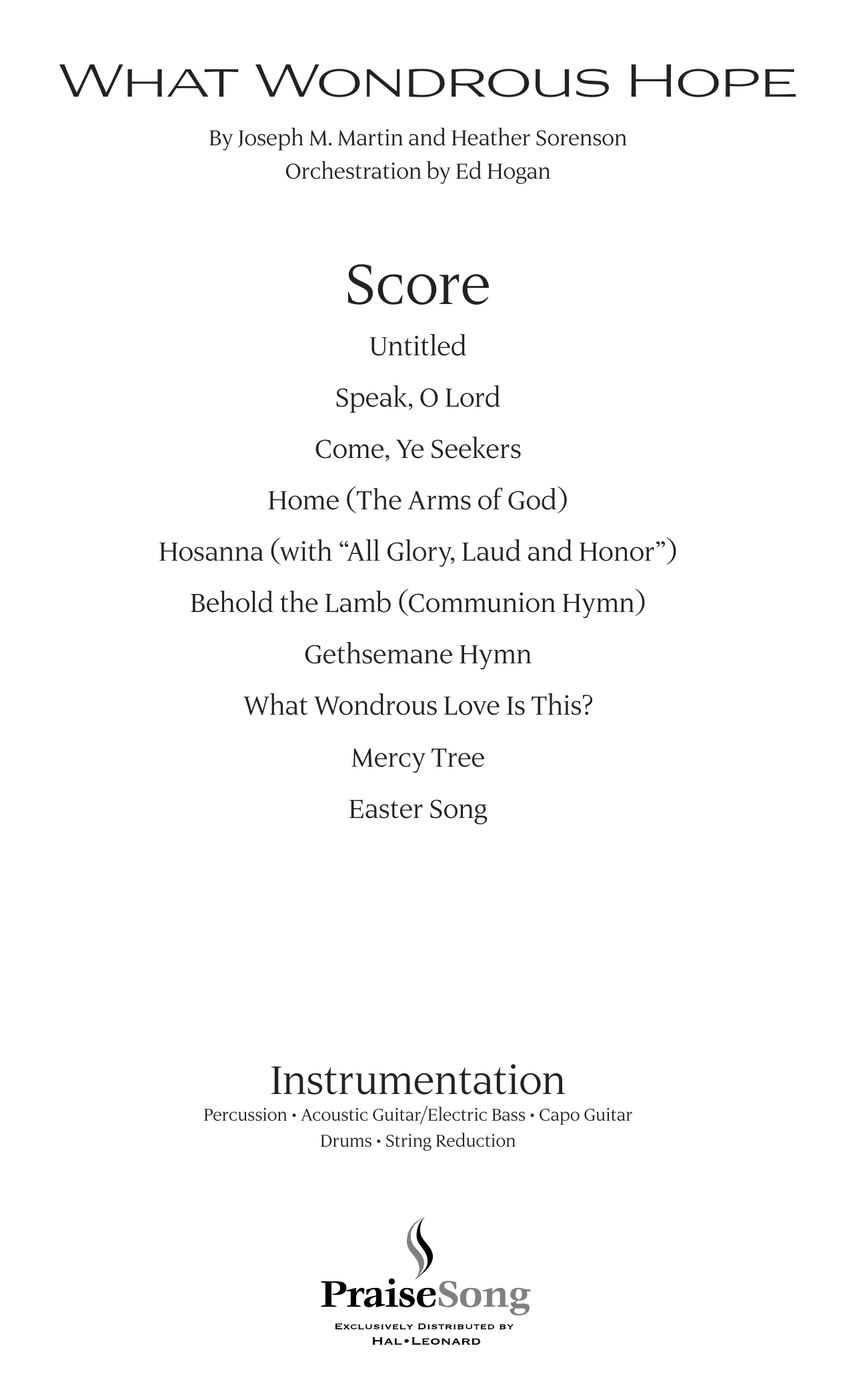


More about this title
About the Authors
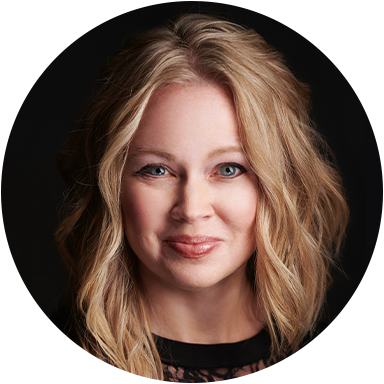
Heather Sorenson brings the perspective of a Dallas-based composer and arranger whose music spans churches, schools, universities, and concert halls across the globe. Known initially as an accomplished pianist, she has built her reputation through distinctive choral, piano, and orchestral compositions that command attention in performance spaces and competitions worldwide.
What sets Sorenson apart is her fluency across musical boundaries. She navigates traditional and contemporary Christian music with equal confidence, layering them together into a signature sound that resists easy categorization. Her commissions reflect this range: Texas A&M University, the John F. Kennedy Memorial Foundation, and the Carnegie Hall premiere of the oratorio EXODUS stand alongside countless works for churches and individual artists.
Education and mentorship have shaped her career as much as composition. Sorenson taught elementary music at Grace Academy of Dallas, served as adjunct faculty at Baylor University, and regularly leads master classes in piano and songwriting. She appears frequently as a guest conductor and speaker at churches, worship conferences, schools, and universities. When not composing or traveling as a lecturer and guest artist, she dedicates her energy to benefit concerts supporting nonprofit organizations close to her heart.
What sets Sorenson apart is her fluency across musical boundaries. She navigates traditional and contemporary Christian music with equal confidence, layering them together into a signature sound that resists easy categorization. Her commissions reflect this range: Texas A&M University, the John F. Kennedy Memorial Foundation, and the Carnegie Hall premiere of the oratorio EXODUS stand alongside countless works for churches and individual artists.
Education and mentorship have shaped her career as much as composition. Sorenson taught elementary music at Grace Academy of Dallas, served as adjunct faculty at Baylor University, and regularly leads master classes in piano and songwriting. She appears frequently as a guest conductor and speaker at churches, worship conferences, schools, and universities. When not composing or traveling as a lecturer and guest artist, she dedicates her energy to benefit concerts supporting nonprofit organizations close to her heart.
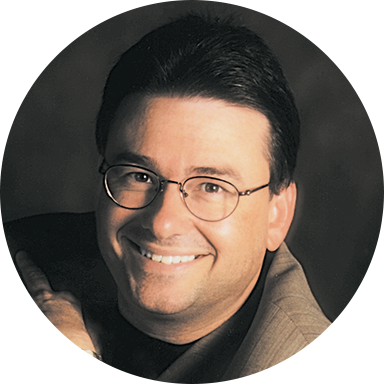
Joseph Martin's musical foundation began in North Carolina and took shape at Furman University, where he completed his undergraduate degree in piano performance. He later earned his master's degree from the University of Texas at Austin, where he also spent five years teaching in the Piano Pedagogy Department. His performance credentials span solo recitals and collaborations with orchestras across the United States and Mexico, including a featured appearance with the Guadalajara Symphony Orchestra following his win in the Nina Plant Wideman Competition.
Today, Martin channels his artistry into church music and conferences for worship leaders, though he remains an active concert performer. His compositions and arrangements reach audiences in settings ranging from Carnegie Hall to regional performance venues to countless Sunday services in churches throughout North America. His gift for writing across multiple styles and genres keeps both performers and listeners engaged with fresh material.
Martin resides in Austin with his wife Sue and their children Jonathan and Aubrey.
Today, Martin channels his artistry into church music and conferences for worship leaders, though he remains an active concert performer. His compositions and arrangements reach audiences in settings ranging from Carnegie Hall to regional performance venues to countless Sunday services in churches throughout North America. His gift for writing across multiple styles and genres keeps both performers and listeners engaged with fresh material.
Martin resides in Austin with his wife Sue and their children Jonathan and Aubrey.