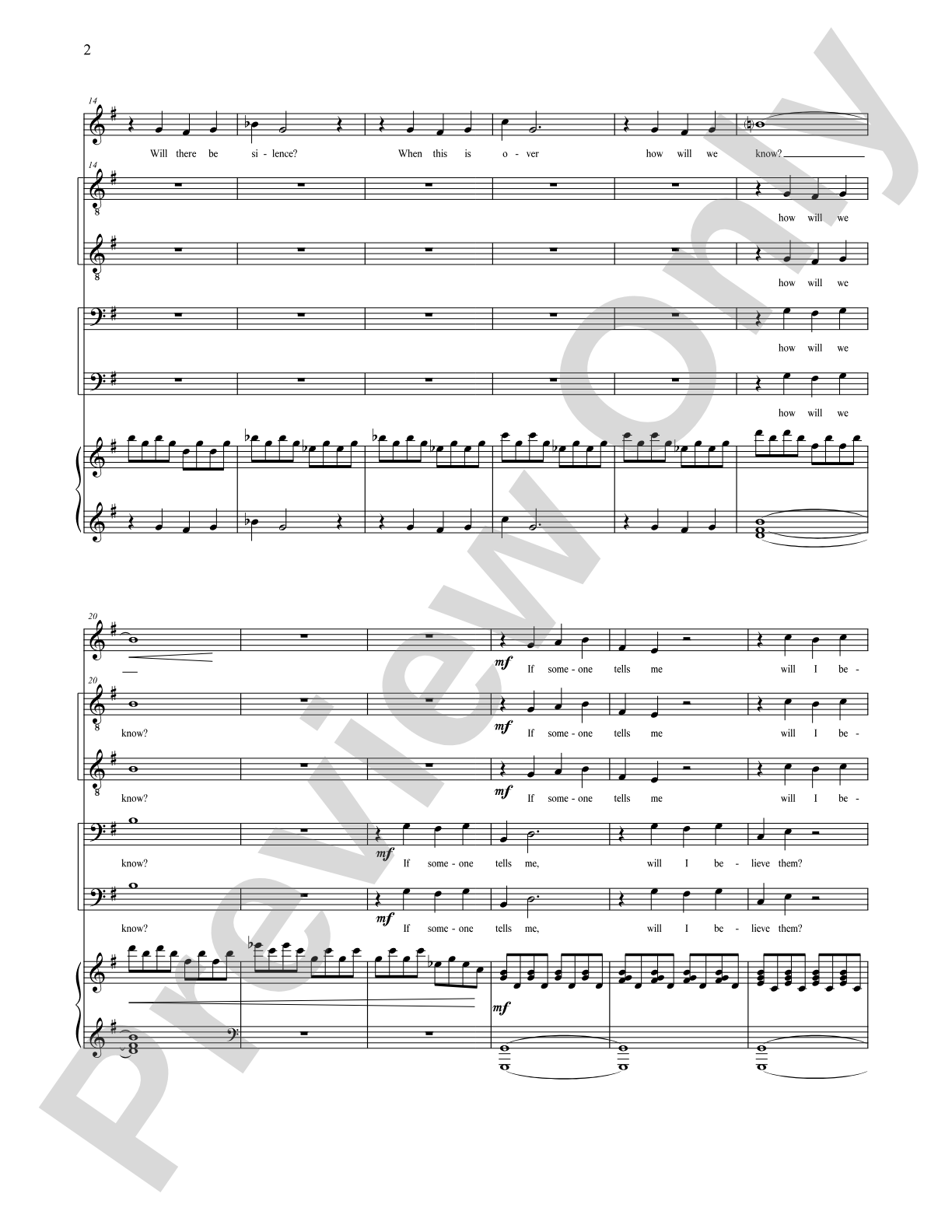
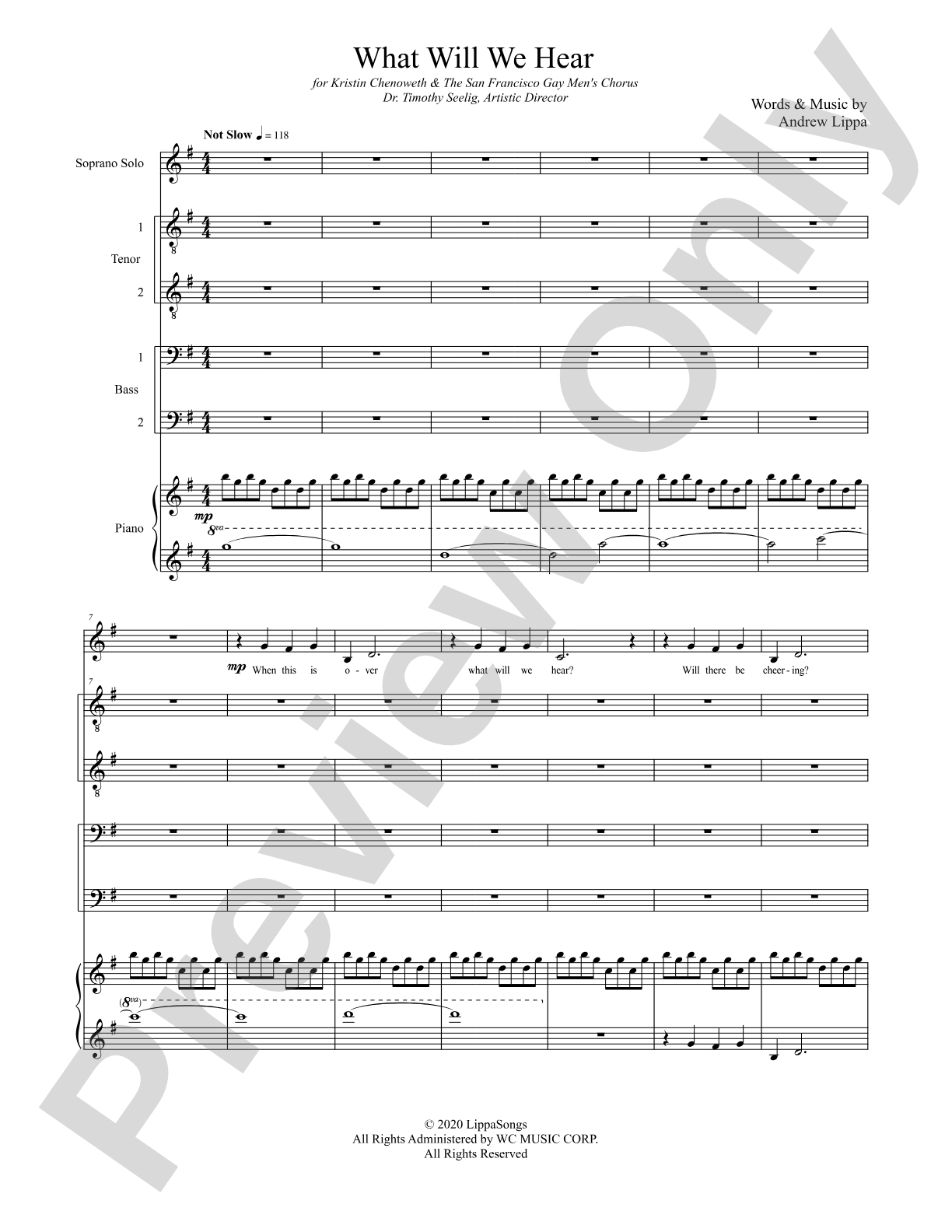
What Will We Hear Sheet Music Preview

What Will We Hear: TTBB Choral Octavo

By Andrew Lippa

Item: 00-PO-0006457

Digital Download
$2.50

Minimum order quantity: 20 copies

One moment…

Description
I have a long-standing relationship with The San Francisco Gay Men's Chorus (SFGMC). When Covid-19 locked us all down, SFGMC's entire year of live performances was wiped out. I wanted to write something to help them stay active. I thought I was going to write about Covid-19 but, as I discovered, the text to "What Will We Hear" and the question that begins with "When this is over..." can and does apply to many ills. The "this" could be AIDS, anti-LGBTQ words and deeds, racial injustice, xenophobia, and so much more. When these are over, what will we hear?

---Andrew Lippa, January, 2021

What Will We Hear: TTBB Choral Octavo isn't in MakeMusic Cloud just yet...but it could be. Let us know you'd like to see it, and you'll help shape what comes next. In the meantime, start a free trial and dive into thousands of interactive titles your students can play along with today.

Sample Audio
No sample audio found.
Sample Video
Additional Details
SKU: 00-PO-0006457

More about this title

About the Composer: Andrew Lippa

Andrew Lippa is a composer and lyricist whose theatrical works span Broadway, film, and concert music. His gift for setting contemporary texts with emotional directness has made him a vital voice in American musical theater, with credits including The Addams Family and significant contributions to projects exploring identity and social themes.

Lippa's choral writing brings the same clarity and accessibility that define his stage work. He understands how to write for singers of varying abilities while never sacrificing musical or emotional substance, making his pieces valuable in educational and professional choir settings alike.

Why we love this

Lippa wrote this piece during lockdown for a specific ensemble, but its deeper resonance extends far beyond that moment. The genius of the text lies in its malleable urgency: "When this is over" functions as a vessel for whatever injustice or hardship your singers and audiences are processing. Programming it signals that your choir engages with repertoire that asks real questions.

What to expect

Meditative and searching, with moments of building intensity. The piece creates space for singers to sit with discomfort and hope simultaneously, moving through questioning toward something like resolution without oversimplifying the journey.

Who it's for

TTBB choirs seeking repertoire that engages with contemporary social and emotional questions. This works equally well in university and high school settings where singers can handle both the harmonic language and the emotional maturity the text demands.

How to get the most out of it

  • Attend to Lippa's text setting closely; the phrasing follows speech rhythms rather than regular metric patterns, so drilling ensemble attacks and releases matters more than strict tempo lock.
  • The piece's power depends on dynamic restraint in the opening sections. Resist the urge to build volume early; let the architecture reveal itself, so the climax lands with genuine impact.
  • Balance the harmonies so the inner voices carry weight. TTBB voicings can muddy if baritones and second tenors aren't heard equally with the outside parts.
  • Consider staging or lighting shifts that acknowledge the piece's emotional arc; this is a contemplative work that benefits from visual support if your performance space allows it.

How to use it

Pair this with other works that address resilience or collective action to deepen the thematic thread. It works particularly well as a concert closer or as part of a program exploring how choral music responds to contemporary events.

Skills your students will build

  • Singing contemporary text with musical authenticity and emotional precision
  • Balancing inner voices in four-part male voicing to maintain harmonic clarity
  • Responding to speech-inflected phrasing and irregular phrase lengths
  • Building dynamic architecture across longer forms without losing musical focus

You May Also Like