
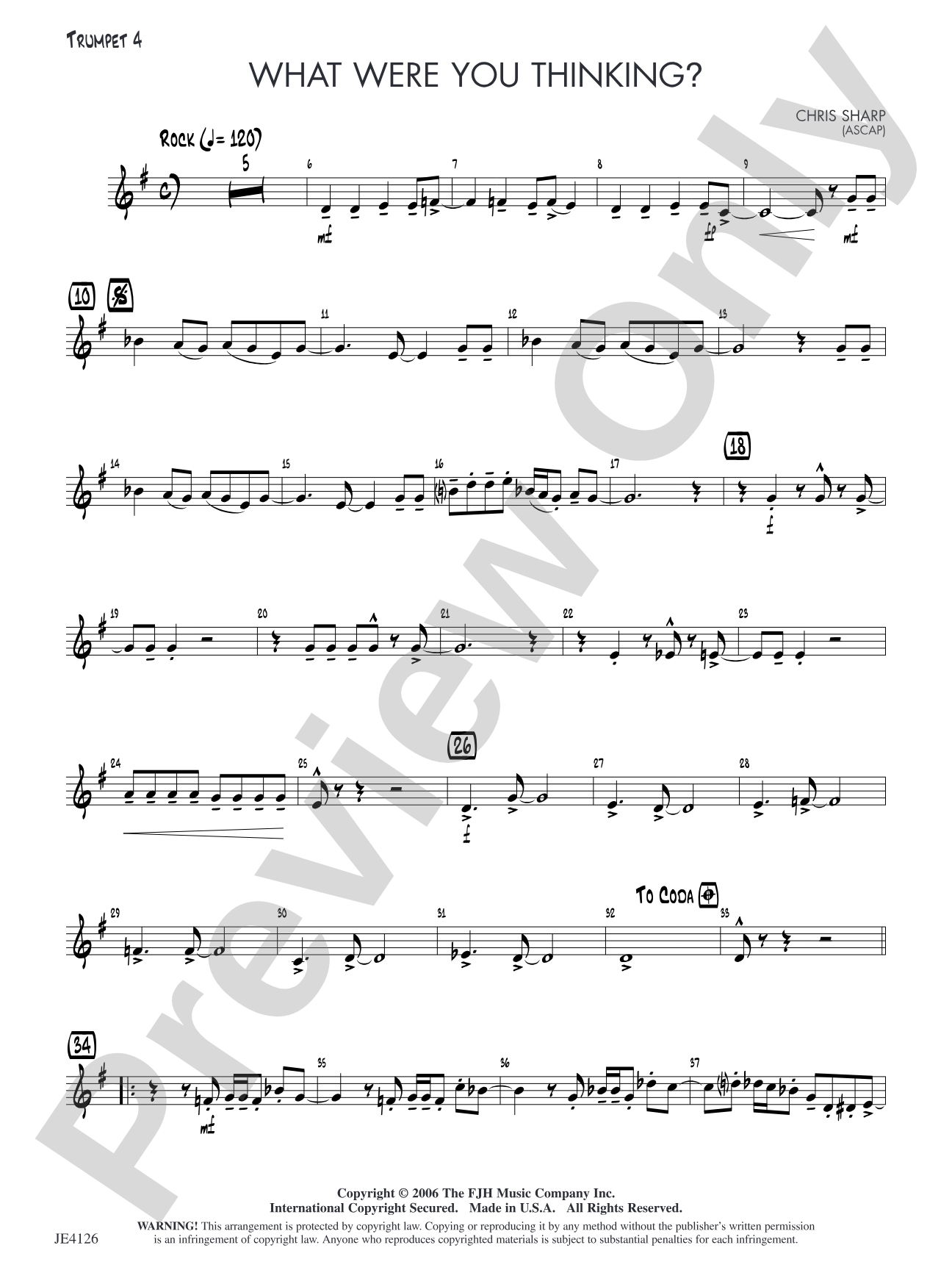

What Were You Thinking?: Opt. Trumpet 4
By Chris Sharp
Grade: 2.5
Item: 98-PC-DJE4126_OT4
$7.00
Pickup currently not available
Description
Your band is sure to enjoy this energetic rock tune in a '70s retro style! Straightforward rhythms make this one easy to learn while audiences will surely get caught in the groove. Written out solos are provided for trumpet and tenor, followed by a solo cowbell that leads a dialogue between saxes and brass. A huge ending caps this dynamic work that is sure to be a favorite!


What Were You Thinking?: Opt. Trumpet 4 isn't in MakeMusic Cloud just yet...but it could be. Let us know you'd like to see it, and you'll help shape what comes next. In the meantime, start a free trial and dive into thousands of interactive titles your students can play along with today.
Request This Title
Tell us you want it.
Start Your Free Trial
Explore everything that's ready to play right now.
Sample Audio
1
Audio File
--:--
0:00
0:00
Sample Video
No sample videos found.
Additional Details
Series:
FJH Developing Jazz Ensemble
Publisher:
The FJH Music Company, Inc.
SKU:
98-PC-DJE4126_OT4
More about this title
About the Composer: Chris Sharp

Chris Sharp holds a doctorate and has built a career spanning performance, composition, and education. As a trombonist, he spent eleven years as a full-time musician and bandleader at Walt Disney World while simultaneously serving as arranger and orchestrator for Disney parks globally since 1984, contributing to live shows, recordings, and national broadcasts. His freelance work extends to Universal Studios, the Boston Pops, the Dallas Brass, and military ensembles including the USAF Airmen of Note.
Currently Director of Bands at Polk State College, Sharp teaches theory, technology, and arranging alongside his conducting duties. He adjudicates for major organizations like Bands of America and Drum Corps International, has appeared regularly at the Midwest Clinic, and has earned multiple ASCAP Plus awards. His dual expertise in professional entertainment and academic music education shapes arrangements that work equally well in the concert hall and the rehearsal room.
Why we love this
Sharp captures the swagger of '70s rock without pretension. The straightforward construction means your ensemble can focus on locking the groove rather than decoding complex notation, yet the piece never sounds simplified or condescending. The written solos and instrumental dialogue create natural soloist spotlights, making ensemble members feel like they're playing something genuinely musical rather than just reading chord changes.
What to expect
Funky and confident. The '70s retro backdrop brings a nostalgic cool factor that audiences recognize immediately, while the straightforward approach keeps the focus on ensemble cohesion and solo personality. It's the kind of tune that makes people move without thinking about it.
Who it's for
Developing jazz ensembles ready to move beyond basics into genuine groove and style. The Grade 2.5 level accommodates younger high school groups or mixed-ability ensembles without compromising musical substance.
How to get the most out of it
- Keep the rhythms tight and relaxed. The 2.5 level suggests accessibility, but the '70s feel depends entirely on your rhythm section committing to pocket rather than rushing. Have the drummer and bass lock in before adding the horns.
- Balance the solo sections carefully. The cowbell has real melodic responsibility, so it shouldn't compete with the dialogue between saxes and brass. A light hand from the accompaniment lets that conversation breathe.
- Save energy for the ending. Sharp indicates a "huge ending," which means your ensemble should approach the final section with increased intensity and togetherness. Build to it deliberately rather than treating it as an afterthought.
How to use it
Pair this with a set of standards or blues heads to build a full jazz concert set. Its high energy makes it ideal as a set closer or a strong middle-of-program piece that resets audience attention. The built-in solo opportunities mean every chair gets a moment to shine, making it especially valuable when you're building confidence in a younger group.
Skills your students will build
- Pocket rhythm and groove fundamentals in rock/funk style
- Balance between solo and accompaniment roles
- Written solo interpretation and phrasing
- Call-and-response ensemble dialogue
- Section unity while maintaining rhythmic flexibility
- Style-appropriate articulation for '70s rock sounds