What Was I Made For? (arr. Larry Moore) Sheet Music Preview

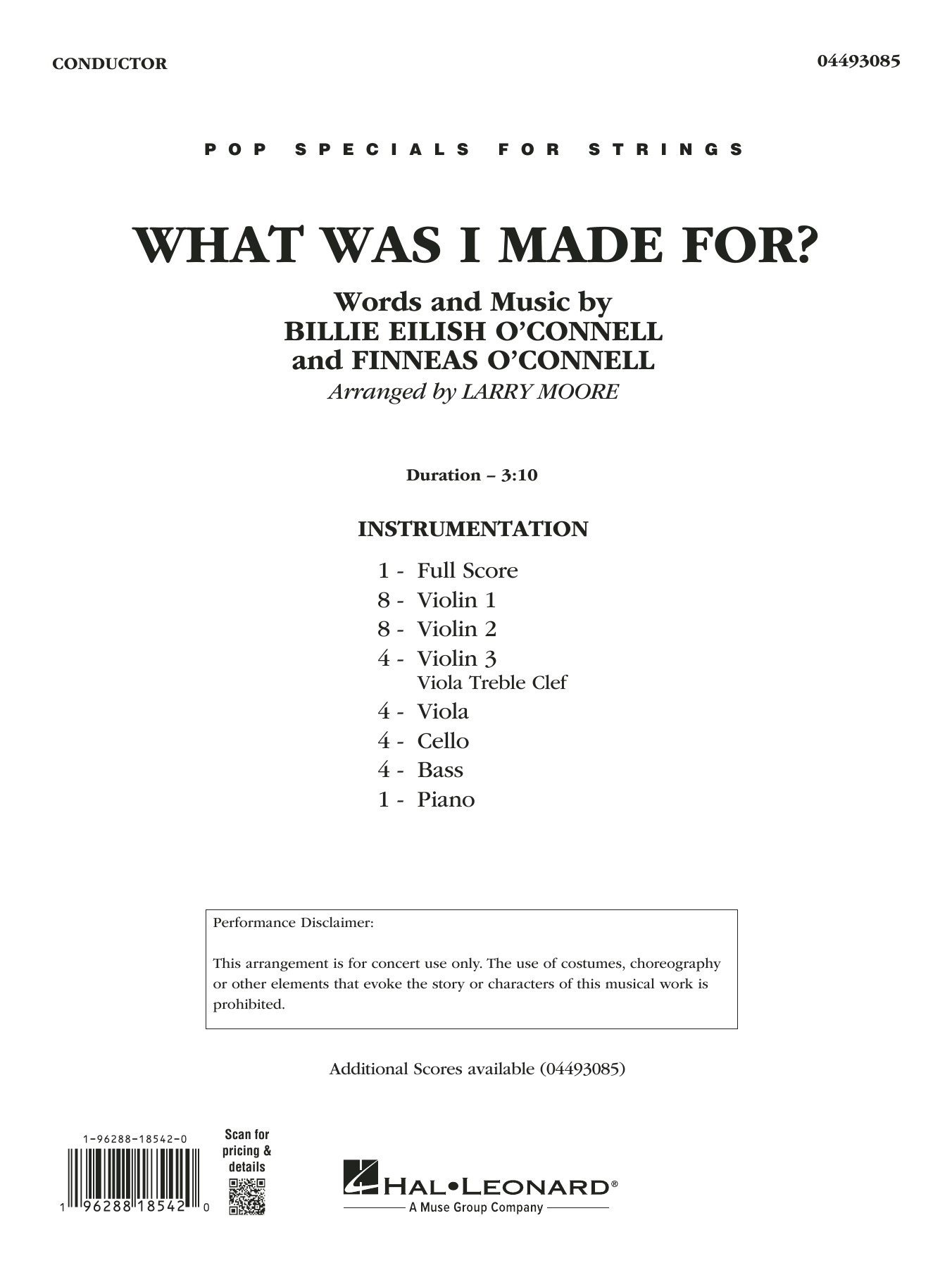
What Was I Made For? (arr. Larry Moore): String Orchestra Conductor Score & Parts

As performed by Billie Eilish / Arranged by Larry Moore

Grade: 3-4

Item: 35-PK01501595

Digital Download
$55.00

One moment…

Description
Larry Moore's haunting arrangement of Billie Eilish's "What Was I Made For?" transforms the pop sensation's introspective ballad from Barbie into a masterpiece for string orchestra. Lush harmonies and poignant melodies--shared throughout the orchestra--capture the song's emotional depth, making it a perfect choice for adding a contemplative touch to your concert program.

What Was I Made For? (arr. Larry Moore): String Orchestra Conductor Score & Parts isn't in MakeMusic Cloud just yet...but it could be. Let us know you'd like to see it, and you'll help shape what comes next. In the meantime, start a free trial and dive into thousands of interactive titles your students can play along with today.

Sample Audio
No sample audio found.
Sample Video
Additional Details
Publisher: Hal Leonard
SKU: 35-PK01501595

More about this title

About the Artist: Billie Eilish

Billie Eilish emerged as a distinctive voice in contemporary pop music through her distinctive vocal approach and introspective songwriting. Working closely with her brother Finneas, she crafted a sound defined by whispered vocals, sparse production, and deeply personal lyrical content that resonates with listeners across generations. Her work demonstrates how restraint and emotional authenticity can command attention in a landscape often dominated by volume and spectacle.

Why we love this

Larry Moore's orchestration honors the song's vulnerability while giving string players something genuinely beautiful to sink their teeth into. The arrangement distributes melody across the ensemble rather than isolating it in one section, which means every stand matters and every player feels the weight of the moment. Programming this alongside more traditional repertoire creates a striking contrast that audiences remember.

What to expect

The arrangement wraps you in warm, sustained harmonies that feel both introspective and spacious. There's a cinematic quality to the orchestration, a sense that you're inside a moment of quiet reflection rather than watching from the outside.

Who it's for

Orchestras with solid fundamentals in ensemble balance and dynamic control will find this arrangement accessible and musically rewarding. Directors programming contemporary music without sacrificing artistic integrity, or looking to engage student musicians through repertoire they already know and care about.

How to get the most out of it

  • Balance the melody line across all four sections. This isn't a solo vehicle; Moore writes it as a conversation between instruments, so resist the urge to let violins dominate.
  • Shape phrases with breath, even though strings don't breathe physically. Subtle dynamic rises and falls will reveal the song's emotional arc rather than treating it as one long static moment.
  • Pay attention to the harmonies underneath the melody. The lush voicings only work if every part is heard; watch for inner voices that carry harmonic color rather than structural weight.
  • Trust the silence and stillness. Ballads at this grade level often benefit from allowing moments of space to speak rather than filling every beat with sound.

How to use it

Pair this with a classical or romantic era ballad to demonstrate how emotional storytelling transcends genre and era. It also works exceptionally well as a standalone closer to a concert, leaving audiences in a contemplative rather than celebratory frame of mind. Consider performing it mid-program before transitioning to lighter or more energetic work.

Skills your students will build

  • Sustaining long melodic phrases with consistent tone quality
  • Blending intonation across four-part string voicings
  • Reading and executing nuanced dynamic shapes within ballad pacing
  • Balancing ensemble sound when melody is distributed across multiple sections
  • Responding to subtle conducting gestures that shape emotional content

You May Also Like