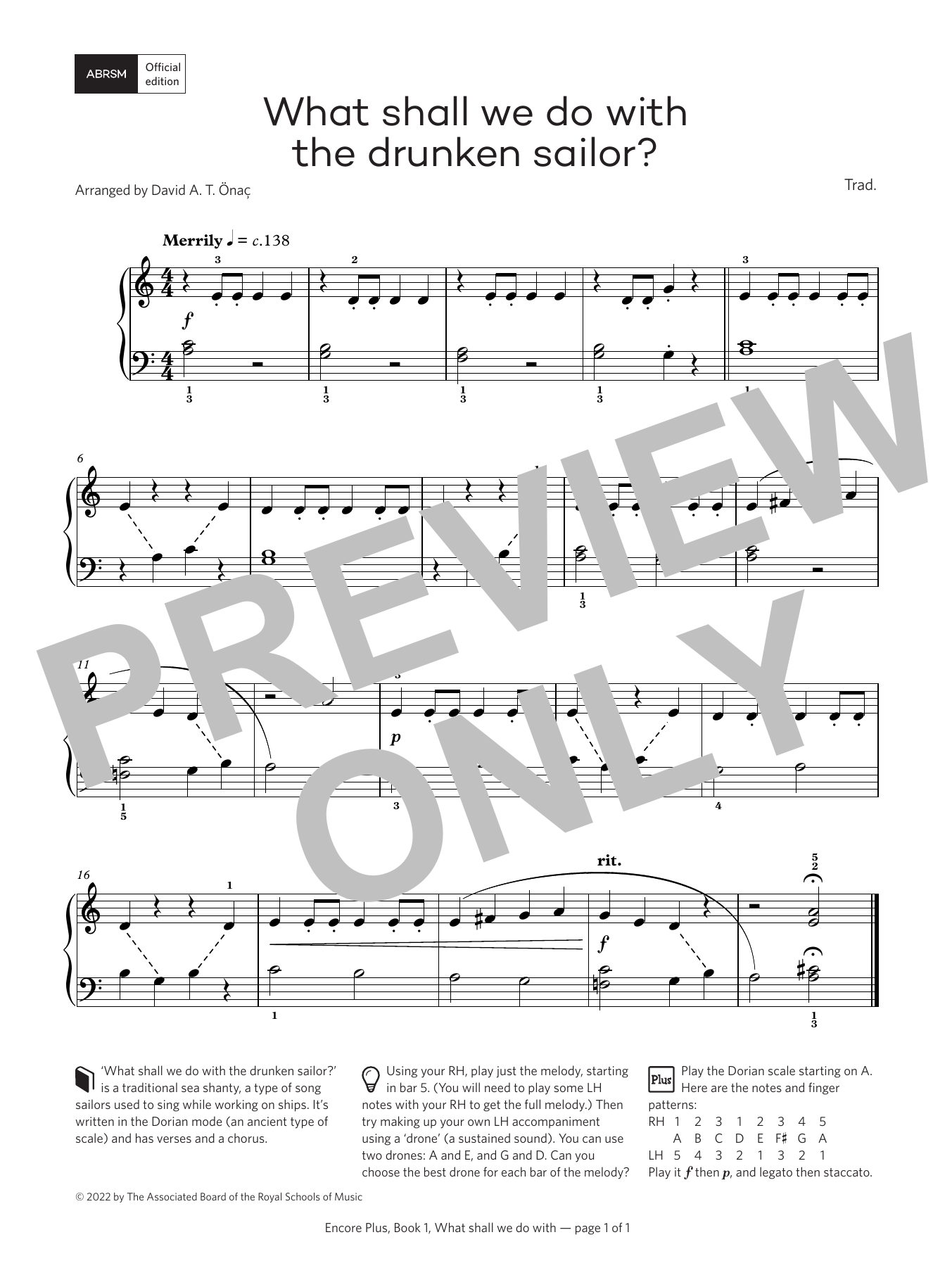
Traditional folk songs represent the collective musical heritage of cultures across centuries. "What Shall We Do with the Drunken Sailor" emerged from English maritime culture, passed down through generations of sailors and shore workers. These songs were teaching tools long before formal music education existed, embedding melodies and stories so effectively that they survived centuries of oral transmission.
Why we love this
This arrangement strips the song to its essentials, making it ideal for students just beginning to explore melody and accompaniment at the keyboard. The familiar tune lets young pianists focus on hand coordination and basic musicianship without struggling through unfamiliar material, while the single-page format means they can actually finish something in their first weeks of study.
What to expect
Spirited and unpretentious, with the rollicking character of a working song. There's playfulness in the rhythm and an immediate sense of forward motion, even at a slow tempo. The melody bounces along with a sturdy maritime quality that makes it genuinely fun to play.
Who it's for
Absolute beginners and early elementary piano students need repertoire that feels like actual music rather than exercises. This Grade 0.5 arrangement gives them a legitimate performance piece while their technique is still developing, building confidence through a melody they likely already know.
How to get the most out of it
Set a steady, moderate tempo that lets your left hand establish a clear rhythmic foundation before your right hand enters with the melody.
Bring out the syncopated moments in the accompaniment; they're what gives this sea shanty its rhythmic character rather than making it feel plodding.
Shape the phrases with slight dynamic swells where the melody rises, allowing the tune's storytelling quality to come through.
How to use it
Include this in early semester recitals where it serves as a brief, memorable piece that delights audiences while showcasing your students' emerging keyboard skills. It also works well in thematic programs exploring folk traditions across cultures or in mixed recitals where young pianists perform alongside other beginning instrumentalists.
Skills your students will build
Reading single-line melodies in treble clef
Coordinating hands independently on the keyboard
Sustaining steady pulse and rhythm
Playing blocked accompaniment patterns with the left hand
Interpreting dynamic shaping and phrasing
You May Also Like
Scan to Complete Your Purchase
Use your phone's camera to scan the code below
You'll log in on your phone and the order will be added to your account