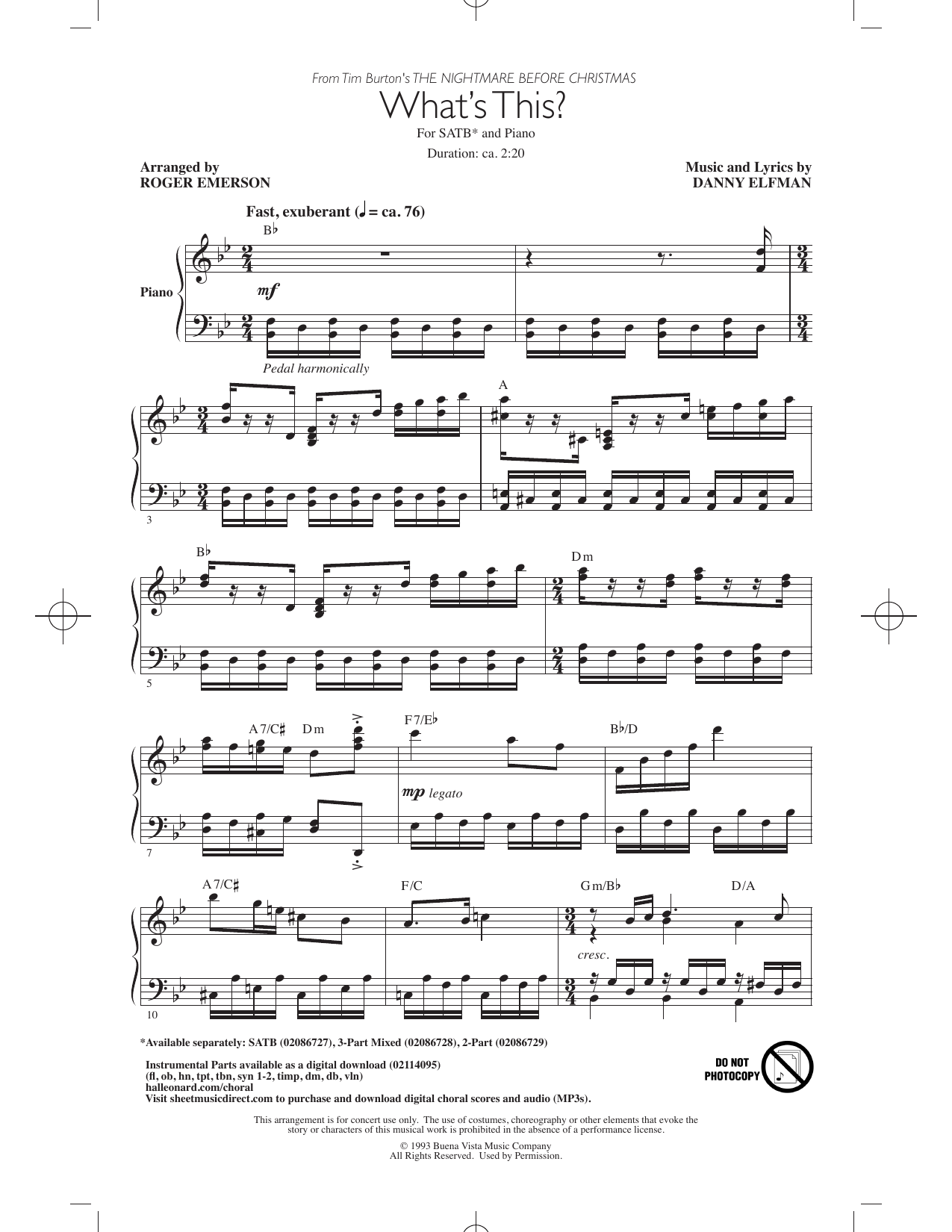
What's This? (arr. Roger Emerson) Sheet Music Preview

What's This? (arr. Roger Emerson): SATB Choral Octavo

By Danny Elfman / Arranged by Roger Emerson

Item: 35-DS01919522

Digital Download
$2.95
Description

What's This? (arr. Roger Emerson): SATB Choral Octavo isn't in MakeMusic Cloud just yet...but it could be. Let us know you'd like to see it, and you'll help shape what comes next. In the meantime, start a free trial and dive into thousands of interactive titles your students can play along with today.

Sample Audio
No sample audio found.
Sample Video
Additional Details
Publisher: Hal Leonard
Page Count: 18
SKU: 35-DS01919522

More about this title

About the Composer: Danny Elfman

Danny Elfman has spent decades composing music that captures the quirky, emotional, and fantastical sides of storytelling. His work for film and theater reveals a composer equally comfortable with sweeping orchestral arrangements and intimate character moments. In music education, his compositions offer students access to sophisticated harmonic language and memorable melodies that feel fresh even after repeated listens.

Why we love this

Roger Emerson's arrangement keeps the whimsy and melodic charm of Elfman's original while making it singable for mixed voices without sacrificing musicality. The piece works beautifully as either a standalone concert number or a bridge between fall and winter programming, since it straddles Halloween and Christmas naturally. Singers connect immediately with material this recognizable, which means you spend rehearsal time on artistry rather than basic note-learning.

What to expect

There's a playful, slightly spooky energy threaded through gentle warmth. The melody invites singers into an intimate moment while the harmonies create atmospheric depth underneath; the overall effect is charming without being saccharine, whimsical without veering into novelty.

Who it's for

Mixed choirs looking for accessible yet musically satisfying contemporary material that connects to familiar film and theatrical contexts. This works equally well for high school ensembles, college non-majors choirs, and community choruses seeking repertoire with immediate appeal and genuine musical substance.

How to get the most out of it

  • Balance the main melody across voice parts by doubling it strategically in rehearsal; once singers know it well, pull back to create independence without losing the tune's presence.
  • Shape the phrasing with gentle dynamic rises and falls rather than forcing the dynamics marked on the page; let the harmonic rhythm inform your breath patterns.
  • Lock in the rhythmic precision during passages with shorter note values by having the rhythm section (or a small group of confident singers) establish the groove first, then layer other parts around it.
  • Emphasize the character of key harmonic shifts by having singers lean slightly into the new chords; this keeps the piece from feeling flat during section transitions.

How to use it

Slot this into a fall concert as a palette cleanser between serious art song and a cappella work, or use it as an opener for a holiday show that bridges Halloween and Christmas themes. Its theatrical origins make it a natural choice for programs featuring film music or for schools pairing choral concerts with drama department productions.

Skills your students will build

  • Balancing independent melodic lines within a harmonic texture
  • Singing character-driven phrasing in contemporary pop and theatrical styles
  • Reading and executing straightforward rhythmic figures in mixed meters
  • Maintaining intonation in chromatic harmonic progressions
  • Connecting emotional intent to dynamic and articulation choices

You May Also Like