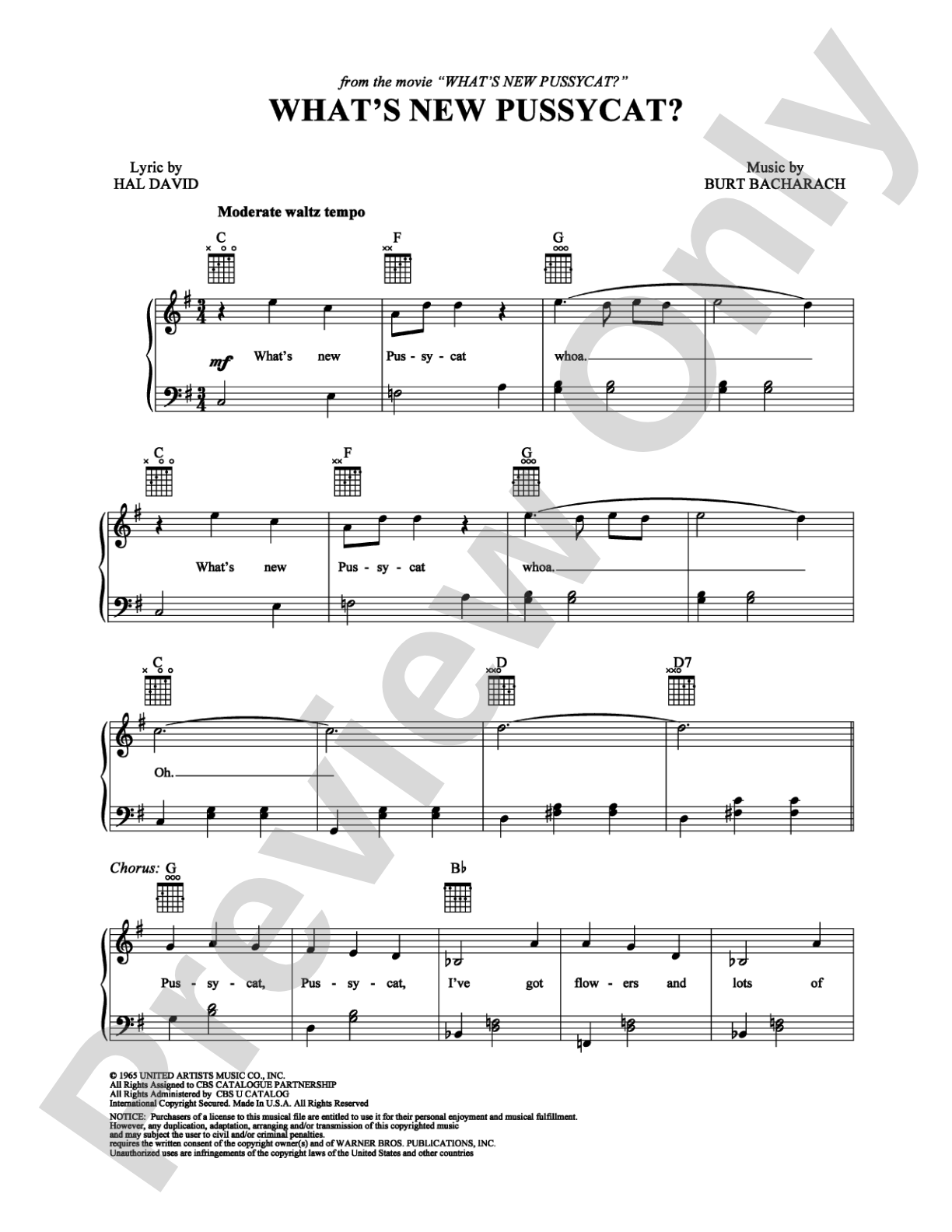
What's New Pussycat?: Piano/Vocal/Chords Digital Sheet Music

What's New Pussycat?: Piano/Vocal/Chords Digital Sheet Music

Tom Jones, Burt Bacharach

Item: 00-PS-0002764

Digital Download
$3.99
Description

What's New Pussycat?: Piano/Vocal/Chords Digital Sheet Music isn't in MakeMusic Cloud just yet...but it could be. Let us know you'd like to see it, and you'll help shape what comes next. In the meantime, start a free trial and dive into thousands of interactive titles your students can play along with today.

Sample Audio
No sample audio found.
Sample Video
Additional Details
SKU: 00-PS-0002764

More about this title

About the Artist: Tom Jones

Tom Jones emerged as one of the defining voices of 1960s pop and rock, known for his powerful baritone and charismatic stage presence. His interpretations of standards and contemporary pop songs became touchstones for vocal performance, blending theatrical delivery with genuine emotional depth.

Why we love this

This arrangement captures the swagger and melodic charm that made the original a pop standard, giving singers and pianists a chance to work with genuinely singable material that rewards both technical control and personality. The piano/vocal/chords format works equally well for recital preparation, audition material, or jazz choir programming.

What to expect

Playful yet sophisticated. The melody has a conversational quality that invites charm and personality without requiring operatic weight. There's genuine melodic substance beneath the pop accessibility, giving thoughtful singers room to find something real.

Who it's for

Singers preparing pop standards for recital or audition repertoire, pianists developing their collaborative skills with vocalists, and any music student exploring the intersection of classic pop songwriting and vocal technique. The chart works for both confident ensemble singers and serious solo performers.

How to get the most out of it

  • Balance the vocal line with the piano part; the accompaniment should support rather than compete with the melody, especially in the verses where conversational phrasing matters.
  • Lean into the rhythmic pocket of the groove. Slight pushes and pulls against the steady beat create the swagger that defines this tune.
  • Color the chord changes with intentional vocal shadings. The progression has personality; let your interpretation reflect that rather than singing through it uniformly.

How to use it

Include this in a pop standards or American songbook recital to anchor a section of classic vocal repertoire. It pairs well with other sophisticated pop writing from the same era and provides a refreshing contrast to classical or musical theater material in a mixed recital.

Skills your students will build

  • Balancing vocal line and piano accompaniment in collaborative performance
  • Interpreting pop/rock phrasing while maintaining vocal technique
  • Reading and interpreting lead sheet chord symbols
  • Developing rhythmic flexibility and swing feel in a pop context

You May Also Like