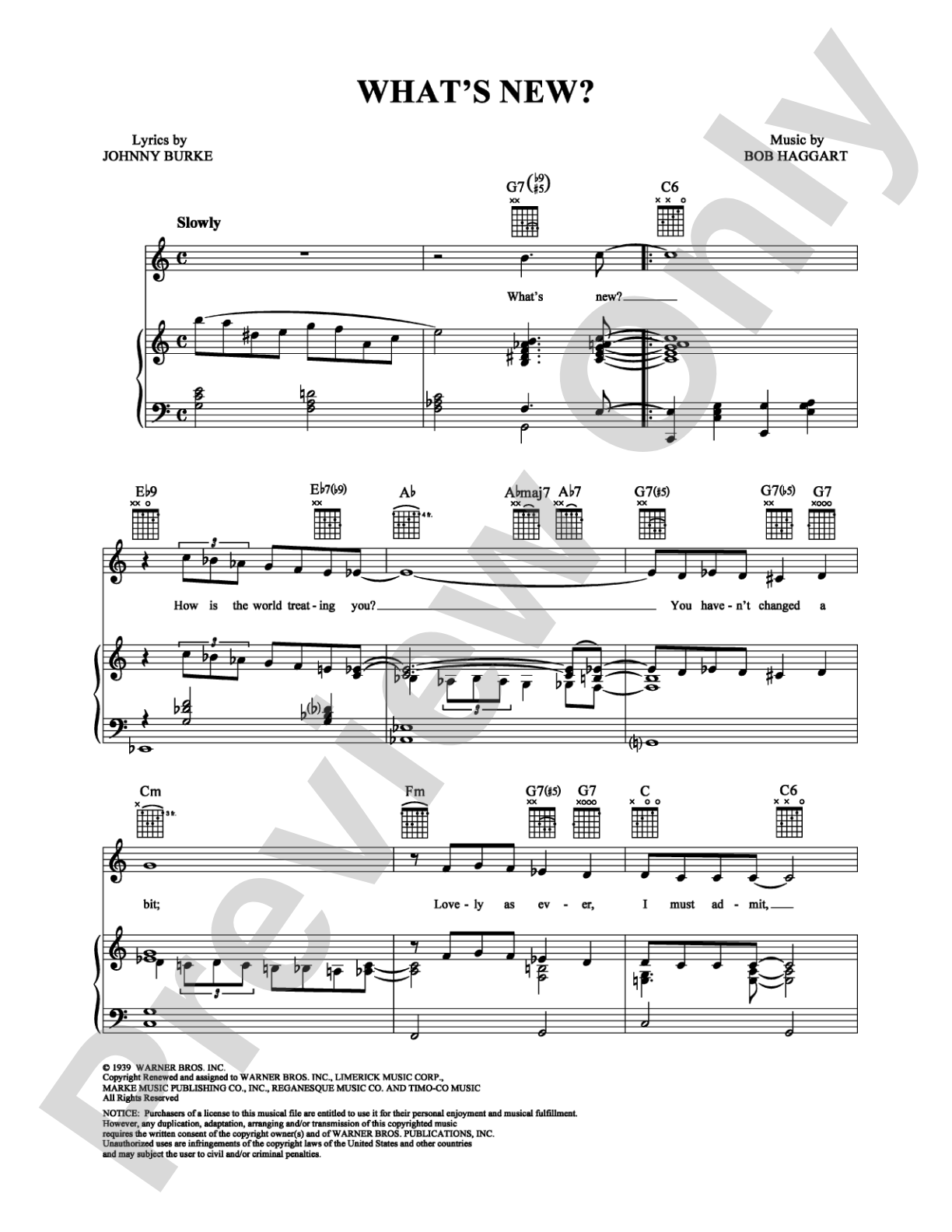
What's New?: Piano/Vocal/Chords Digital Sheet Music

What's New?: Piano/Vocal/Chords Digital Sheet Music

Bob Haggart, Linda Ronstadt

Item: 00-PS-0008554

Digital Download
$3.99
Description

What's New?: Piano/Vocal/Chords Digital Sheet Music isn't in MakeMusic Cloud just yet...but it could be. Let us know you'd like to see it, and you'll help shape what comes next. In the meantime, start a free trial and dive into thousands of interactive titles your students can play along with today.

Sample Audio
No sample audio found.
Sample Video
Additional Details
SKU: 00-PS-0008554

More about this title

About the Artist: Linda Ronstadt

Linda Ronstadt stands as one of the most versatile vocalists in American popular music, with a career spanning rock, country, jazz, and operetta. Her interpretive gifts and technical vocal control made her a model for musicians across genres, and her willingness to inhabit different musical styles opened doors for generations of singers who followed.

Why we love this

Ronstadt's rendition of this standard sits at the intersection of jazz sophistication and pop accessibility, making it an ideal choice for pianists and singers looking to explore the Great American Songbook without straying far from familiar territory. The arrangement respects the song's harmonic richness while remaining performable in intimate settings, and Ronstadt's phrasing offers a masterclass in how to deliver a lyric with both warmth and restraint.

What to expect

The song settles into a reflective, conversational tone, with chord changes that shimmer beneath a conversational vocal line. There's an undercurrent of sophistication here, a sense that even simple questions about novelty in a relationship deserve harmonic complexity and restraint in delivery.

Who it's for

Pianists and vocalists preparing for jazz standards, cabaret performances, or recitals will find this arrangement both vocally comfortable and musically substantive. It works equally well for music students exploring pop standards in a more formal setting or for experienced performers looking for a reliable, well-crafted lead sheet.

How to get the most out of it

  • Shape the melody around the lyrical content rather than the beat; let the piano accompaniment provide harmonic grounding while your voice breathes with the phrasing of the words.
  • Pay close attention to chord voicings in the piano part, as they define the harmonic color of each section; sparse voicings in the verses will shift the mood in ways that thick, voiced chords in the chorus cannot replicate.
  • Use the dynamic range available in your vocal register to distinguish verse from chorus; Ronstadt's approach favors intimacy in the early phrases before opening up into fuller resonance as the song develops.

How to use it

Consider pairing this with other standards from the American songbook for a jazz or cabaret-inspired set, or use it as a bridge piece between classical vocal literature and contemporary popular music in a student recital. Its moderate length and accessible harmonic language make it suitable for accompaniment classes, jazz ensemble projects, or studio lessons focused on stylistic interpretation.

Skills your students will build

  • Reading and interpreting chord symbols and lead sheet notation
  • Phrasing melodic lines over jazz-influenced harmonic progressions
  • Balancing vocal expression with harmonic support from a pianist
  • Translating interpretive choices from a known recording into personal performance choices

You May Also Like