
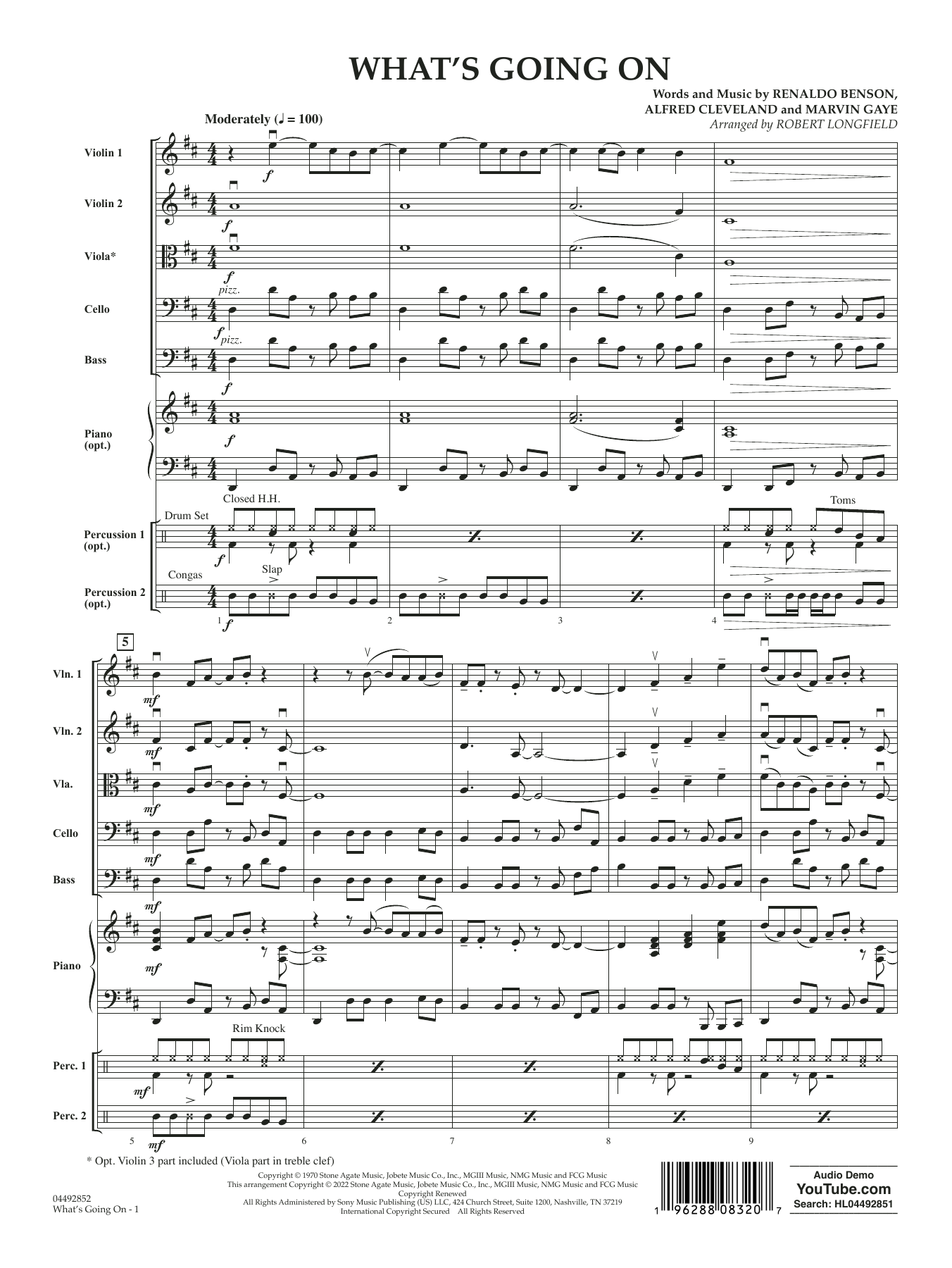

What's Going On (arr. Robert Longfield): String Orchestra Conductor Score & Parts
As performed by Marvin Gaye / Arranged by Robert Longfield
Grade: 3-4
Item: 35-PK01103139
$55.00
Pickup currently not available
Buy Extra Parts (Digital PDF Download)
Parts Added to Cart!
Description
Though initially written over 50 years ago, Marvin Gaye's plea for peace and understanding is a message that still resonates strongly and needs to be heard. This arrangement for string orchestra by Robert Longfield maintains the original's easy cool and RB rhythms in a format that allows modern-day students to "find a way to bring some loving here today."


What's Going On (arr. Robert Longfield): String Orchestra Conductor Score & Parts isn't in MakeMusic Cloud just yet...but it could be. Let us know you'd like to see it, and you'll help shape what comes next. In the meantime, start a free trial and dive into thousands of interactive titles your students can play along with today.
Request This Title
Tell us you want it.
Start Your Free Trial
Explore everything that's ready to play right now.
Sample Audio
No sample audio found.
Sample Video
No sample videos found.
Additional Details
Publisher:
Hal Leonard
SKU:
35-PK01103139
More about this title
About the Artist: Marvin Gaye
Marvin Gaye (1939-1984) was a Detroit-born singer, songwriter, and producer who fundamentally reshaped popular music by infusing soul with social consciousness. His work broke genre boundaries, drawing equally from R&B, gospel, and rock while addressing urgent themes of injustice, spirituality, and human connection. For music educators, Gaye represents a pivotal moment when popular music became a vehicle for artistic integrity and meaningful dialogue.
Gaye's influence extends far beyond his era. His willingness to tackle complex subjects through accessible melodies and sophisticated arrangements opened doors for generations of artists to use popular forms for serious expression. In the classroom, his music demonstrates that commercial success and artistic depth are not mutually exclusive, making him an essential reference point for students learning about music's power beyond entertainment.
Why we love this
Longfield's orchestration captures the spiritual depth and rhythmic sophistication of the original without sacrificing accessibility for developing string players. Programming this alongside classical works or contemporary concert music shows students that artistic merit transcends genre boundaries, while the Grade 3-4 level ensures your section can execute Gaye's message with genuine musicality rather than simplification.
What to expect
Cool and grounded, with an undercurrent of emotional urgency. The orchestration wraps Gaye's original melancholy and hope in warm string colors, creating a sound that feels both sophisticated and deeply human. Your students will recognize the song while discovering how arrangement shapes meaning.
Who it's for
String orchestras at the intermediate level who want to engage with contemporary repertoire that carries genuine artistic weight. This arrangement works for directors seeking to expand their students' musical vocabulary beyond traditional classical canon while maintaining technical rigor and musical integrity.
How to get the most out of it
- Anchor the R&B pulse through the section; the bass line drives everything, so ensure your cellos and basses lock in before rehearsing with upper strings.
- Balance the orchestral texture so that sustained chords never overshadow the lyrical melody. Your first violins need space to sing without drowning out the message.
- Let the arrangement breathe at phrase endings rather than rushing through them. The original's cool restraint comes from knowing when not to play.
- Invest rehearsal time in the rhythmic figures that feel unfamiliar to classical string players. The R&B syncopation will feel natural only after repetition makes it instinctive.
How to use it
Schedule this for a mixed concert where it sits comfortably between classical works and pop arrangements, demonstrating that artistic lineage runs in multiple directions. The piece works equally well as an opener that establishes modern relevance or a closer that leaves audiences contemplating the composer's original call for compassion.
Skills your students will build
- Reading and executing syncopated rhythms typical of R&B and pop idioms
- Sustaining tone quality and blend in long, exposed string chords
- Balancing accompaniment texture so that melody remains prominent
- Responding to a rubato or flexible approach to phrasing rather than metronomic time
- Understanding how orchestration choices support emotional communication in music