
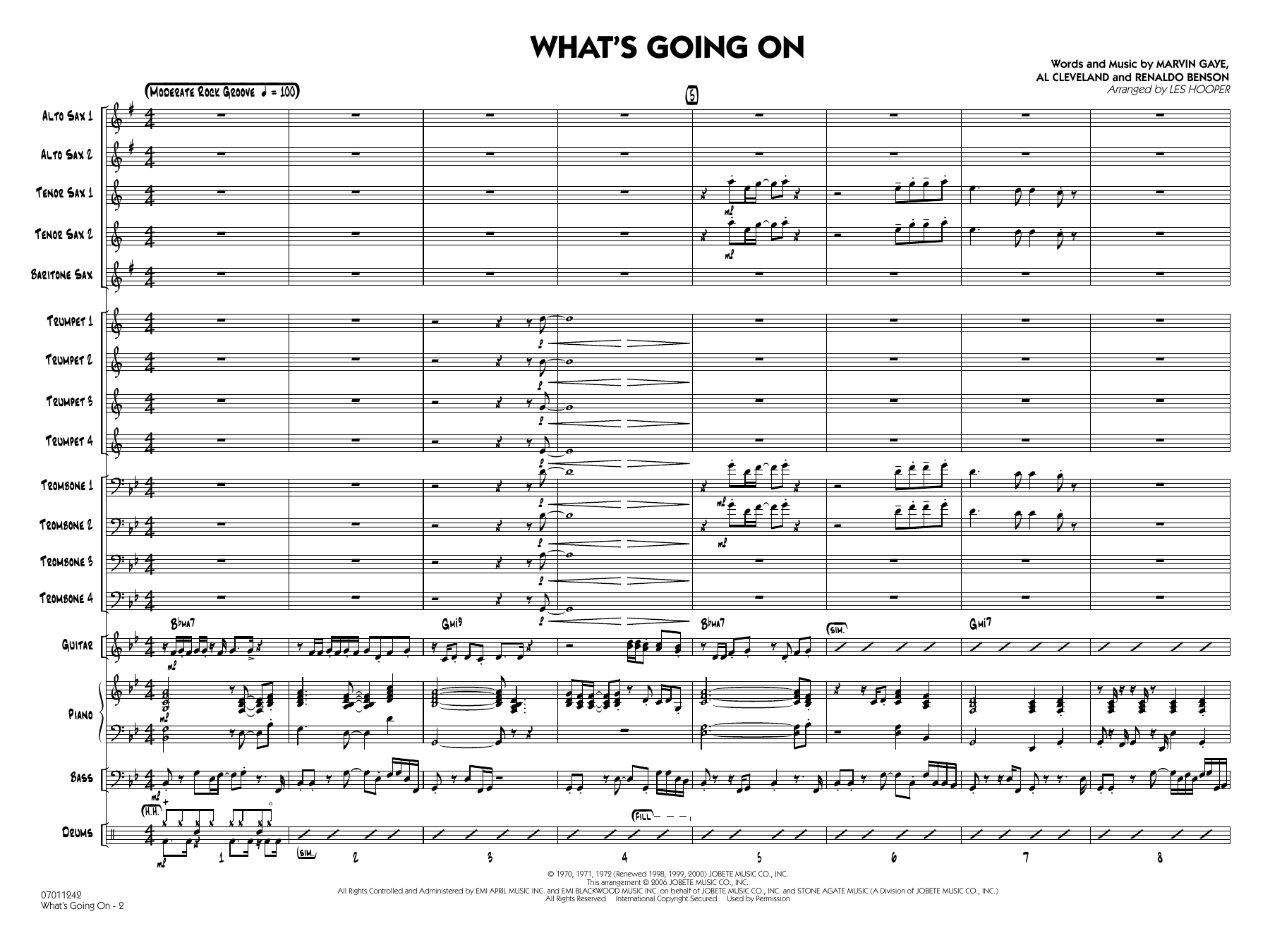

What's Going On (arr. Les Hooper): Jazz Ensemble Conductor Score & Parts
As performed by Marvin Gaye / Arranged by Les Hooper
Grade: 5
Item: 35-PK00477189
$50.00
Pickup currently not available
Buy Extra Parts (Digital PDF Download)
Parts Added to Cart!
Description
This classic Marvin Gaye hit has always been a favorite with jazzers and has great crossover appeal. From the CD "Out of the Woods" by the Les Hooper Band, this funky version is infused with a West Coast attitude and is packed with energy and drive. A solo for alto sax is featured. From the CD "Out of the Woods" by the Les Hooper Band. Courtesy of Hooperman Records. Visit: www.leshooper.com


What's Going On (arr. Les Hooper): Jazz Ensemble Conductor Score & Parts isn't in MakeMusic Cloud just yet...but it could be. Let us know you'd like to see it, and you'll help shape what comes next. In the meantime, start a free trial and dive into thousands of interactive titles your students can play along with today.
Request This Title
Tell us you want it.
Start Your Free Trial
Explore everything that's ready to play right now.
Sample Audio
No sample audio found.
Sample Video
No sample videos found.
Additional Details
Publisher:
Hal Leonard
SKU:
35-PK00477189
More about this title
About the Artist: Marvin Gaye
Marvin Gaye transformed popular music by infusing soul, social consciousness, and sophisticated harmonic sensibility into everything he recorded. His work in the late 1960s and early 1970s redefined what R&B and soul could express, blending funk grooves with lyrical depth that spoke to real human concerns.
For ensemble musicians, Gaye's catalog offers a masterclass in how to sing (or play) with intention. His phrasing, dynamics, and rhythmic feel remain endlessly instructive. Arrangers continue to mine his compositions because they contain natural musicality that transcends genre.
Why we love this
Les Hooper's arrangement captures the infectious groove and social urgency of the original while giving your ensemble room to stretch into contemporary jazz vocabulary. The alto sax solo provides a natural feature moment, and the West Coast energy keeps the whole band engaged without requiring virtuosic chops at every stand. This is the kind of accessible crossover piece that reminds students why they play jazz in the first place.
What to expect
Propulsive and purposeful. The West Coast attitude brings a laid-back confidence to the original's message, letting the band settle into the pocket and enjoy the ride. There's sophistication in the voicings and a real sense of forward motion throughout.
Who it's for
Jazz ensembles at the intermediate level looking for a contemporary arrangement that balances accessibility with authentic groove. Directors programming concerts that bridge jazz, pop, and rock worlds will find this especially valuable because it gives students a familiar song to hook onto while they develop jazz reading skills.
How to get the most out of it
- Let the rhythm section establish the pocket first. The bass and drums need to lock in tight before anyone else adds layers; this Hooper arrangement relies on that foundation to make the funk breathe.
- Shape the alto solo with plenty of space. Resist the urge to fill every beat; Hooper's voicings support the soloist best when the ensemble plays with restraint during that section.
- Emphasize the unison figures in the horns. They're written to hit hard, and clarity here makes the arrangement feel organized and sharp rather than muddy.
- Keep the energy consistent from top to bottom. Grade 5 ensembles sometimes rush during the funkier sections; a steady click and conductor's attention to tempo pays dividends.
How to use it
This works equally well as a concert opener (to grab attention immediately) or a mid-set anchor that shifts the mood toward something groovier. It's ideal for spring concerts when ensembles have built their chops and can handle the rhythmic precision required. The crossover appeal also makes it a smart choice for community outreach events where jazz might share billing with other genres.
Skills your students will build
- Funk and R&B rhythmic feels with emphasis on pocket and groove
- Reading jazz chord symbols and interpreting harmony in a pop-rooted context
- Supporting and responding to a featured soloist
- Balancing articulation and tone across a mixed ensemble (horns, rhythm section)
- Understanding the relationship between composed figures and improvisation