
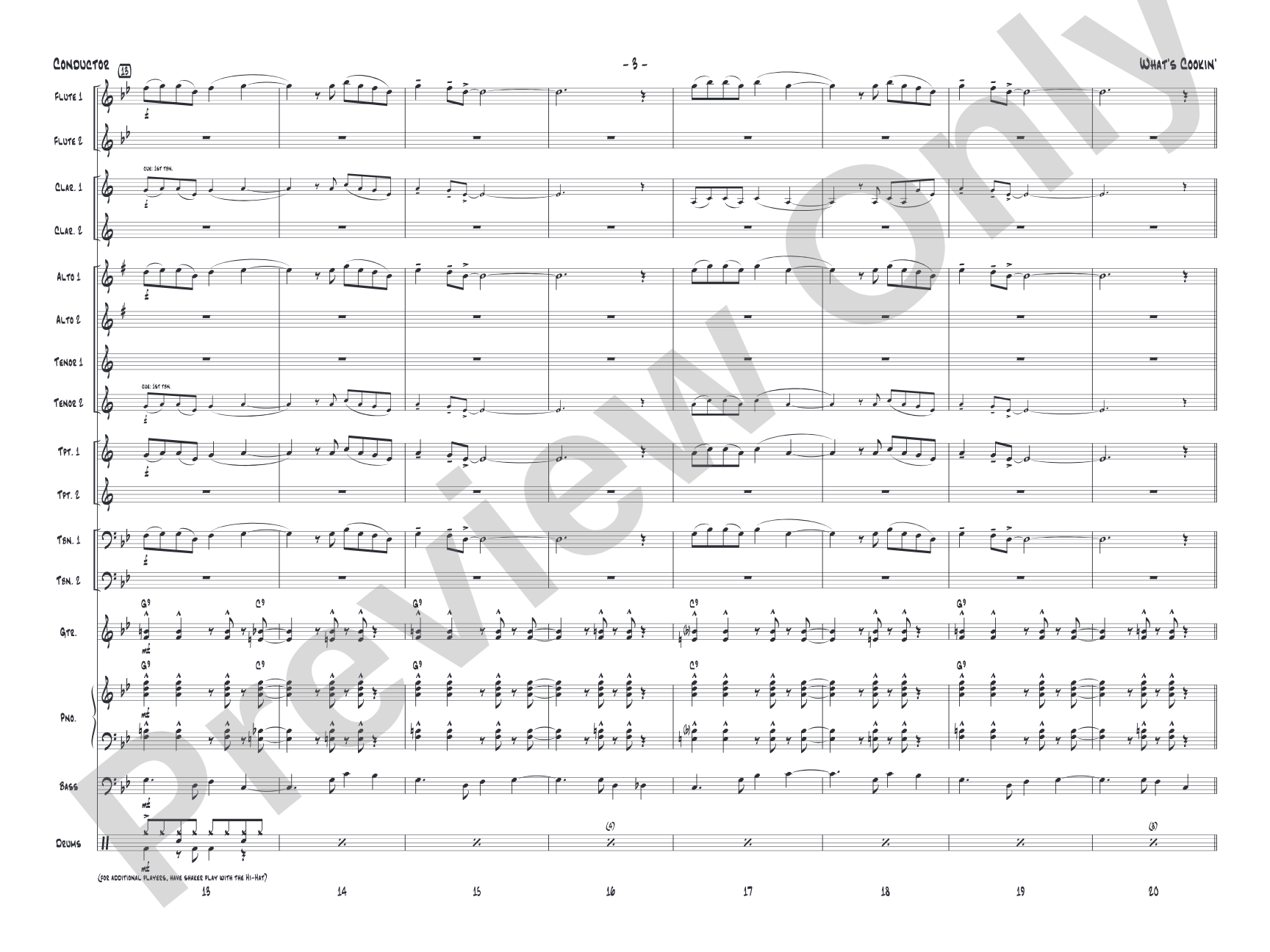
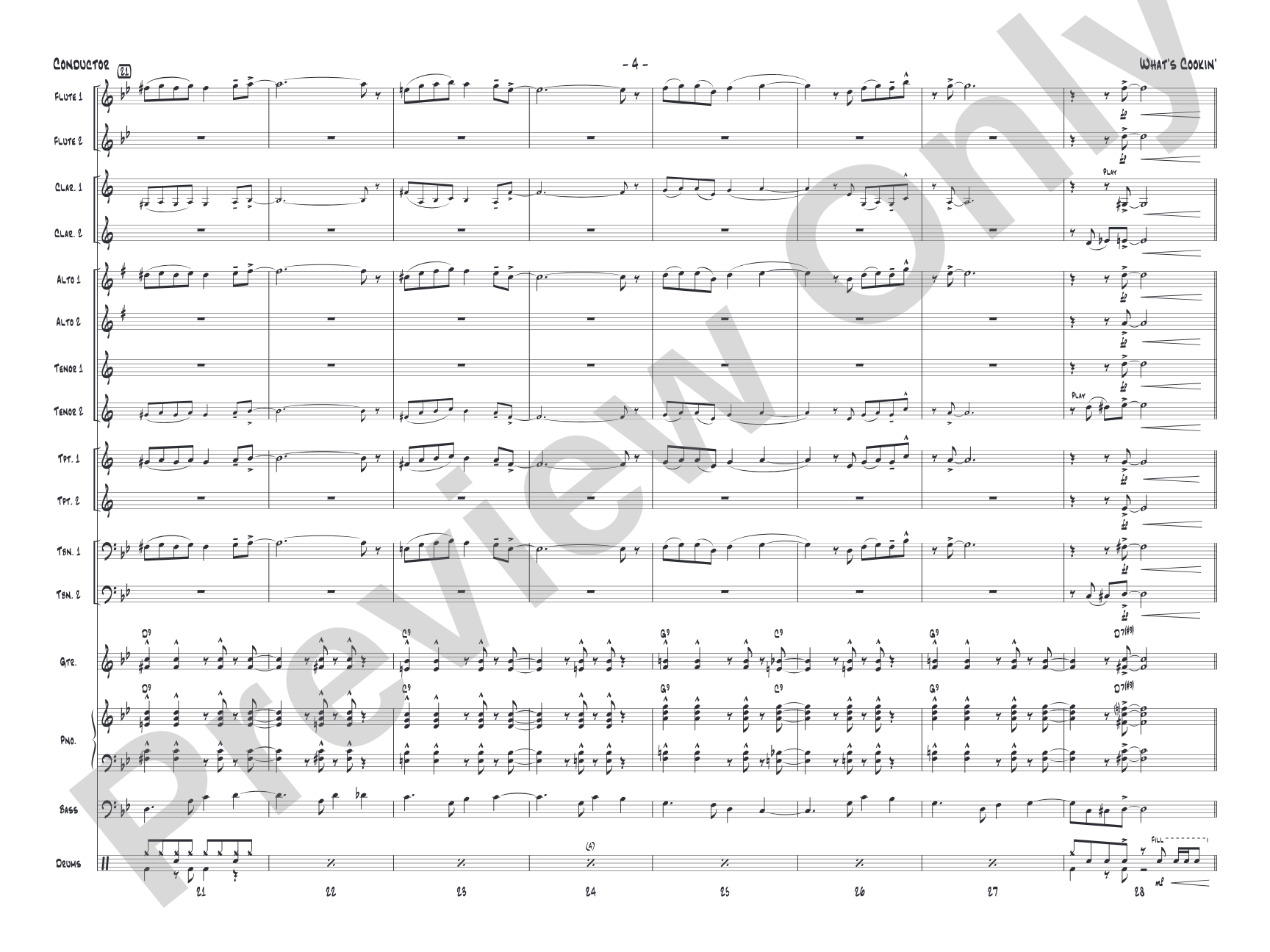
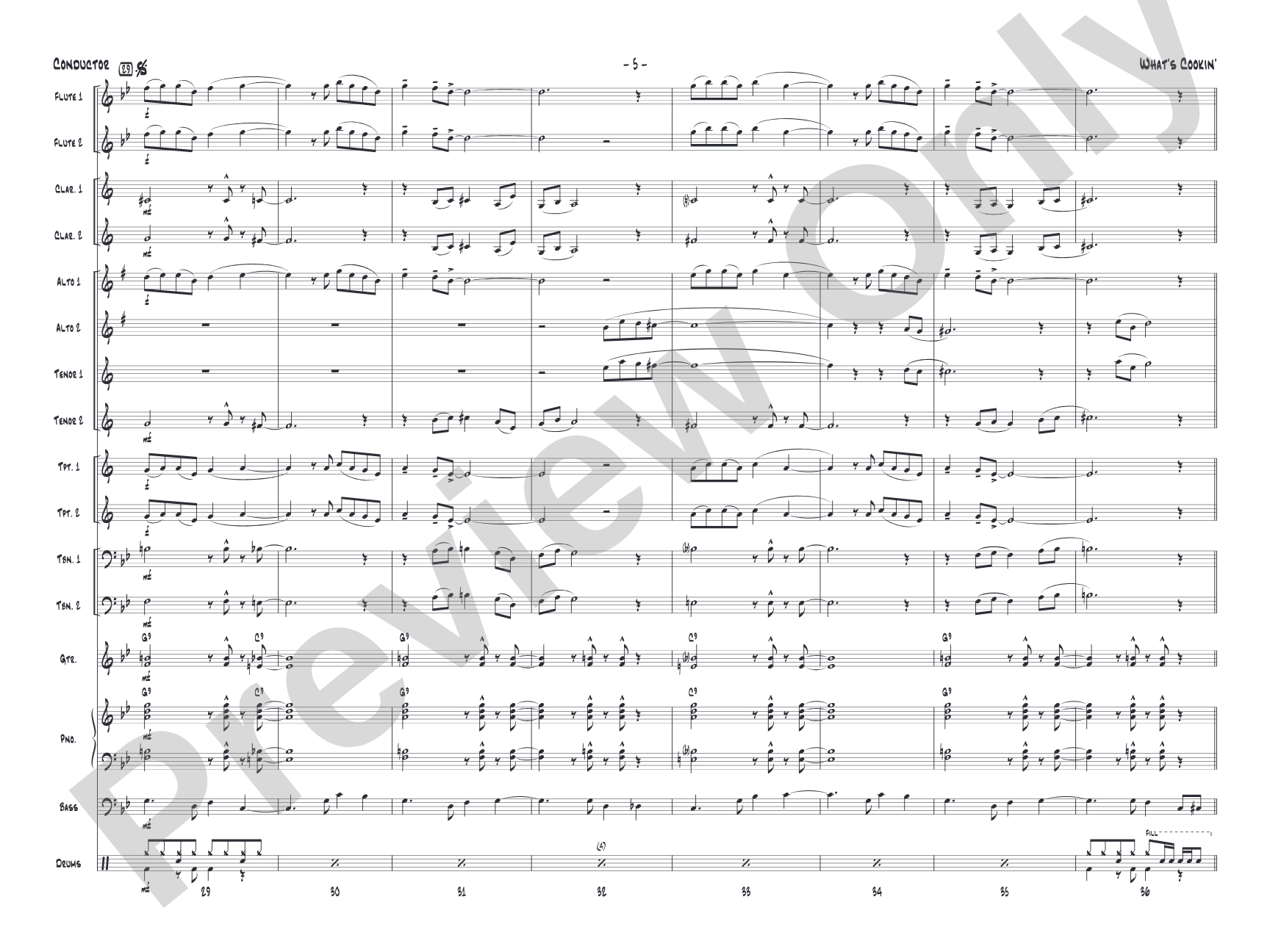
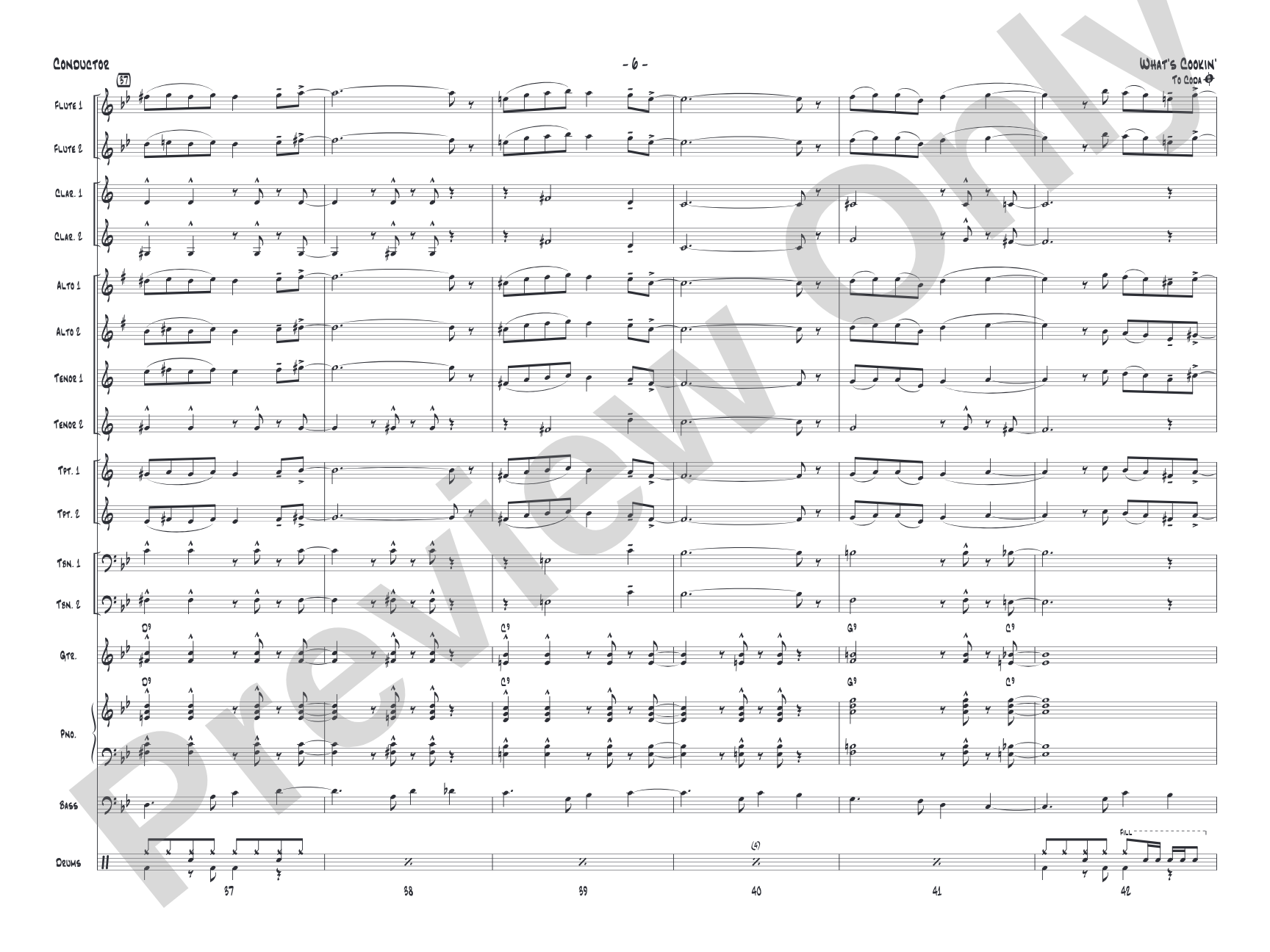
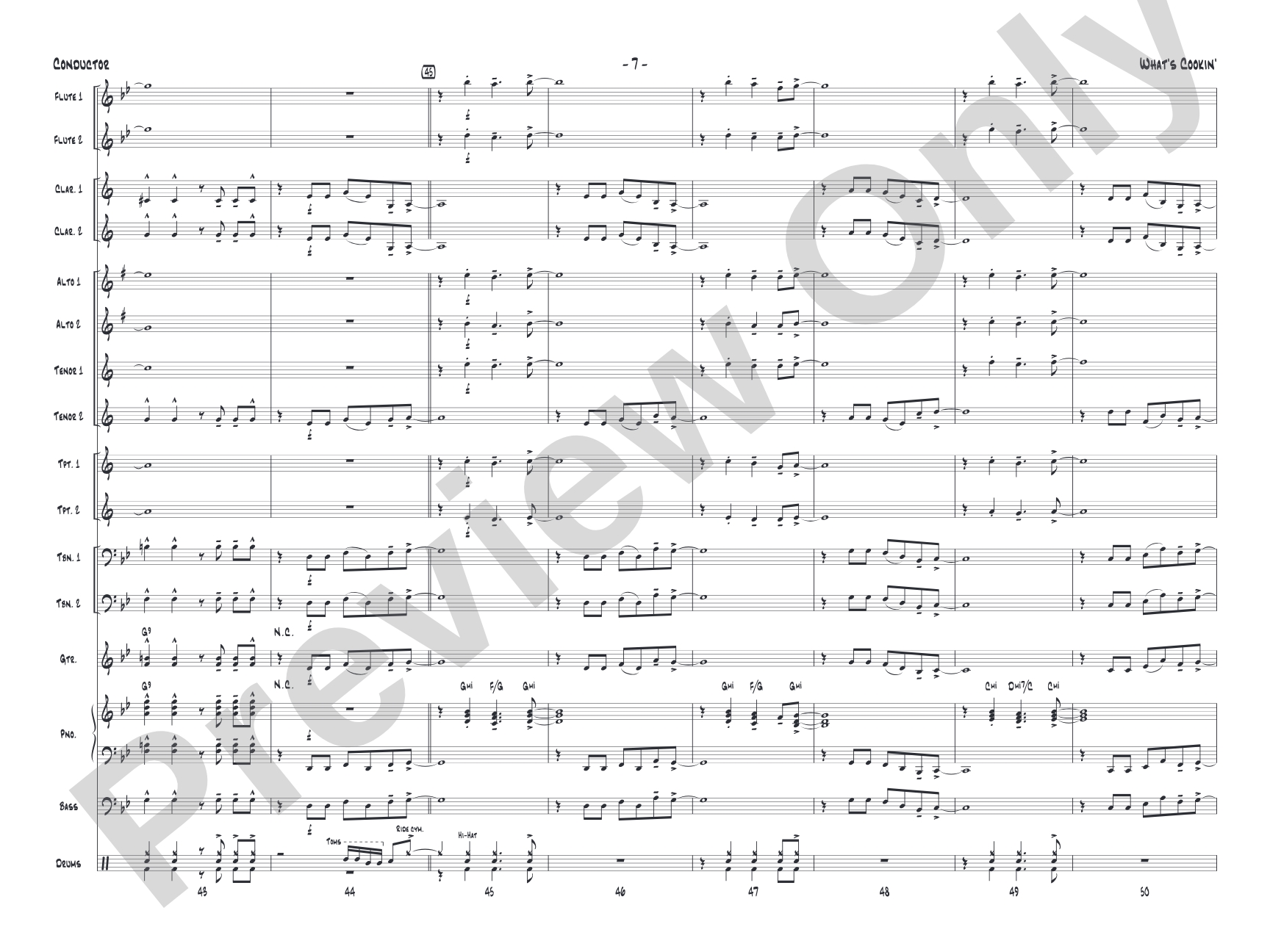
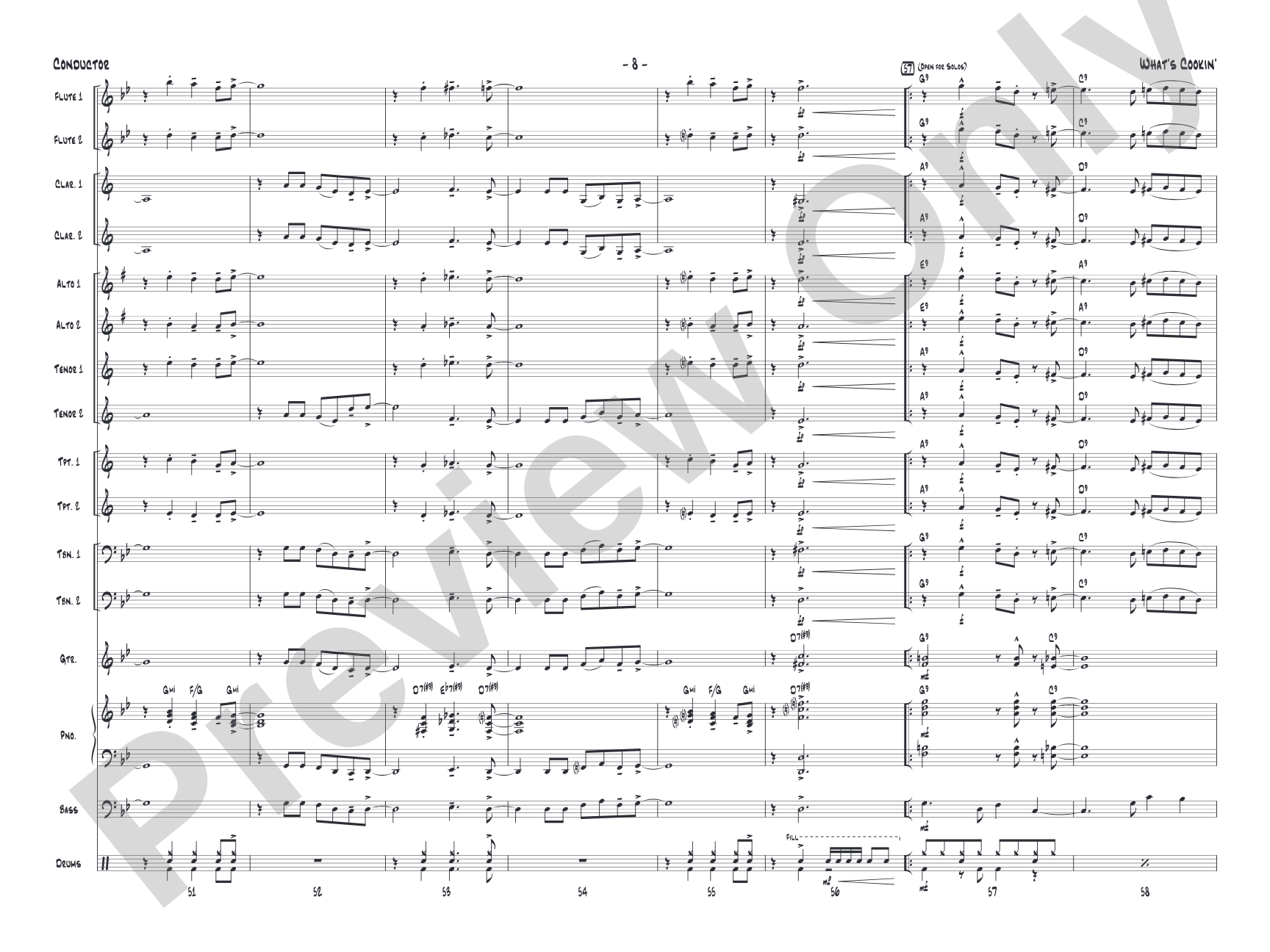
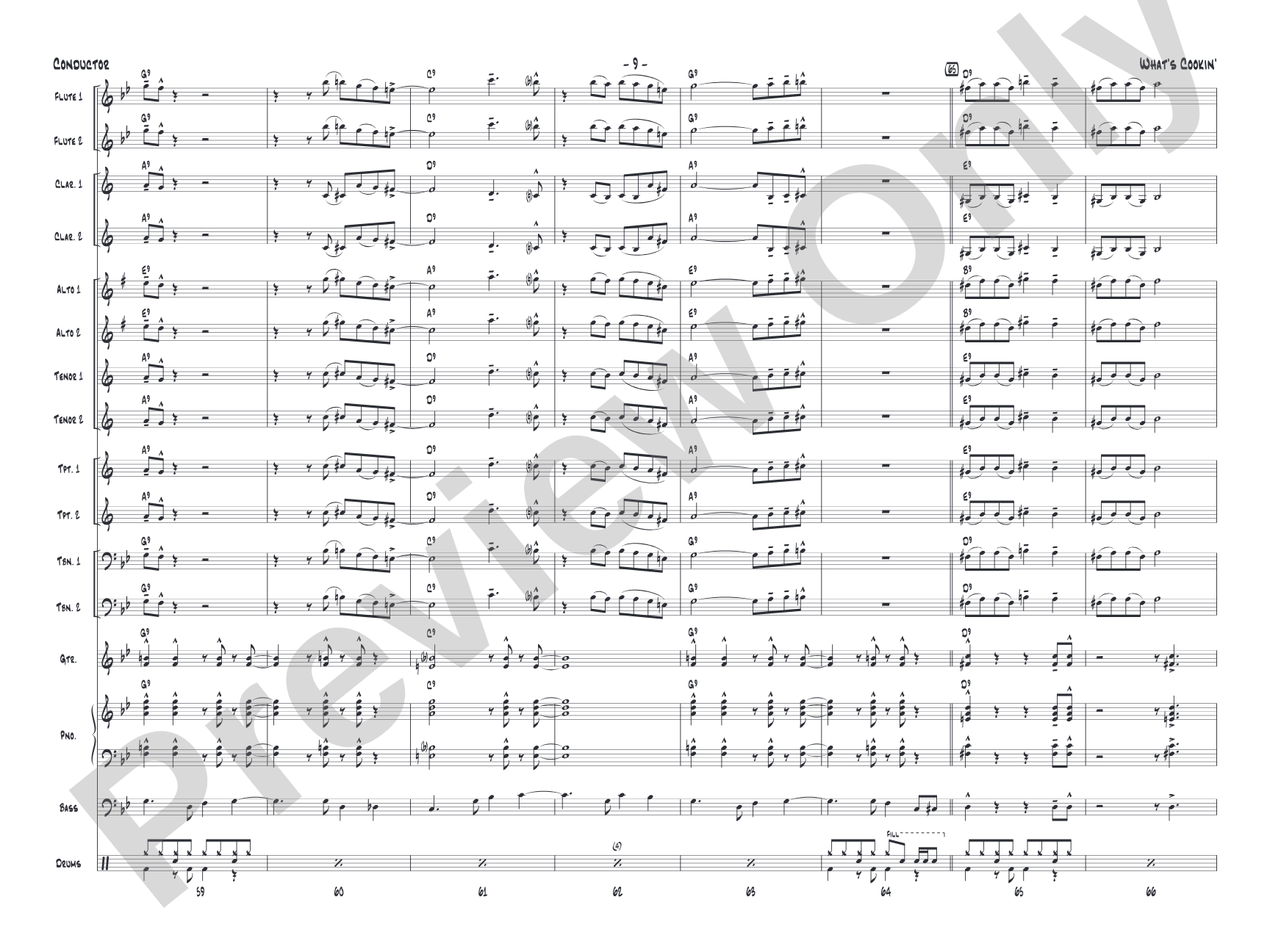
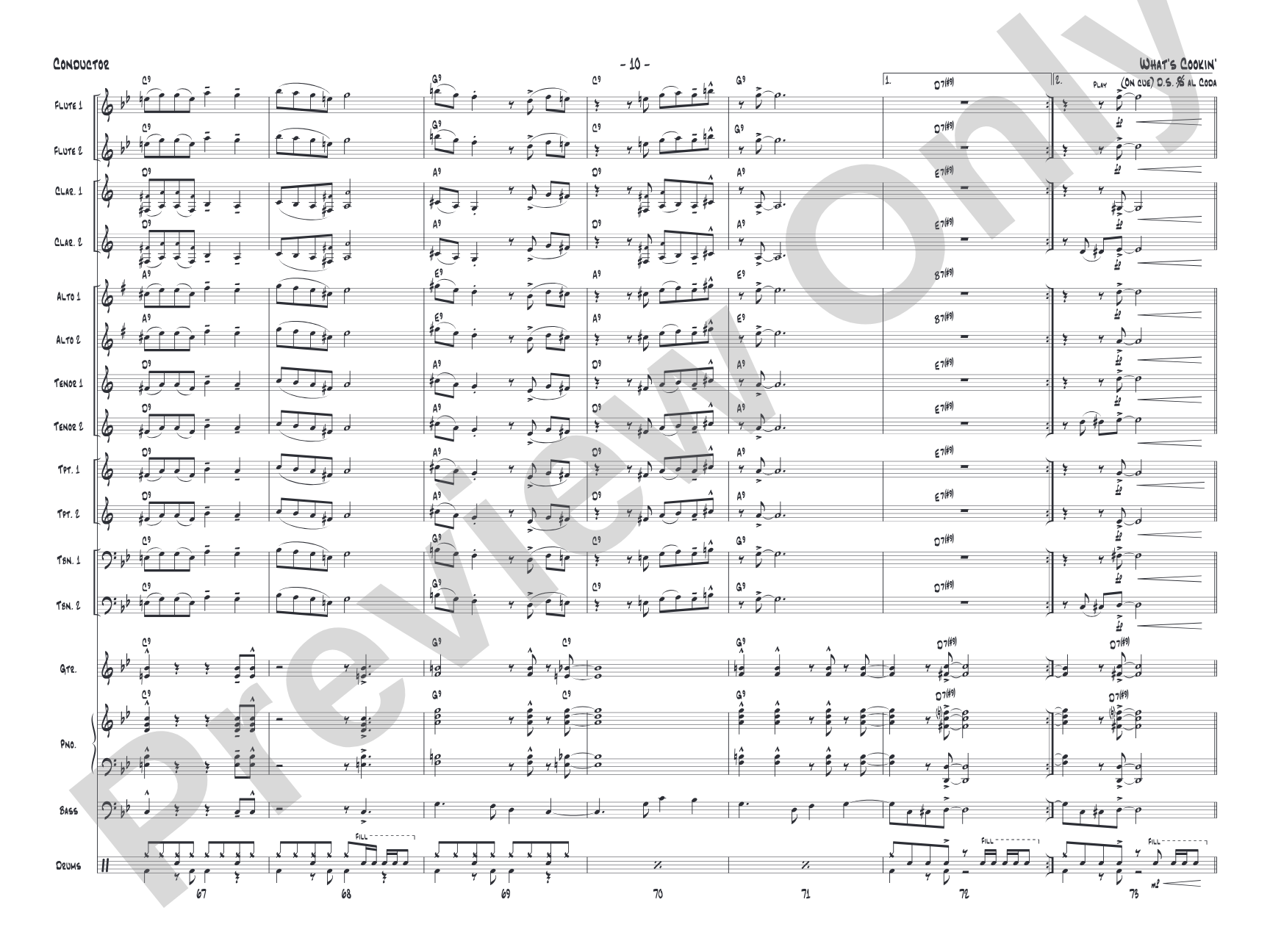
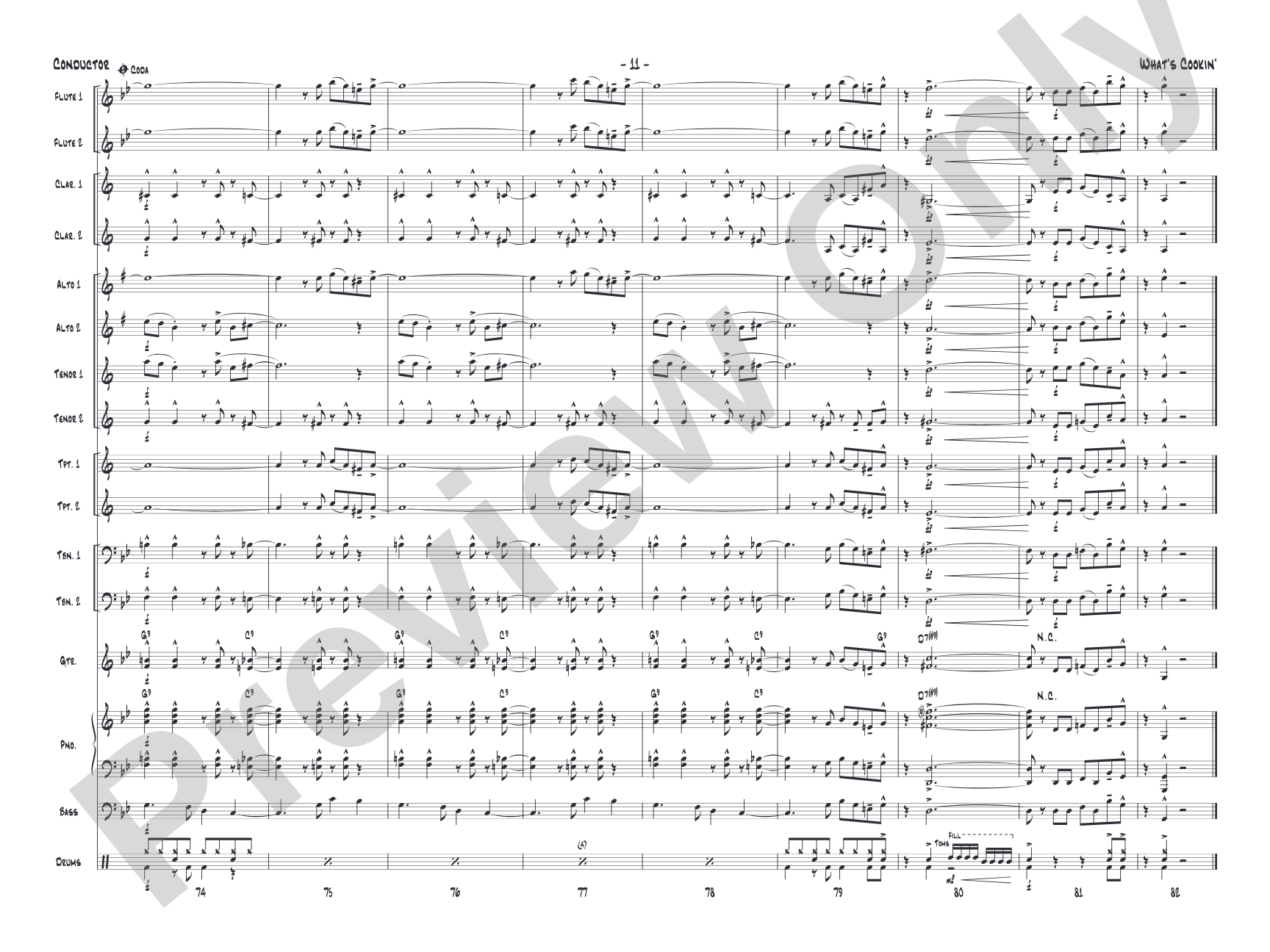




What's Cookin': Score
By Victor López
Grade: 1 (Easy)
Item: 00-PR-0004067
$7.00
Pickup currently not available
Description
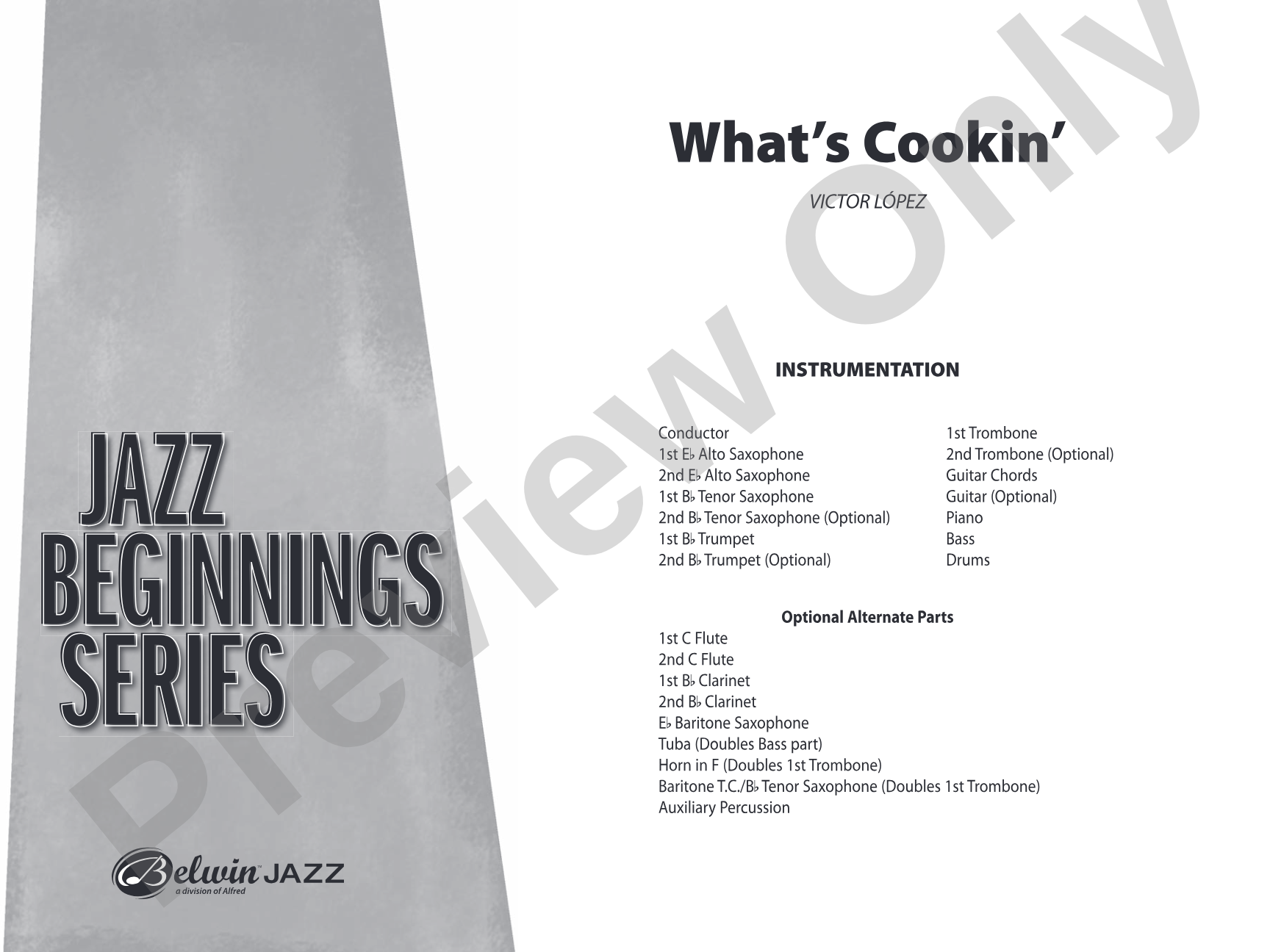
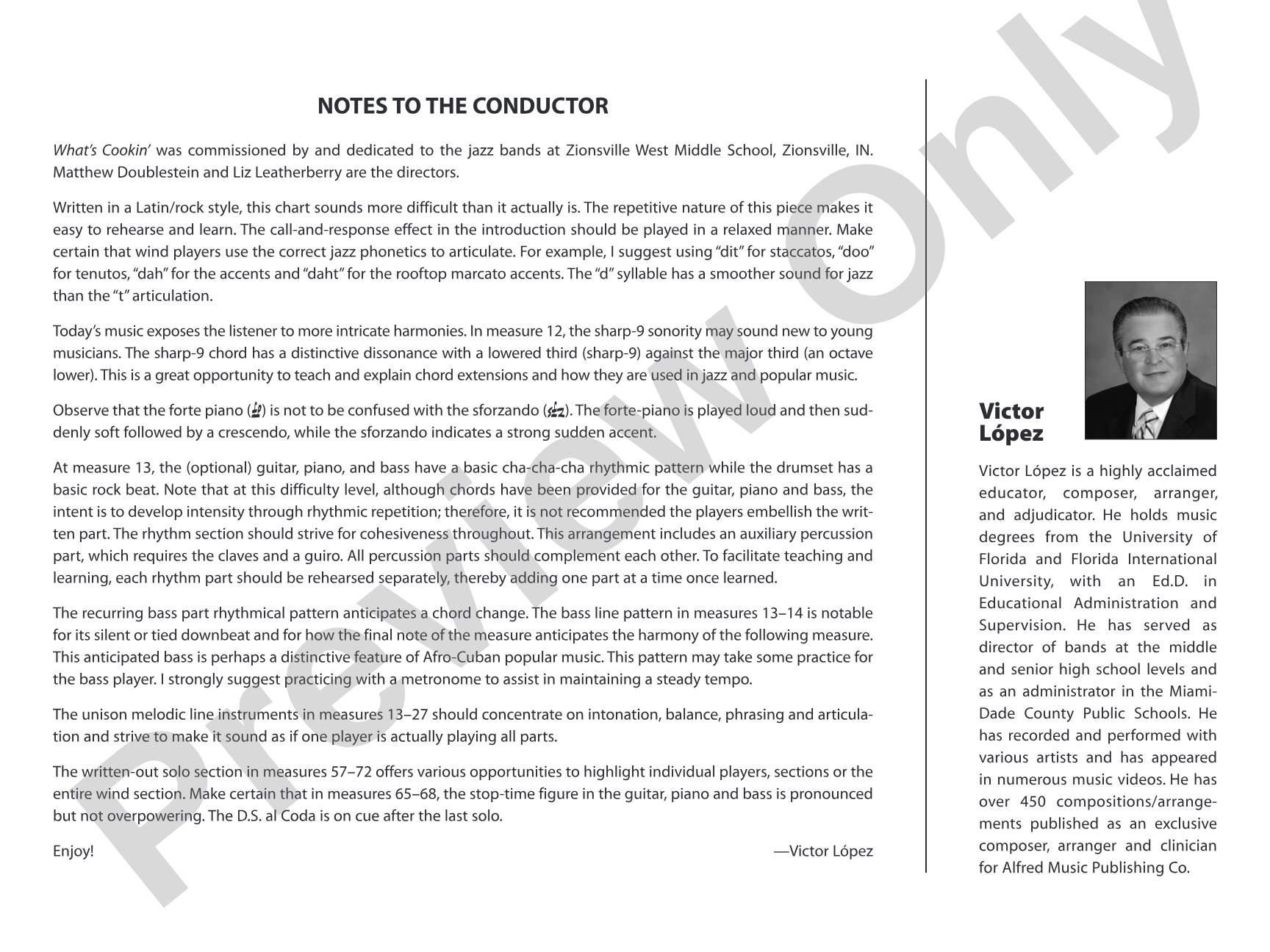
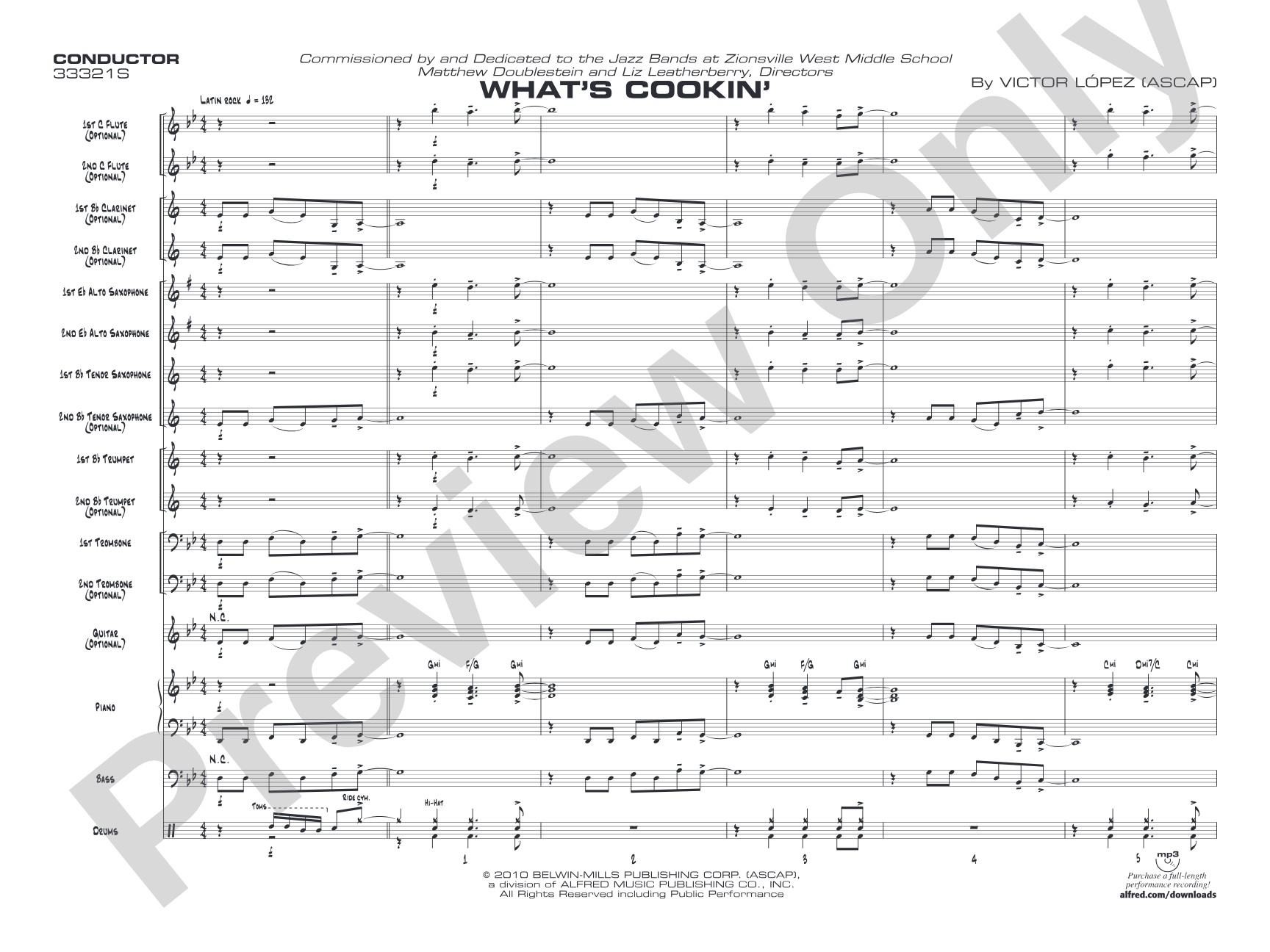
Written in a Latin/rock style, this chart sounds more difficult than it actually is. With a call-and-response effect, reduced instrumentation, included optional parts, and a written solo for any player, this tune will work with even the youngest groups. (3:00)


Don't just read it, hear it, play along with it, and watch your students grow with it. In MakeMusic Cloud, What's Cookin': Score comes alive with professional accompaniment, adjustable tempo, and built-in practice tools that turn solo practice into real progress.
Open in the Player
Jump straight in and assign it today.
Start Your Free Trial
Open this title and explore the full library in minutes.
Sample Audio
1
Audio File
--:--
0:00
0:00
Sample Video
Additional Details
Series:
Jazz Beginnings Series
Publisher:
Alfred Music
Page Count:
84
SKU:
00-PR-0004067
More about this title
About the Composer: Victor López
Victor López is a composer and arranger whose work spans jazz, Latin, and contemporary ensemble music. His compositions for young and developing ensembles balance accessibility with genuine musicality, making him a trusted voice in jazz education.
Why we love this
This chart proves that Latin grooves and call-and-response energy don't require advanced technical skills. The reduced instrumentation and optional parts mean you can make it work with whoever shows up, while the flexible written solo keeps every player invested in the performance.
What to expect
Upbeat and playful, with a laid-back Latin bounce that keeps the energy rolling without demanding precision gymnastics. The tune sits somewhere between a walking groove and a rock pocket, giving it a contemporary vibe that appeals to players just discovering jazz.
Who it's for
Young and developing jazz ensembles looking for a fun, approachable chart with real style and swing. This works for groups just entering the jazz repertoire or for bands building confidence in Latin feels and ensemble jazz language.
How to get the most out of it
- Lock the rhythm section first. Get your drums and bass rock-solid on the Latin groove before layering in horn lines; the feel depends entirely on their pocket.
- Emphasize the call-and-response sections with clear dynamic contrast. Let the solo voice cut through on the call, then bring the ensemble response in with unified articulation and attack.
- Use the optional parts strategically. If you have full instrumentation, layer them in gradually to build texture through the chart. If you're thin on players, dropping optional lines keeps the arrangement honest.
- Assign the written solo to a player who owns the style, not necessarily your highest chair. This solo rewards confidence and pocket over technical perfection.
How to use it
Program this early in a jazz concert to set an energetic tone, or use it as a closer if you need something fun and memorable to send the audience out. It pairs well with blues-based standards and works particularly well in informal settings like school assemblies or community events where accessibility matters more than virtuosity.
Skills your students will build
- Comping and rhythm section coordination in Latin/rock grooves
- Call-and-response phrasing and ensemble togetherness
- Solo construction and improvisation confidence
- Swing articulation and jazz feel at an early stage
- Reading and balancing optional vs. written parts