What Part Of No Sheet Music Preview

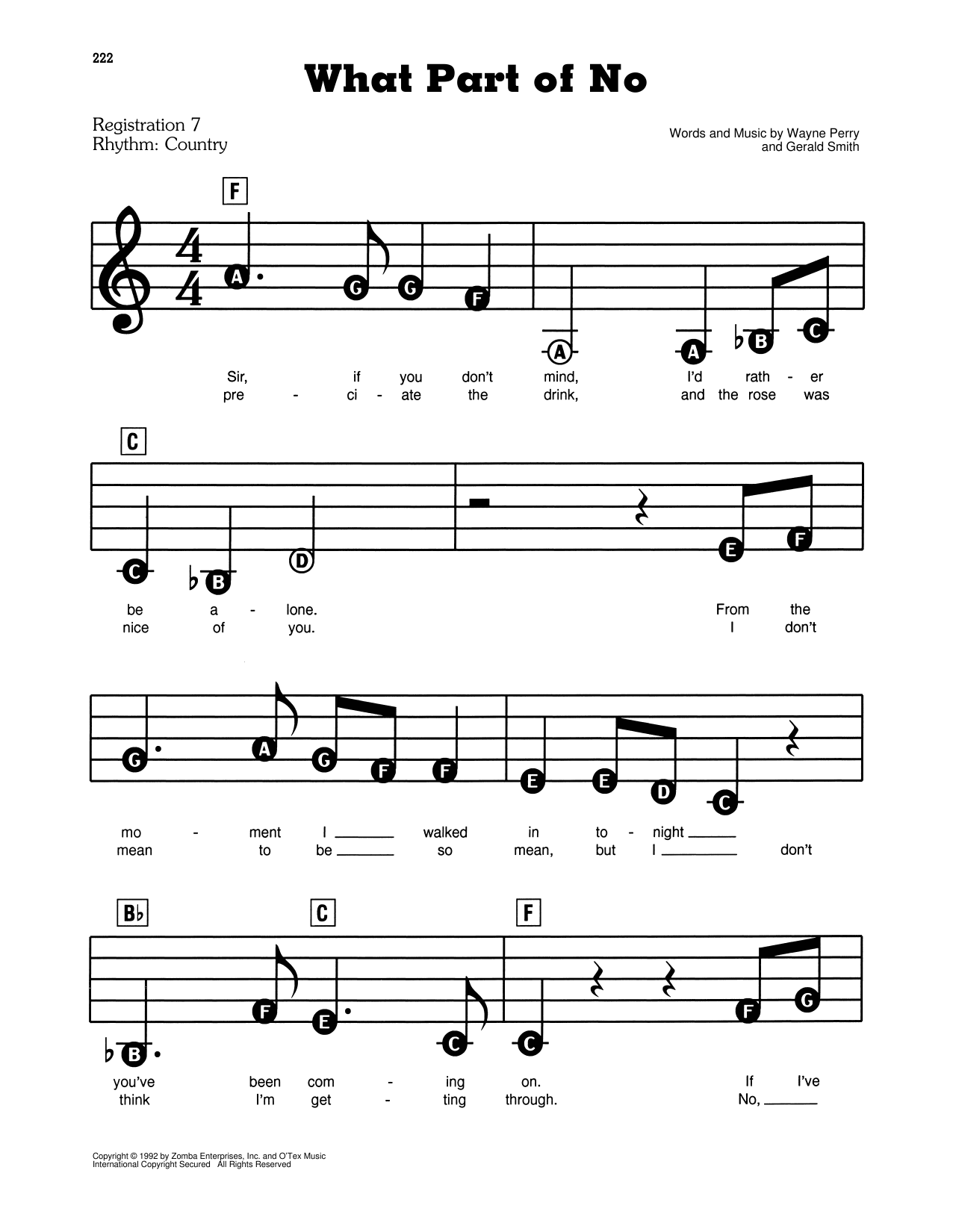
What Part Of No: E-Z Play Today

As performed by Lorrie Morgan

Item: 35-DS00676683

Digital Download
$4.99
Description

What Part Of No: E-Z Play Today isn't in MakeMusic Cloud just yet...but it could be. Let us know you'd like to see it, and you'll help shape what comes next. In the meantime, start a free trial and dive into thousands of interactive titles your students can play along with today.

Sample Audio
No sample audio found.
Sample Video
Additional Details
Publisher: Hal Leonard
Page Count: 4
SKU: 35-DS00676683

More about this title

About the Artist: Lorrie Morgan

Lorrie Morgan built her career on authentic country storytelling, bringing both vocal precision and emotional depth to narratives about love, loss, and resilience. As a second-generation country artist, she inherited her musical instincts from her father, Little Redd Morgan, then developed her own voice through decades of recording and performing across traditional and contemporary country repertoire.

Why we love this

Country ballads like this one offer piano students a chance to accompany vocal melody in a style that rewards both technical clarity and interpretive restraint. The four-page length makes it substantial enough to develop real musicianship without overwhelming learners still building their stamina and sight-reading confidence.

What to expect

A direct, conversational melody that sits comfortably in the middle range, supported by straightforward harmonic movement. The phrasing mirrors natural speech, giving pianists room to develop expressive timing without fighting against complex rhythmic structures.

Who it's for

Piano students exploring country music and vocalists seeking accessible accompaniment that doesn't require complex left-hand patterns. Teachers introducing genre styles beyond classical and pop repertoire will find this an engaging entry point.

How to get the most out of it

  • Balance the vocal line so it remains the focus while your accompaniment provides steady harmonic support underneath.
  • Shape phrases around the lyrical content rather than playing rhythmically flat; country storytelling demands breath and intention.
  • Listen closely to how the chord progression moves, since changes often land on unexpected syllables in the melody.

How to use it

Pair this with other country standards or roots music to create a themed performance set that appeals to audiences beyond classical concert attendees. It works equally well as a solo piano feature or as accompaniment for a vocalist working across multiple genres.

Skills your students will build

  • Accompanying a vocal melody with appropriate harmonic texture
  • Maintaining steady pulse while shaping phrasing for lyrical content
  • Navigating country chord progressions and their typical voicings
  • Balancing independent melodic and accompaniment lines

You May Also Like