What'll I Do? (arr. Ed Waesche and Renee Craig) Sheet Music Preview

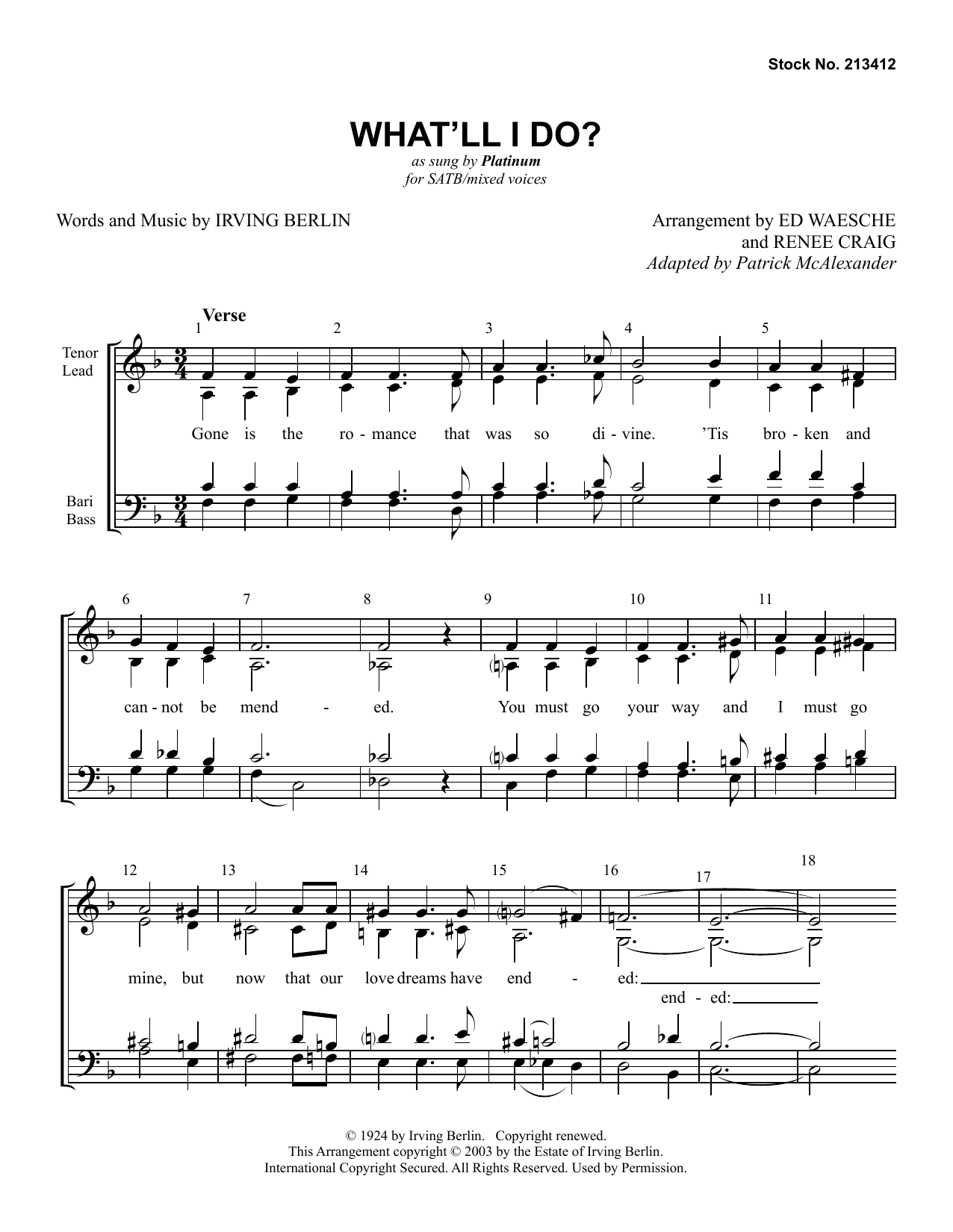
What'll I Do? (arr. Ed Waesche and Renee Craig): SATB Choral Octavo

As performed by Platinum / Arranged by Ed Waesche / Arranged by Renee Craig / Edited by Patrick McAlexander

Item: 35-DS00451702

Digital Download
$3.20
Description

What'll I Do? (arr. Ed Waesche and Renee Craig): SATB Choral Octavo isn't in MakeMusic Cloud just yet...but it could be. Let us know you'd like to see it, and you'll help shape what comes next. In the meantime, start a free trial and dive into thousands of interactive titles your students can play along with today.

Sample Audio
No sample audio found.
Sample Video
Additional Details
Publisher: Hal Leonard
Page Count: 4
SKU: 35-DS00451702

More about this title

Why we love this

This arrangement captures the warmth and harmonic sophistication that defines barbershop style without requiring your singers to navigate extreme ranges or excessive complexity. The four-part writing sits comfortably across all voices, which means your ensemble can focus on the musical storytelling rather than technical survival.

What to expect

Introspective and bittersweet. The piece carries the intimate vulnerability of a Tin Pan Alley standard while the barbershop harmonies add richness and warmth that feels both nostalgic and immediate. Singing this requires genuine emotional connection rather than technical display.

Who it's for

SATB choirs looking to explore the American barbershop tradition with accessible material that still demands musical maturity. This works well for ensembles comfortable with four-part harmony who want to branch into a repertoire beyond classical choral standards.

How to get the most out of it

  • Balance the melody line so it sits prominently in the soprano without overwhelming the supporting harmonies; the beauty of barbershop lies in the blend of all four parts working together.
  • Shape the phrasing to mirror the song's emotional arc. This is an introspective piece about uncertainty, so resist the urge to drive forward relentlessly.
  • Lock into a steady harmonic rhythm during rehearsals by having the lower three voices count and lock before adding the soprano line.

How to use it

Pair this with other early 20th century American repertoire to trace the evolution of popular song, or program it as a standalone feature that showcases your choir's ability to handle jazz and barbershop idioms. It works particularly well on concerts celebrating vocal Americana.

Skills your students will build

  • Barbershop harmonic conventions and voice leading
  • Balancing melodic and supporting lines within a four-part texture
  • Singing in the jazz and popular song tradition
  • Shaping phrasing in emotionally narrative music

You May Also Like