What'll I Do? Sheet Music Preview

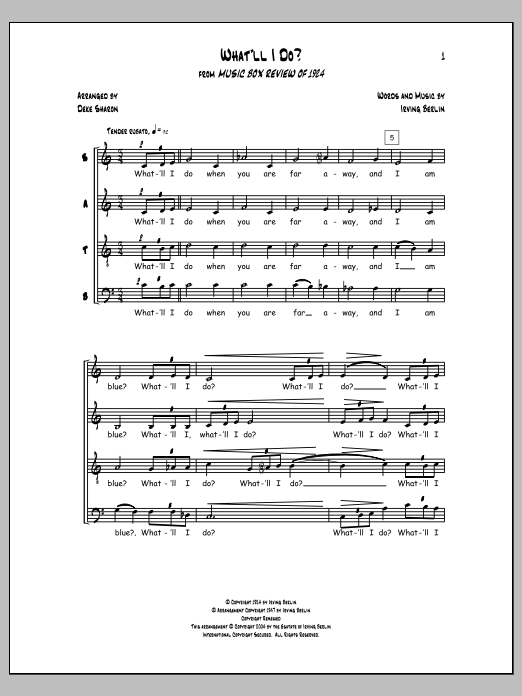
What'll I Do?: SATB Choral Octavo

As performed by Irving Berlin / As performed by Anne Raugh / Arranged by Deke Sharon

Item: 35-DS00299709

Digital Download
$2.99
Description

What'll I Do?: SATB Choral Octavo isn't in MakeMusic Cloud just yet...but it could be. Let us know you'd like to see it, and you'll help shape what comes next. In the meantime, start a free trial and dive into thousands of interactive titles your students can play along with today.

Sample Audio
No sample audio found.
Sample Video
Additional Details
Publisher: Hal Leonard
Page Count: 5
SKU: 35-DS00299709

More about this title

About the Artist: Irving Berlin

Irving Berlin (1888-1989) stands as one of the most prolific and influential songwriters in American popular music. A self-taught composer who could barely read music notation, Berlin wrote over 1,000 songs and composed music for numerous Broadway shows and Hollywood films. His gift for crafting instantly memorable melodies and emotionally resonant lyrics made him a defining voice of the 20th century, and his catalog remains essential repertoire for vocal musicians across genres.

Why we love this

Deke Sharon's arrangement captures the bittersweet vulnerability at the heart of this Berlin standard without overwrought harmony. The piece sits beautifully for SATB voices and demonstrates how restraint can actually deepen emotional impact. It's the kind of accessible yet sophisticated choice that reminds audiences why this song has endured for a century.

What to expect

Nostalgic but never maudlin, this arrangement captures that particular ache of longing and resignation Berlin captures so well. The harmonies feel both warm and slightly open, leaving room for personal interpretation rather than dictating every emotion.

Who it's for

Choirs seeking accessible a cappella repertoire with genuine musical substance will find this valuable. It works equally well for advanced high school programs, college choirs, and community ensembles looking to program a recognizable American standard.

How to get the most out of it

  • Shape the melodic line with natural speech inflection, letting the lyrics breathe between phrases rather than pressing through them.
  • Balance the four parts so the soprano line sits slightly forward without the inner voices disappearing entirely; supporting harmony matters as much as the tune.
  • Keep the tempo unhurried and intimate, treating this as a quiet reflection rather than a narrative performance.

How to use it

Pair this with other pre-Broadway or golden age standards to create a themed concert, or use it as a poignant closer that lets audiences sit quietly with the melody. At five pages, it's also ideal for filling a slot when you need something singers can learn efficiently but deliver with impact.

Skills your students will build

  • Shaping lyrical lines with conversational phrasing
  • Balancing soprano melody against four-part harmony
  • Finding emotional authenticity in familiar material
  • A cappella blend and blend across full ensemble

You May Also Like