What Is This Thing Called Love?: E-flat Baritone Saxophone Sheet Music Preview

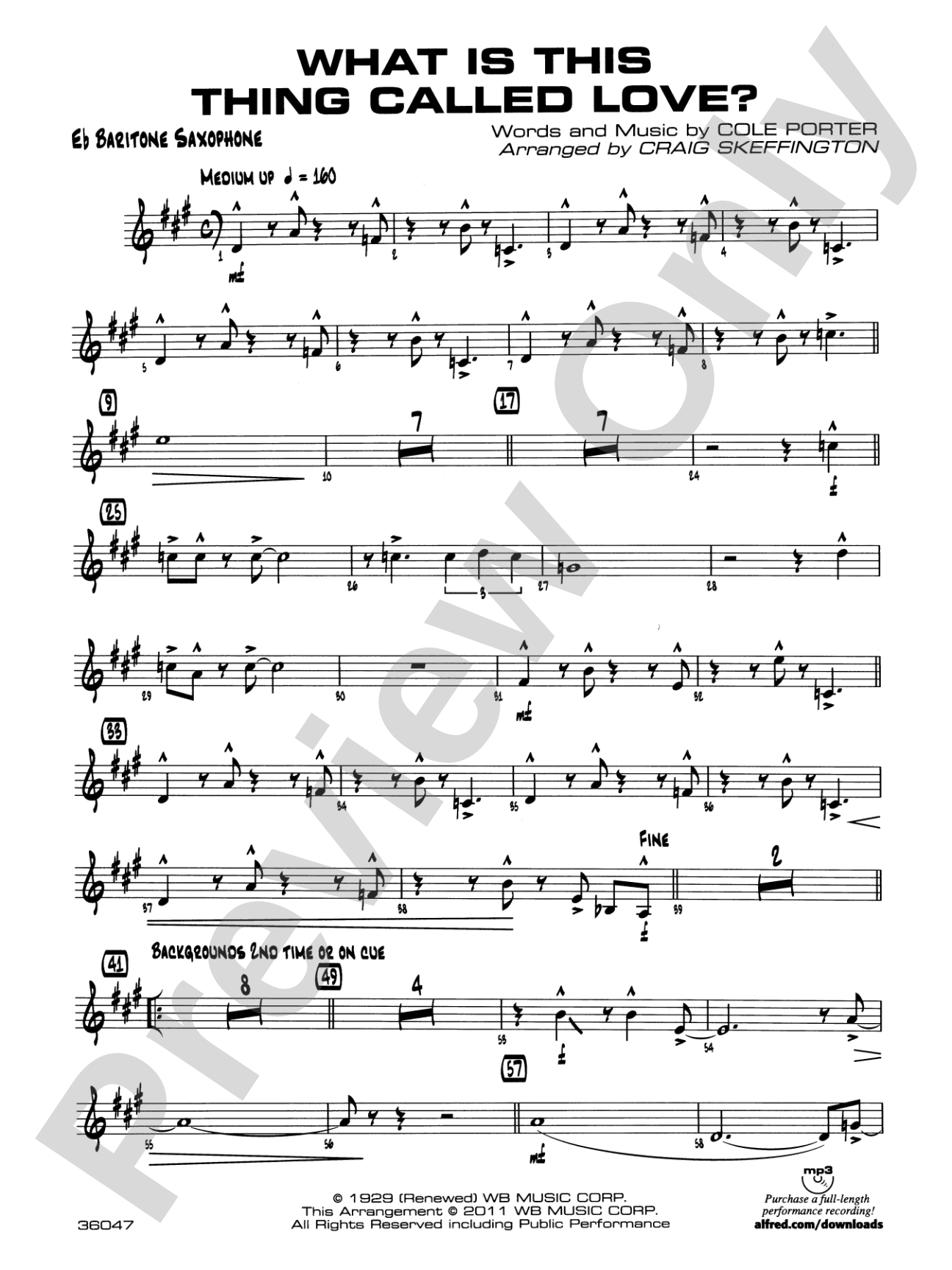
What Is This Thing Called Love?: E-flat Baritone Saxophone

Words and music by Cole Porter / arr. Craig Skeffington

Grade: 3 (Medium)

Item: 00-PC-0017194_BTX

Digital Download
$3.00
Description
A swing tempo at around 160 BPM, the melody is stated by alto 1, trumpet 1 and trombone 1. Add some ensemble counterpoint, some solo space (written) for trumpet 2 and 'bone 1 and you have all the right stuff. Lead trumpet range is to written A above the staff with optional higher notes. Rhythm section parts are well-written. The band will swing!

Don't just read it, hear it, play along with it, and watch your students grow with it. In MakeMusic Cloud, What Is This Thing Called Love?: E-flat Baritone Saxophone comes alive with professional accompaniment, adjustable tempo, and built-in practice tools that turn solo practice into real progress.

Sample Audio
0:00
0:00
Sample Video
Additional Details
Series: Jazz Band Series
Publisher: Alfred Music
Page Count: 98
SKU: 00-PC-0017194_BTX

More about this title

About the Composer: Cole Porter

Cole Porter (1891-1964) was an American composer and lyricist whose sophisticated melodies and witty, urbane lyrics defined the golden age of American musical theater. His works span Broadway shows, film scores, and standards that remain central to jazz and popular music repertoires. Porter's harmonic language and memorable melodic lines have made his compositions enduring choices for jazz ensemble arrangements, offering players access to music that challenges both technique and musicality.

Why we love this

Craig Skeffington's arrangement brings the swagger and sophistication of a Cole Porter standard into a working jazz ensemble chart that delivers real ensemble sound without sacrificing individual voice. The written solos for trumpet 2 and trombone 1 give younger soloists a secure framework while the well-crafted rhythm section parts ensure the groove stays grounded. This is the kind of chart that sounds polished in performance and teaches swing style authentically.

What to expect

Sophisticated and playful, with the kind of melodic elegance Porter was known for. The swing tempo keeps energy high while the ensemble counterpoint adds textural interest, and those written solos give the band moments to stretch without losing structure.

Who it's for

This score and parts suit a Grade 3 jazz ensemble with developing soloists and a solid rhythm section. The arrangement works for high school jazz bands, college prep ensembles, and community jazz groups looking for a standard that sounds sophisticated without requiring all-star players.

How to get the most out of it

  • Push the articulation on the melody statement (alto 1, trumpet 1, trombone 1) to lock in the swing feel at 160 BPM. Clean, deliberate tonguing will make the unison voices sit together.
  • Balance the counterpoint passages so no single voice disappears. The ensemble writing will sound muddy if sections aren't listening to one another.
  • Have trumpet 2 and trombone 1 prepare their solo passages early. Written solos give structure, but they still need phrasing and control to sound like they're really playing over the changes.
  • Check the lead trumpet's upper register work. Optional higher notes above the staff should be rehearsed separately; don't force them if the player isn't comfortable.

How to use it

Program this alongside other Porter standards or as part of a jazz standards showcase. It pairs well with similar-level swing arrangements and works equally well as a featured piece on a jazz concert or as a program opener that sets a swinging, professional tone.

Skills your students will build

  • Swing eighth-note articulation and phrasing
  • Reading and playing jazz counterpoint
  • Soloing over chord changes with written guidance
  • Ensemble balance and blend in unison melodic statements
  • Jazz comping and time-keeping in the rhythm section

You May Also Like