
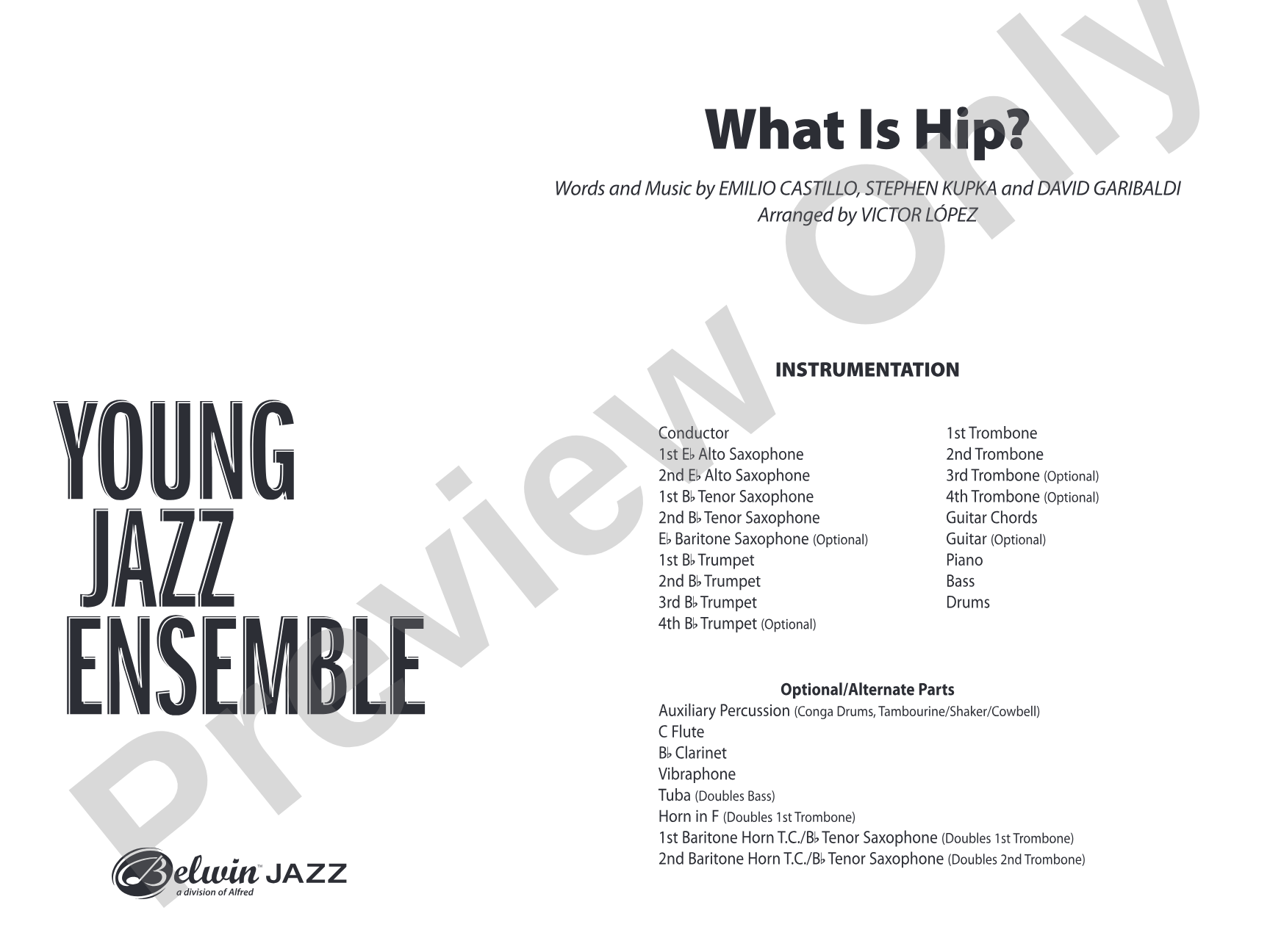
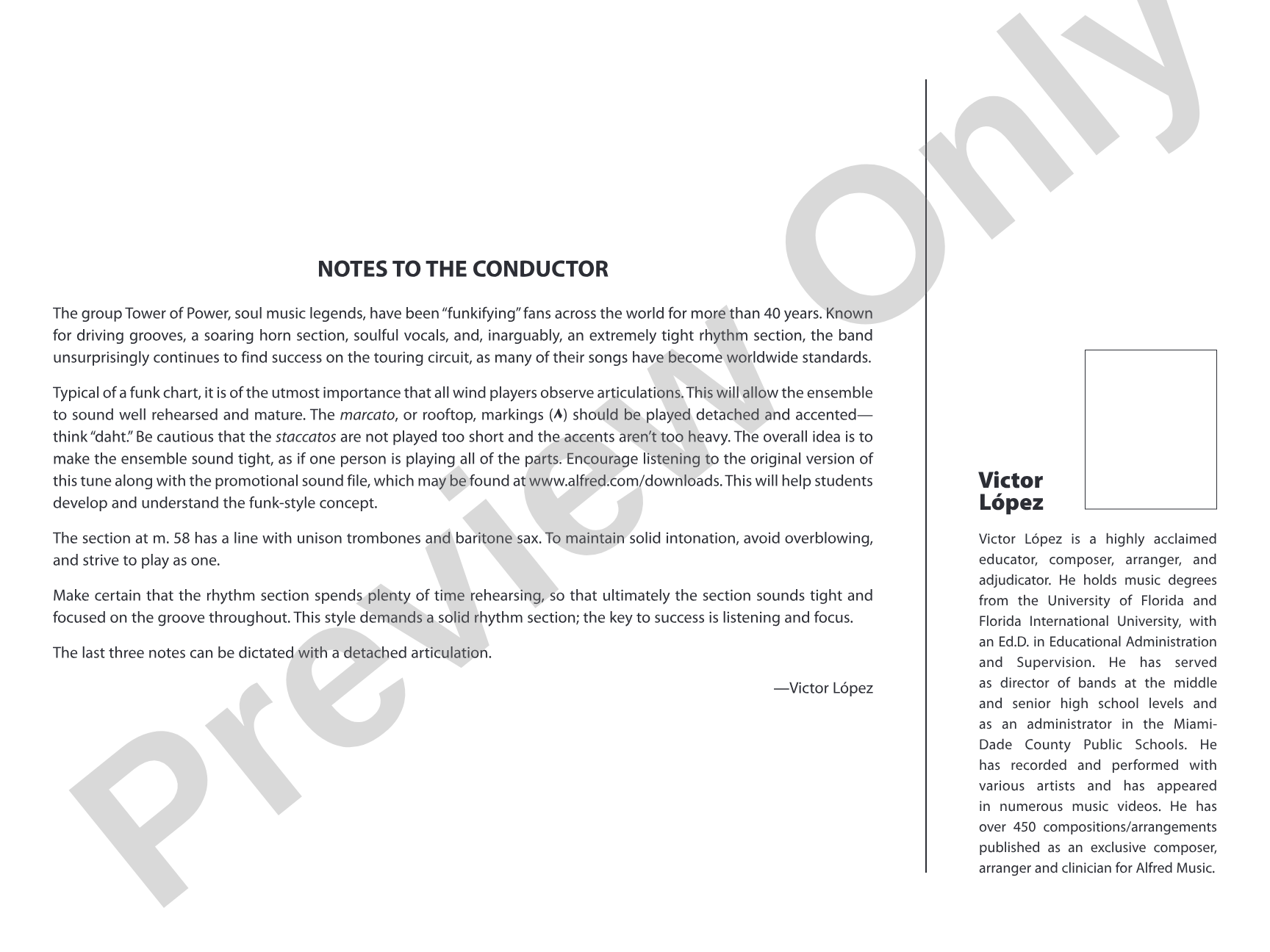
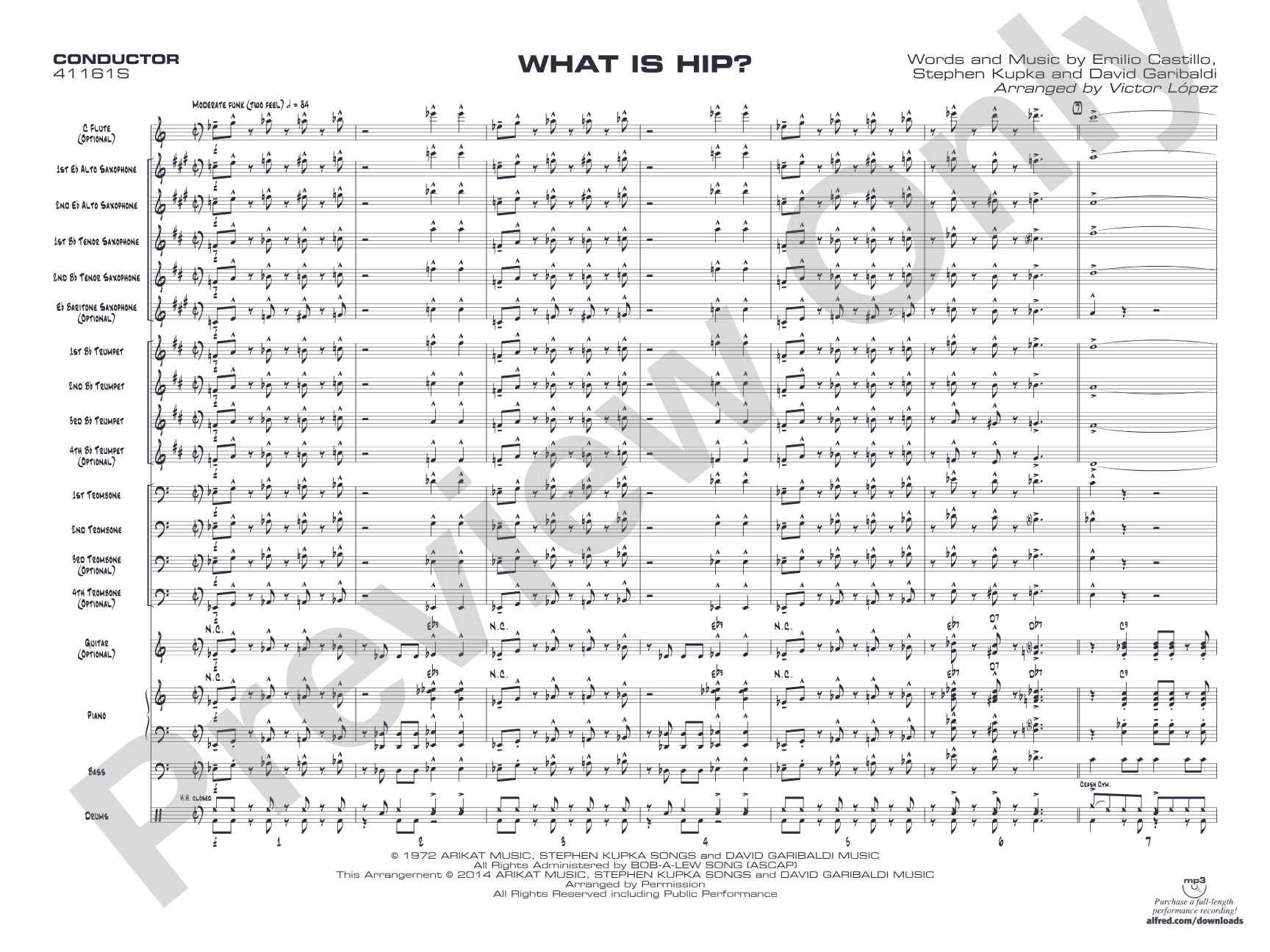
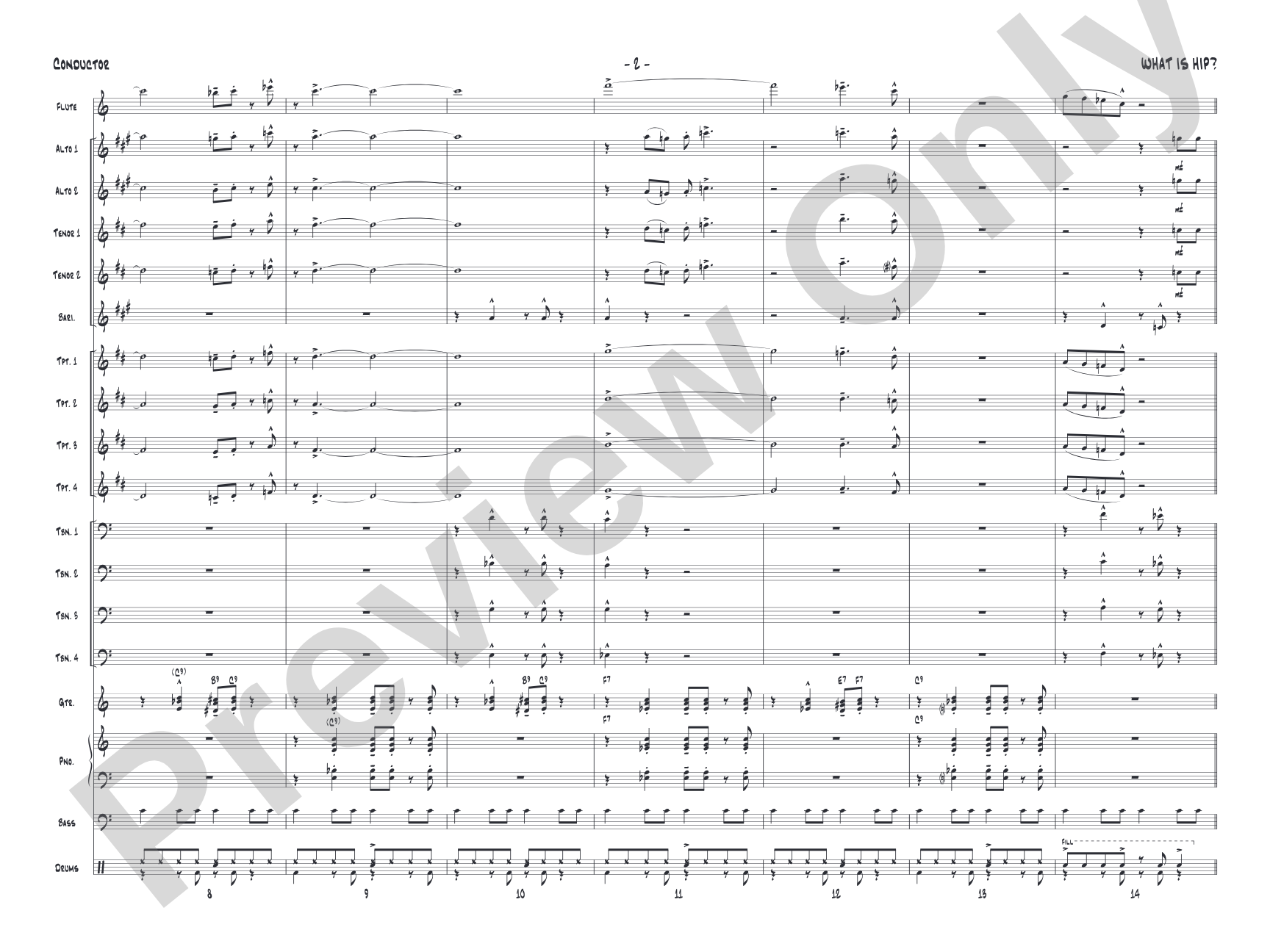
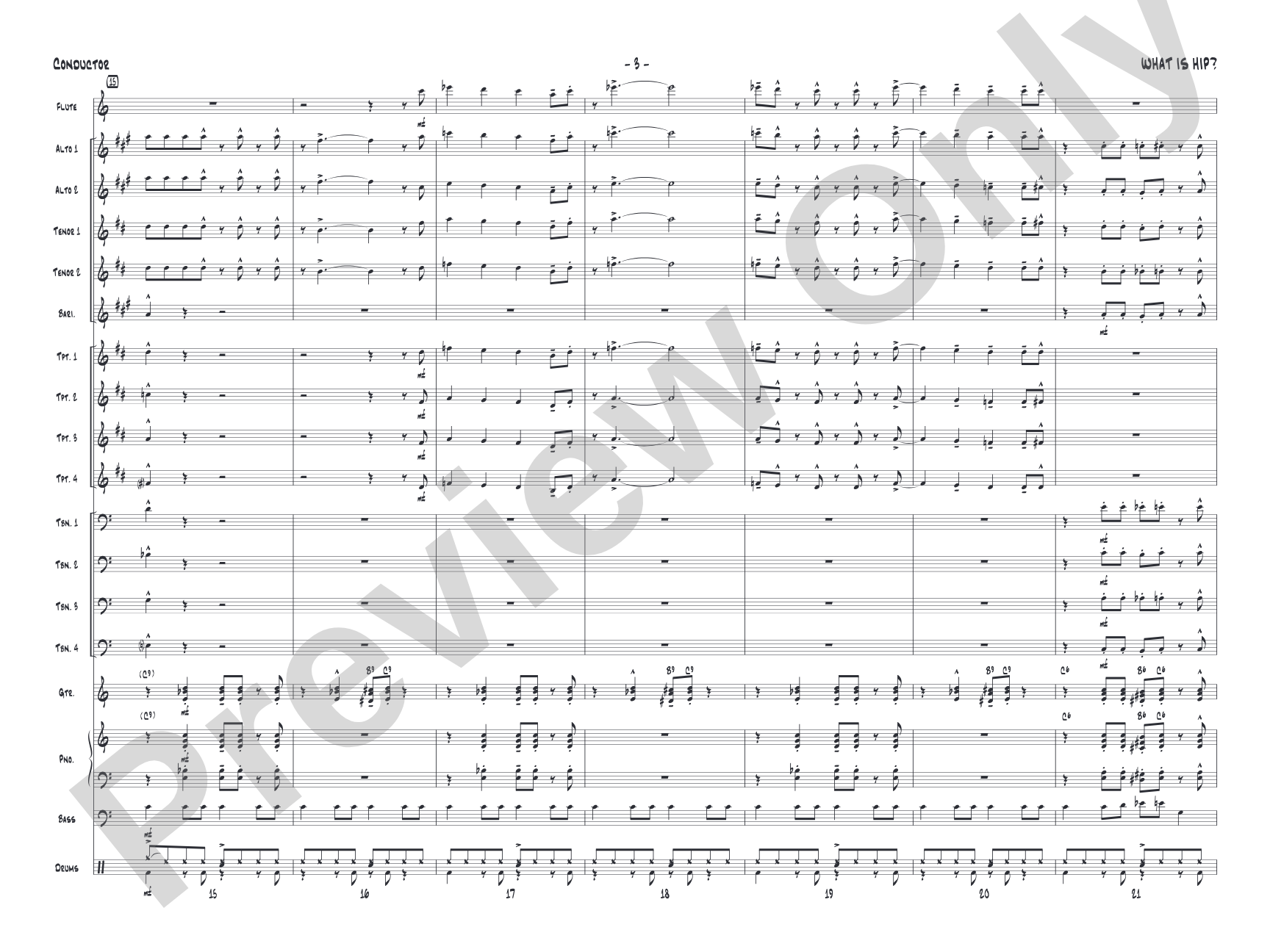
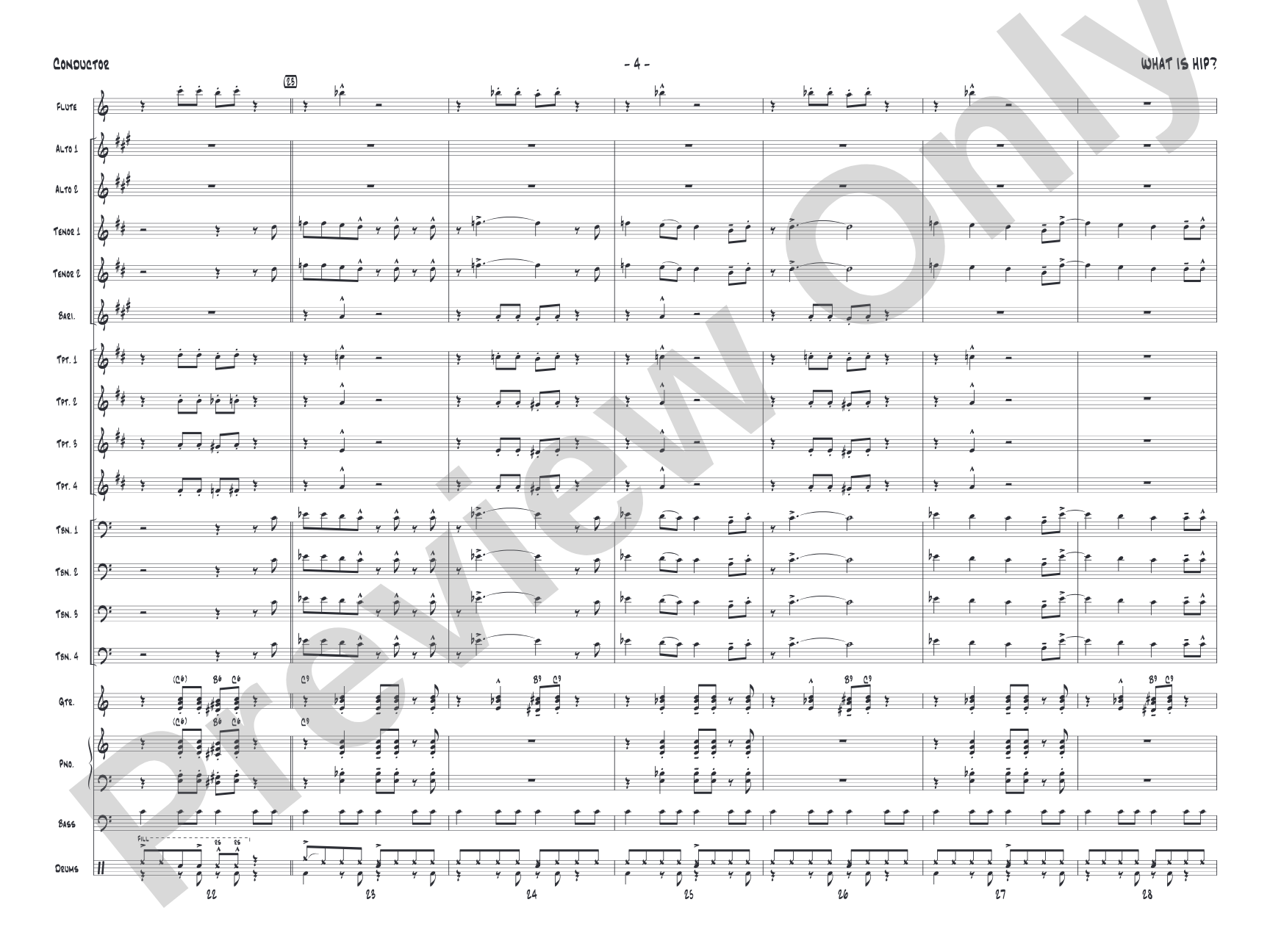
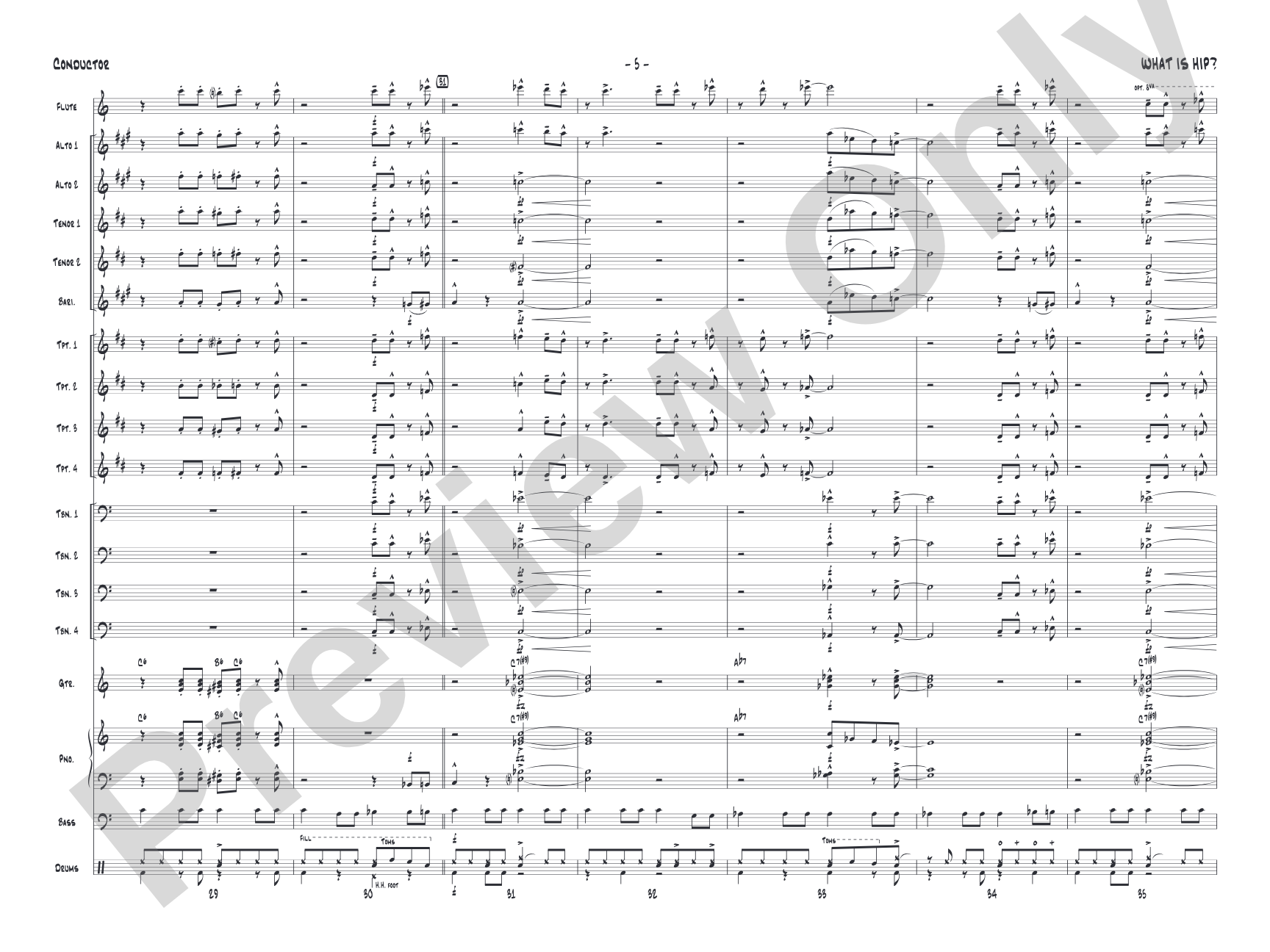
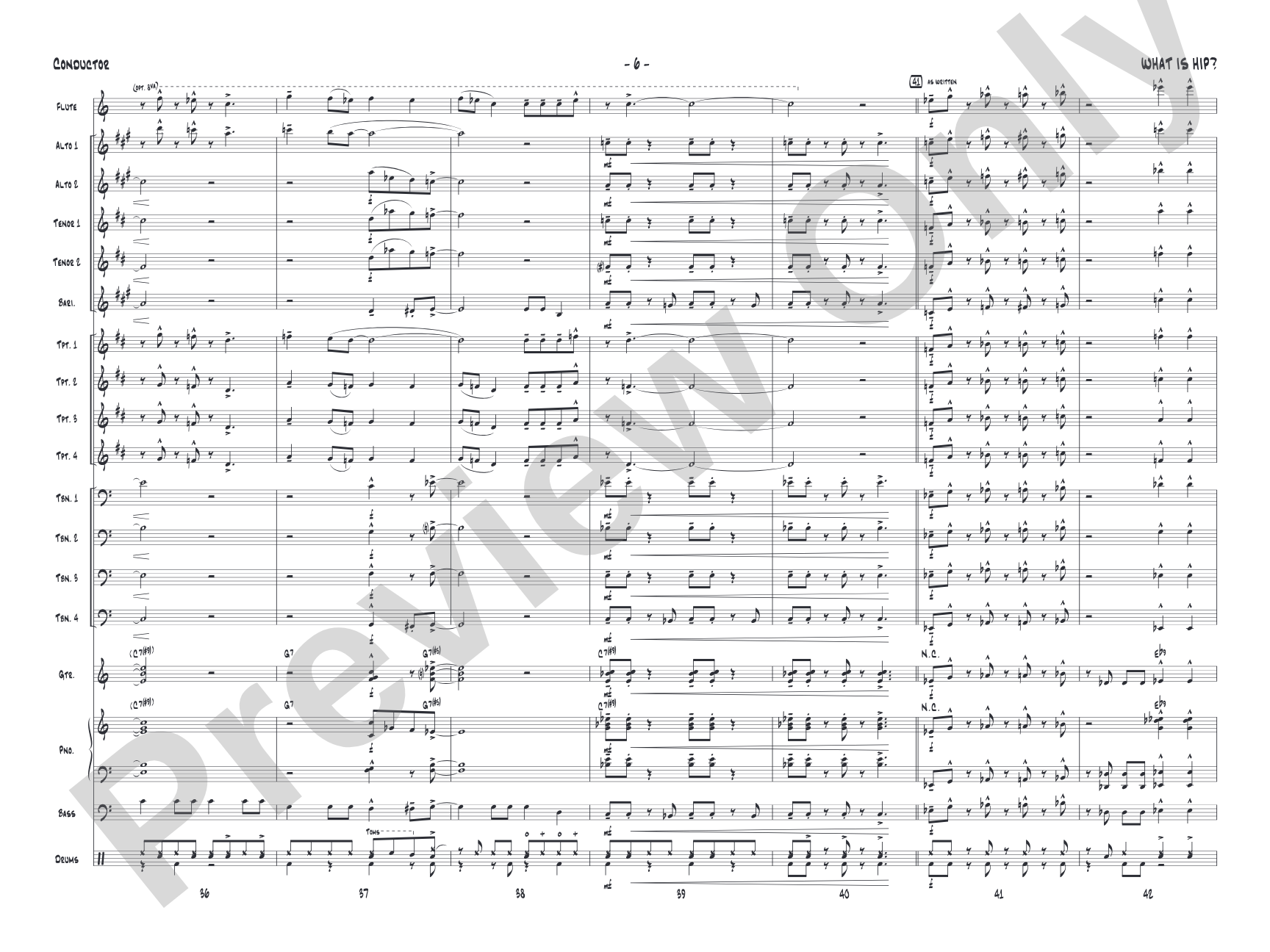
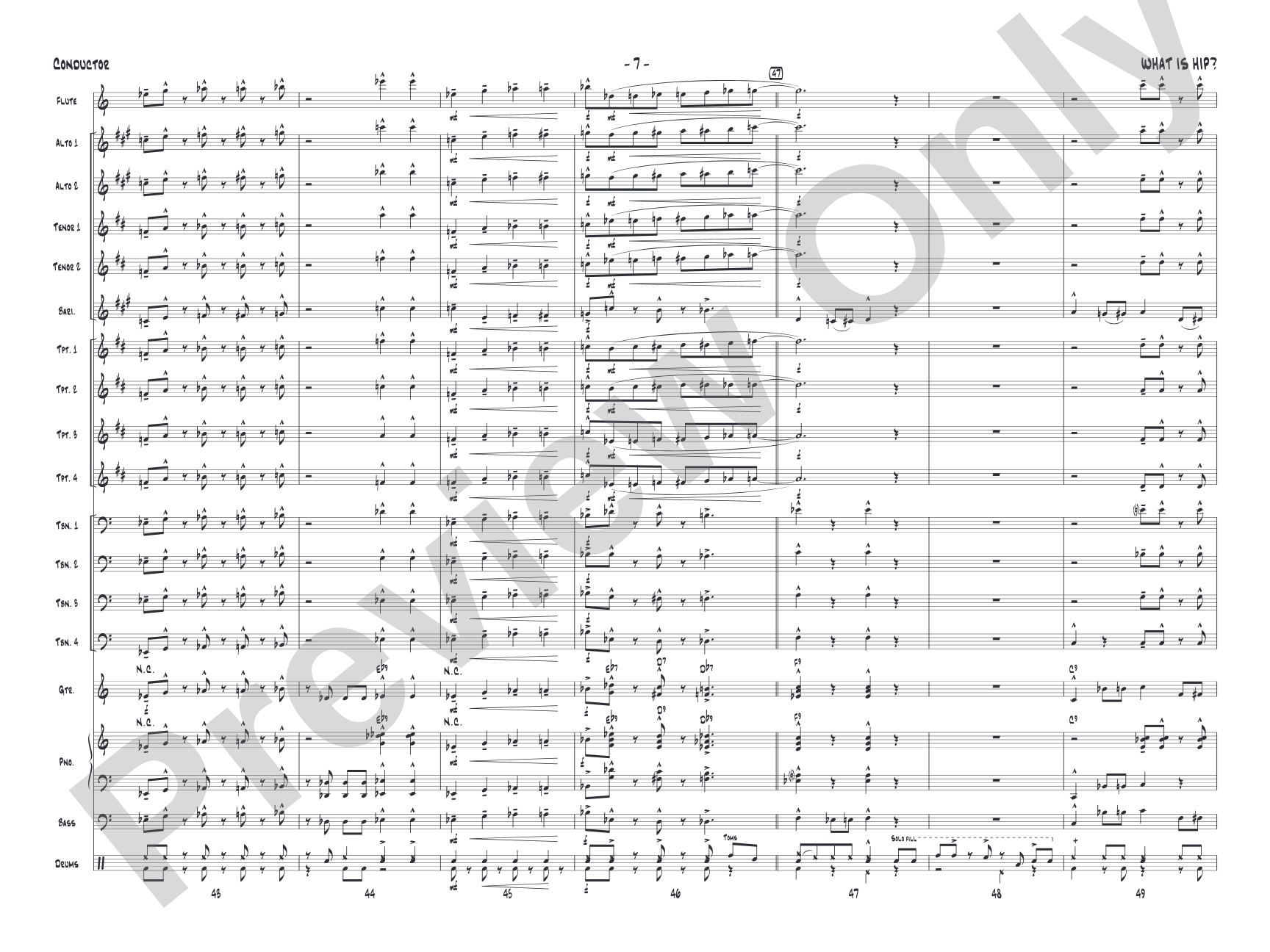
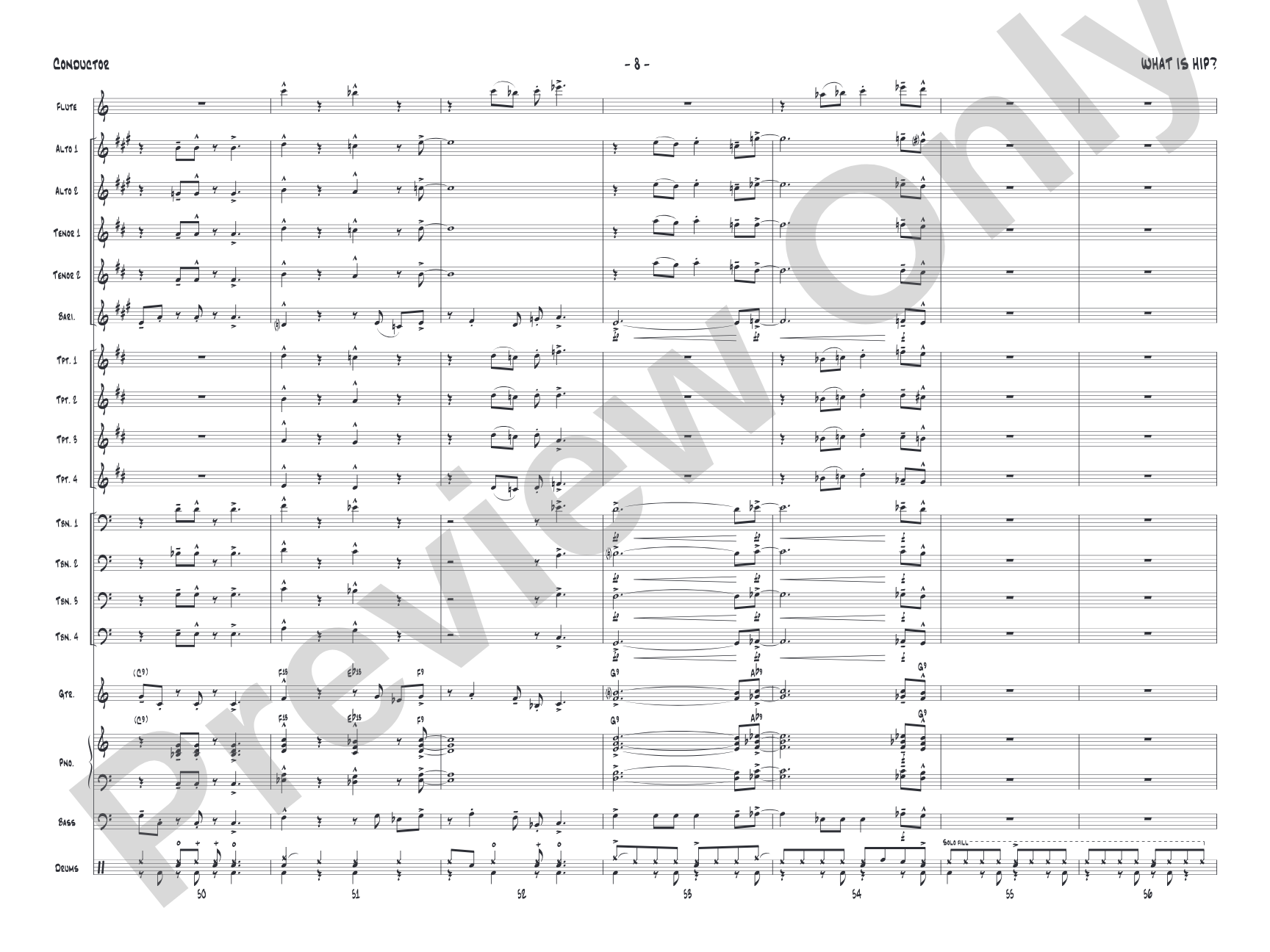
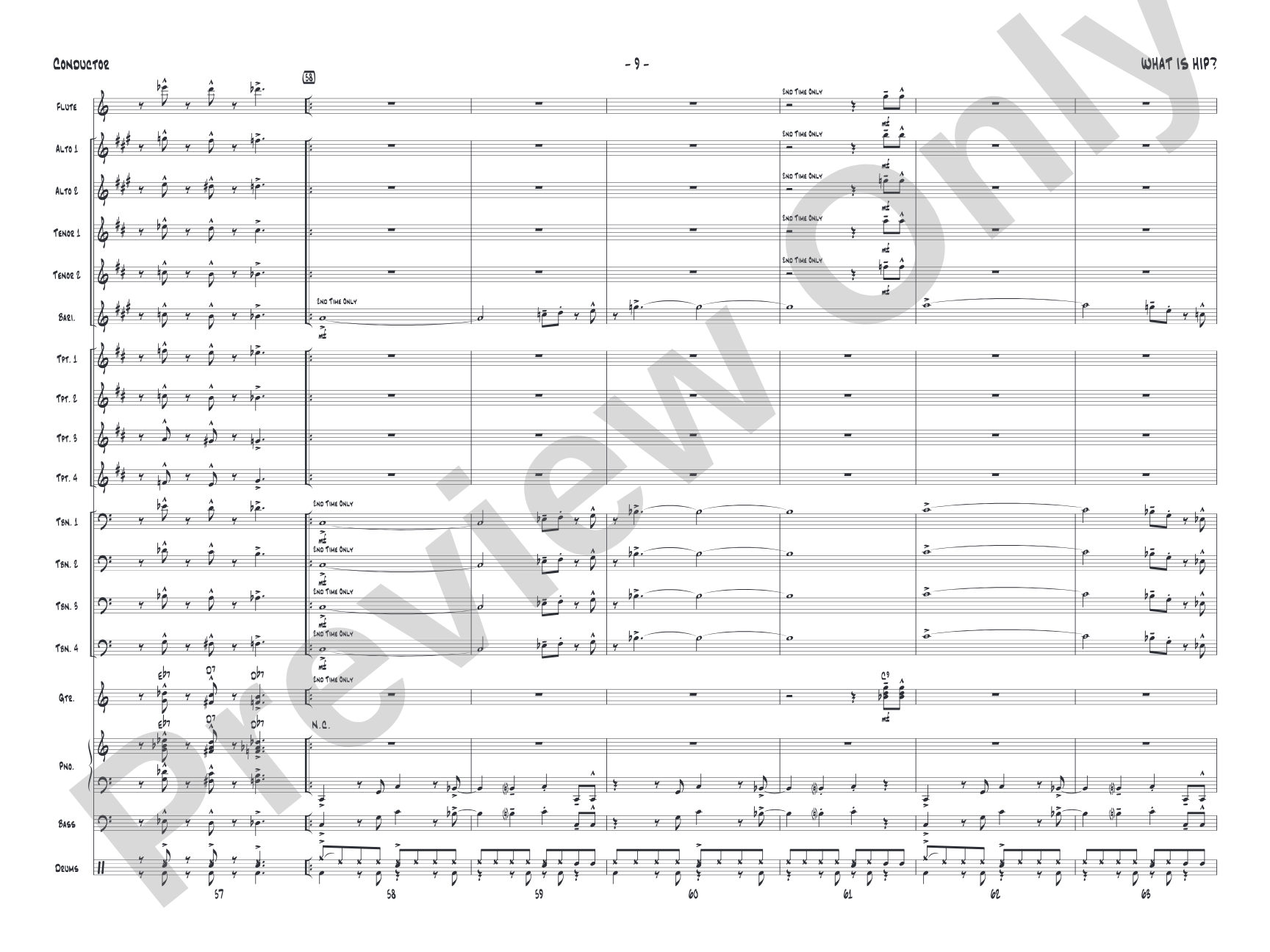
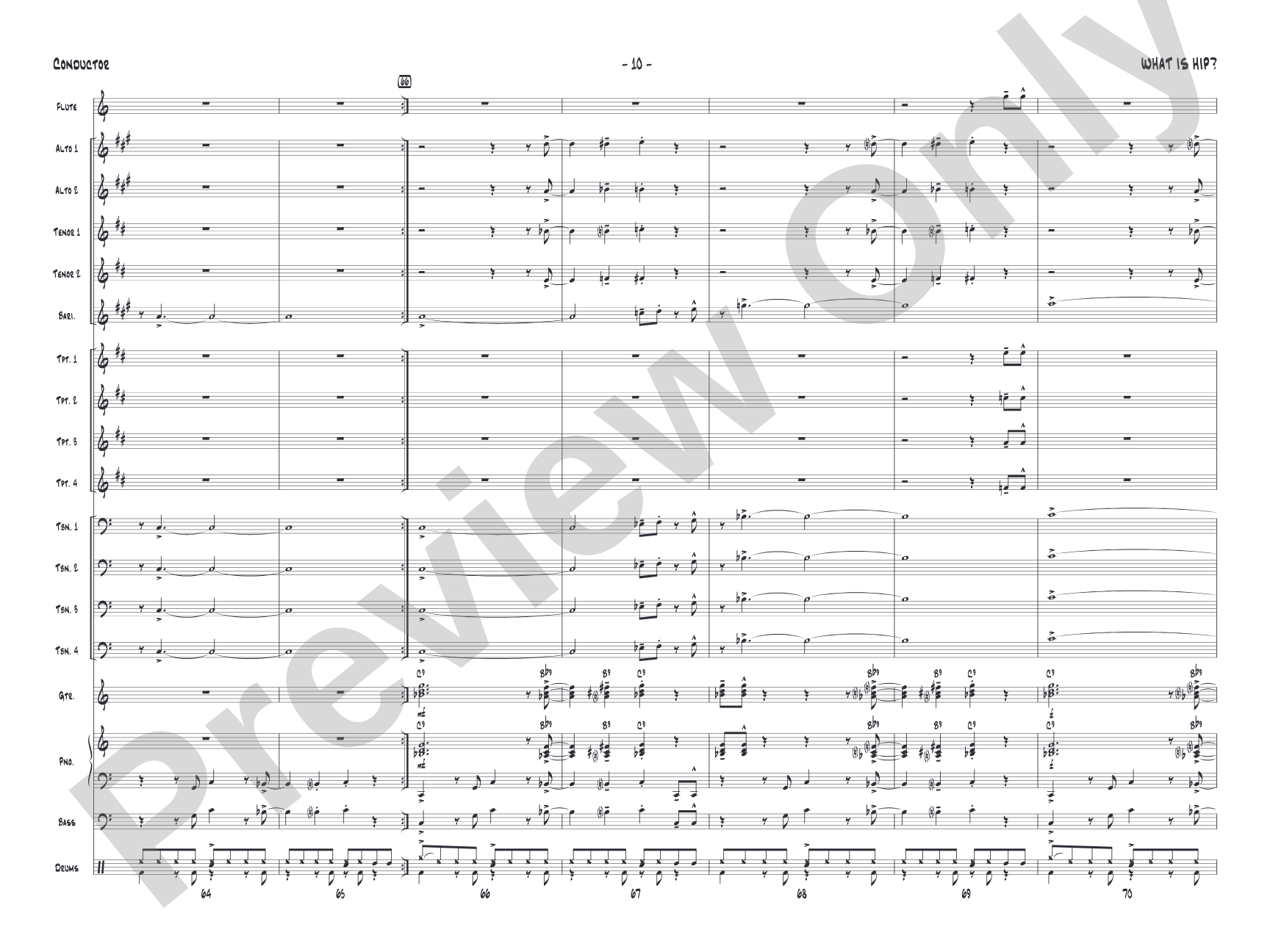
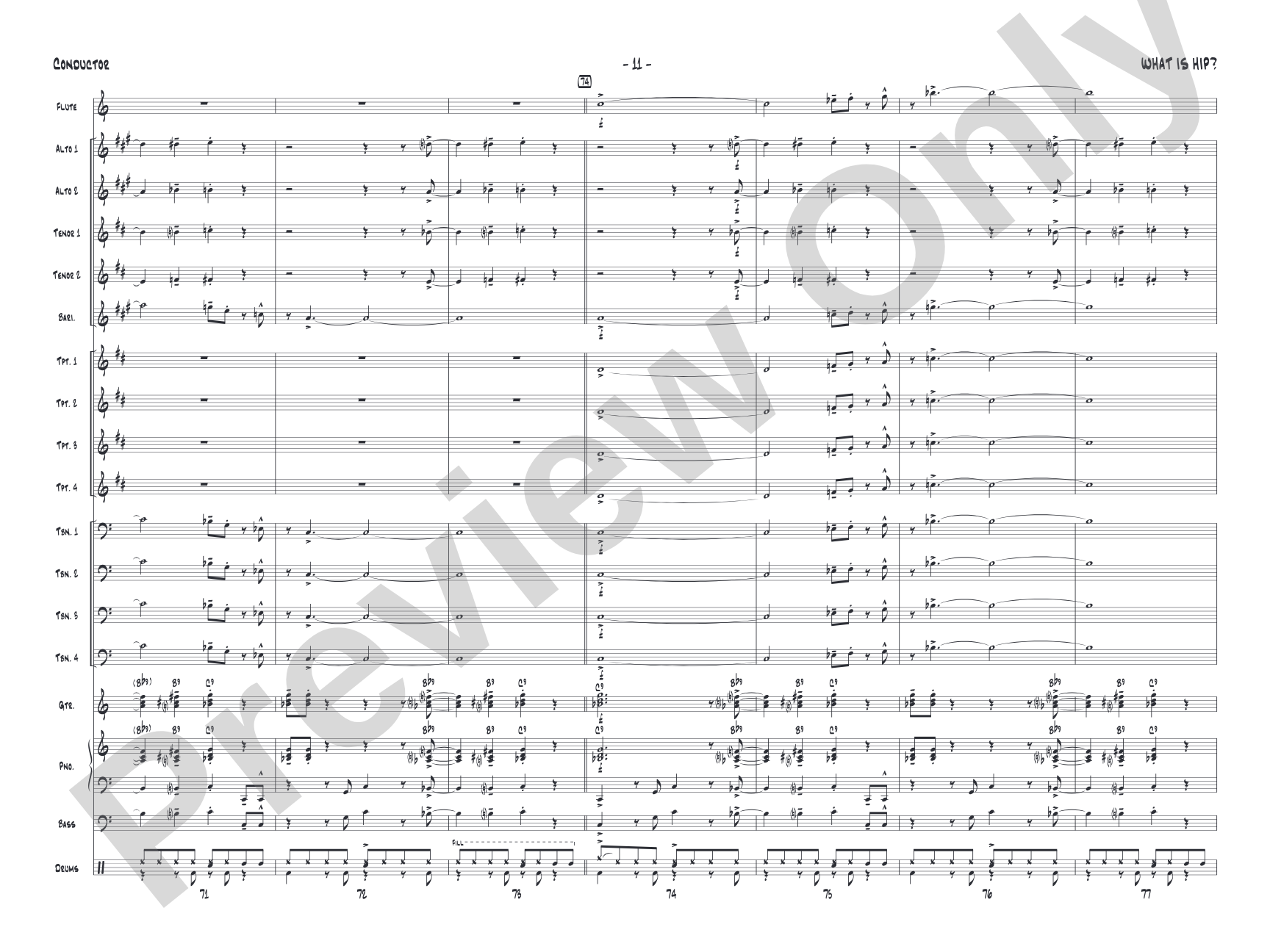
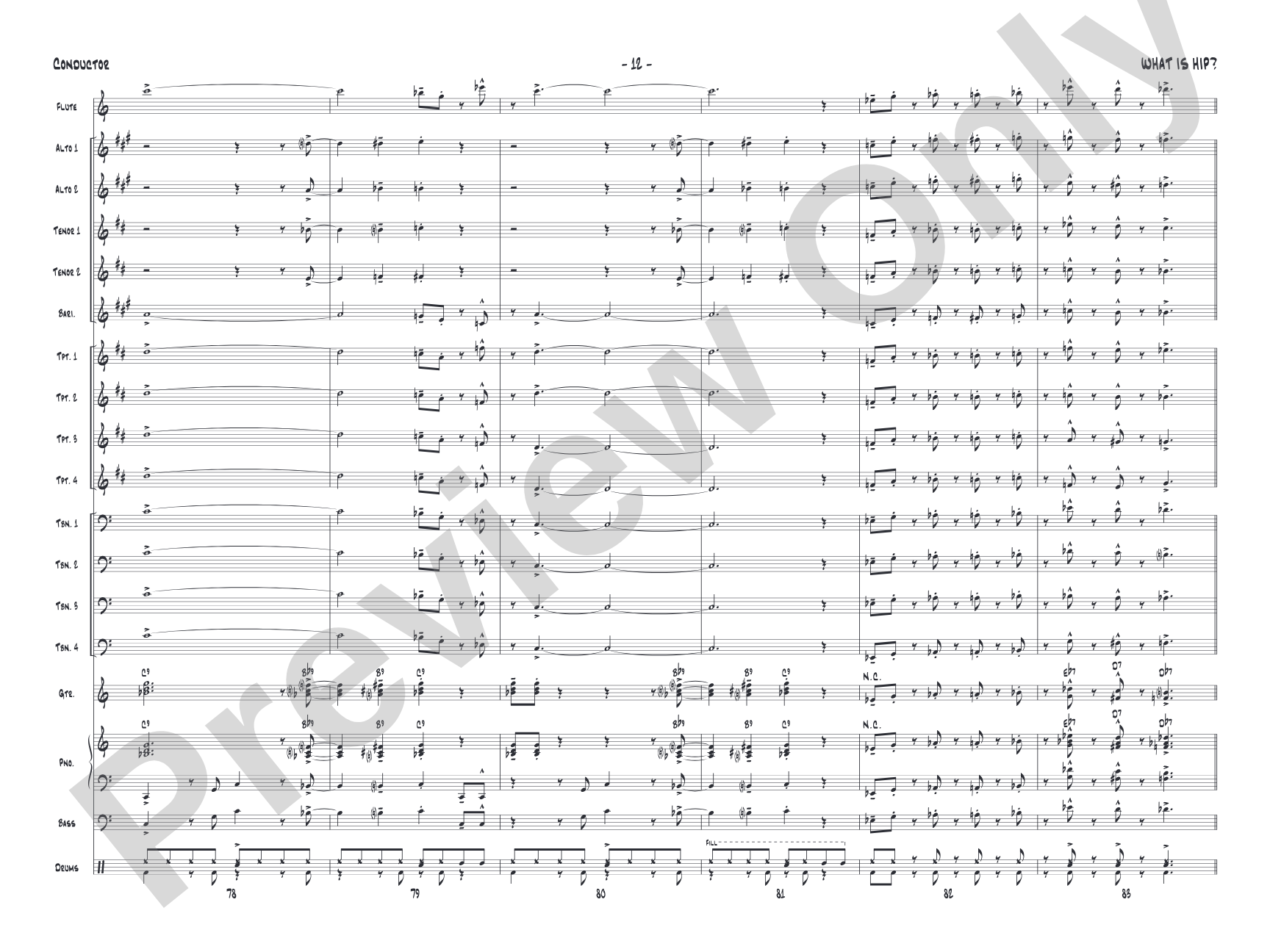
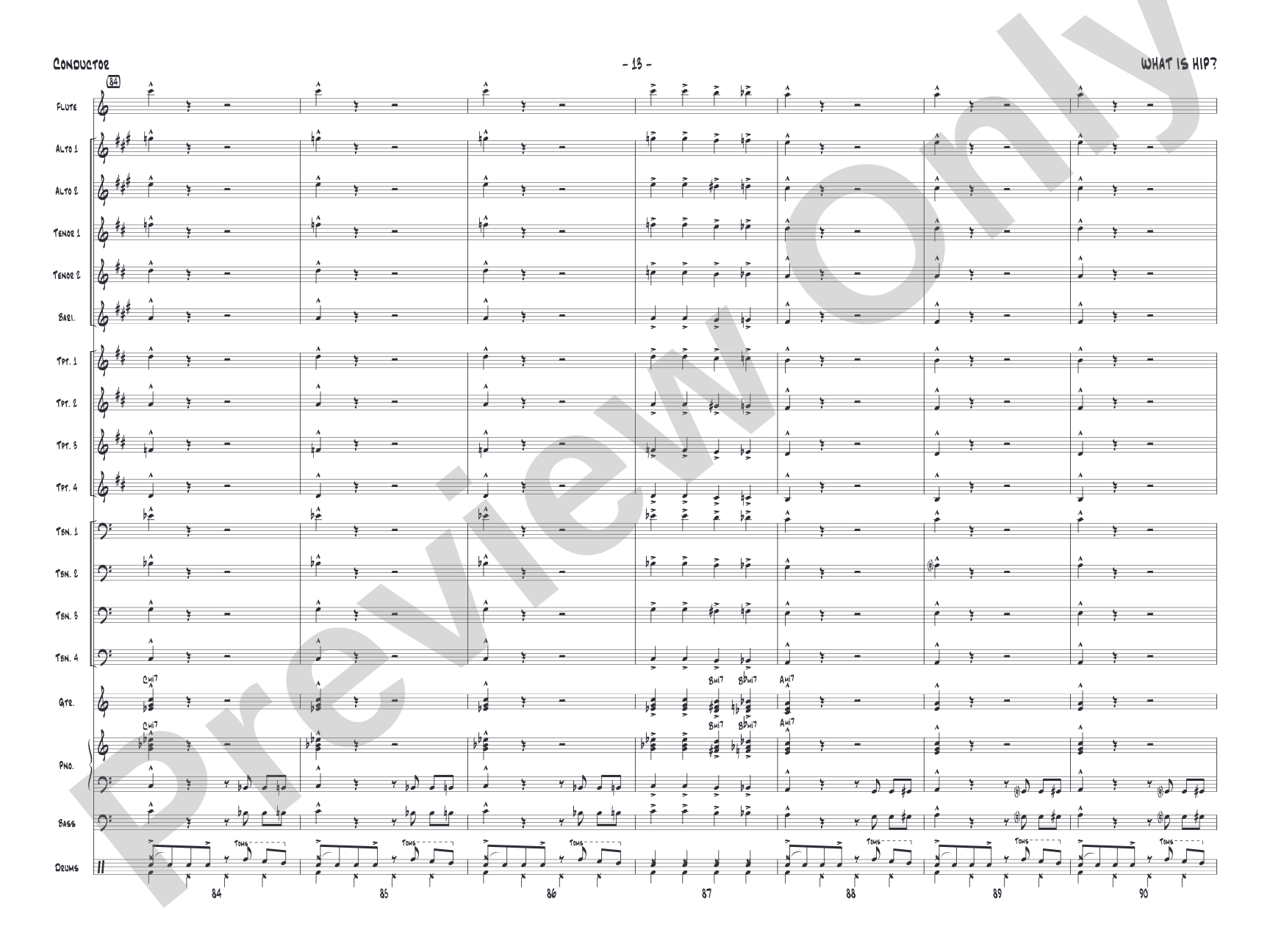
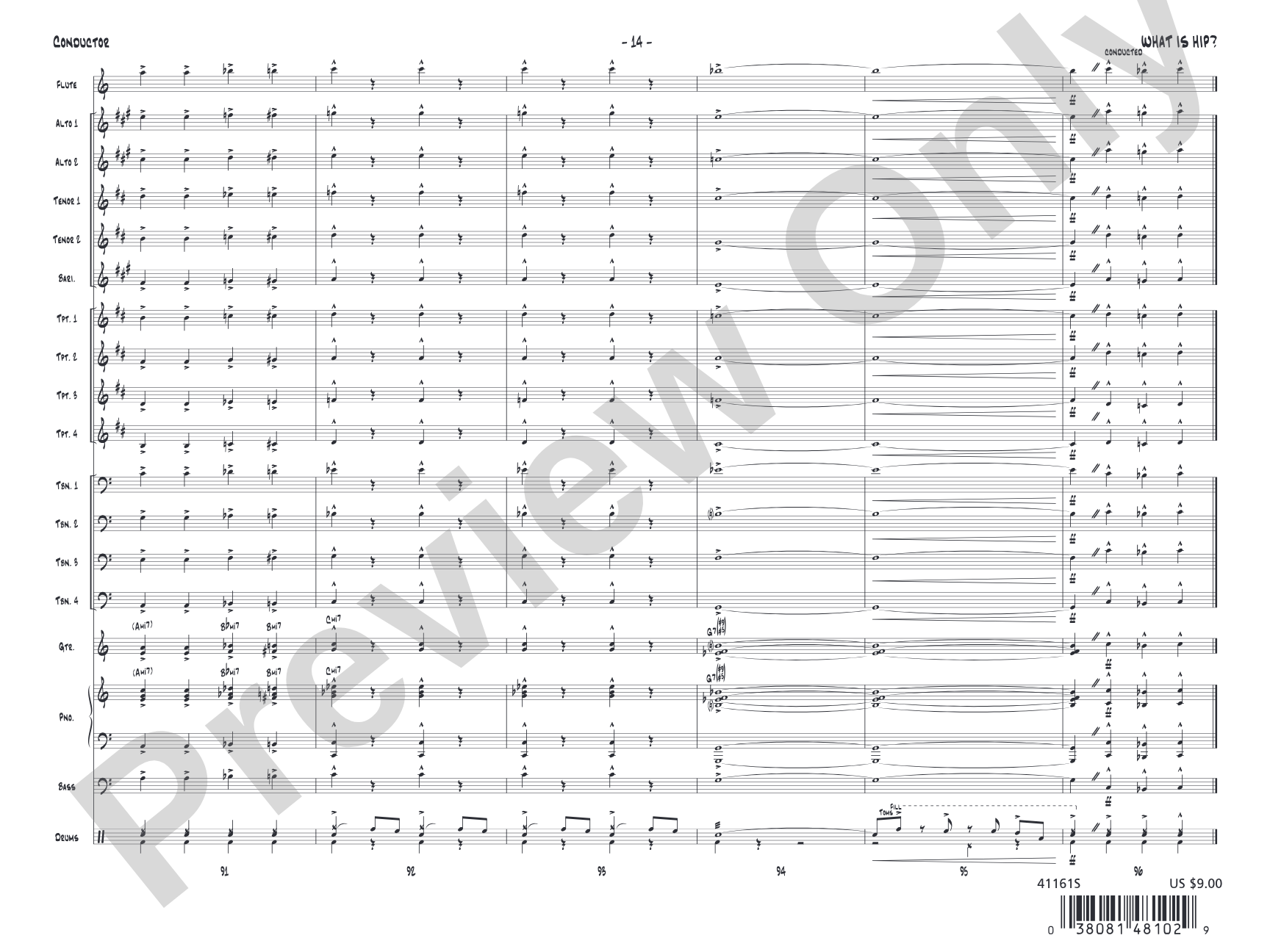

What Is Hip: Jazz Ensemble Conductor Score & Parts
Words and music by Emilio Castillo, Stephen Kupka, and David Garibaldi / arr. Victor López
Grade: 2 (Medium Easy)
Item: 00-PK-0006034

$48.00
Pickup currently not available
Buy Extra Parts (Digital PDF Download)
| Product | Price | Quantity |
|---|---|---|
| What Is Hip: Score | $9.00 | |
| What Is Hip: E-flat Alto Saxophone | $3.00 | |
| What Is Hip: 2nd E-flat Alto Saxophone | $3.00 | |
| What Is Hip: B-flat Tenor Saxophone | $3.00 | |
| What Is Hip: 2nd B-flat Tenor Saxophone | $3.00 | |
| What Is Hip: E-flat Baritone Saxophone | $3.00 | |
| What Is Hip: 1st B-flat Trumpet | $3.00 | |
| What Is Hip: 2nd B-flat Trumpet | $3.00 | |
| What Is Hip: 3rd B-flat Trumpet | $3.00 | |
| What Is Hip: 4th B-flat Trumpet | $3.00 | |
| What Is Hip: 1st Trombone | $3.00 | |
| What Is Hip: 2nd Trombone | $3.00 | |
| What Is Hip: 3rd Trombone | $3.00 | |
| What Is Hip: 4th Trombone | $3.00 | |
| What Is Hip: Guitar Chords | $3.00 | |
| What Is Hip: Guitar | $3.00 | |
| What Is Hip: Piano Accompaniment | $3.00 | |
| What Is Hip: String Bass | $3.00 | |
| What Is Hip: Drums | $3.00 | |
| What Is Hip: Flute | $3.00 | |
| What Is Hip: 1st B-flat Clarinet | $3.00 | |
| What Is Hip: 1st F Horn | $3.00 | |
| What Is Hip: Tuba | $3.00 | |
| What Is Hip: Baritone T.C. | $3.00 | |
| What Is Hip: 2nd Baritone T.C. | $3.00 | |
| What Is Hip: Vibraphone | $3.00 | |
| What Is Hip: Auxiliary Percussion | $3.00 |
Parts Added to Cart!
Description
If you are looking for easy yet hip, this is it. A funky Tower of Power hit, this chart is accessible at 166 BPM with no solos and trumpet 1 range is to F top line. Fun to play. (2:35)


Don't just read it, hear it, play along with it, and watch your students grow with it. In MakeMusic Cloud, What Is Hip: Jazz Ensemble Conductor Score & Parts comes alive with professional accompaniment, adjustable tempo, and built-in practice tools that turn solo practice into real progress.
Open in the Player
Jump straight in and assign it today.
Start Your Free Trial
Open this title and explore the full library in minutes.
Sample Audio
1
Audio File
--:--
0:00
0:00
Sample Video
No sample videos found.
Additional Details
Series:
Young Jazz Ensemble
Publisher:
Alfred Music
Page Count:
102
SKU:
00-PK-0006034
More about this title
About the Composer: Emilio Castillo
Emilio Castillo cofounded Tower of Power in 1968 and has served as the band's primary composer and saxophonist for over five decades. His writing blends tight horn arrangements with infectious funk grooves, creating some of the most durable party and radio hits in soul and R&B history. "What Is Hip" stands as one of his signature compositions, instantly recognizable for its syncopated horn lines and irresistible pocket.
Why we love this
Victor López's arrangement strips away nothing essential from the original's swagger while keeping the parts accessible for younger ensembles. The funky pocket is immediate and felt by every section, so students experience how an ensemble locks together through groove rather than complexity. At Grade 2 with no solos to cover, this chart lets everyone contribute to the vibe from measure one.
What to expect
This chart swaggers. Every section gets a moment to feel the bounce, and the no-solo format means nobody gets left out of the fun. The 2:35 length keeps the energy high without wearing out a younger group.
Who it's for
Jazz ensembles at the Grade 2 level, particularly those building confidence in reading jazz notation and playing together as a section. This works equally well for high school jazz 2 bands or strong middle school groups seeking repertoire that sounds professional without requiring advanced technique.
How to get the most out of it
- Establish a steady pocket from the rhythm section. Lock the bass and drums into the groove before layering horns; the chart's fun factor depends on this foundation.
- Balance the horn voicings so no single section dominates. The strength lies in how saxophone and trumpet lines weave together, not in volume.
- Keep the tempo at 166 BPM consistent and relaxed. Rushing this chart kills the laid-back funk feel.
How to use it
Program this as an opener on a jazz concert or as part of a funk-and-soul-themed set with other accessible grooves. It works as a morale booster mid-rehearsal when focus is dipping, and audiences consistently respond to the familiarity and joy.
Skills your students will build
- Reading jazz notation and syncopated rhythms in ensemble context
- Playing with pocket and feel rather than mechanical precision
- Balancing individual voice independence with section blend
- Maintaining steady tempo in funk-oriented grooves