What Do You Do? Sheet Music Preview

What Do You Do?: Piano

By Edwin McLean

Item: 98-DW9388

Digital Download
$2.95
Description
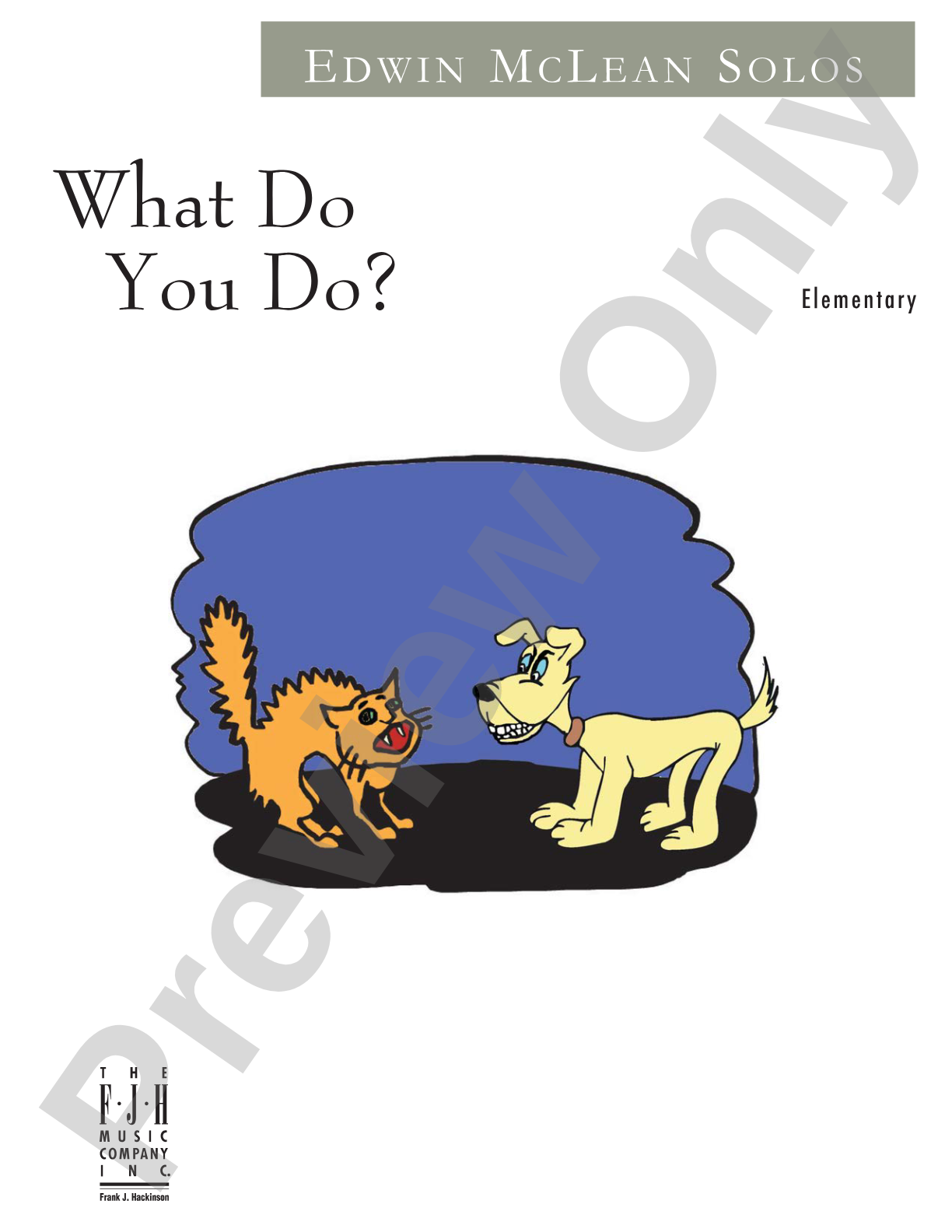
What do you do when your pets have a spat? This piece takes a humorous look at a common situation that kids can relate to with minimal hands together playing in D position and an optional teacher duet part. Uses accidentals in each hand.

What Do You Do?: Piano isn't in MakeMusic Cloud just yet...but it could be. Let us know you'd like to see it, and you'll help shape what comes next. In the meantime, start a free trial and dive into thousands of interactive titles your students can play along with today.

Sample Audio
No sample audio found.
Sample Video
Additional Details
Series: Written For You
Publisher: The FJH Music Company, Inc.
SKU: 98-DW9388

More about this title

Why we love this

This piece captures the chaotic energy of pet squabbles with musical wit. The humorous scenario speaks directly to young pianists' lived experience, making it instantly engaging, while the accessible D position framework keeps technical demands reasonable enough that students can focus on bringing the comedy to life.

What to expect

Lighthearted and mischievous, with moments of playful bickering between the hands. The music bounces along with a sense of fun, painting a picture of pets in a mild disagreement without ever losing its charm.

Who it's for

Elementary pianists working in D position who are ready to add accidentals into their repertoire. This piece works well for students who respond to narrative-driven music and benefit from pieces that spark their imagination and humor.

How to get the most out of it

  • Lean into the comedic timing by giving each phrase space to breathe; resist the urge to rush through moments of conflict between the hands.
  • Exaggerate the accidental notes slightly to highlight them as musical 'surprises' that mirror the pets' bickering.
  • If performing with the optional teacher duet, coordinate with your accompanist to balance clarity in both parts so the melody remains the focal point.
  • Use dynamic contrast to paint the narrative: softer moments for calm, brighter attacks when tension builds.

How to use it

Include this as a recital opener or interlude to set a warm, engaging tone for your audience. Its relatable subject matter and gentle humor make it an excellent choice for studio showcases, school performances, or casual listening events where young performers want to entertain rather than impress.

Skills your students will build

  • Playing in D position with both hands
  • Reading and executing accidentals (sharps and naturals) in melodic context
  • Coordinating hands together with minimal overlap
  • Musical storytelling through dynamic and rhythmic choices
  • Ensemble awareness if performing with the optional teacher duet

You May Also Like