
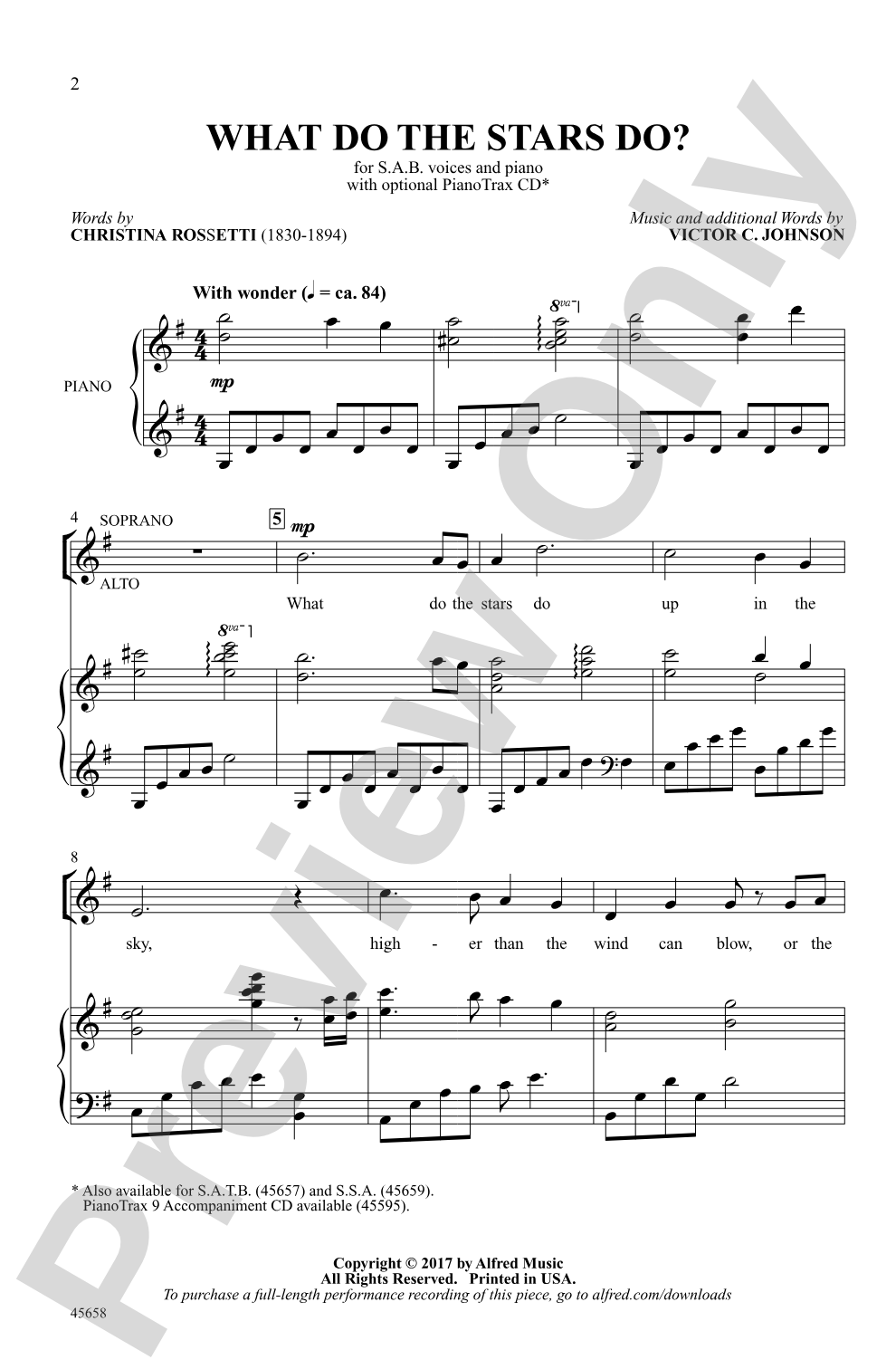

What Do the Stars Do?: SAB Choral Octavo
Words by Christina Rossetti, music and additional words by Victor C. Johnson
Item: 00-PO-0005537
$2.05
Minimum order quantity: 20 copies
Pickup currently not available
Description
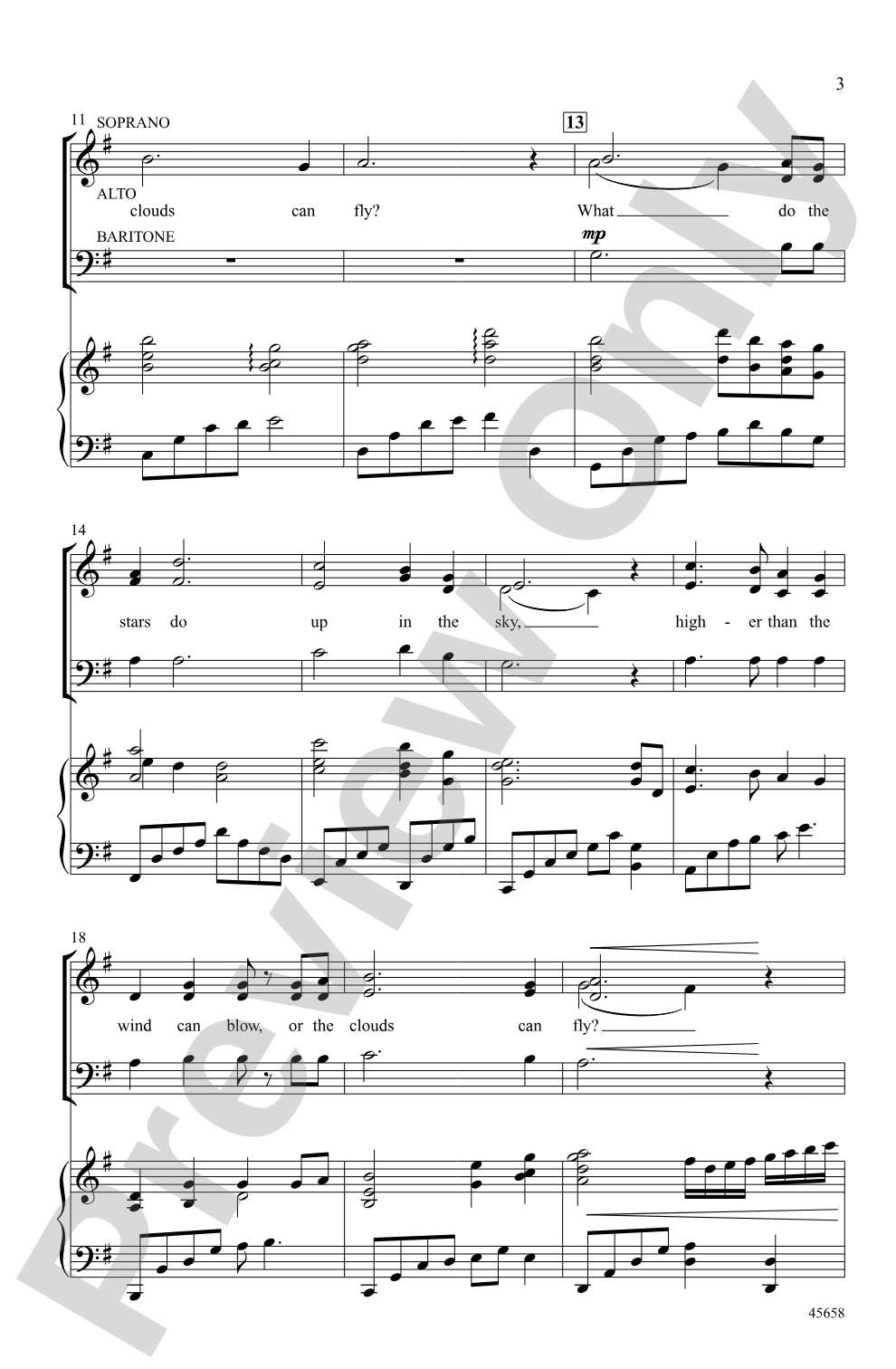
A delicate piano introduction leads the listener to an elegant setting of Christina Rossetti's inquisitive poem. Well-conceived voice leading makes the fully realized choral harmony beautifully singable, and each voice part gets a turn with the celestial melody. Text painting, lyrical lines, warm suspensions, emotional range---it's all here, ready to amaze audiences and adjudicators.


What Do the Stars Do?: SAB Choral Octavo isn't in MakeMusic Cloud just yet...but it could be. Let us know you'd like to see it, and you'll help shape what comes next. In the meantime, start a free trial and dive into thousands of interactive titles your students can play along with today.
Request This Title
Tell us you want it.
Start Your Free Trial
Explore everything that's ready to play right now.
Sample Audio
1
Audio File
--:--
0:00
0:00
Sample Video
No sample videos found.
Additional Details
Series:
Alfred Choral Designs
Publisher:
Alfred Music
Page Count:
8
SKU:
00-PO-0005537
More about this title
About the Composer: Victor Johnson
Victor Johnson has established himself as a composer whose choral writing prioritizes singability without sacrificing sophistication. His works for treble, mixed, and men's voices appear regularly in concert and festival settings, earning recognition for their lyrical sensibility and careful voice leading.
Why we love this
Victor Johnson's ear for singable voice leading shines throughout this piece. Each part gets genuine melodic interest rather than relegated harmonic filler, which keeps singers engaged and audiences captivated. The text painting and emotional arc prove that sacred choral writing doesn't require complexity to achieve sophistication.
What to expect
Contemplative yet warm, this setting draws you into Rossetti's wonder about the cosmos. The delicate piano foundation creates space for voices to float without heaviness, while the suspensions add emotional depth that prevents the piece from feeling overly simple. It invites quiet listening rather than theatrical grandstanding.
Who it's for
Treble and lower voice singers with solid intonation and basic musicianship. The fully realized harmony requires secure blend, but the accessible ranges and straightforward rhythms make it approachable for intermediate choirs. This works equally well for community, church, and school ensembles.
How to get the most out of it
- Let the piano introduction establish the intimate, celestial mood before voices enter; resist the urge to rush into the text.
- Emphasize the suspensions to bring out the warm harmonic color; these moments benefit from slight dynamic shaping rather than aggressive articulation.
- Give each voice part time to own the melody when it passes through; alternating sections should sound like different voices in conversation, not identical statements.
- Shape the emotional arc across the full arc of Rossetti's poem; this is a piece that grows in expressive power, not one that stays at a single dynamic.
How to use it
Pair this with other Rossetti settings or poetry-based sacred works for a thematic concert program. It functions beautifully as a transitional moment between larger, more dramatic pieces, or as a closing selection that leaves audiences in reflection rather than celebration.
Skills your students will build
- Balancing lyrical melody with harmonic awareness in SAB voicing
- Interpreting suspensions for expressive effect
- Voice leading clarity when melody passes between parts
- Text painting and poetic interpretation in sacred context
- Blend and intonation in close harmonic writing