
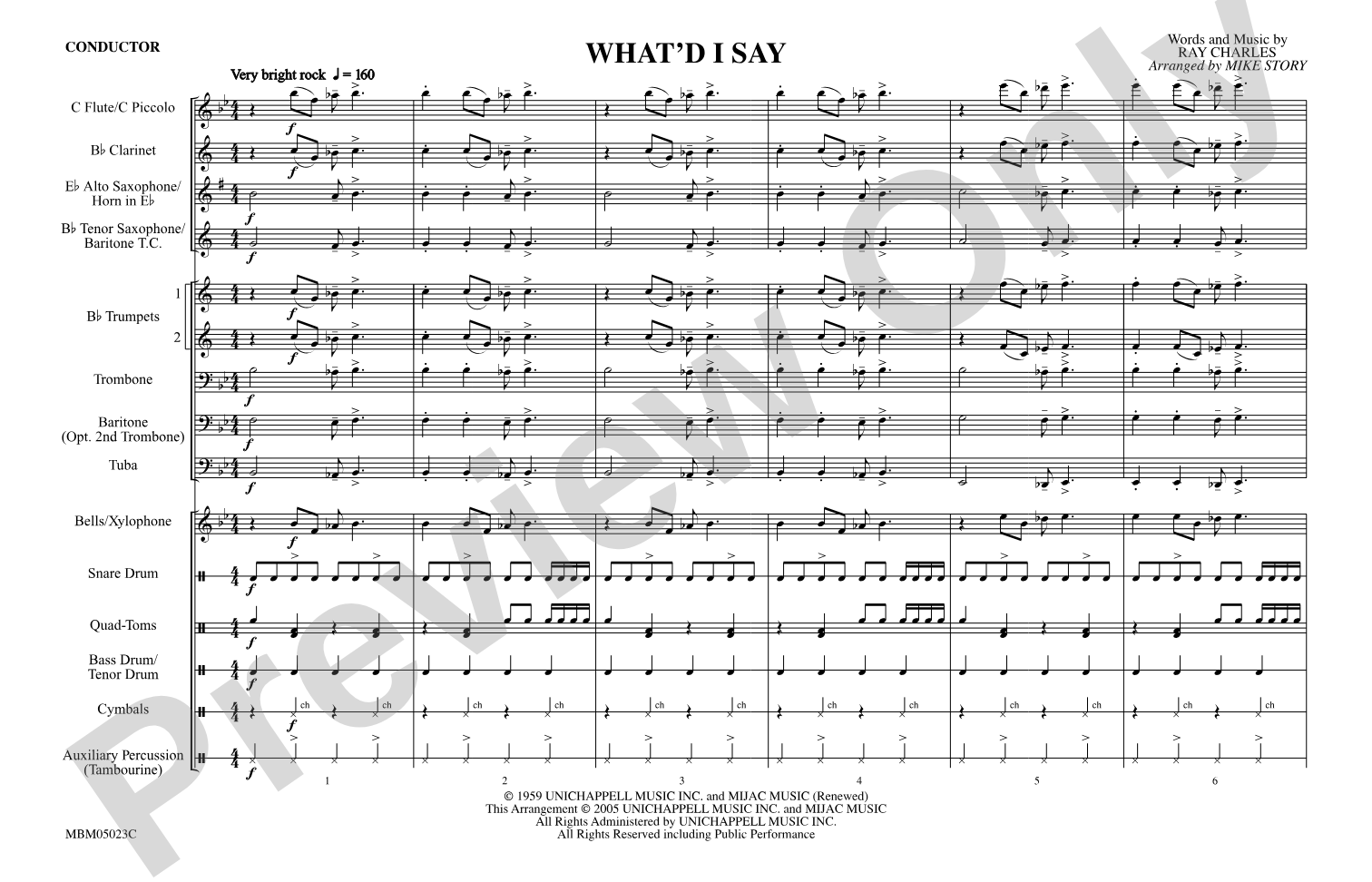
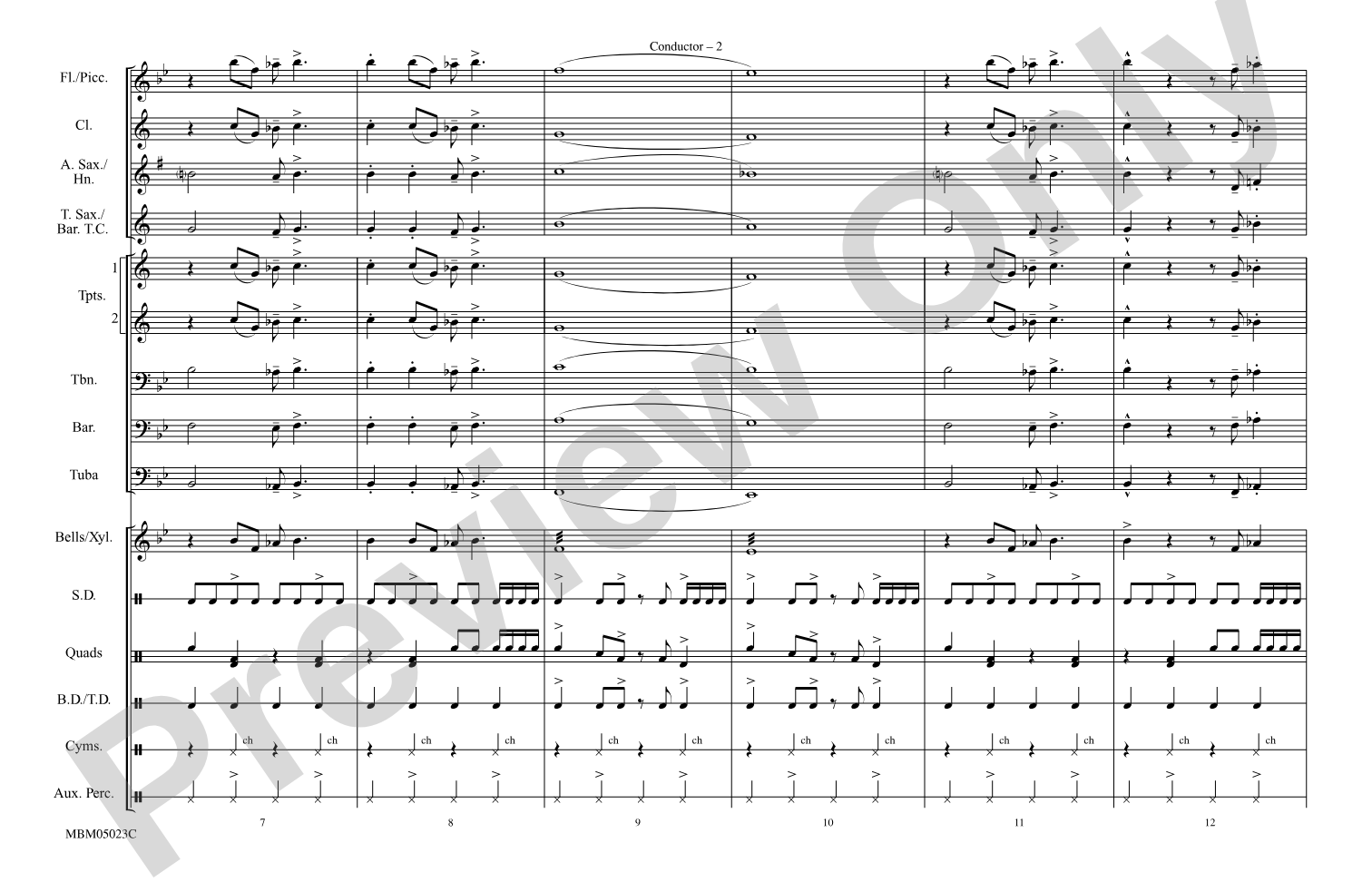
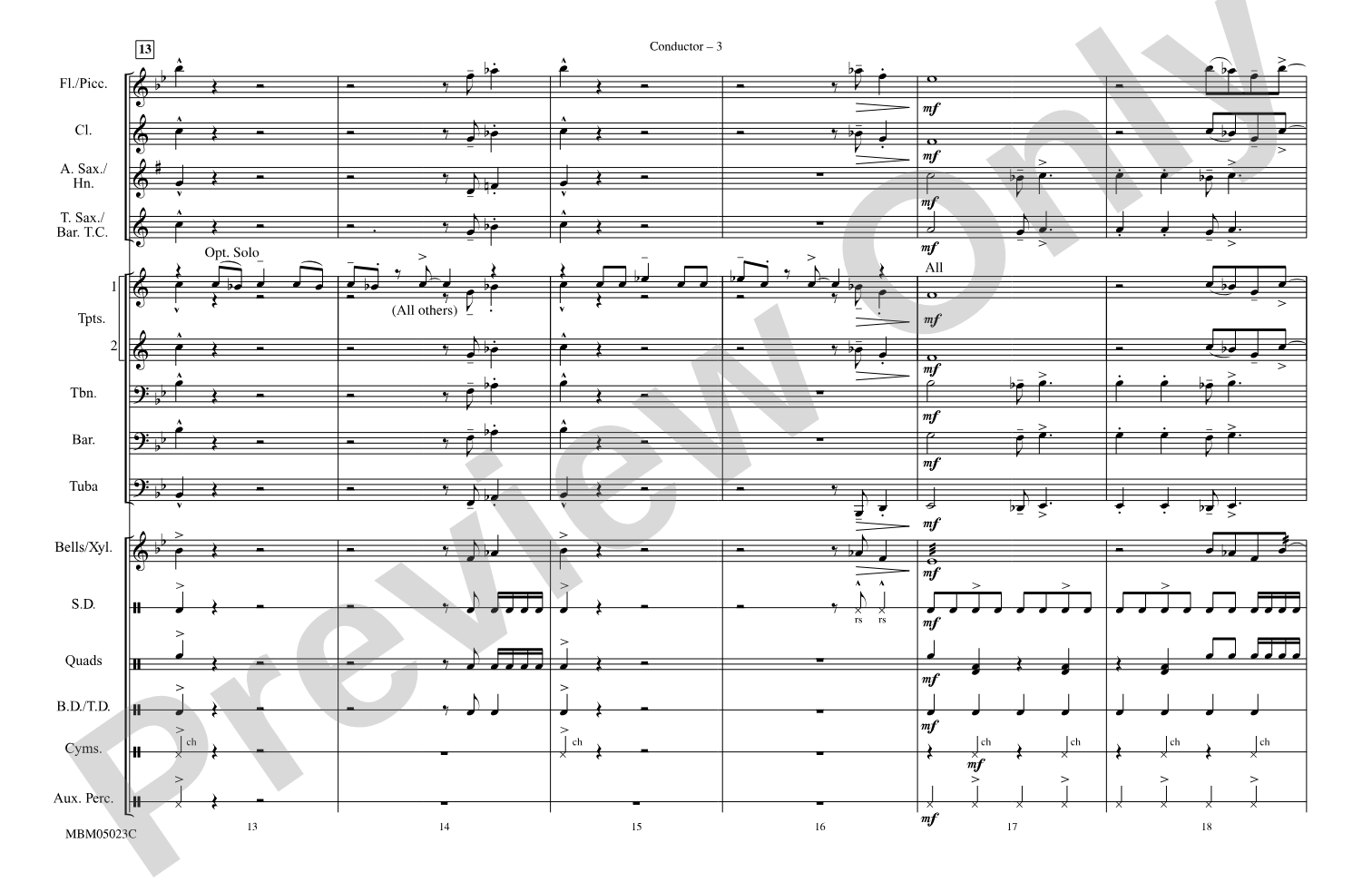
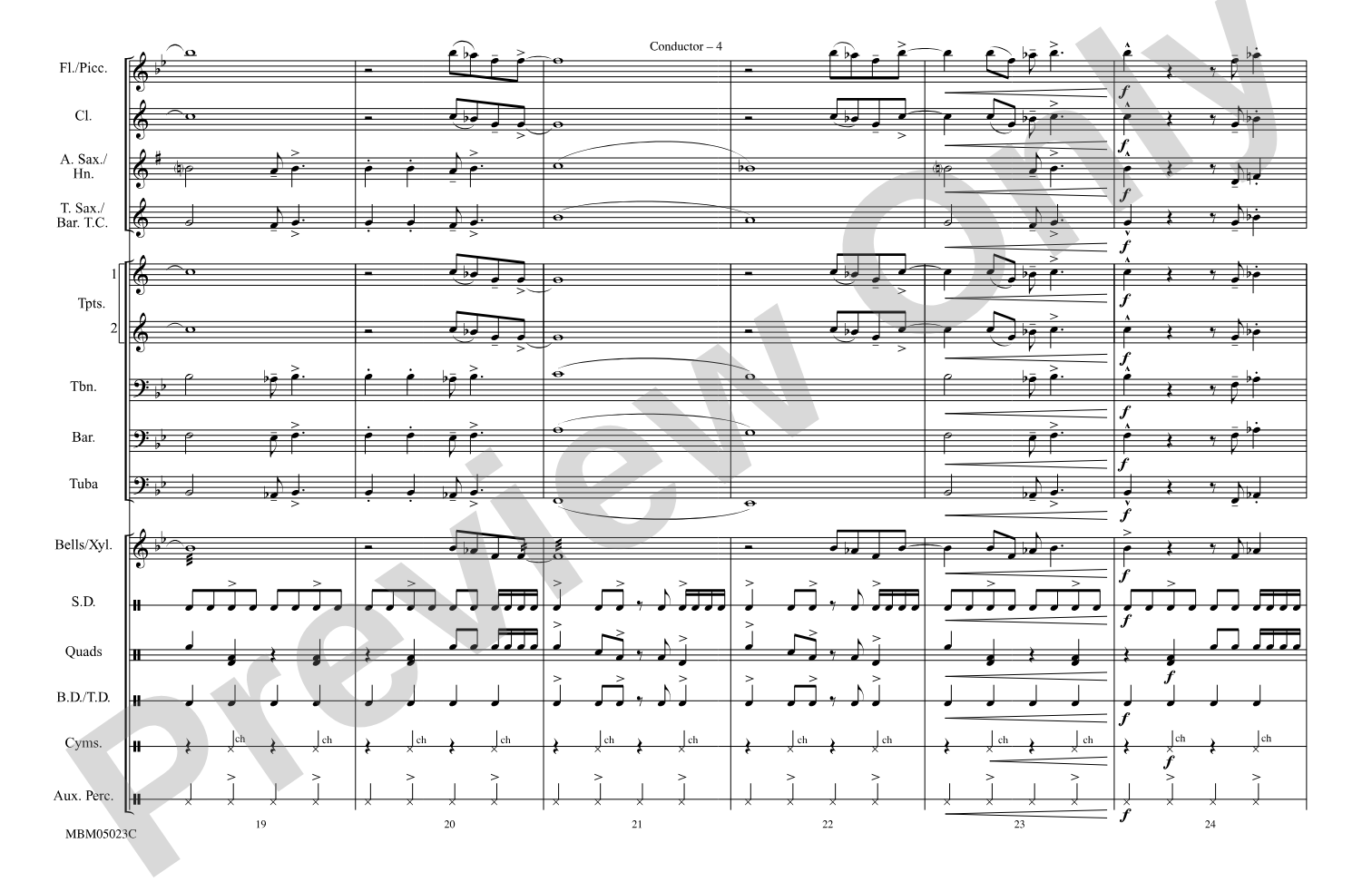
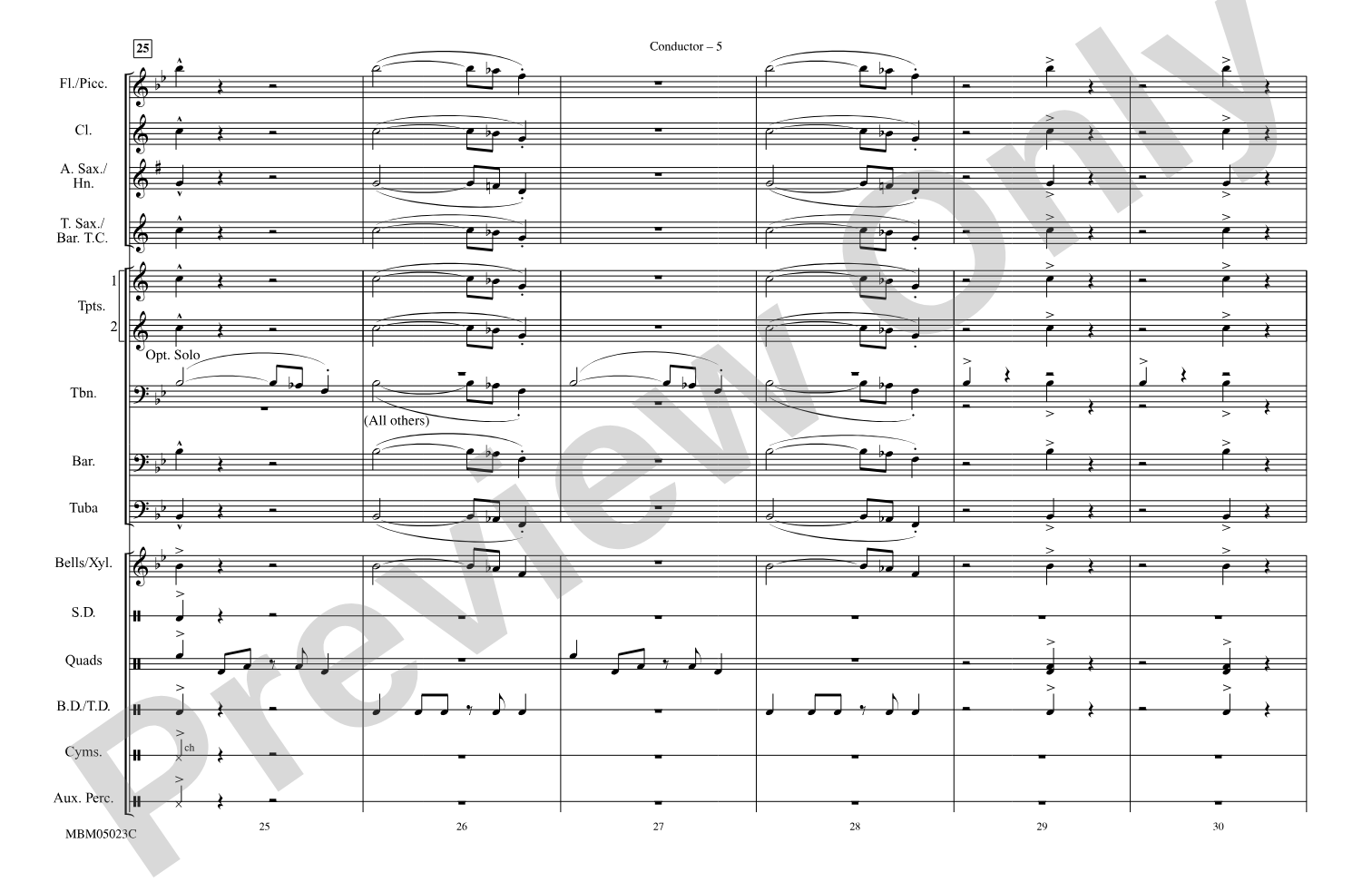
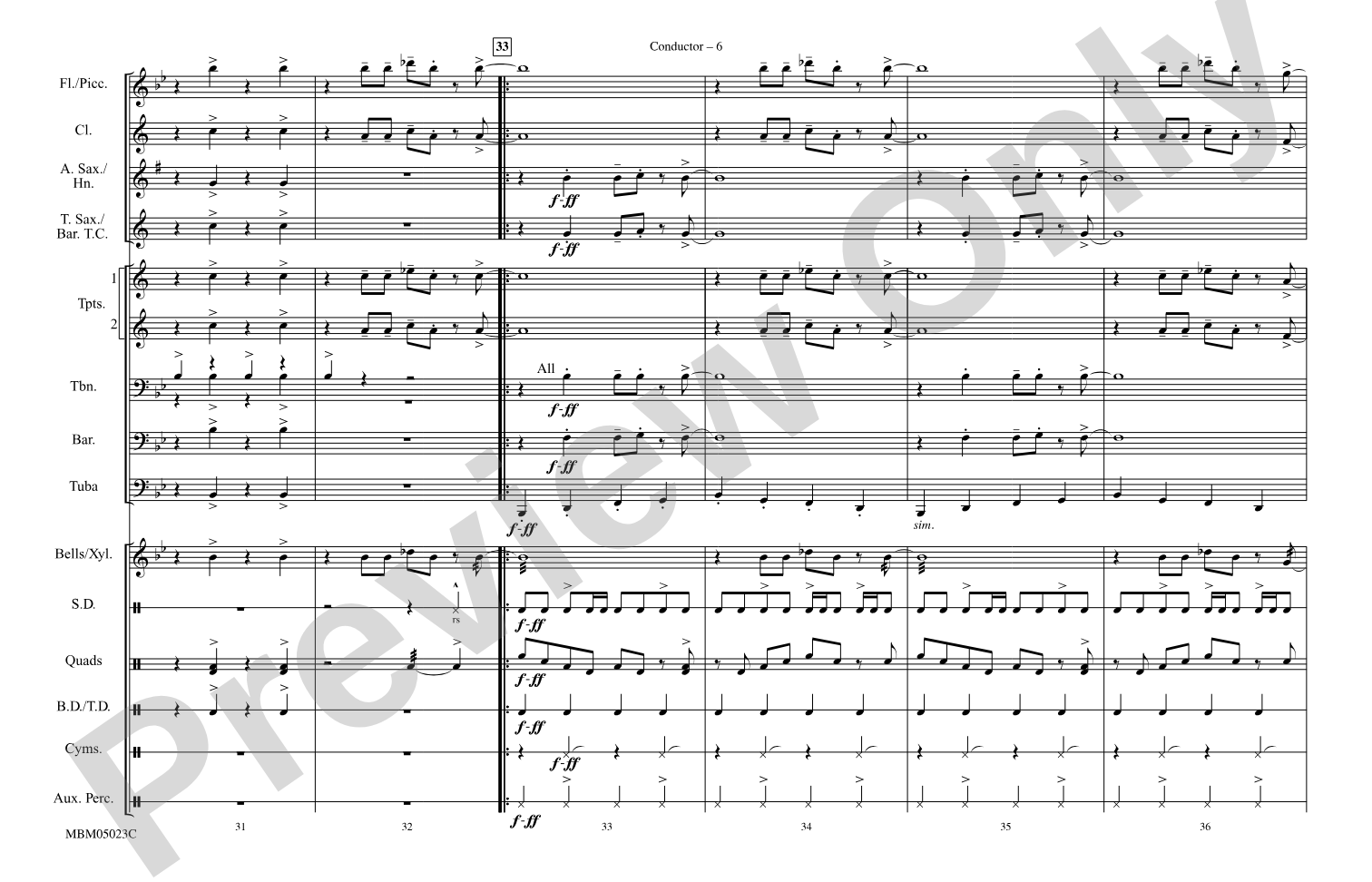
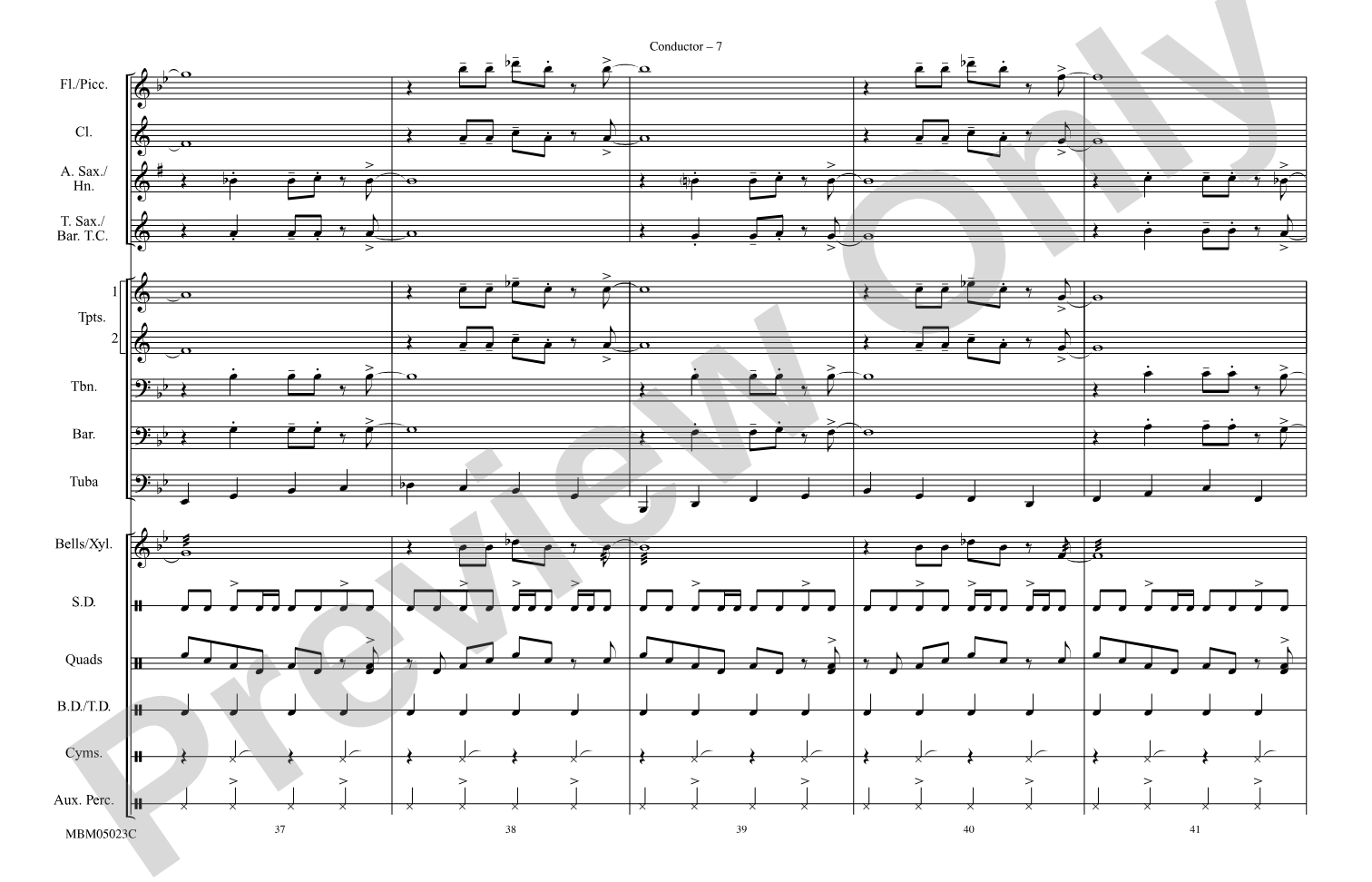
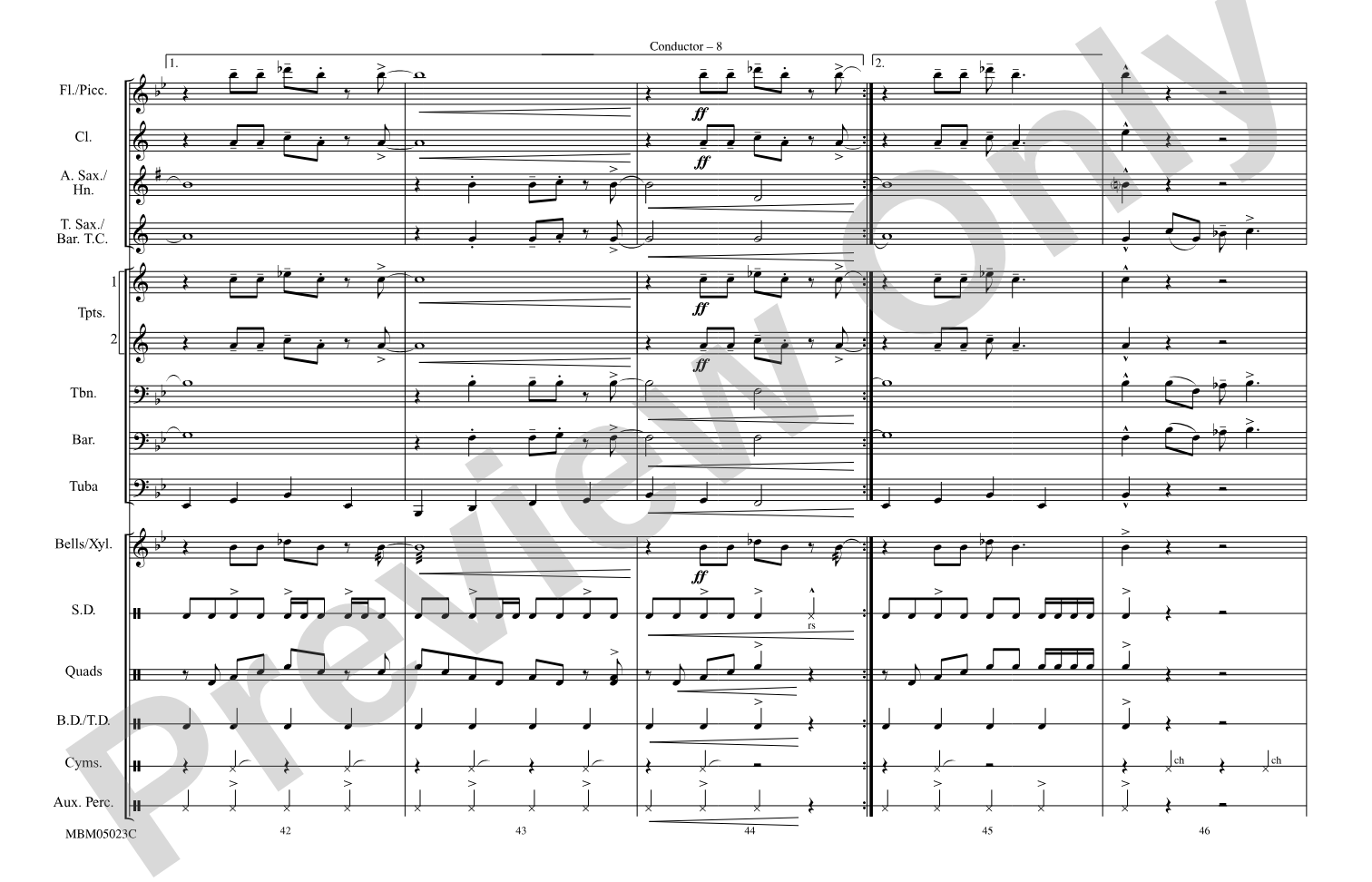
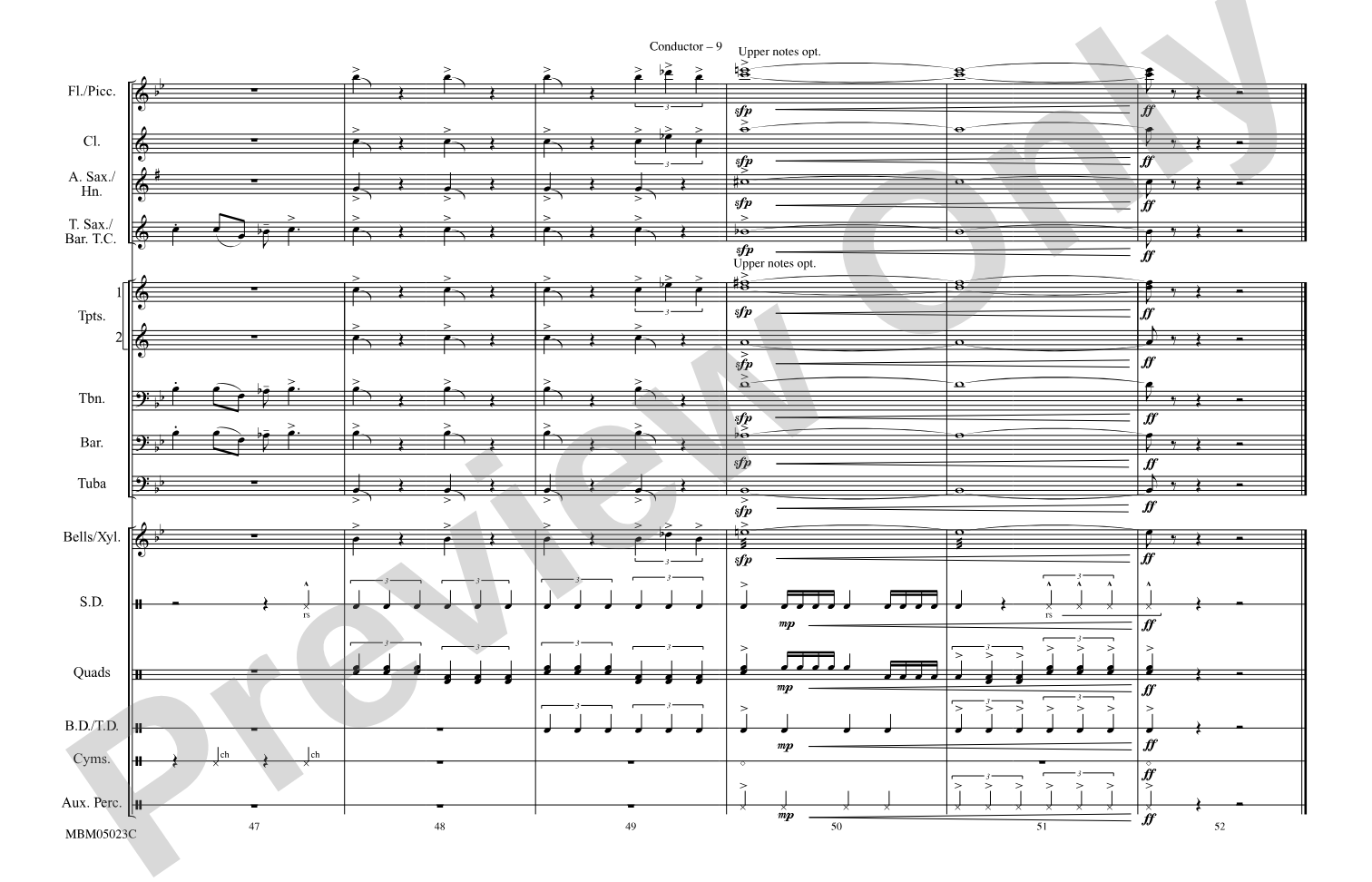

What'd I Say: Marching Band Conductor Score & Parts
Words and music by Ray Charles / arr. Mike Story
Grade: 2 (Easy)
Item: 00-PK-0008084

$40.00
One moment…
Description
The music world lost one of its biggest and best last year with the passing of Ray Charles. We asked Mike to craft an easy but solid arrangement of one of Ray's most memorable tunes. An awesome production number or stands chart! (1:52)


Don't just read it, hear it, play along with it, and watch your students grow with it. In MakeMusic Cloud, What'd I Say: Marching Band Conductor Score & Parts comes alive with professional accompaniment, adjustable tempo, and built-in practice tools that turn solo practice into real progress.
Open in the Player
Jump straight in and assign it today.
Start Your Free Trial
Open this title and explore the full library in minutes.
Sample Audio
1
Audio File
--:--
0:00
0:00
Sample Video
No sample videos found.
Additional Details
Series:
Big and Easy
Publisher:
Alfred Music
SKU:
00-PK-0008084
More about this title
About the Composer: Ray Charles
Ray Charles (1930-2004) revolutionized American music by fusing blues, gospel, country, and jazz into a sound that transcended genre boundaries. His work as a pianist, vocalist, and bandleader established him as one of the most influential musicians of the 20th century, earning him the title "The Genius of Soul." For music educators, Charles's catalog offers rich material that connects students to authentic American musical traditions while celebrating artistry rooted in deep musicianship and emotional honesty.
Why we love this
Mike Story's arrangement captures the infectious energy and accessibility that made Ray Charles's original such a hit, giving your marching band a showstopper that doesn't demand virtuosic playing. At Grade 2, this sits in that sweet spot where students experience the satisfaction of performing a recognizable, crowd-pleasing tune while still building fundamental skills. The arrangement balances musicality with ease, making it ideal for young ensembles who need repertoire that sounds impressive without overextending their technical abilities.
What to expect
This arrangement radiates the loose, swinging joy that defined the original, with a driving rhythm section that propels the band forward and a spirited melody that lodges itself in listeners' heads. The arrangement honors Ray Charles's blues roots while keeping the energy youthful and direct, capturing that moment when a great song becomes irresistible.
Who it's for
Grade 2 marching bands looking for accessible, engaging repertoire that connects students to popular music history. Young ensembles benefit from the straightforward arranging and recognizable melody, while directors appreciate a charting option that delivers crowd appeal without technical overreach.
How to get the most out of it
- Lock the rhythmic groove early in sectional rehearsals. The piece's energy hinges on a tight backbeat, so isolate the snare line and bass drum patterns and drill them until they sit in the pocket naturally.
- Shape the melodic line with gentle dynamic swells rather than forced accents. Let the inherent swing of the tune breathe through phrasing; this will feel more authentic to the Ray Charles sound.
- Balance the upper woodwind melody against the lower brass foundation. The band should hear the tune clearly, but not at the expense of the supporting harmonic structure underneath.
- Rehearse the field transitions and stands moments separately. A 1:52 production number needs clean visual and sonic execution, so give students time to nail both the music and the logistics without pressure.
How to use it
Deploy this as a summer or early-fall opener that builds ensemble confidence and audience connection. Its length (1:52) makes it perfect for a second-half opener at a stadium show, or as a high-energy transition piece between more formal selections on a concert program. Programming it alongside other blues or soul-influenced charts deepens the thematic richness of a program.
Skills your students will build
- Swing rhythms and syncopated figures
- Balanced sectional playing in a blues idiom
- Phrasing and dynamic shaping at the ensemble level
- Coordination between melody and supporting harmony lines
- Marching fundamentals with rhythmic precision