
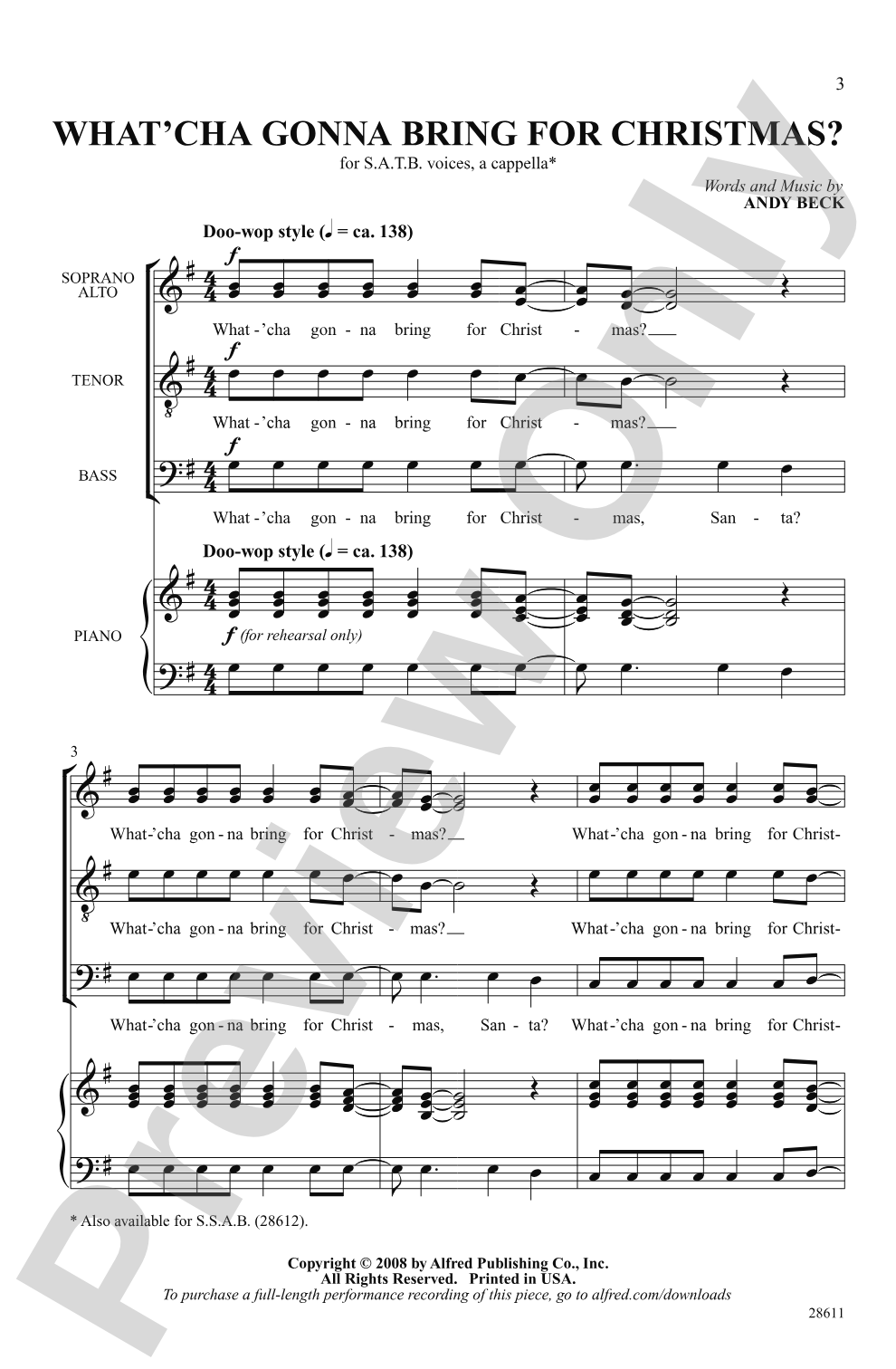

What'cha Gonna Bring for Christmas?: SATB, a cappella Choral Octavo
Words and music by Andy Beck
Item: 00-PO-0000505
$1.75
Minimum order quantity: 20 copies
Pickup currently not available
Description
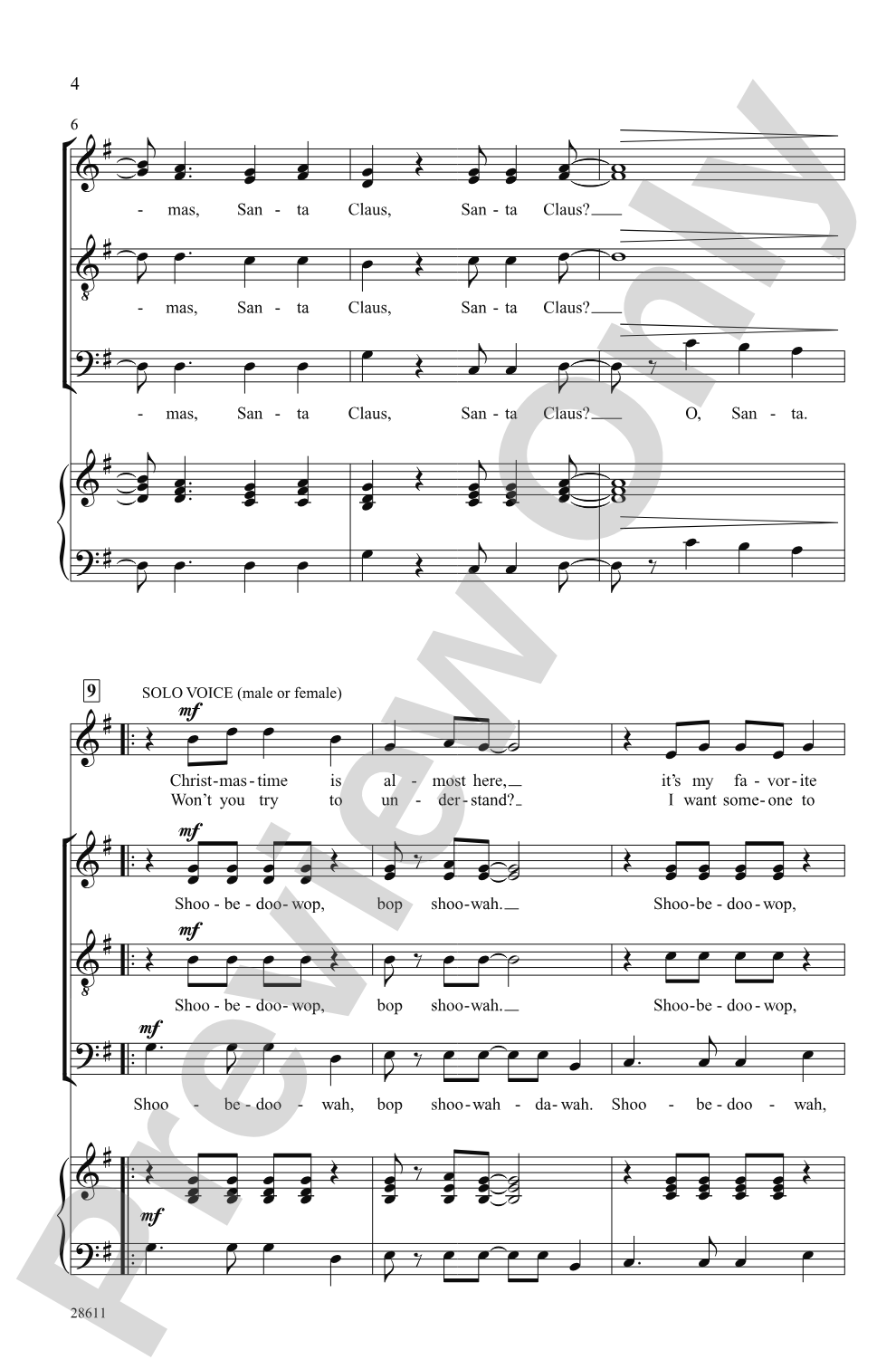
Feature your best solo crooner(s) on this '50s inspired a cappella chorus that begs Santa for a timeless teen wish: "Won't you bring me someone to love?" The choir serves equally as the featured act (of the chorus and bridge) and the backup singers (for two dreamy verses). The final falsetto phrases and 7th chord cadence deliver a sweet doo-wop ending.


What'cha Gonna Bring for Christmas?: SATB, a cappella Choral Octavo isn't in MakeMusic Cloud just yet...but it could be. Let us know you'd like to see it, and you'll help shape what comes next. In the meantime, start a free trial and dive into thousands of interactive titles your students can play along with today.
Request This Title
Tell us you want it.
Start Your Free Trial
Explore everything that's ready to play right now.
Sample Audio
1
Audio File
--:--
0:00
0:00
Sample Video
No sample videos found.
Additional Details
Series:
Alfred Choral Designs
Publisher:
Alfred Music
Page Count:
12
SKU:
00-PO-0000505
More about this title
About the Composer: Andy Beck

Andy Beck directs choral publications at Alfred Music and has composed and arranged over 450 choral works for singers of all ages. His output spans popular repertoire, vocal resources, and children's musicals, and his compositions are performed by choirs worldwide. Beyond the page, Beck serves as guest conductor, choreographer, adjudicator, and clinician for music educators across the United States and internationally, with recent commissions and conducting engagements for all-state honor choirs throughout the Southeast.
A tenor himself, Beck combines his performance background with deep pedagogical expertise. He earned degrees in music education from Ithaca College and Northwest Missouri State University, and has authored influential vocal resources including Sing at First Sight, Foundations in Choral Sight Singing, and Vocalize! 45 Vocal Warm-Ups That Teach Technique. His work as an Alfred Music studio singer since 1992, combined with his involvement in musical theatre and the North Carolina Master Chorale Chamber Choir, reflects a lifelong commitment to choral artistry and music literacy.
Why we love this
Beck nails the vocal texture that makes doo-wop thrive: the interplay between a featured soloist and tight, rhythmic choral support. The piece gives your choir ownership of the arrangement itself, rotating them through starring and supporting roles so every section gets a moment. That falsetto ending and 7th chord cadence feel genuine, not saccharine, making this a crowd-pleasing closer that doesn't compromise musical substance.
What to expect
Vintage sweetness with modern choir voices: the arrangement captures that '50s radio warmth, complete with yearning minor-key melody and lush seventh chords, while keeping the vocal writing grounded in contemporary SATB comfort. The song's central hook (a teenager's plea for companionship) lands with genuine charm, and the doo-wop ending feels like the needle dropping off a vinyl record.
Who it's for
This is ideal for choirs with strong solo singers who can carry a lead with confidence and style. It works equally well in show choirs, concert choirs seeking a fun seasonal contrast, or mixed ensembles looking for an accessible a cappella feature that doesn't require complex staging or choreography.
How to get the most out of it
- Lock the rhythmic foundation in the backup verses before adding the soloist; the swing feel depends on secure ensemble timing, not individual interpretation.
- Encourage your featured singer(s) to lean into the legit crooner sound of the '50s. Shape the melodic line with longer phrase arcs, not straight tone delivery.
- Balance the doo-wop texture by keeping the rhythm section (bass and chord notes) anchored and clear; too much vibrato in the harmonic parts will muddy the style.
- Rehearse the falsetto phrases separately with your higher singers; mark dynamics and vibrato specifically so those closing lines sit distinctly at the top of the texture.
How to use it
Program this as a penultimate number in a holiday concert to shift the mood from traditional reverence to fun, nostalgia, and levity before a grand finale. It pairs well in a set with other secular holiday repertoire and gives audiences permission to smile. The 12-page length makes it manageable as a featured moment without overshadowing longer works.
Skills your students will build
- Balancing solo prominence with ensemble support in a single piece
- Singing in the doo-wop and '50s vocal style idiom
- Rhythmic precision in a swung feel without sheet music conducting cues
- Navigating falsetto register and maintaining it across phrases
- Voice part independence while maintaining homophonic harmonic awareness