What A Wonderful World (arr. Hans Reintjes) Sheet Music Preview

What A Wonderful World (arr. Hans Reintjes): SATB Choral Octavo

As performed by Louis Armstrong / Arranged by Hans Reintjes

Item: 35-DS00490650

Digital Download
$2.99
Description

What A Wonderful World (arr. Hans Reintjes): SATB Choral Octavo isn't in MakeMusic Cloud just yet...but it could be. Let us know you'd like to see it, and you'll help shape what comes next. In the meantime, start a free trial and dive into thousands of interactive titles your students can play along with today.

Sample Audio
No sample audio found.
Sample Video
Additional Details
Publisher: Hal Leonard
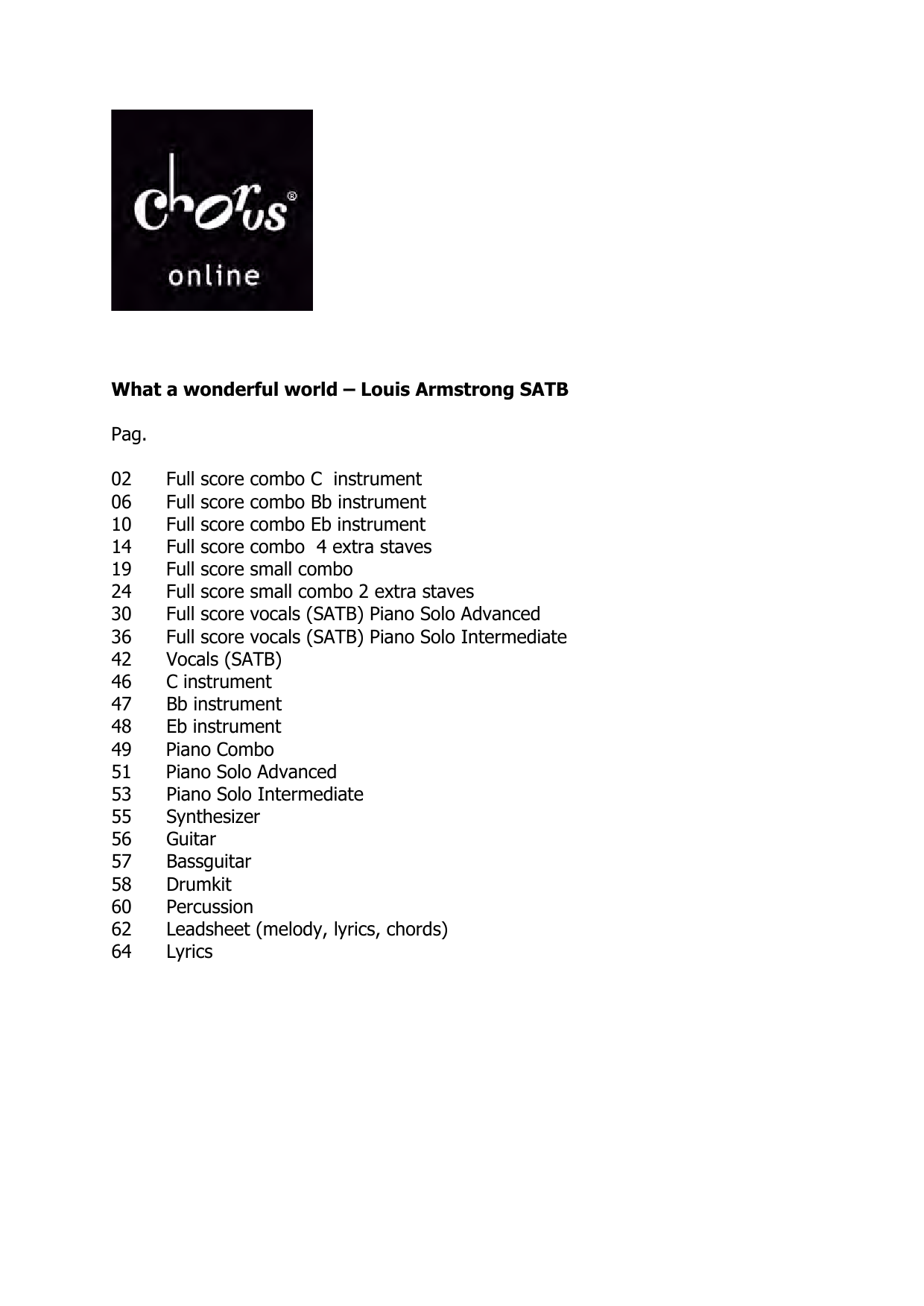
Page Count: 64
SKU: 35-DS00490650

More about this title

About the Artist: Louis Armstrong

Louis Armstrong transformed jazz from a regional sound into a global language. His innovations in improvisation, scat singing, and expressive phrasing fundamentally changed how musicians approached their instruments and voices, influencing everyone from vocalists to brass players across multiple genres. In the classroom, his work teaches students about the power of individual voice within ensemble settings and demonstrates how technical mastery serves emotional expression rather than replacing it.

Why we love this

Reintjes' arrangement captures the warmth and accessibility of Armstrong's original without sacrificing musical substance. The four-part writing sits comfortably for mixed choirs while offering enough harmonic color to keep singers engaged throughout the piece. Audiences respond immediately to this tune, making it an ideal closer for concerts where you want singers and listeners leaving in genuine good spirits.

What to expect

Warmth radiates from every measure; the harmony supports rather than complicates the message. There's an easiness here, a quality of acceptance and gentle wisdom that makes singers want to inhabit the space created by the arrangement rather than simply execute the notes.

Who it's for

This arrangement works for community choirs, school choirs at the intermediate level and above, and any ensemble seeking repertoire that spans generations without sacrificing musicality. Singers with little jazz experience will find the voicing approachable, while more experienced ensembles can explore the interpretive possibilities Armstrong's legacy invites.

How to get the most out of it

  • Sing the melody with conversational phrasing rather than rigid rhythmic precision; this piece breathes best when soloists and ensemble sections feel like they're speaking rather than performing.
  • Balance the harmony voices so they support the melody without overshadowing it; inner parts should recede slightly even when they carry interesting lines.
  • Find the natural rubato in your rehearsals early, then commit to it collectively so the flexibility feels intentional rather than uncertain.
  • Let the accompaniment establish a gentle swing feel; singers will lock in more easily if the rhythmic foundation feels relaxed and grounded.

How to use it

Save this for programs where you want to acknowledge the connection between jazz and contemporary choral music, or pair it with other twentieth-century American classics to show choir's range. The piece also serves beautifully as a finale for spring concerts, benefits, or community celebrations where inclusivity and warmth matter as much as technical display.

Skills your students will build

  • Singing swing rhythms with appropriate relaxation and forward motion
  • Balancing melody and harmony in jazz voicings
  • Interpreting written music with expressive flexibility
  • Blending jazz phrasing vocabulary with ensemble singing
  • Sustaining harmonic awareness while supporting the lead line

You May Also Like