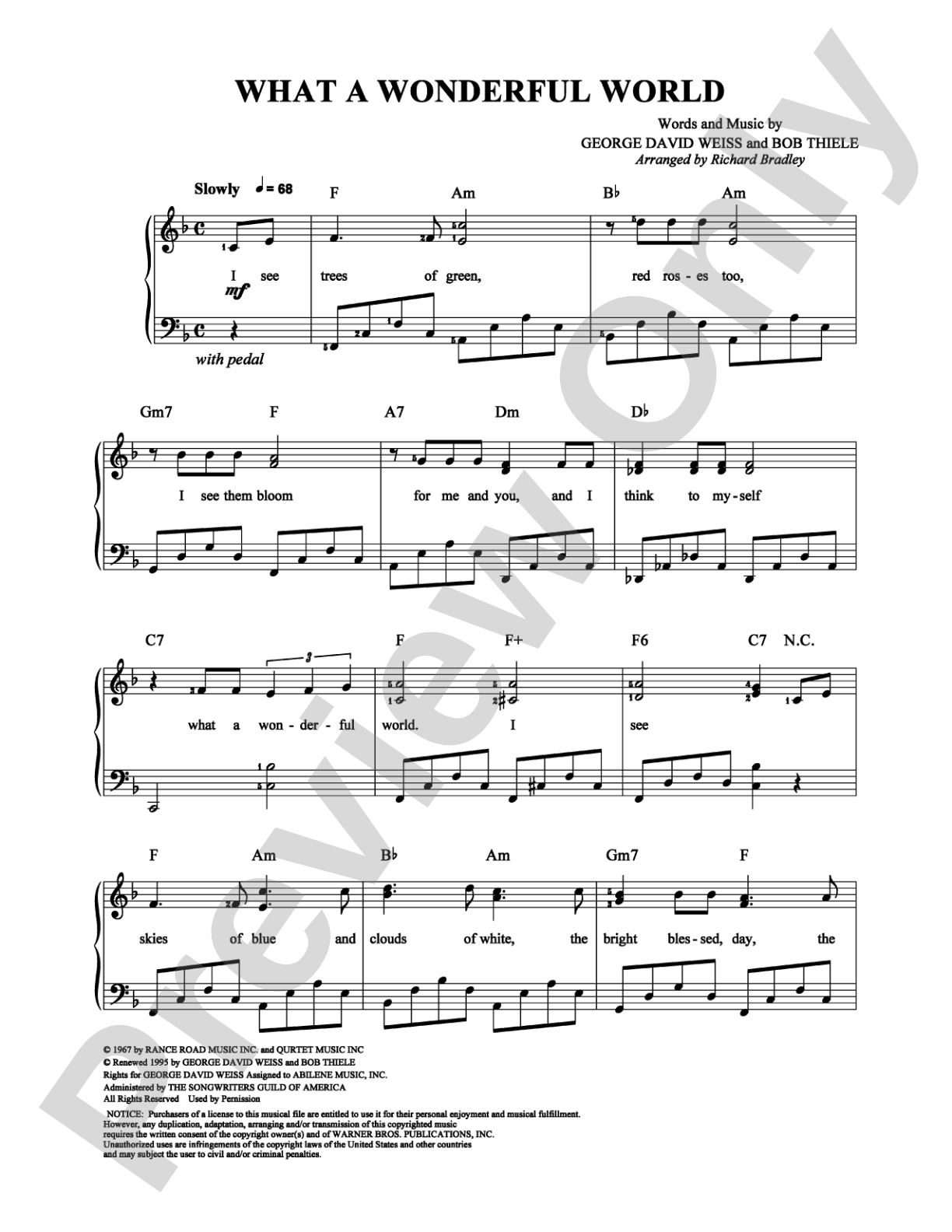
What A Wonderful World: Easy Piano Digital Sheet Music

What A Wonderful World: Easy Piano Digital Sheet Music

George David Weiss, Bob Thiele, Louis Armstrong

Item: 00-PS-0002992

Digital Download
$3.99
Description

What A Wonderful World: Easy Piano Digital Sheet Music isn't in MakeMusic Cloud just yet...but it could be. Let us know you'd like to see it, and you'll help shape what comes next. In the meantime, start a free trial and dive into thousands of interactive titles your students can play along with today.

Sample Audio
No sample audio found.
Sample Video
Additional Details
SKU: 00-PS-0002992

More about this title

About the Artist: Louis Armstrong

Louis Armstrong (1901-1971) fundamentally shaped American jazz and popular music through his innovative trumpet playing, distinctive vocal style, and infectious charisma. Born in New Orleans, Armstrong developed the art of improvisation and scat singing, becoming one of the most influential musicians of the 20th century. His recordings and live performances made jazz accessible to mainstream audiences, and his warmth as a performer set a standard for musicianship that educators still reference today.

Why we love this

This arrangement captures the genuine optimism and accessibility that made Armstrong's original so beloved, without requiring advanced jazz technique. The easy piano voicing preserves the melody's beauty while keeping technical demands manageable for intermediate players, making it an excellent choice for building confidence and musical maturity.

What to expect

Playing this piece feels like having a conversation with an old friend. The melody sits comfortably under the hands, the harmonies are warm and unpretentious, and there's built-in space for you to express yourself without fighting the music.

Who it's for

This arrangement suits intermediate pianists who want to expand beyond classical training into jazz standards and popular repertoire. It works equally well for students exploring jazz history, pianists preparing for recitals or casual performances, and anyone looking for an accessible entry point into Armstrong's legacy.

How to get the most out of it

  • Let the melody breathe; resist the urge to rush. Armstrong's phrasing was unhurried and conversational, so use space and silence intentionally.
  • Shape the left hand accompaniment lightly so it supports rather than competes with the melody. The harmony should feel like a gentle cushion.
  • Listen to Armstrong's vocal recording before you play. His interpretation (the way he bends notes and phrases across bar lines) will inform your touch and tempo choices at the piano.
  • Pay attention to any dynamic markings in your edition. Small variations in volume can capture the tenderness that makes this piece timeless.

How to use it

Include this on a recital to show range beyond classical repertoire or pair it with other American standards to create a cohesive set. It also works beautifully as an encore or as a bridge piece between more demanding works, giving both performer and audience a moment of genuine joy.

Skills your students will build

  • Interpreting jazz-inflected phrasing and rubato
  • Accompanying melody with balanced harmony
  • Understanding jazz standards and American popular song
  • Building expressive control at a moderate technical level
  • Connecting performance to historical recordings and original artists

You May Also Like