
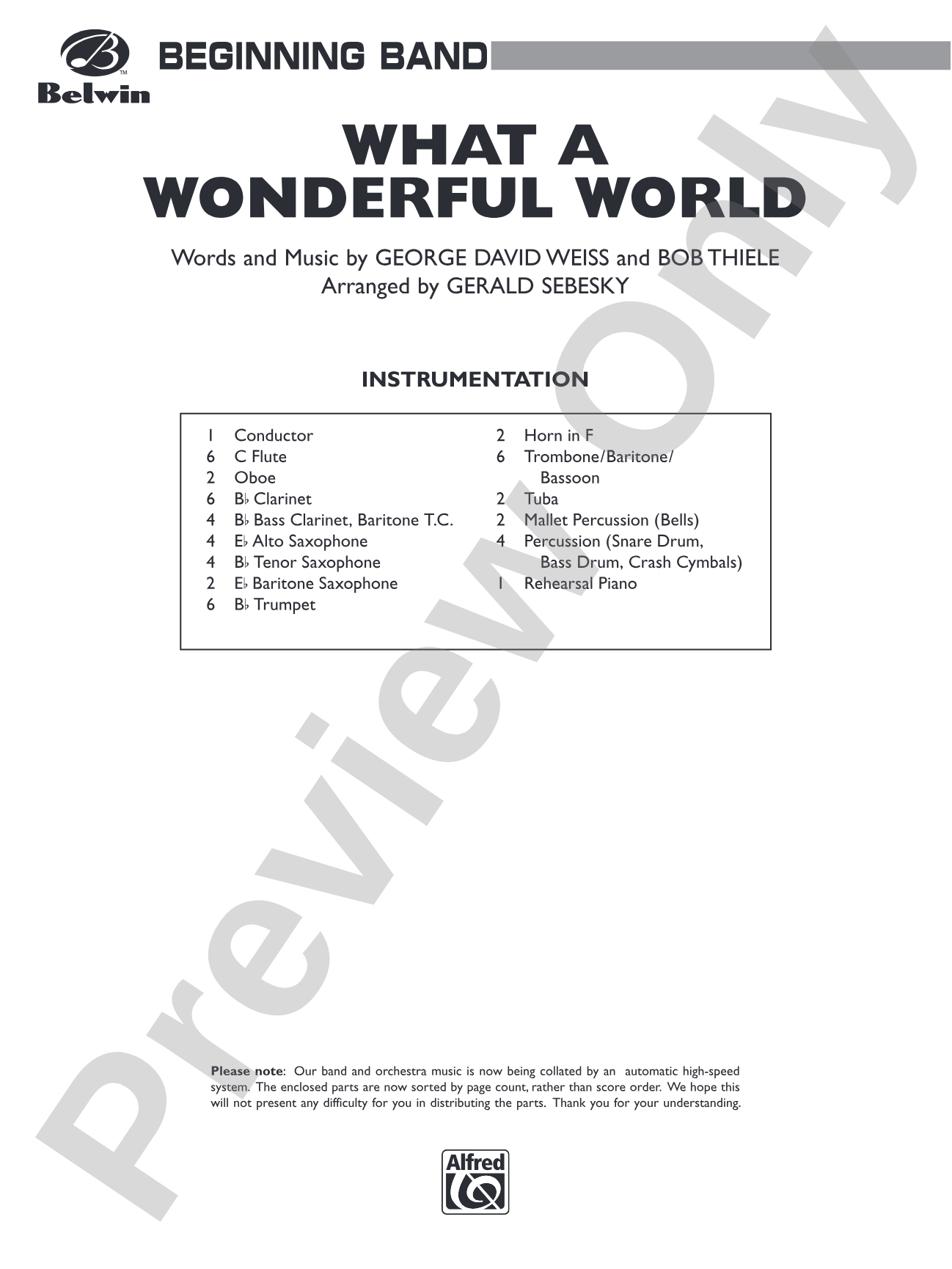
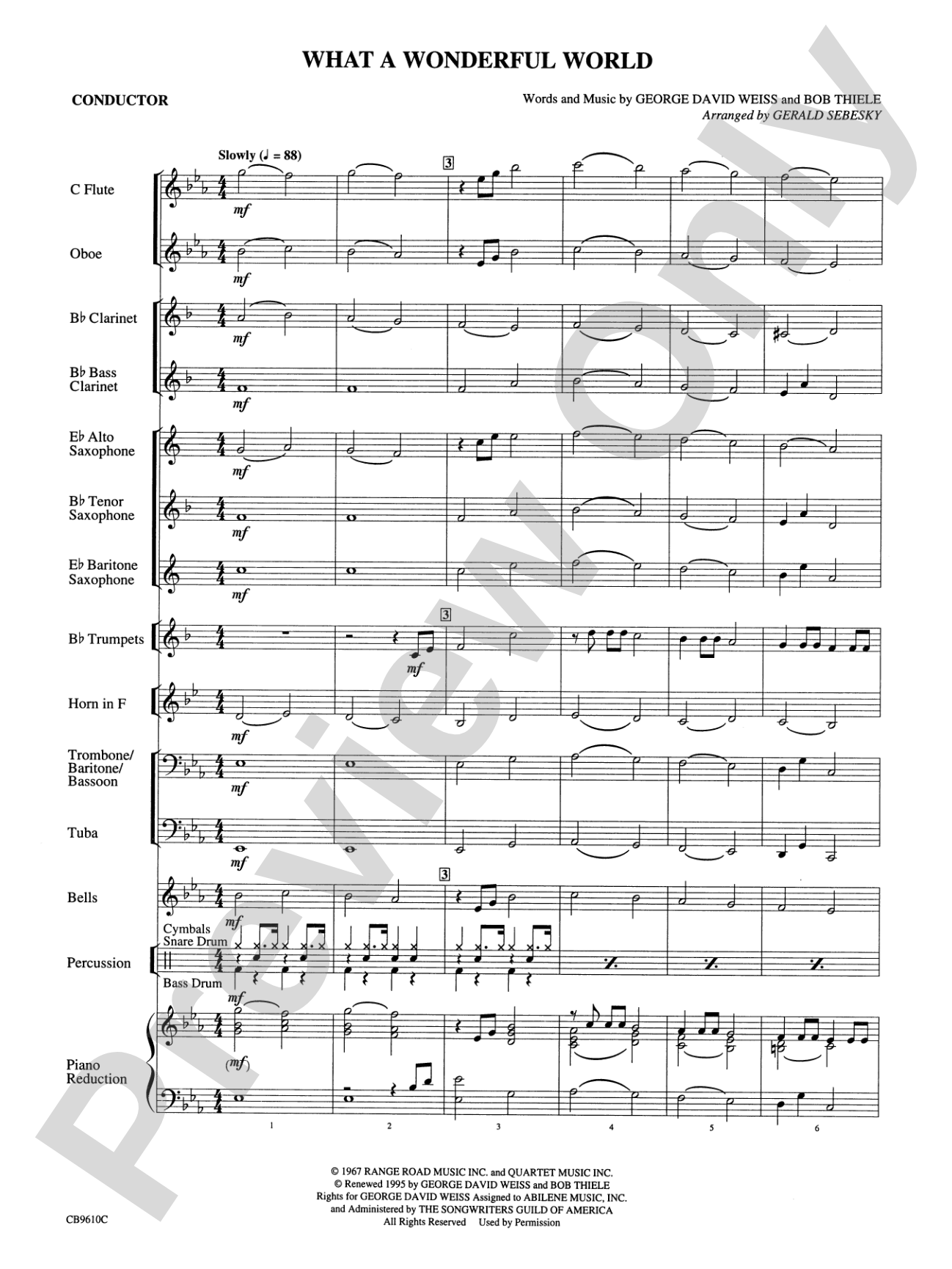
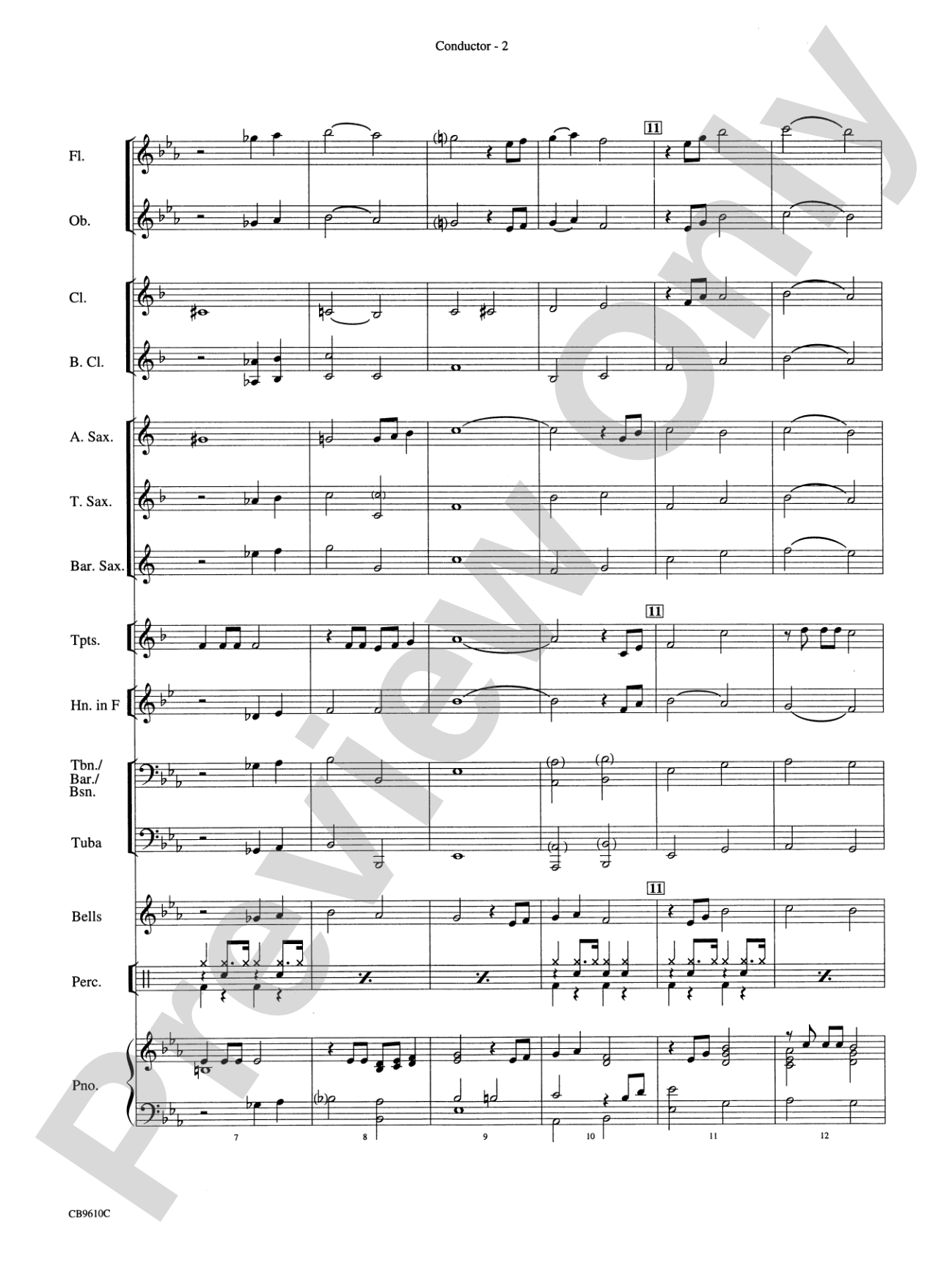
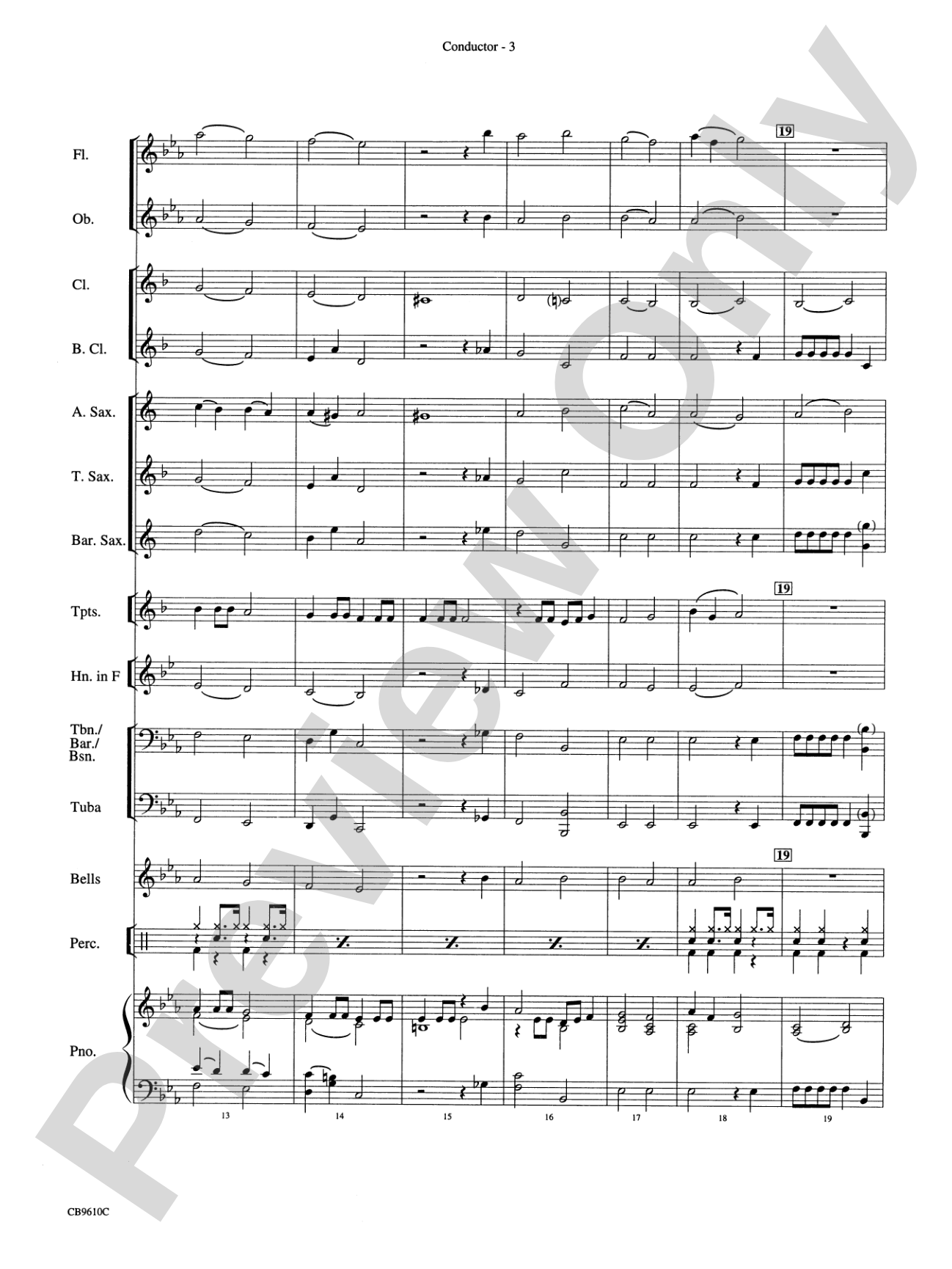
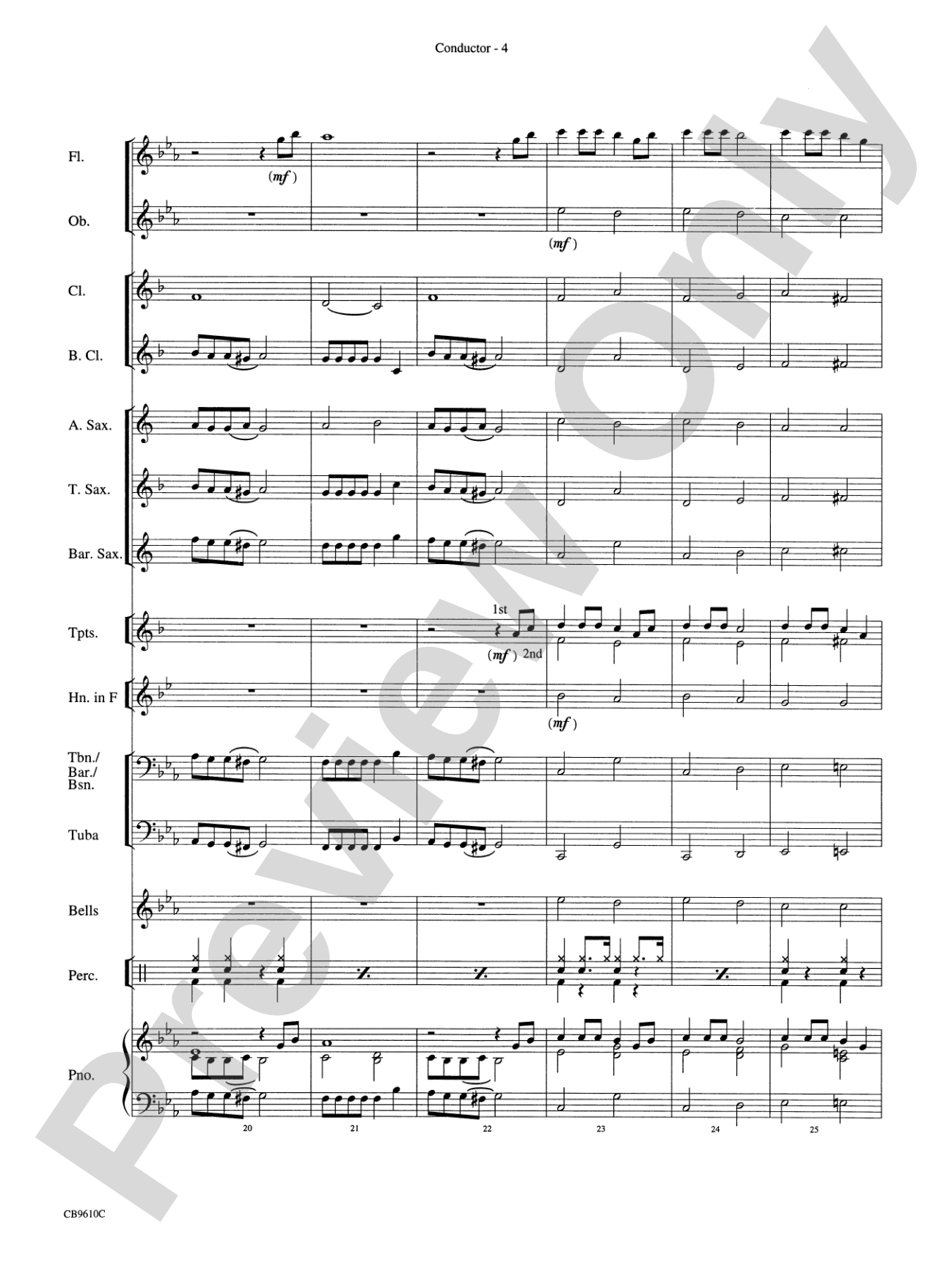
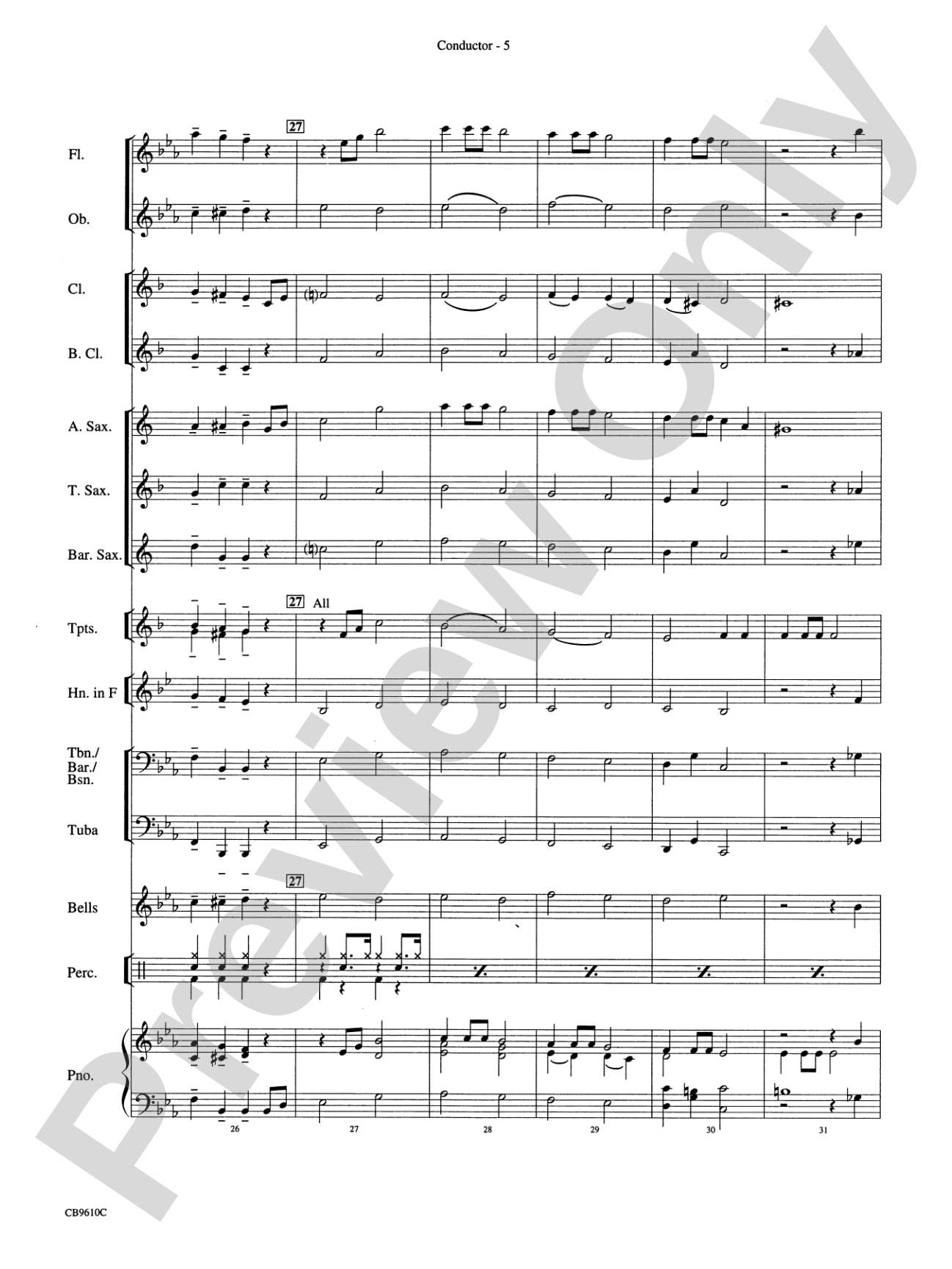
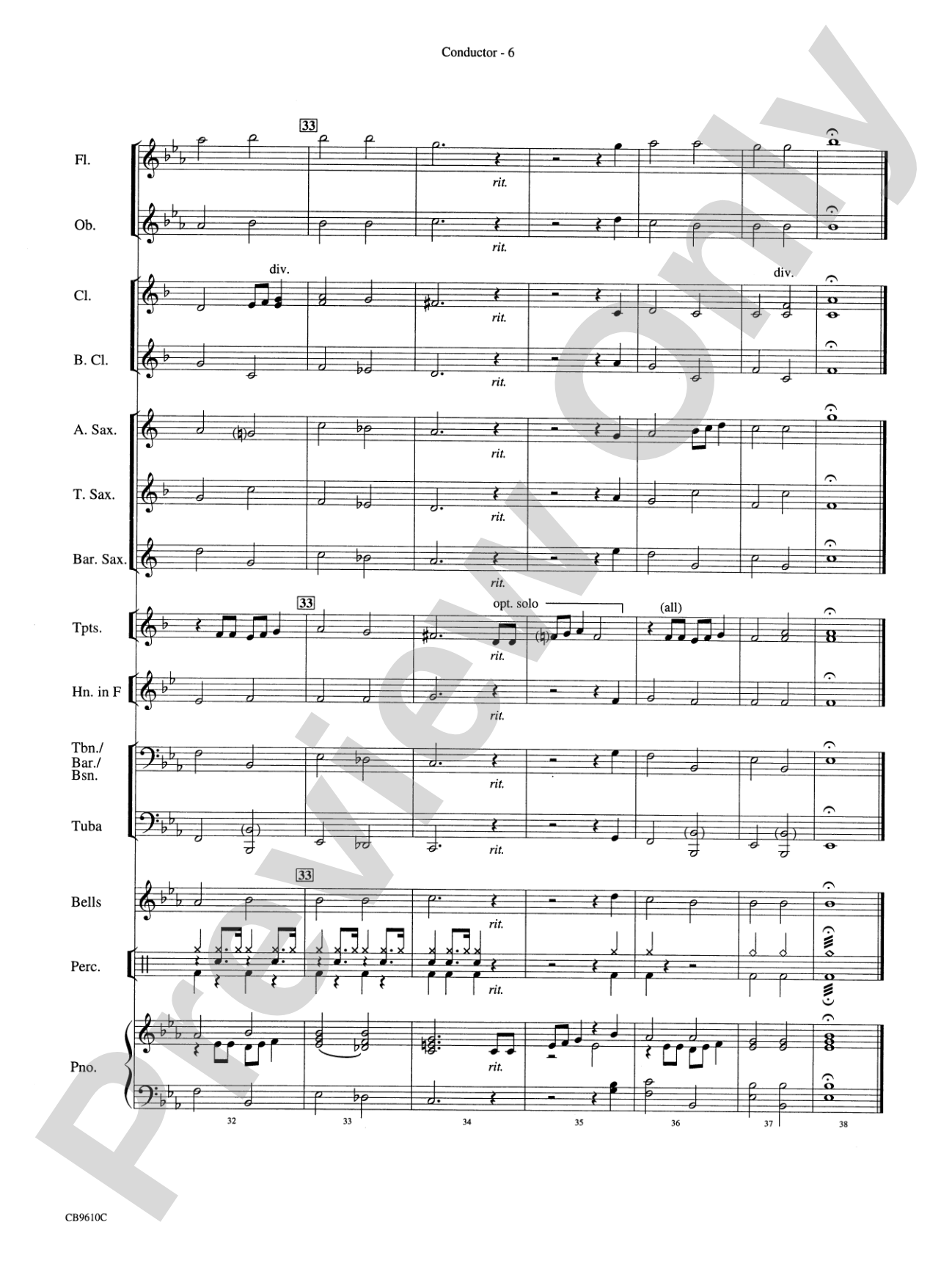


What a Wonderful World: Concert Band Conductor Score & Parts
By George David Weiss and Bob Thiele / arr. Gerald Sebesky
Grade: 1 (Very Easy)
Item: 00-PK-0002324
$56.00
One moment…
Description
This title sings the praises of just being alive! Some of us remember the fantastic Louis Armstrong vocal/instrumental version that has become a true classic in the annals of jazz. More recently, we've heard it immortalized Good Morning, Vietnam. Here's a great tune with a wonderfully easy transcription to bring to your beginning band. (duration 1:52)


Discover MakeMusic Cloud: thousands of interactive titles your students can play along with today.
Sample Audio
No sample audio found.
Sample Video
No sample videos found.
Additional Details
Series:
Pop Beginning Band
Publisher:
Alfred Music
Page Count:
142
SKU:
00-PK-0002324
More about this title
About the Composer: George David Weiss
George David Weiss (1921-2010) was a prolific songwriter and composer who shaped the Great American Songbook alongside his collaborators. Working across multiple genres from jazz standards to film scores, Weiss wrote music that balanced sophisticated harmonic language with immediate emotional appeal, making his work accessible to both casual listeners and serious musicians.
Weiss's gift for memorable melody served him well in musical theater and popular song. "What a Wonderful World," co-written with Bob Thiele, exemplifies his ability to craft music that endures across generations and performance contexts. His compositions continue to appear in educational settings because they combine genuine artistry with genuine singability.
Why we love this
This arrangement captures everything that makes the original timeless without overwhelming a beginning band. Sebesky's transcription respects the song's gentle character while giving each section clear material to play, which means your students will sound musical from rehearsal one. The Grade 1 scoring feels earned, not simplified.
What to expect
Warm, unhurried, and fundamentally optimistic. The harmonic language sits comfortably in accessible territory while still sounding sophisticated. There's a gentle swing to the rhythm that invites players to relax into their phrases rather than mechanically count their way through.
Who it's for
Beginning concert bands looking for repertoire that teaches musicality without technical complexity. This works equally well for Grade 1 programs building confidence and for experienced musicians who want to add a straightforward, joyful standard to their concert. Directors seeking a piece with cultural reach beyond traditional band literature will find it here.
How to get the most out of it
- Balance the melody between your lead voices and the harmonic foundation. Beginning bands often push dynamics too hard; let the natural lift of the tune carry the phrase instead.
- Shape the phrasing in long arcs rather than beat-by-beat. This piece breathes, so encourage your students to think in 4 or 8-bar units.
- Keep articulation light and connected. This is jazz-inflected material, so avoid tonguing that sounds military or detached.
- Use dynamic contrast judiciously. The Grade 1 scoring doesn't call for dramatic shifts, but subtle crescendos and decrescendos on longer phrases will reveal the song's inherent warmth.
How to use it
This is an ideal piece for graduation ceremonies, spring concerts, or any program celebrating community and connection. Pair it with other accessible standards or contrast it against more energetic contemporary selections to show the breadth of your band's repertoire. The 1:52 duration makes it an efficient anchor for a varied program.
Skills your students will build
- Phrasing in longer melodic arcs
- Jazz style and swing articulation
- Dynamic control and balance between melody and harmony
- Reading and playing at Grade 1 difficulty level with musical intent
- Ensemble precision in slower tempos