

What a Song Can Do: 2-Part Choral Octavo
Words and music by Raphael Fusco
Item: 00-PO-0007587
$2.30
Minimum order quantity: 20 copies
Pickup currently not available
Description
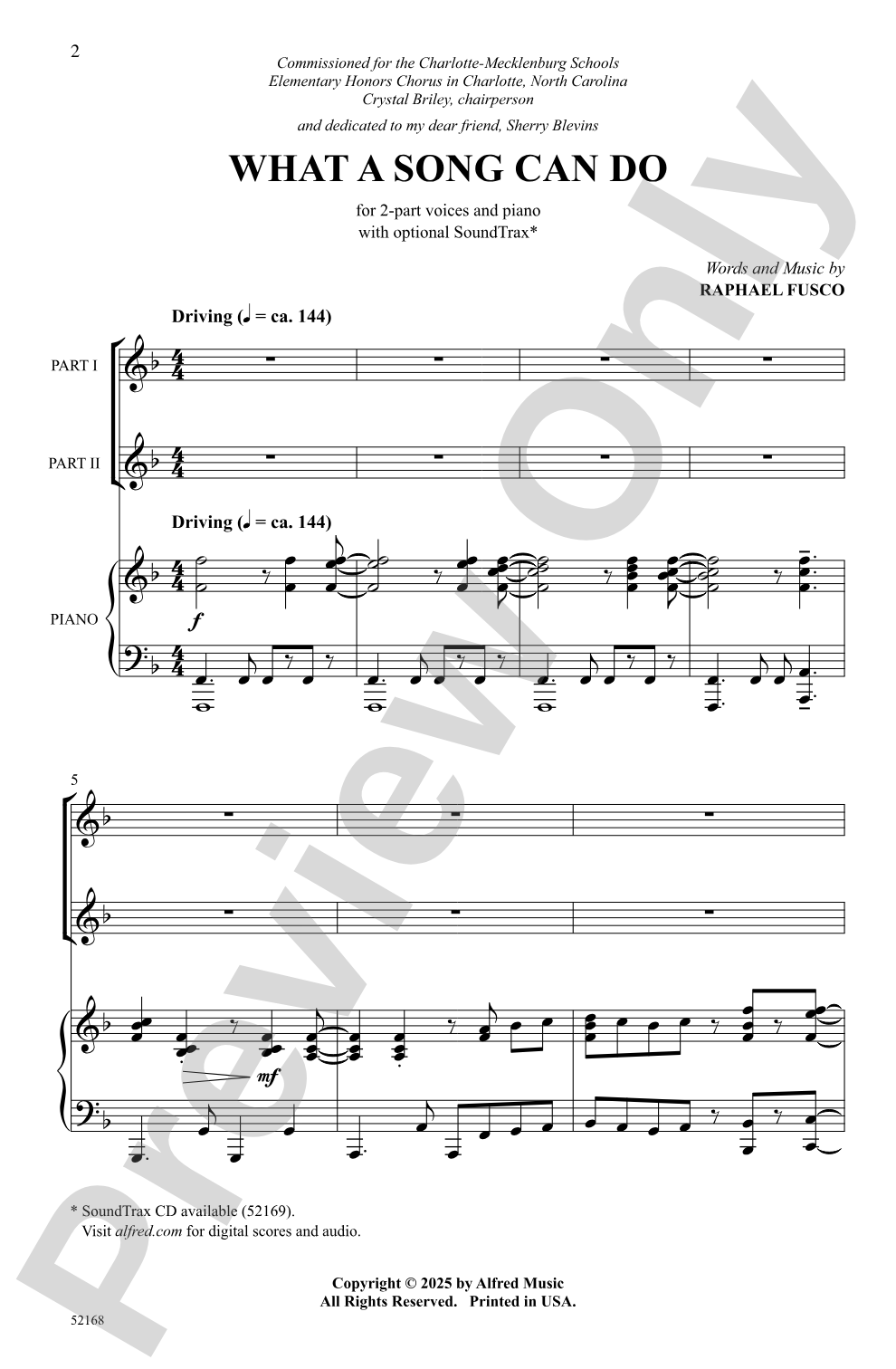
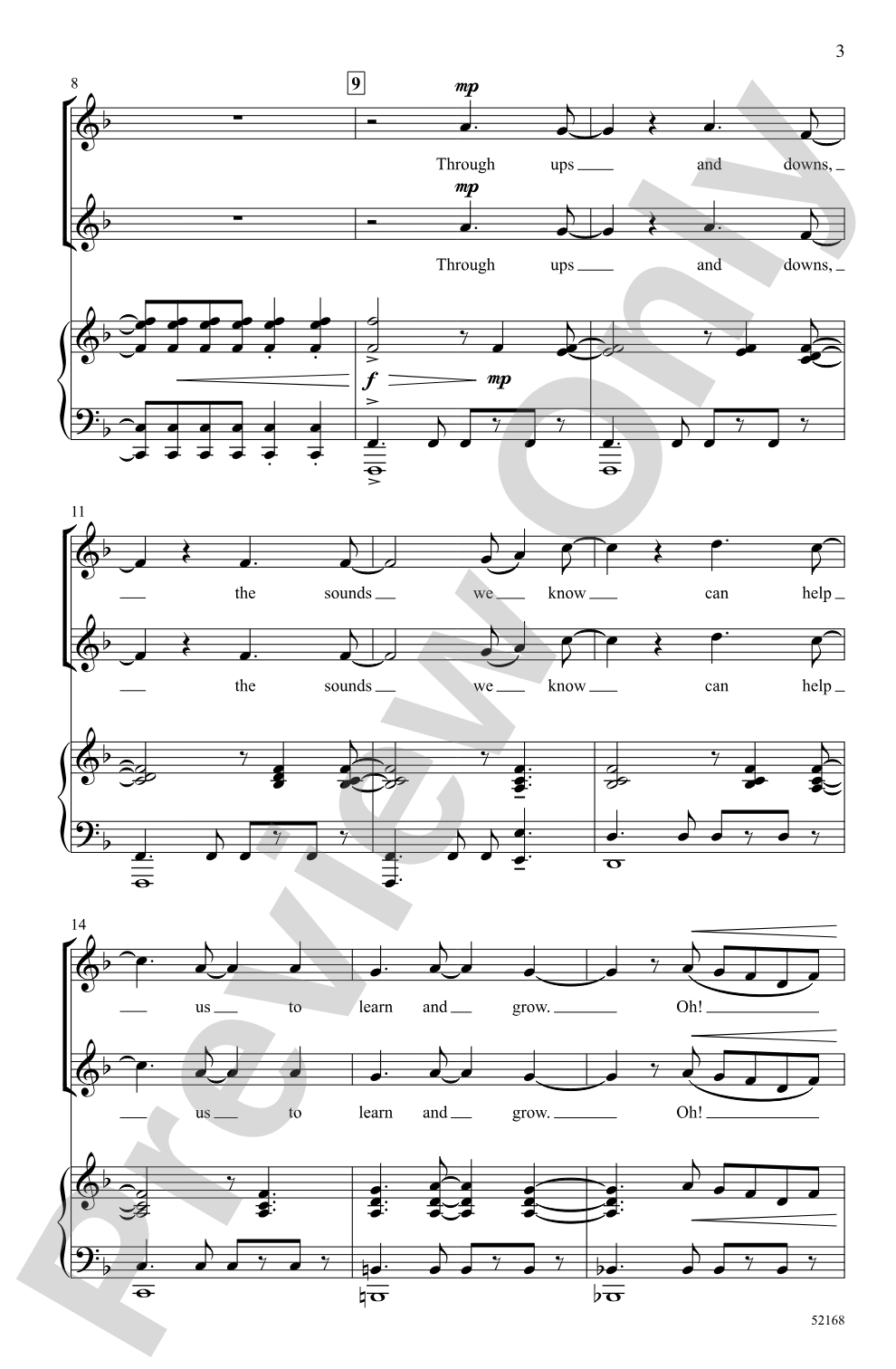
Get ready to rock out while singing about the power of music! This undeniable earworm hooks you right away and sticks. It's so much fun, the kids will beg to sing it. Pay careful attention to notated body percussion in the breakdown which creates an impressive visual effect. Add the high-voltage SoundTrax and really bring down the house!


Discover MakeMusic Cloud: thousands of interactive titles your students can play along with today.
Sample Audio
1
Audio File
--:--
0:00
0:00
Sample Video
Additional Details
Series:
Alfred Choral Designs
Publisher:
Alfred Music
Page Count:
12
SKU:
00-PO-0007587
More about this title
About the Composer: Raphael Fusco
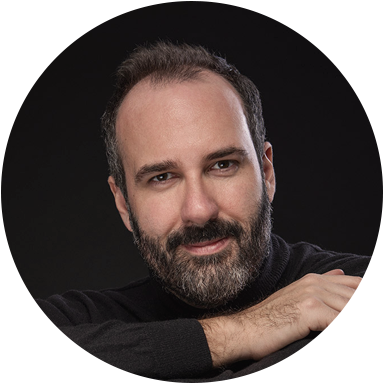
Raphael Fusco brings together composition, conducting, and keyboard performance with a voice that critics have called energetic and inventive. His works span opera, orchestral music, chamber pieces, and art song, drawing on both classical tradition and contemporary approaches to create engaging experiences for performers and listeners. Fusco has premiered his compositions at major venues including Carnegie Hall and Lincoln Center, and his music is published by Universal Edition Vienna and Alfred Music among others.
As an educator, Fusco has taught masterclasses at institutions like the Sorbonne, Manhattan School of Music, and Boston University. He founded and directs the Composer Institute at Opera Lucca in Italy, where he continues to develop the next generation of musicians. His performance experience spans the New York Philharmonic, American Ballet Theatre, and collaborations with GRAMMY Award-winning artists.
Why we love this
This piece knows exactly what it wants to do: grab attention, stay in your singers' heads, and deliver a visual payoff. The notated body percussion in the breakdown transforms a fun song into a memorable performance moment, and the infectious melody does the heavy lifting for singers who might otherwise hesitate at a secular pop-style piece.
What to expect
High-energy and celebratory, with a contemporary pop sensibility that keeps things grounded in accessibility. The combination of the earworm melody and the added spectacle of body percussion creates a performance that feels both spontaneous and rehearsed, giving audiences a sense that music itself is a tool for connection and joy.
Who it's for
This piece works for middle school, high school, and even adult choirs seeking contemporary repertoire with immediate appeal. Singers gravitate toward it naturally because the melody is memorable and the vocal parts feel singable, making it ideal for building confidence and engagement in younger ensembles.
How to get the most out of it
- Prepare the body percussion section early. Spend rehearsal time isolating the rhythmic patterns so they feel secure before adding them to the vocal line. The physical component should feel like an extension of the song, not a distraction.
- Work the infectious hook in isolation before placing it in context. Once it's locked in your singers' muscle memory, the momentum of the piece will carry itself.
- Layer the SoundTrax accompaniment gradually during rehearsals. Start without it to establish vocal blend and intonation, then add it in sections to let your singers adjust to the full arrangement.
- Emphasize clarity in the two-part texture. With a catchy melody, precision in both parts prevents the piece from becoming muddled. Lock the rhythm section early.
How to use it
Program this as a concert opener or a festival entry where you want immediate audience engagement. It pairs well with traditional or art song repertoire elsewhere in your program, providing contrast and proving your ensemble's range. The performance energy makes it equally suitable for pep rallies, community events, or contests where contemporary choral writing is valued.
Skills your students will build
- Two-part blending and balance in contemporary vocal writing
- Rhythmic precision in notated body percussion
- Confidence performing pop-influenced melodic material
- Responding to recorded accompaniment and ensemble coordination
- Text expression and energy projection in secular programming