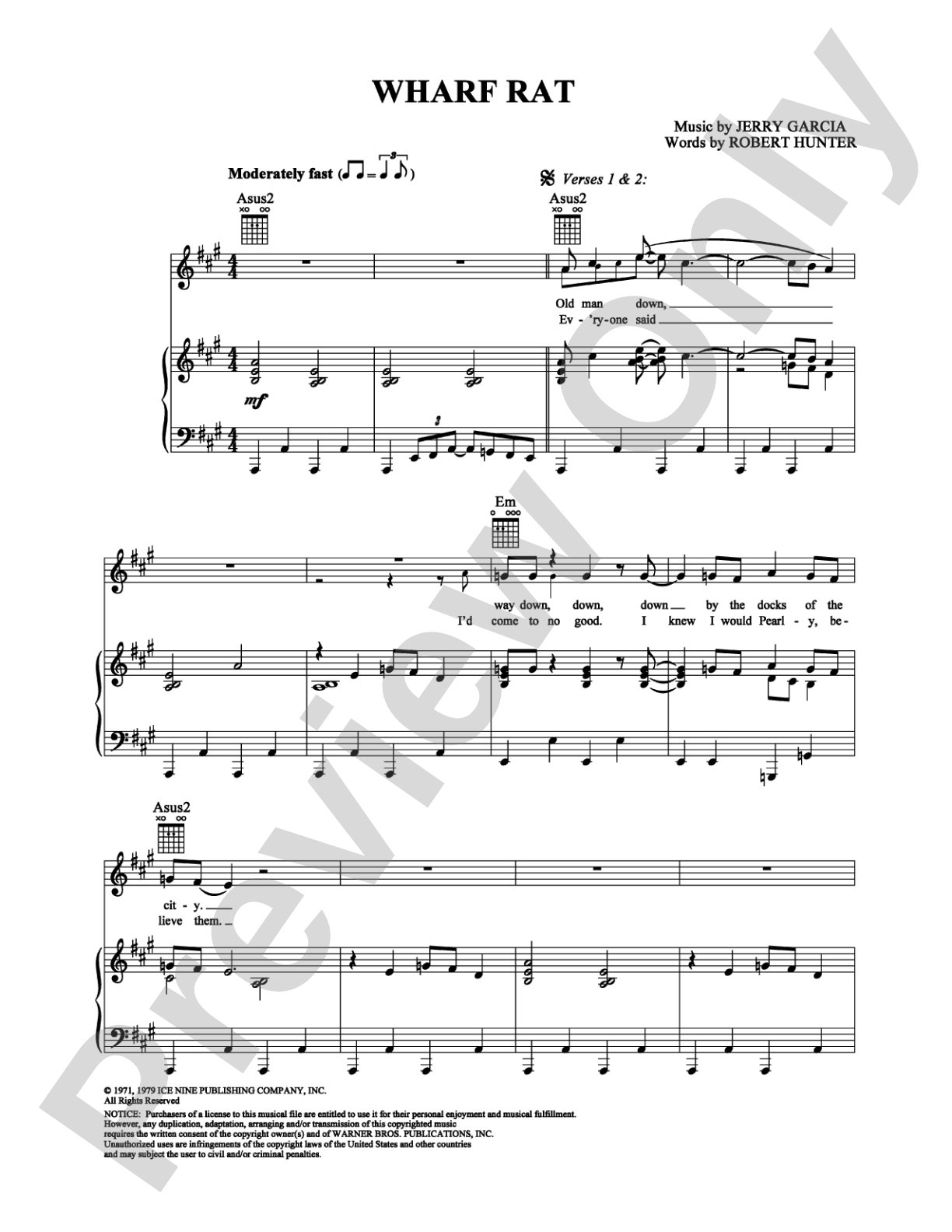
Wharf Rat: Piano/Vocal/Chords Digital Sheet Music

Wharf Rat: Piano/Vocal/Chords Digital Sheet Music

Jerry Garcia, Grateful Dead

Item: 00-PS-0000419

Digital Download
$2.95
Description

Wharf Rat: Piano/Vocal/Chords Digital Sheet Music isn't in MakeMusic Cloud just yet...but it could be. Let us know you'd like to see it, and you'll help shape what comes next. In the meantime, start a free trial and dive into thousands of interactive titles your students can play along with today.

Sample Audio
No sample audio found.
Sample Video
Additional Details
SKU: 00-PS-0000419

More about this title

About the Artist: Grateful Dead

The Grateful Dead shaped American rock and improvisational music across five decades of touring and recording. Formed in 1965, the band became known for extended jam sessions, sophisticated harmonic structures, and a deep connection to their audience. Their catalog spans blues, country, folk, and rock, with compositions that reward close study from both performers and listeners.

For music educators, the Dead's work offers accessible entry points into jazz-inflected harmony, modal interchange, and the art of musical conversation. Songs like 'Wharf Rat' showcase the band's lyrical depth and harmonic ambition, making them valuable for students exploring songwriting beyond conventional pop structures.

Why we love this

This song cuts deeper than typical pop-rock material. 'Wharf Rat' builds from a sparse, introspective verse into a soaring chorus, and the harmonic movement rewards careful listening and intentional performance. Singers who tackle this piece learn how restraint in the first section amplifies the emotional impact of the release, a principle that transfers directly to classical art song.

What to expect

Haunting and introspective, with moments of genuine vulnerability. The song begins quietly, almost confessional, before building into an anthem of redemption and hope. There is a cinematic quality to the emotional arc; the music doesn't rush, and neither should the performance.

Who it's for

Singers who have moved beyond beginning-level material and want to explore rock repertoire with harmonic and emotional sophistication. Pianists arranging their own vocal accompaniments will find this digital sheet a clear reference for voicing decisions. Solo recitalists and cabaret singers can program this as a bridge between classical song cycles and contemporary American music.

How to get the most out of it

  • Hold back dynamics in the opening verse to create genuine contrast when the chorus arrives; the song's emotional arc depends on this restraint.
  • Pay attention to the piano voicings and chord extensions. The Grateful Dead often used jazz-influenced harmony that sits differently than standard major/minor triads.
  • Let the rubato breathe naturally, especially in the quieter sections. This piece rewards a singer who listens and responds rather than locks to a rigid tempo.
  • The lyrics carry narrative weight. Approach the storytelling with specificity and emotional honesty; technical precision without conviction falls flat.

How to use it

Pair this with art songs or classical standards to show students how contemporary songwriting inherits traditions of narrative and harmonic sophistication. It works well in recitals focused on American song, or as a contemporary complement to folk-influenced classical vocal repertoire. Consider programming it alongside other pieces that explore themes of resilience and reflection.

Skills your students will build

  • Reading jazz-influenced chord voicings and extensions
  • Performing with rubato and expressive phrasing in a rock context
  • Interpreting lyrics as narrative and building character through vocal delivery
  • Balancing accompaniment texture with vocal line prominence

You May Also Like