Whale Warriors: B-flat Bass Clarinet Sheet Music Preview

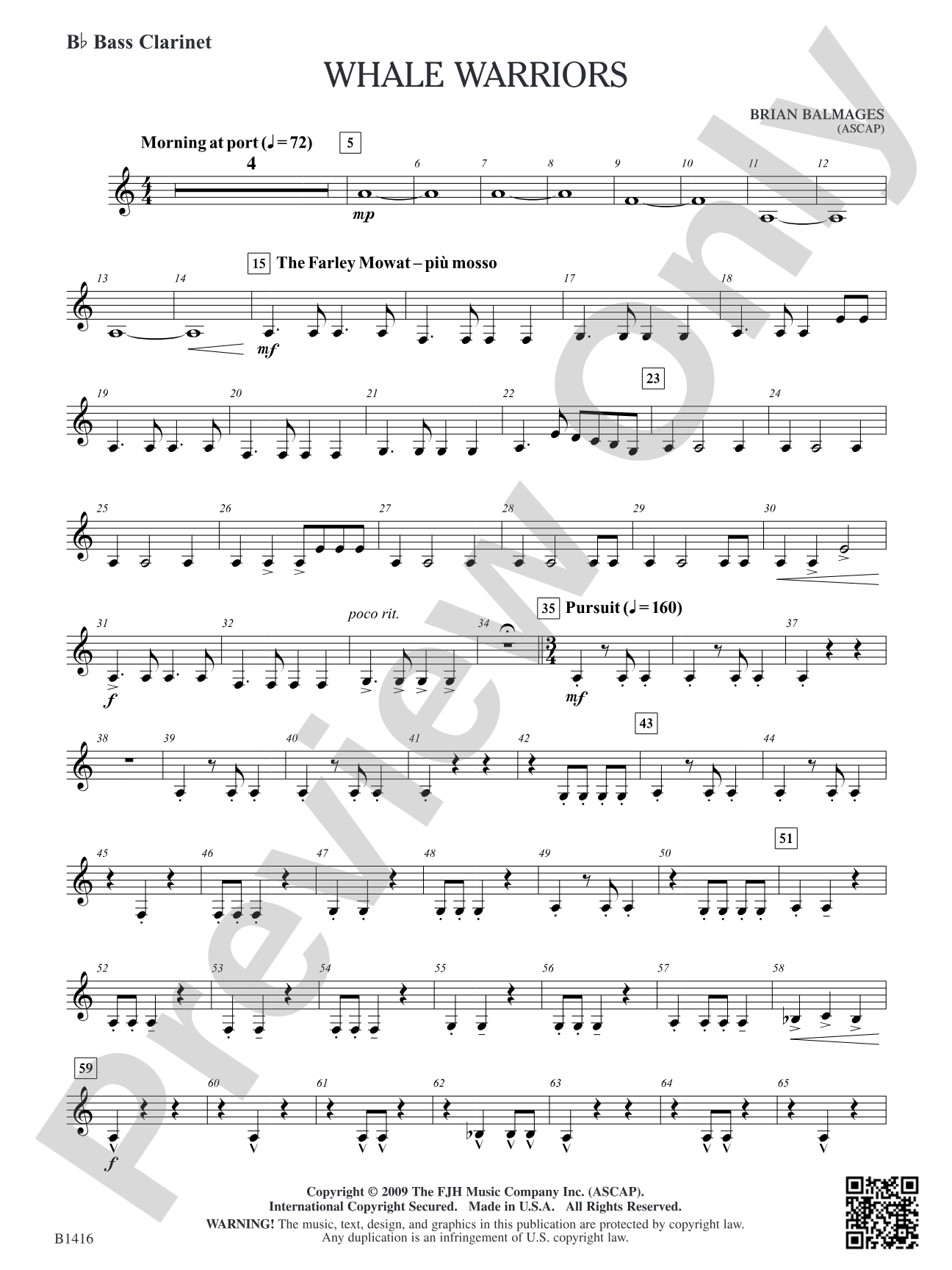
Whale Warriors: B-flat Bass Clarinet

By Brian Balmages

Grade: 2.5;3

Item: 98-PC-DB1416_BC

Digital Download
$7.00
Description
Experience the stunning true story of Captain Paul Watson and his crew as they set sail in the Antarctic in an attempt to sink whaling ships! Based on these “modern day pirates,” the music tells the story of their adventures as they use methods that include stink bombs, prop foulers, and even the dreaded “can opener!” The music paints a picture of their ship, the Farley Mowat, which is painted black with a Jolly Roger hoisted up. The energy rises as they engage other ships and risk their lives to save these beautiful defenseless creatures. Awe inspiring!

Whale Warriors: B-flat Bass Clarinet isn't in MakeMusic Cloud just yet...but it could be. Let us know you'd like to see it, and you'll help shape what comes next. In the meantime, start a free trial and dive into thousands of interactive titles your students can play along with today.

Sample Audio
0:00
0:00
Sample Video
Additional Details
Series: FJH Young Band
Publisher: The FJH Music Company, Inc.
SKU: 98-PC-DB1416_BC

More about this title

About the Composer: Brian Balmages

Brian Balmages

Brian Balmages commands respect across orchestral, band, and chamber music circles, with performances spanning Carnegie Hall, the Kennedy Center, and the Sydney Opera House. His catalog has reached ensembles from professional orchestras down to elementary school programs, earning him the A. Austin Harding Award from the American School Band Directors Association and a 2020 NBA William D. Revelli Composition Contest win for Love and Light.

Balmages holds elected membership in the American Bandmasters Association and received the inaugural James Madison University Distinguished Alumni Award. His work has graced significant national occasions, including the 2013 Presidential Inaugural Prayer Service attended by President Obama and Vice President Biden. As Director of MakeMusic Publications and Digital Education, he continues to shape the landscape of music education while maintaining active guest conducting engagements with all-state ensembles and university groups worldwide.

Why we love this

Balmages crafts programmatic narratives without sacrificing musical substance, and Whale Warriors proves it. The Grade 2.5/3 scoring keeps execution manageable while the storyboarding (stink bombs, prop foulers, the black ship) gives your students something genuinely memorable to perform and your audience a reason to sit forward in their seats.

What to expect

Equal parts adventure film and ocean voyage. The music swells with heroism and urgency as the Farley Mowat cuts through Antarctic waters, then bristles with tension as the crew encounters opposition. There's genuine stakes woven through the orchestration, a sense that something matters.

Who it's for

Young bands at the intermediate level who are ready to tackle thematic development and sustained energy but benefit from a clear narrative scaffold. Directors seeking repertoire that engages student musicians intellectually and emotionally without requiring advanced technical demands.

How to get the most out of it

  • Build contrast between the ship's calm sailing passages and the high-energy confrontation scenes. The dramatic arc depends on restraint early on.
  • Let the rhythm section lock the pulse tight during the action sequences; any wavering in the drums or low brass dissolves the tension.
  • Communicate the Jolly Roger imagery through your conducting. Visual storytelling from the podium sets the tone for how your band interprets the character moments.

How to use it

Perfect for a spring concert that celebrates action and social consciousness. Pair it with a contrasting ballad or march to round out the program, letting Whale Warriors serve as your set closer when energy and momentum are essential. It also works as a festival piece for groups seeking to stand out with distinctive, well-crafted programmatic content.

Skills your students will build

  • Sustaining ensemble energy through dynamic contrasts and tempo shifts
  • Interpreting programmatic context to inform interpretive choices
  • Maintaining rhythmic precision during syncopated passages and fast articulation
  • Balancing sectional independence with unified textural storytelling

You May Also Like