
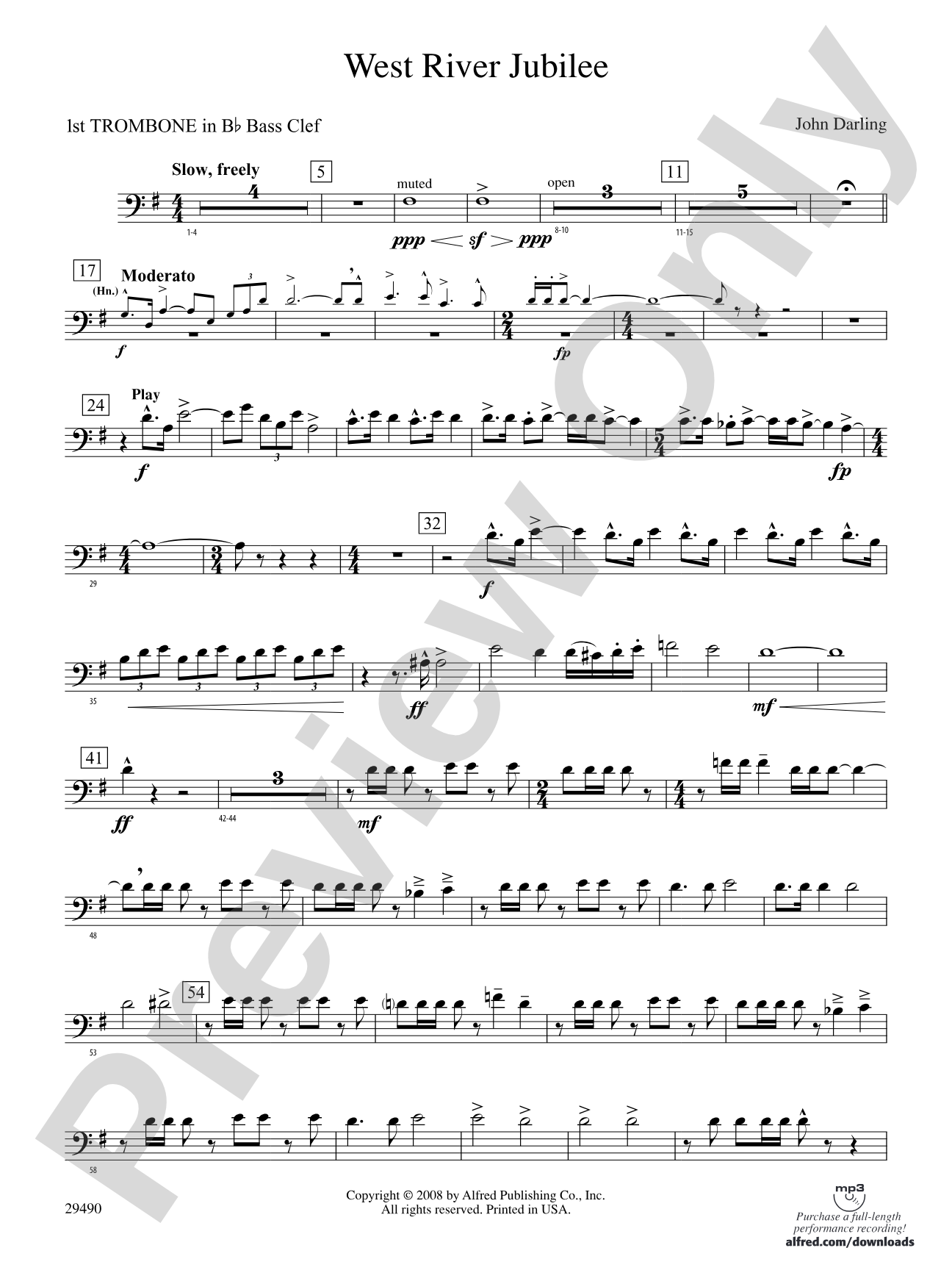
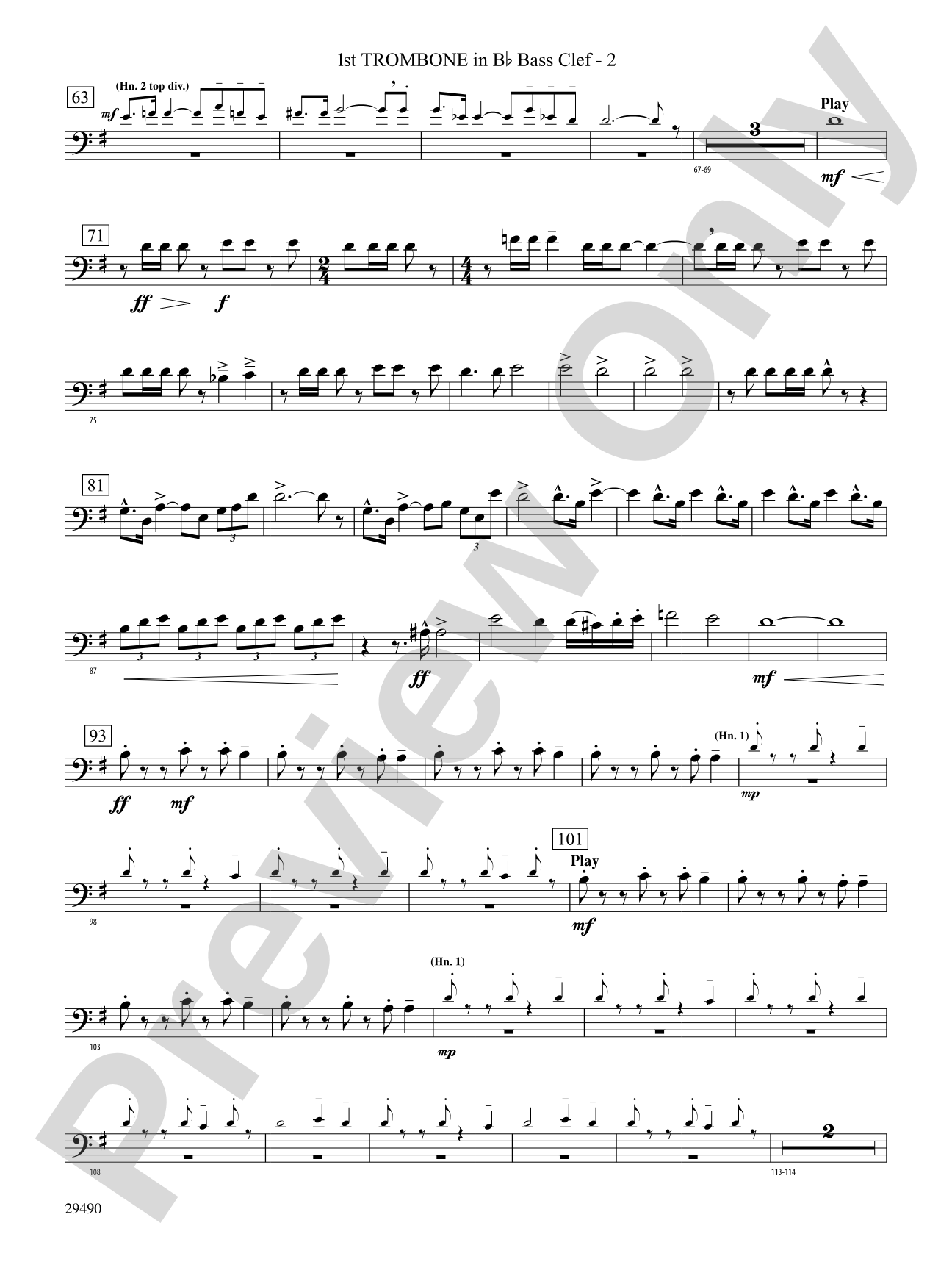
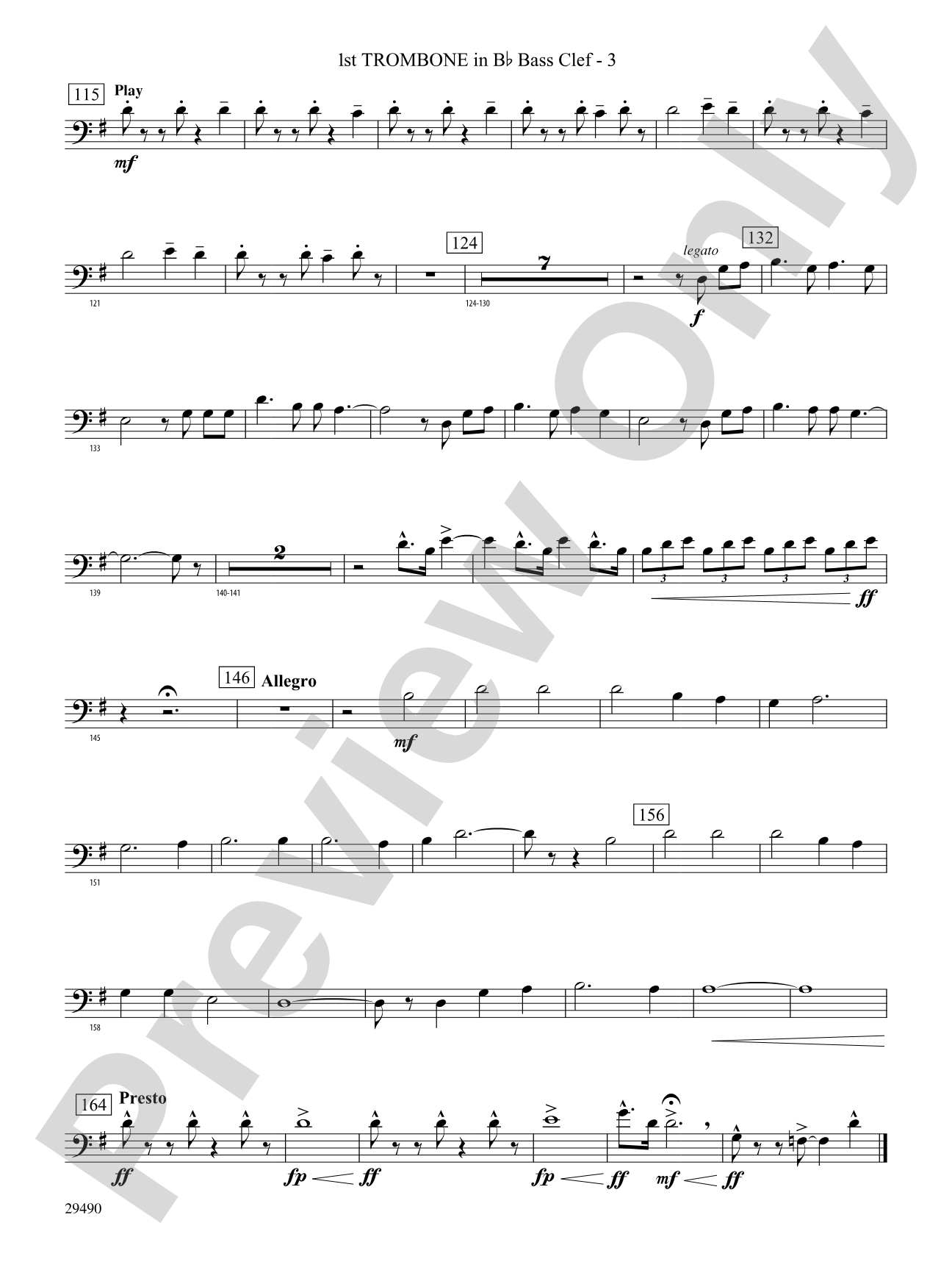

West River Jubilee: (wp) 1st B-flat Trombone B.C.
By John Darling
Grade: 4 (Medium Difficult)
Item: 00-PC-0001446_wpTN1BC
$3.00
Pickup currently not available
Description
This cinematic overture captures the essence of the northern plains, from a serene scene on the Missouri River to the sweeping hills and grassy buttes of the Dakotas, culminating with a rollicking hoe-down. Colorful scoring and infectious rhythms abound. Sure to be a favorite on any concert or festival performance! (6:35)


Don't just read it, hear it, play along with it, and watch your students grow with it. In MakeMusic Cloud, West River Jubilee: (wp) 1st B-flat Trombone B.C. comes alive with professional accompaniment, adjustable tempo, and built-in practice tools that turn solo practice into real progress.
Open in the Player
Jump straight in and assign it today.
Start Your Free Trial
Open this title and explore the full library in minutes.
Sample Audio
1
Audio File
--:--
0:00
0:00
Sample Video
No sample videos found.
Additional Details
Series:
Alfred Concert Band
Publisher:
Alfred Music
Page Count:
224
SKU:
00-PC-0001446_wpTN1BC
More about this title
About the Composer: John Darling

John Darling has taught instrumental conducting, aural skills, and music appreciation at Bismarck State College, where he directed the Wind Ensemble and Jazz Ensemble alongside chamber ensembles. His academic preparation included studies at the University of the State of New York, Virginia Commonwealth University (conducting), and The Ohio State University (conducting doctorate), complemented by two years as Assistant Director of Bands at Rutgers University before joining the BSC faculty in 2003.
Darling's background spans multiple roles within the U.S. Army band program, where he performed as a saxophonist, taught music theory and ear training at the Armed Forces School of Music, and directed Army bands stationed in South Carolina, Korea, Virginia, and Hawaii. He remains active as a guest conductor, clinician, and adjudicator across the upper Midwest and serves as an Associate Member of the International Music Camp Board of Directors.
Why we love this
West River Jubilee succeeds because it respects the Grade 4 ensemble without talking down to it. Darling's orchestration rewards careful balance work and rhythmic precision while remaining genuinely fun to conduct and play, making it equally effective in concert or festival settings where you need something that sounds impressive without exhausting your players.
What to expect
West River Jubilee opens with the calm, reflective beauty of wide plains and river light before gradually drawing energy into itself. The final hoe-down arrives with infectious, unforced joy; this is music that swings and moves without ever feeling rushed or cluttered, painting a specific landscape while remaining purely musical.
Who it's for
This work suits concert bands at the Grade 4 level seeking a showcase piece with genuine character and narrative arc. Directors programming festival competitions or spring concerts will find an overture that engages audiences without requiring an advanced ensemble, making it accessible for strong middle-tier bands and excellent groups wanting something lighter than the typical Grade 5 contest selection.
How to get the most out of it
- Establish the river opening with genuine stillness. Resist the urge to rush the serene section; let the wind parts breathe and allow the dynamic swell to feel inevitable rather than hurried.
- Shape the transition into the hoe-down with clear baton work. The ensemble needs to track the meter change as confidently as you do, so lock eyes with your first-chair players through this pivot.
- Balance the colorful scoring by having woodwinds and brass support each other without one drowning the other. Mark your parts explicitly where texture shifts to ensure no one defaults to mezzo-forte just because they're unsure.
How to use it
Program this as your concert centerpiece or festival opener where you want to establish command of the stage without starting at full intensity. It pairs naturally with both lyrical chamber works and energetic finales, and its six-and-a-half-minute duration makes it a perfect anchor for a mixed program featuring contrasting styles and periods.
Skills your students will build
- Sustained dynamic control through extended soft passages
- Sectional independence while maintaining ensemble cohesion
- Meter and tempo transitions without loss of ensemble togetherness
- Rhythmic precision in syncopated hoe-down figures
- Balance between melodic content and harmonic/rhythmic accompaniment