
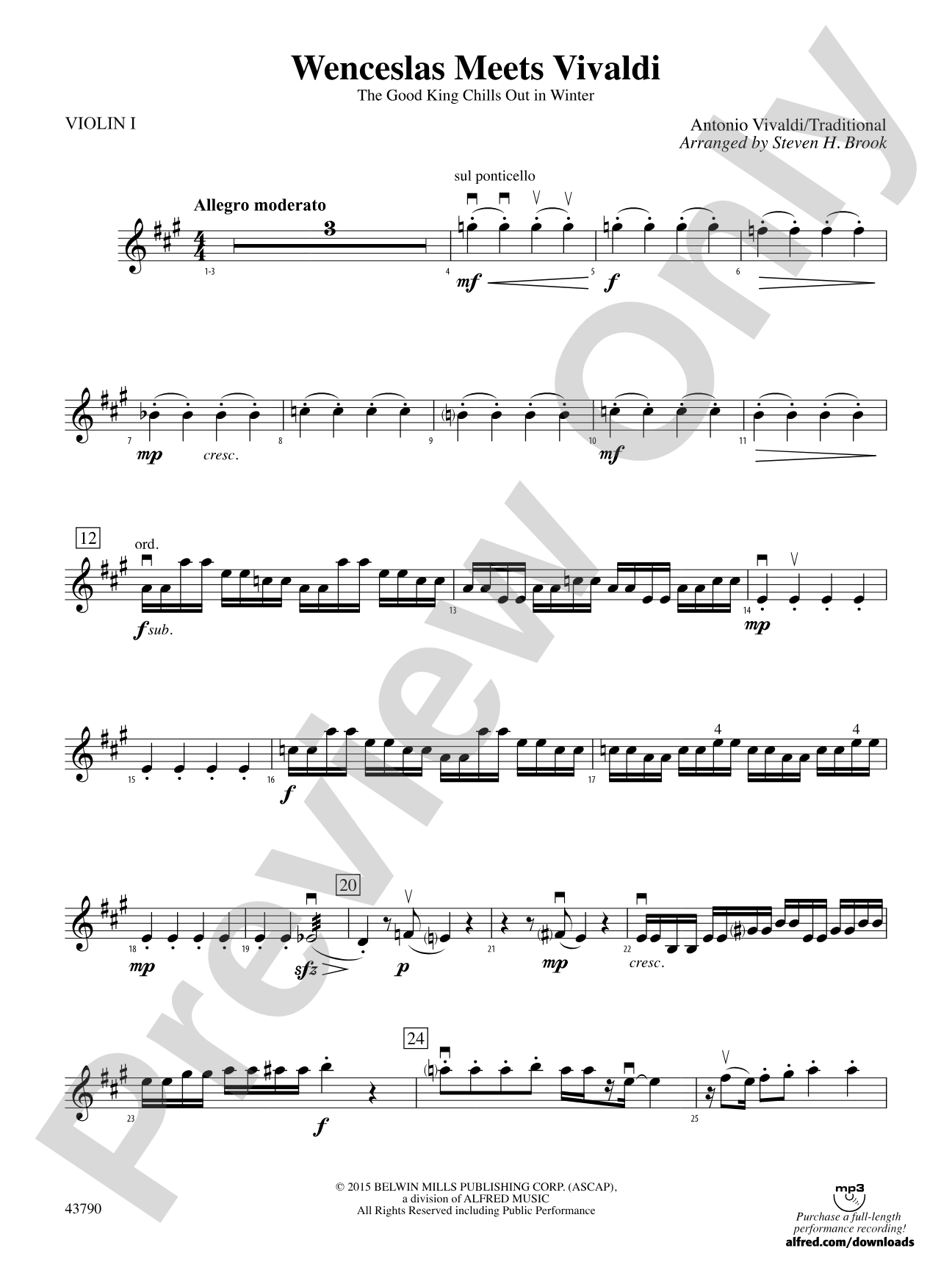

Wenceslas Meets Vivaldi: 1st Violin
The Good King Chills Out in Winter
The music of Antonio Vivaldi and a traditional carol / arr. Steven H. Brook
Grade: 3
Item: 00-PC-0016891_VN1
$7.99
Pickup currently not available
Description
Imagine howling winds and bitter cold as musicians rehearse. Good King Wenceslas arrives with gifts of food and fuel! Spirits are lifted, the music is transformed, and everyone chills out. Blending and transforming both "Good King Wenceslas" and "Winter," this arrangement will jazz up any holiday program. (2:00)


Don't just read it, hear it, play along with it, and watch your students grow with it. In MakeMusic Cloud, Wenceslas Meets Vivaldi: 1st Violin comes alive with professional accompaniment, adjustable tempo, and built-in practice tools that turn solo practice into real progress.
Open in the Player
Jump straight in and assign it today.
Start Your Free Trial
Open this title and explore the full library in minutes.
Sample Audio
1
Audio File
--:--
0:00
0:00
Sample Video
Additional Details
Series:
Belwin Concert String Orchestra
Publisher:
Alfred Music
Page Count:
94
SKU:
00-PC-0016891_VN1
More about this title
About the Composer: Antonio Vivaldi
Antonio Vivaldi (1678-1741) stands as one of the most prolific composers of the Baroque era, producing over 500 concertos across nearly every instrumental combination. His mastery of orchestral color and rhythmic vitality revolutionized instrumental music, establishing conventions for the concerto grosso that influenced generations of composers. Vivaldi's "Four Seasons" remains the most performed Baroque instrumental work, a testament to his gift for translating natural imagery into visceral musical drama.
His output spanned sacred music, operas, and chamber works, yet his instrumental concertos define his legacy in music education. String players at every level encounter Vivaldi's fingerprints on their repertoire, and his architectural approach to building tension, contrast, and resolution offers conductors and students alike a masterclass in musical storytelling.
Why we love this
Steven Brook's fusion of "Winter" from Vivaldi's "Four Seasons" with "Good King Wenceslas" creates a narrative arc that transforms the bleakness of cold into an act of human warmth. The arrangement preserves Vivaldi's signature string writing while giving young orchestras a sophisticated holiday option that rises above the typical classroom Christmas fare. Programming this signals to your ensemble that holiday concerts belong in the concert hall, not just the gymnasium.
What to expect
You hear the winter wind howling through tremolo and rapid string passages, the bitter cold almost tangible. Then a shift occurs—the music warms, a familiar carol melody emerges, and the bleakness yields to kindness and connection. The piece moves between starkness and brightness, never settling into sentimentality; it captures the real emotional stakes of cold and generosity.
Who it's for
String orchestras at the high school level or advancing middle school groups will find this arrangement scaled to their technical and interpretive abilities without sacrificing sophistication. Conductors seeking holiday repertoire that engages serious players and audiences alike will appreciate how Brook honors Vivaldi's musical language while layering in a second melody that young musicians can latch onto.
How to get the most out of it
- Balance the opening storm texture by keeping the rapid figurations in the upper strings articulate but not aggressive; let the lower strings anchor the turbulent harmonic foundation without drowning out the melodic activity above.
- Shape the transition into "Good King Wenceslas" as a moment of genuine arrival. The shift in emotional temperature should be audible and felt, not merely rushed through.
- Draw out the extended pizzicato passages with clarity and rhythmic precision; they anchor the piece during texture changes and deserve the same attention as any bowed passage.
- Mark the dynamic contrasts between the winter imagery and the king's benevolent entrance. The score's journey from cold to warmth only lands if these shifts are deliberate and proportional.
How to use it
Pair this with other Baroque masterwork arrangements to build a concert section that shows how string repertoire evolves across centuries, or place it as the emotional centerpiece of a holiday program, where its narrative strength provides relief from pure entertainment pieces. The two-minute duration makes it ideal for concert openers or for anchoring a miscellaneous collection of shorter works.
Skills your students will build
- Executing rapid string figurations with control and articulation (tremolo, fast bow work)
- Reading and responding to dramatic dynamic shifts and contrasts in musical character
- Balancing multiple textures and melodic layers within a section (carrying "Winter" while integrating "Good King Wenceslas")
- Sustaining ensemble blend through extended pizzicato sections
- Interpreting Baroque phrasing and articulation conventions within a narrative context