
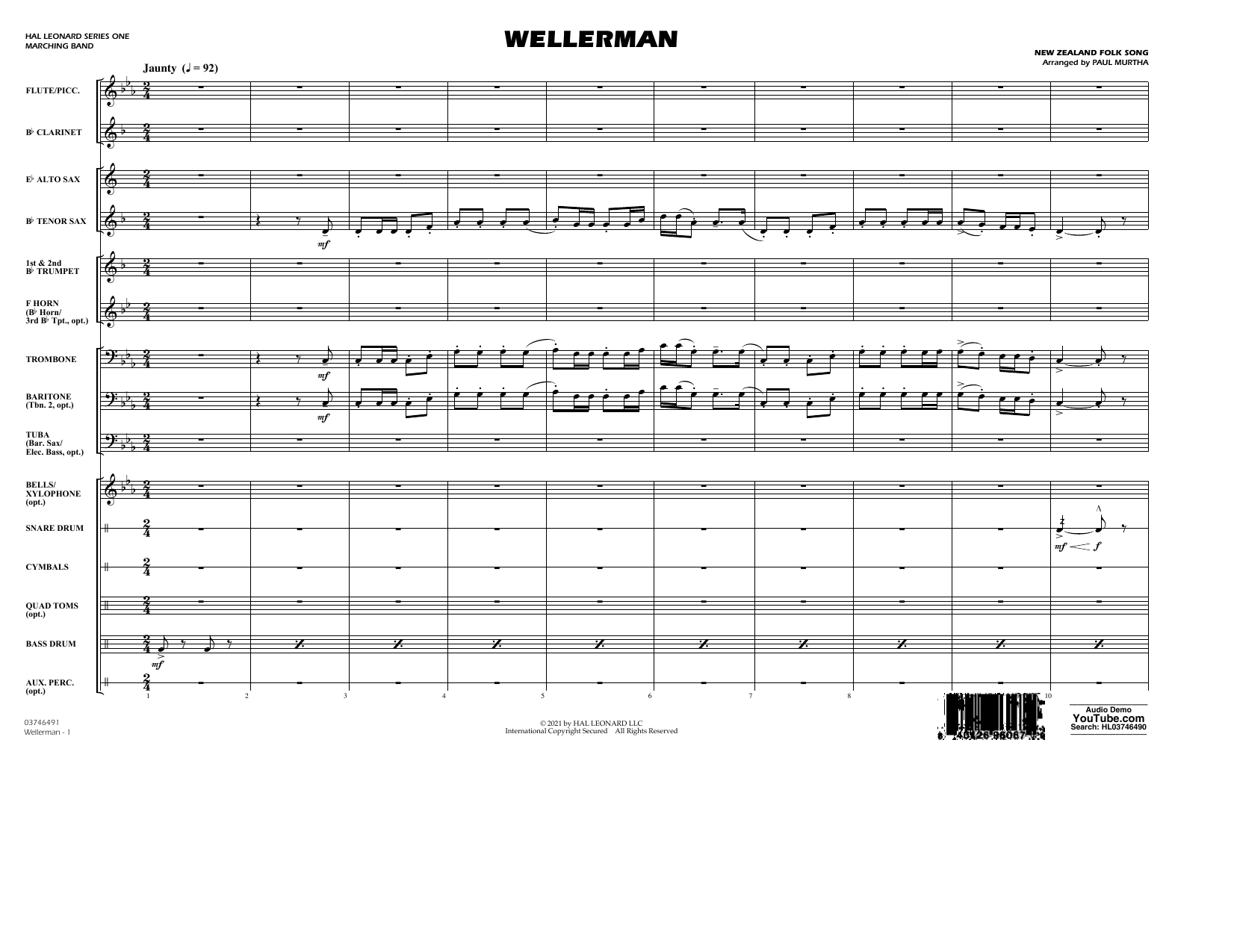

Wellerman (arr. Paul Murtha): Marching Band Conductor Score & Parts
Arranged by Paul Murtha
Grade: 2
Item: 35-PK00475323
$60.00
Pickup currently not available
Buy Extra Parts (Digital PDF Download)
Parts Added to Cart!
Description
Get your sea shanty on with his well-known whaling song from New Zealand. Featuring a catchy melody passed around the band and a timely key change, this is fun and effective for the stands or field.


Wellerman (arr. Paul Murtha): Marching Band Conductor Score & Parts isn't in MakeMusic Cloud just yet...but it could be. Let us know you'd like to see it, and you'll help shape what comes next. In the meantime, start a free trial and dive into thousands of interactive titles your students can play along with today.
Request This Title
Tell us you want it.
Start Your Free Trial
Explore everything that's ready to play right now.
Sample Audio
No sample audio found.
Sample Video
No sample videos found.
Additional Details
Publisher:
Hal Leonard
SKU:
35-PK00475323
More about this title
About the Arranger: Paul Murtha
Paul Murtha has spent decades creating arrangements that give marching bands access to music beyond the traditional competitive circuit. His work across multiple styles and difficulty levels has made him a trusted voice in the field, known for writing charts that are genuinely fun to perform without sacrificing musical integrity.
Why we love this
Murtha understands what makes a marching band arrangement sing. The melody trades keep everyone engaged, the key change arrives at exactly the right moment to refresh the energy, and the folk melody itself is immediately recognizable enough that audiences connect with it on first hearing. It's the kind of piece that energizes both your ensemble and the crowd.
What to expect
Salty and spirited. The melody carries the swagger of a whaling ship's crew, grounded and steady even as it travels through the band. There's genuine warmth in the arrangement, a sense of ensemble camaraderie that mirrors the song's origins.
Who it's for
Marching bands at the Grade 2 level looking for repertoire with strong melodic content and built-in audience appeal. This works equally well for fall competitions, spring concerts, or field shows where you want something spirited without technical overreach.
How to get the most out of it
- Balance the melody line across sections as it rotates. Each group holding the tune should project with confidence while the accompaniment stays underneath.
- Nail the key change with precision. Ensure all parts make the transition together; sloppy execution here will undermine the arrangement's momentum.
- Let the character breathe. This is a sea shanty, not a march. The rhythm should feel unhurried and grounded, not rushed or mechanical.
How to use it
Consider this for a concert program that mixes traditional marching band fare with folk material. It sits comfortably alongside lighter works and provides a welcome tonal shift if programmed thoughtfully. It also translates well to field shows where you're building a thematic set or simply want a crowd-pleaser with substance.
Skills your students will build
- Melodic trading between sections and clear projection of primary material
- Executing key changes with intonation precision
- Balancing melody and accompaniment in an ensemble texture
- Interpreting folk material with appropriate rhythmic character and phrasing