

Welcome, Welcome Winter: SATB Choral Octavo
Words and music by Greg Gilpin
Item: 00-PO-0001033
$1.80
Minimum order quantity: 20 copies
Pickup currently not available
Related Items
Welcome, Welcome Winter: SoundTrax Digital Audio Download |
$26.99
|
View | |
Welcome, Welcome Winter: SSAB Choral Octavo |
$1.80
|
View | |
Welcome, Welcome Winter: SSA Choral Octavo |
$1.80
|
View | |
Welcome, Welcome Winter: SATB Choral Octavo |
$1.80
|
View | |
Welcome, Welcome Winter: SSAB Choral Octavo |
$1.80
|
View | |
Welcome, Welcome Winter: SSA Choral Octavo |
$1.80
|
View | |
Welcome, Welcome Winter: Choral Octavo SoundTrax CD |
$26.99
|
View |
Description
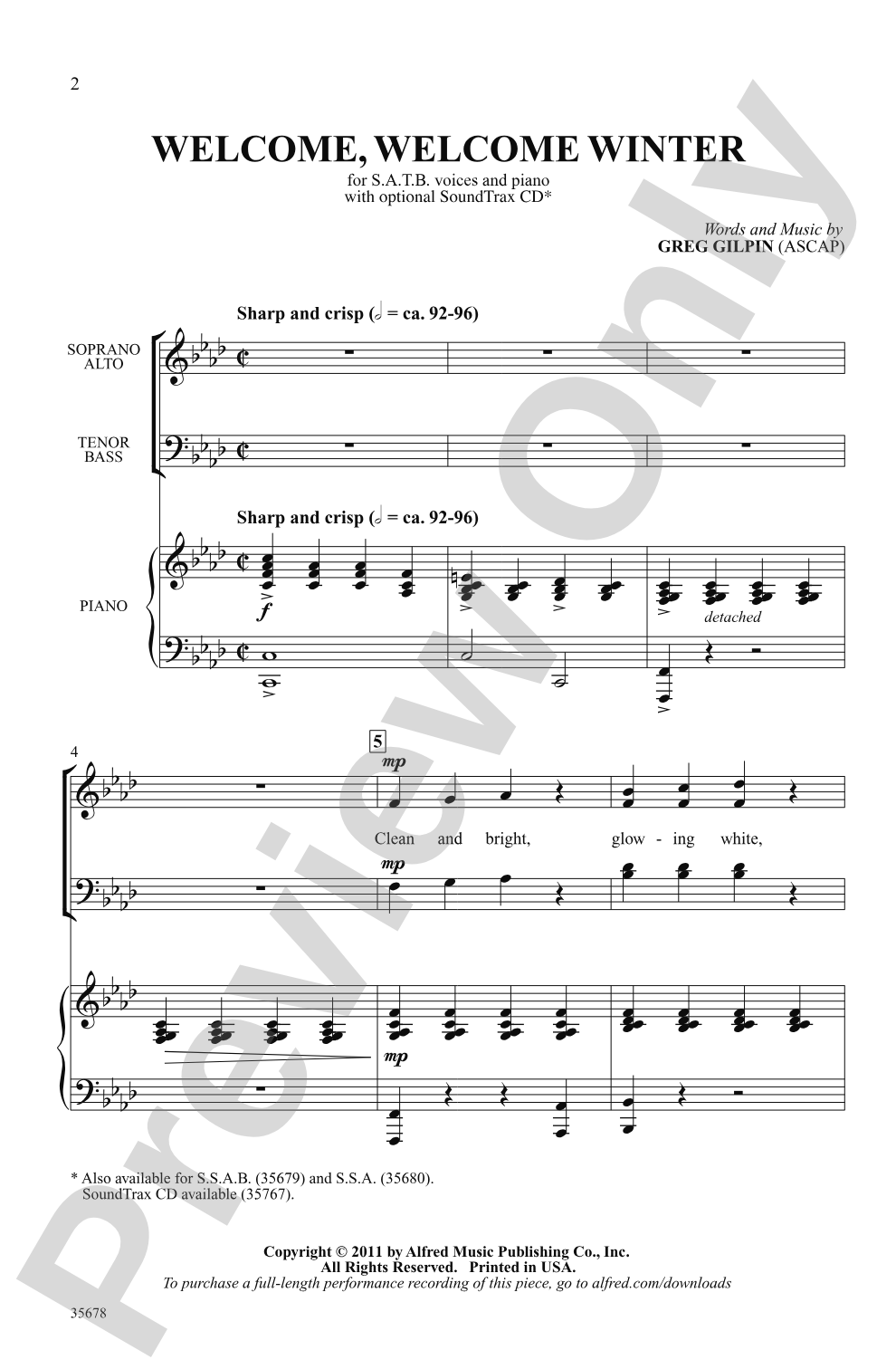
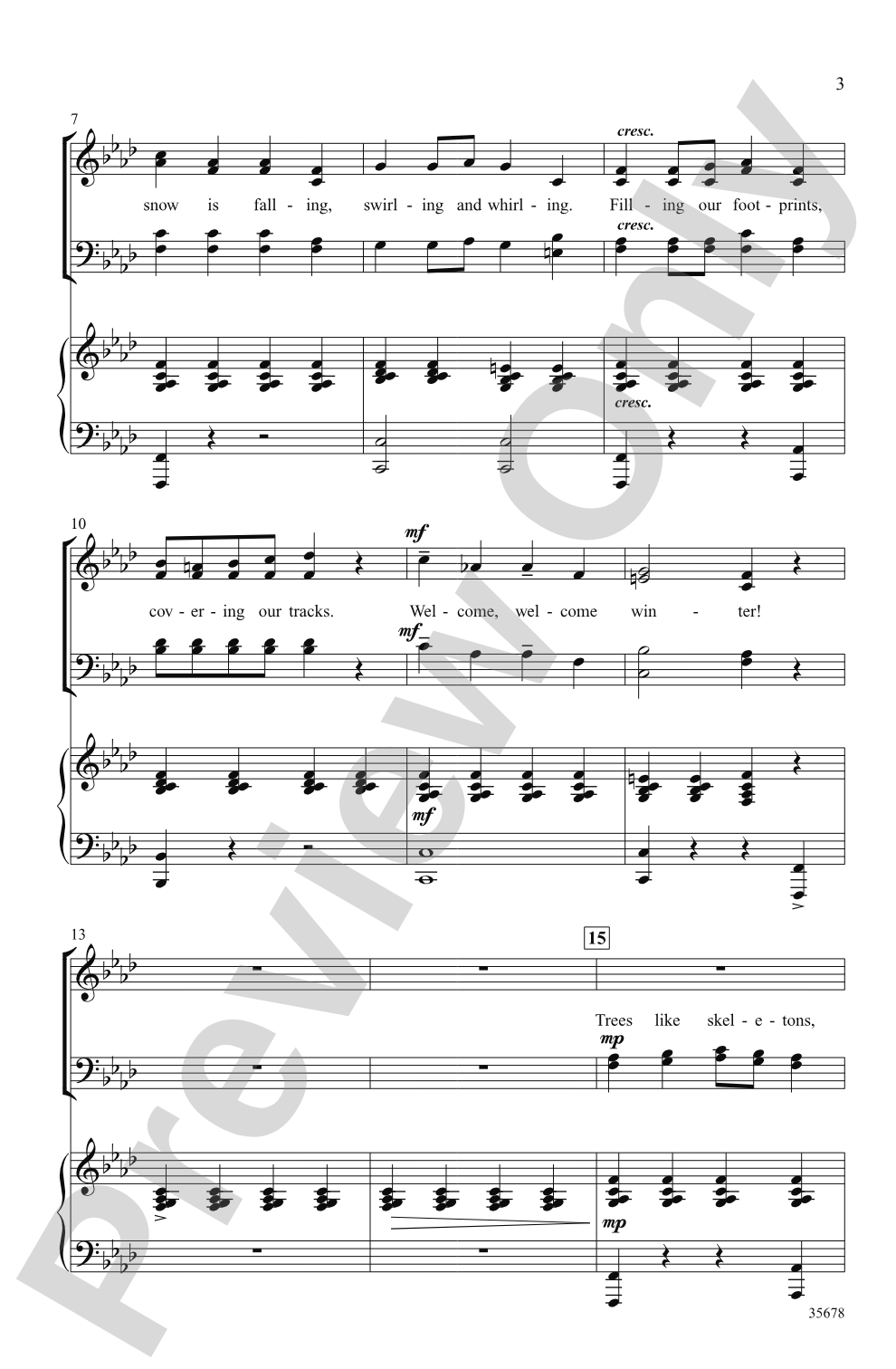
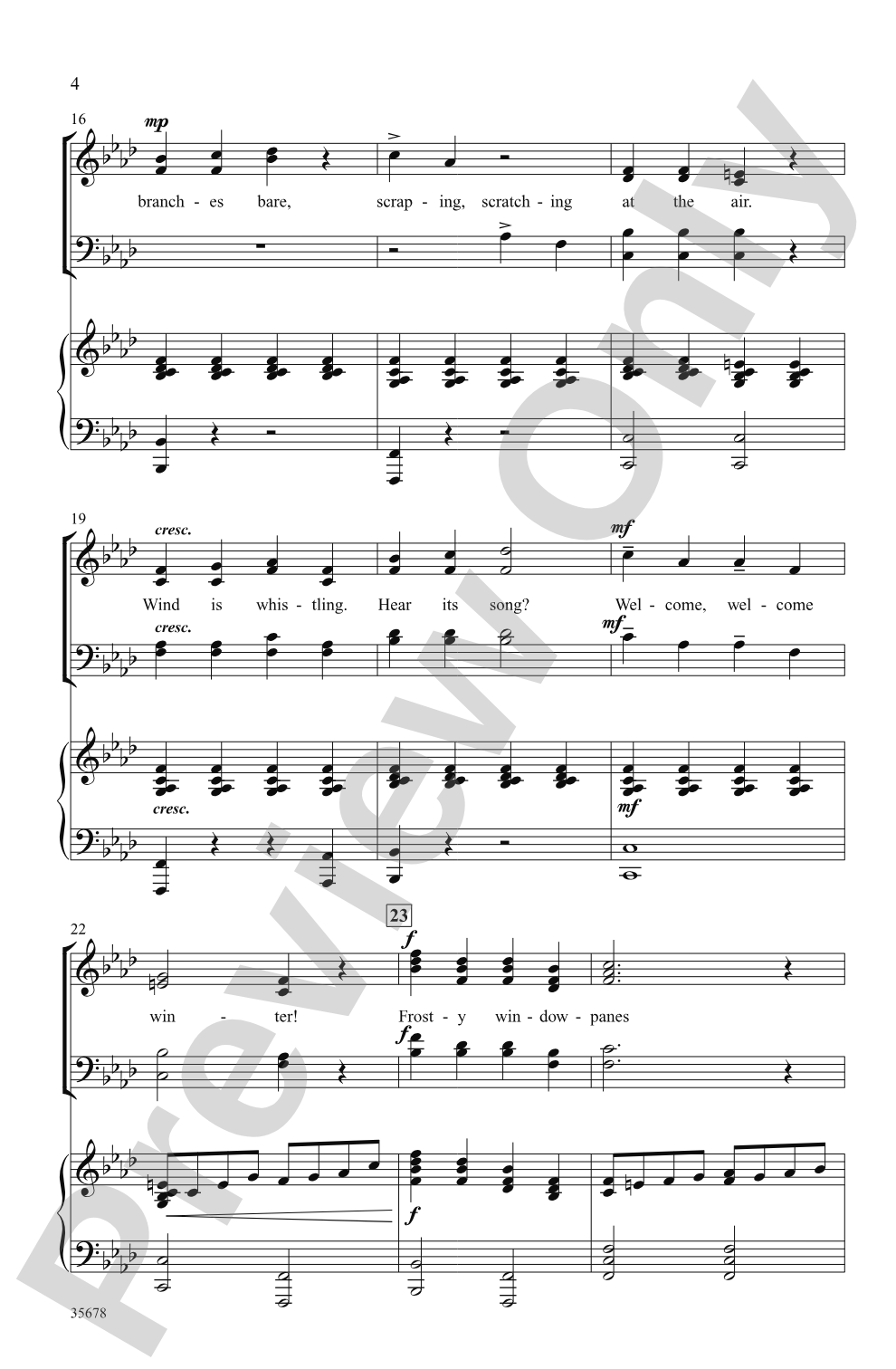
A crisp, detached accompaniment supports the playful attitude of an evocative text, and articulate voice parts provide vivid images of wintertime. The F-minor tonality makes for a haunting and delightful greeting. Innovative.


Welcome, Welcome Winter: SATB Choral Octavo isn't in MakeMusic Cloud just yet...but it could be. Let us know you'd like to see it, and you'll help shape what comes next. In the meantime, start a free trial and dive into thousands of interactive titles your students can play along with today.
Request This Title
Tell us you want it.
Start Your Free Trial
Explore everything that's ready to play right now.
Sample Audio
1
Audio File
--:--
0:00
0:00
Sample Video
No sample videos found.
Additional Details
Series:
Alfred Choral Designs
Publisher:
Alfred Music
Page Count:
12
SKU:
00-PO-0001033
More about this title
About the Composer: Greg Gilpin

Greg Gilpin stands among America's most performed choral composers, with his works regularly heard at prestigious venues including Carnegie Hall, Lincoln Center, and the Sydney Opera House. His compositions have earned ASCAP recognition, and he serves as Director of Educational Choral Publications for Shawnee Press, where he shapes the landscape of contemporary choral music for student ensembles and professional choirs alike.
Beyond the concert hall, Gilpin has expanded his creative reach into film scoring and collaborative projects with internationally recognized artists. He holds membership in ACDA and NAfME and maintains his commitment to the choral art through conducting, composing, and teaching.
Why we love this
Gilpin's command of text painting and harmonic color shines through here. The F-minor tonality creates an atmospheric foundation that feels both mysterious and welcoming, while his articulation markings in the voice parts demand precise execution from singers and deliver genuine dramatic payoff. This is sophisticated writing that respects the intelligence of student musicians.
What to expect
Crisp winter air and vivid imagery crystallize in sound. The minor tonality and detached accompaniment create an unsettling elegance, as if peering through frost-covered glass at something both beautiful and slightly unsettling. Singers experience the delicious tension between the playful attitude of the text and the haunting harmonic landscape.
Who it's for
High school and adult community choirs seeking contemporary secular repertoire with literary substance and harmonic sophistication. Ensembles comfortable with precise articulation and expressive text work will find this piece rewarding.
How to get the most out of it
- Shape the detached accompaniment to avoid sounding mechanical; the crisp articulation should feel playful, not stiff, so the text remains the focus.
- Drill the articulation patterns in each voice part independently before combining; Gilpin's notation is specific, and accuracy here defines the piece's character.
- Balance the voices to let the upper parts carry the melodic imagery while maintaining support from the lower voices, especially through the harmonic shifts that the F-minor tonality creates.
- Use the recorded accompaniment to lock in the rhythmic precision the piece demands, then gradually remove it so singers develop confident independence from it.
How to use it
Pair this with other seasonal selections for a December concert that moves beyond sentiment into genuine artistry. Its contemporary style and modest page count (12 pages) make it an ideal anchor piece for a winter program alongside both traditional and modern works.
Skills your students will build
- Articulate diction and precise consonant placement in support of text imagery
- Voice independence within complex harmonic structures using F-minor tonality
- Attention to specific articulation markings as compositional choices, not optional details
- Balance and blend adjustments across changing harmonic colors
- Interpretation of modern notation and extended techniques within SATB scoring