

Welcome, Spring: SATB Choral Octavo
Words and music by Andy Beck
Item: 00-PO-0007745
$1.65
Minimum order quantity: 20 copies
Pickup currently not available
Related Items
Welcome, Spring: SoundTrax Digital Audio Download |
$24.95
|
View | |
Welcome, Spring: 2-Part/SSA Choral Octavo |
$2.25
|
View | |
Welcome, Spring: Choral SoundPax |
$15.00
|
View | |
Welcome, Spring: SATB Choral Octavo |
$1.65
|
View | |
Welcome, Spring: 3-Part Mixed Choral Octavo |
$2.05
|
View | |
Welcome, Spring: 2-Part/SSA Choral Octavo |
$2.25
|
View | |
Welcome, Spring: Choral Octavo SoundTrax CD |
$24.95
|
View | |
Welcome, Spring: Choral SoundPax |
$15.00
|
View |
Description
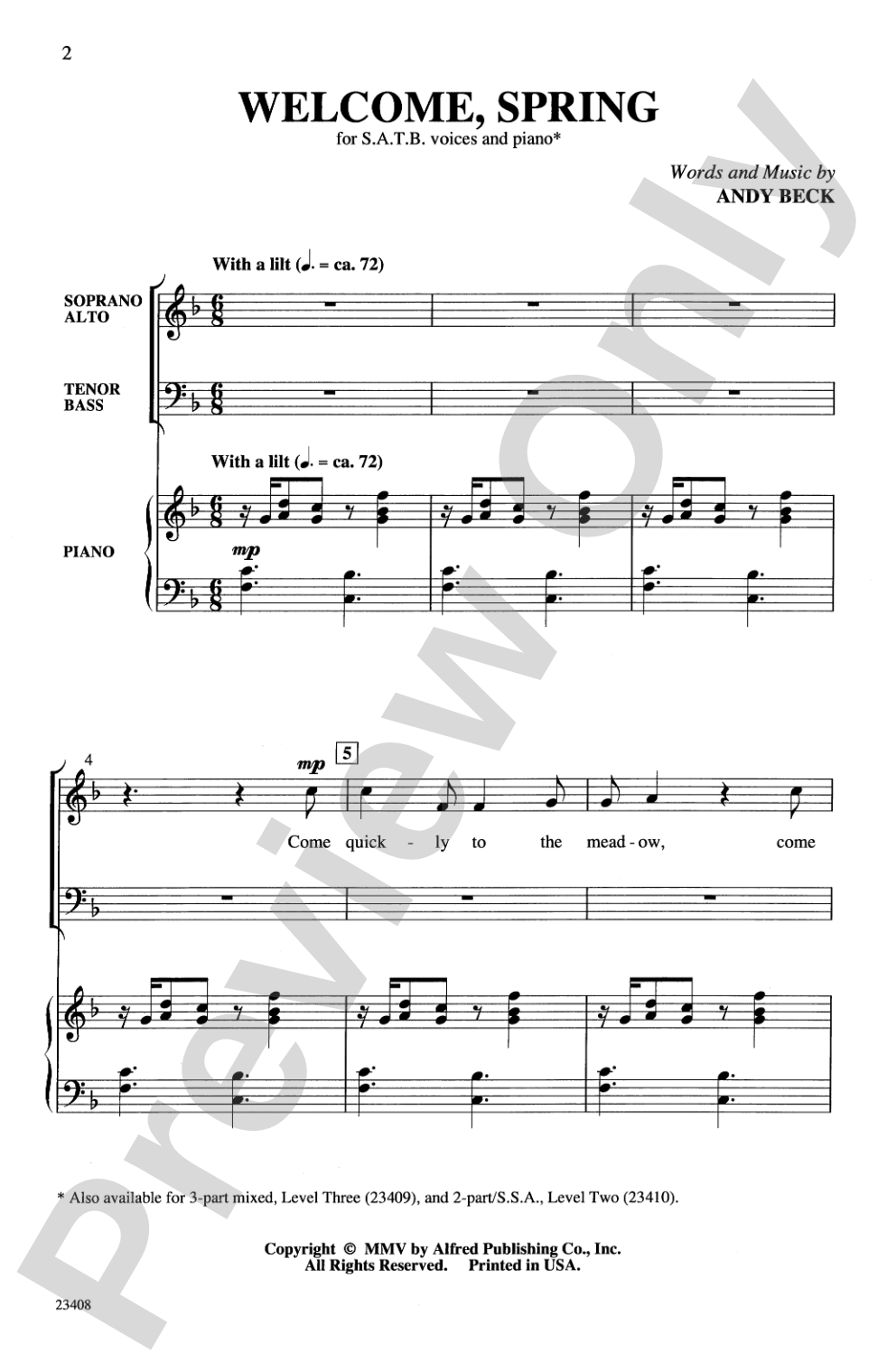
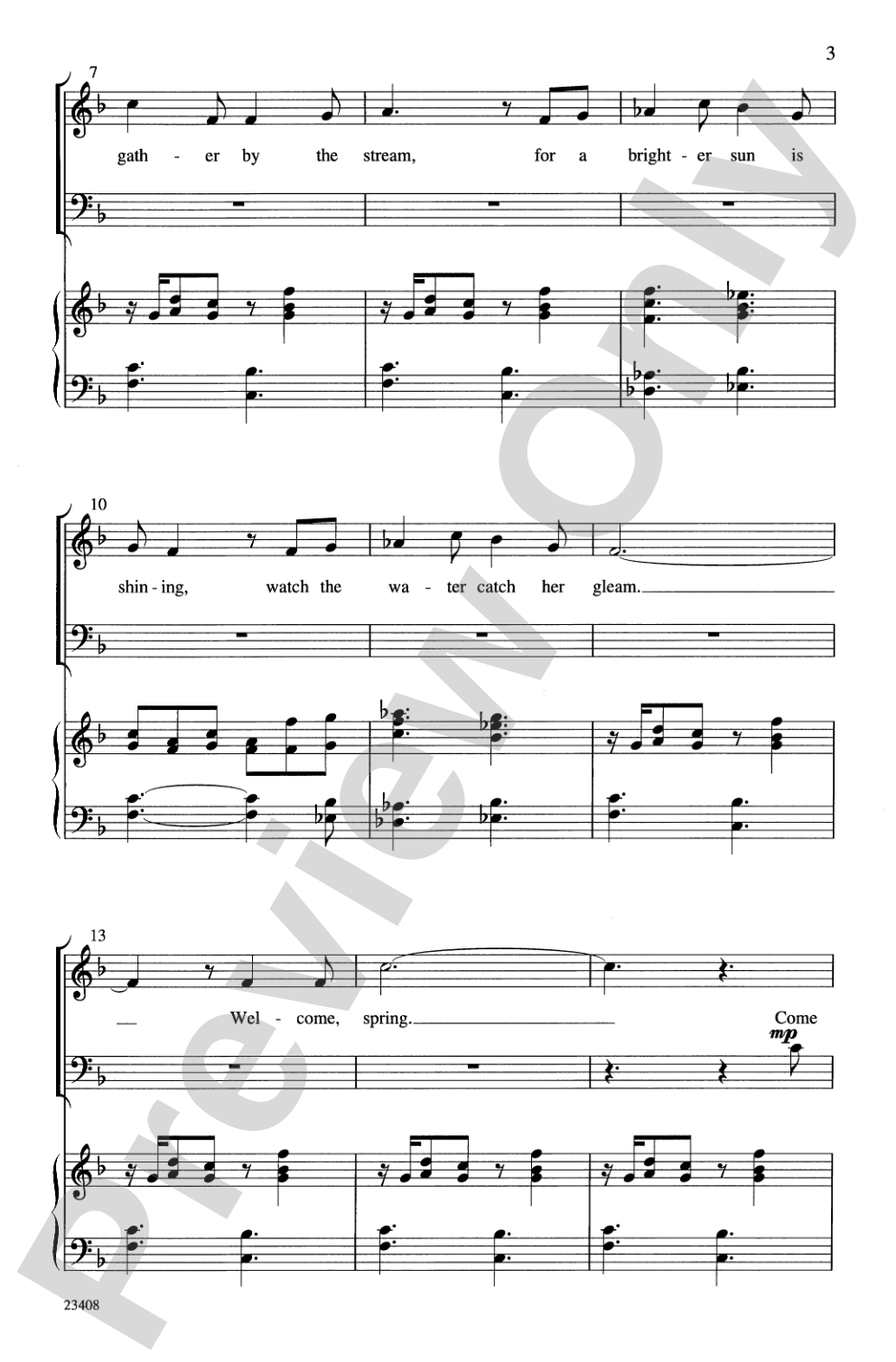
Andy Beck adds a third to his song cycle about the seasons with Welcome, Spring. Text painting is vivid when an agile piano ostinato trickles its watery pattern, when an unexpected tonal shift symbolizes the change from winter to spring, and when vocal "pedals" gradually "bloom" one after the other over a pianistic transition to the textured finale. Poetic and musical nuances are plentiful and purposeful in all voicings.


Welcome, Spring: SATB Choral Octavo isn't in MakeMusic Cloud just yet...but it could be. Let us know you'd like to see it, and you'll help shape what comes next. In the meantime, start a free trial and dive into thousands of interactive titles your students can play along with today.
Request This Title
Tell us you want it.
Start Your Free Trial
Explore everything that's ready to play right now.
Sample Audio
1
Audio File
--:--
0:00
0:00
Sample Video
No sample videos found.
Additional Details
Series:
Alfred Choral Designs
Publisher:
Alfred Music
Page Count:
12
SKU:
00-PO-0007745
More about this title
About the Composer: Andy Beck

Andy Beck directs choral publications at Alfred Music and has composed and arranged over 450 choral works now in performance worldwide. His output spans secular and sacred choral literature, vocal resources, children's musicals, and sight-singing instruction; his pedagogical texts Sing at First Sight, Foundations in Choral Sight Singing, and Vocalize! 45 Vocal Warm-Ups That Teach Technique are widely adopted in music education. A trained tenor with degrees from Ithaca College and Northwest Missouri State University, Beck maintains an active career as guest conductor, adjudicator, and clinician across the United States and internationally.
Beck's work as a commissioned composer and conductor for honor choirs and all-state groups reflects his deep commitment to choral artistry and music literacy. He performs regularly with the North Carolina Master Chorale Chamber Choir and continues his long association with Alfred Music as a studio singer since 1992. His dual expertise in composition and pedagogy shapes every piece he writes for choral directors seeking music that teaches while it moves.
Why we love this
Beck's ear for text painting and harmonic surprise makes this spring portrait feel both intimate and theatrical. The interplay between vocal lines blooming gradually over a pianistic transition to the finale rewards singers who shape their lines carefully, and the recorded accompaniment gives rehearsal-strapped programs an easy pathway to a polished performance.
What to expect
The piece unfolds with quiet poetry, beginning in minor shadows before sunlight breaks through. A restless, cascading piano figure suggests snowmelt and flowing water, while the choir's gradual vocal bloom feels genuinely organic, as if spring is unfolding one voice at a time. The final section gathers momentum and texture, landing in brightness.
Who it's for
This octavo suits intermediate to advanced SATB choirs with singers who can sustain legit lines and respond to subtle dynamic and harmonic shifts. Directors programming concert cycles or spring concerts will find this valuable as both a musical showpiece and a technically engaging work for developing choirs.
How to get the most out of it
- Isolate the piano ostinato in early rehearsals so singers hear how the "watery pattern" sits against their entrances; this helps anchor intonation during the tonal shift from winter to spring.
- Shape the vocal pedals as true sustained tones that grow in weight and presence, not as static notes. Each voice should feel its own arc over the transition section.
- Balance the piano texture against the choral blend; Beck writes for transparency here, so avoid oversinging the outer voices during the final section's "textured" climax.
- Use the recorded accompaniment in performance if rehearsal time is limited, or track it early to establish tempo and phrasing before moving to live piano.
How to use it
Program this as a centerpiece for a seasonal concert or as a sophisticated transition between winter and spring-themed pieces. Its 12 pages and moderate technical demands fit well in concert programs that mix accessible music with more advanced literature, and the recorded accompaniment makes it feasible for programs without reliable pianists.
Skills your students will build
- Sustaining long tones with consistent breath support and vibrato control
- Reading and maintaining individual lines within shifting harmonic contexts
- Understanding and executing text painting through vocal color and dynamic shaping
- Blending voices across a four-part texture while preserving line independence
- Responding to unexpected tonal shifts and maintaining ensemble cohesion through key changes