
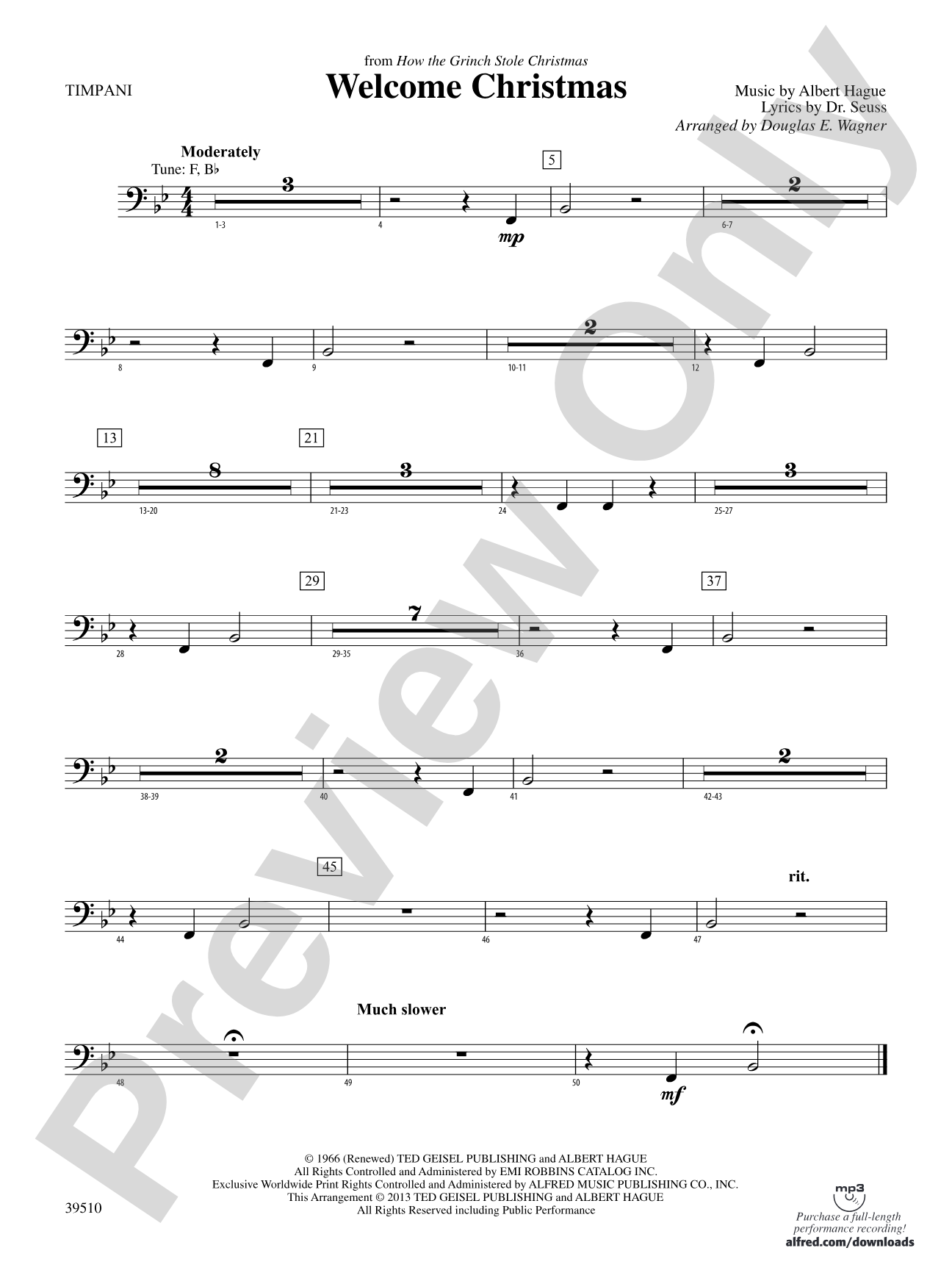

Welcome Christmas (from How the Grinch Stole Christmas): Timpani
Music by Albert Hague, lyrics by Dr. Seuss / arr. Douglas E. Wagner
Grade: 1 (Very Easy)
Item: 00-PC-0015825_TMP
$3.00
Pickup currently not available
Description
The joyous sounds rising from Whoville, as its undaunted residents join their voices affirming the deeper meaning of the season, are recreated in this solidly scored arrangement for beginning players at their first holiday program. How the Grinch Stole Christmas, the 1966 animated television adaptation of the Dr. Seuss classic, has become mandatory viewing each year for children of all ages. Its imaginative musical score, together with an endearing cast of characters---not to mention the delicious narration of Boris Karloff---have created this American Christmas tradition. (2:15)
This title is available in MakeMusic Cloud.


This title is available in MakeMusic Cloud.
Don't just read it, hear it, play along with it, and watch your students grow with it. In MakeMusic Cloud, Welcome Christmas (from How the Grinch Stole Christmas): Timpani comes alive with professional accompaniment, adjustable tempo, and built-in practice tools that turn solo practice into real progress.
Open in the Player
Jump straight in and assign it today.
Start Your Free Trial
Open this title and explore the full library in minutes.
Sample Audio
1
Audio File
--:--
0:00
0:00
Sample Video
Additional Details
Series:
Pop Beginning Band
Publisher:
Alfred Music
Page Count:
132
SKU:
00-PC-0015825_TMP
More about this title
About the Composer: Albert Hague
Albert Hague composed the score for the 1966 animated television special How the Grinch Stole Christmas, which has since become a cornerstone of American holiday broadcasting. His work on this Dr. Seuss adaptation earned him an Emmy nomination and demonstrated his gift for writing music that captures both whimsy and genuine emotional depth for family audiences.
Beyond his television work, Hague had a distinguished career in musical theater, including the original Broadway production of Pipe Dream. He also taught music composition and theory at universities throughout his career, bringing his practical knowledge of orchestration and songwriting to generations of students.
Why we love this
Douglas E. Wagner's arrangement respects the melodic charm of Hague's original while keeping the instrumentation and range absolutely accessible for Grade 1 ensembles. The scoring gives every section meaningful material rather than doubling parts, so beginning players feel genuinely involved in creating something recognizable and musically satisfying. It's the rare arrangement that works both as a confidence-builder for first-year musicians and as a piece that audiences actually want to hear.
What to expect
Warm and inviting, with the kind of straightforward melodic generosity that made the original television special so memorable. The orchestration captures the gentle, almost naive optimism of Whoville without condescension. There's a lift in the phrasing and a genuine sense of celebration that students can feel in their hands and hear in the room.
Who it's for
Beginning concert band students encountering their first holiday performance. This arrangement assumes players are early in their first year (Grade 1) and may have limited facility with their instruments. Directors seeking reliable, musically honest repertoire for December concerts will find this especially useful for programs that need to feel both accessible and professionally crafted.
How to get the most out of it
- Balance the melody between first and second parts; this arrangement distributes the tune across sections, so coordinate who carries the phrase at each moment during rehearsal.
- Keep articulation clean and consistent, especially in the eighth-note passages. Clarity in attack will let the joyful character shine through.
- Support the text and emotional intent: this piece celebrates hope and community, not just the mechanics of playing. Encourage students to think about the story of Whoville as they rehearse.
- Watch for intonation in the lower voices, where sustained notes can drift. Build in tuning checks during sectional rehearsals.
How to use it
Pair this with other Grade 1 holiday selections to build a cohesive December concert, or program it as a standalone opener that immediately signals the season to your audience. Its recognizable source material and manageable length (2:15) also make it ideal for pep rallies, school assemblies, or community holiday events where you want to showcase what your beginning band can accomplish.
Skills your students will build
- Reading and executing simple melodic lines across multiple parts
- Sustained tone production and breath control
- Balanced ensemble playing with clear articulation
- Following a conductor through moderate tempo changes
- Intonation awareness, particularly in sustained chords