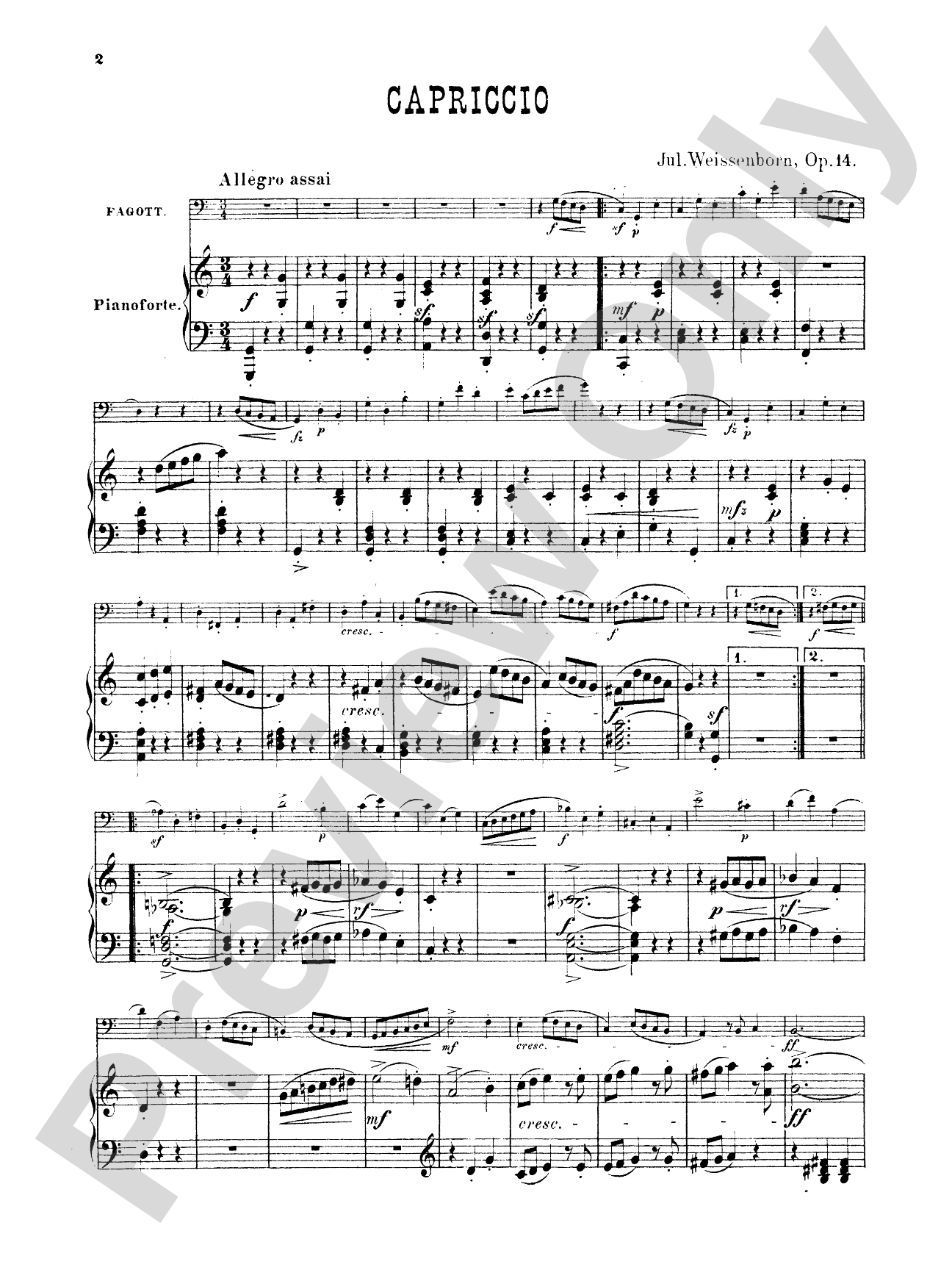
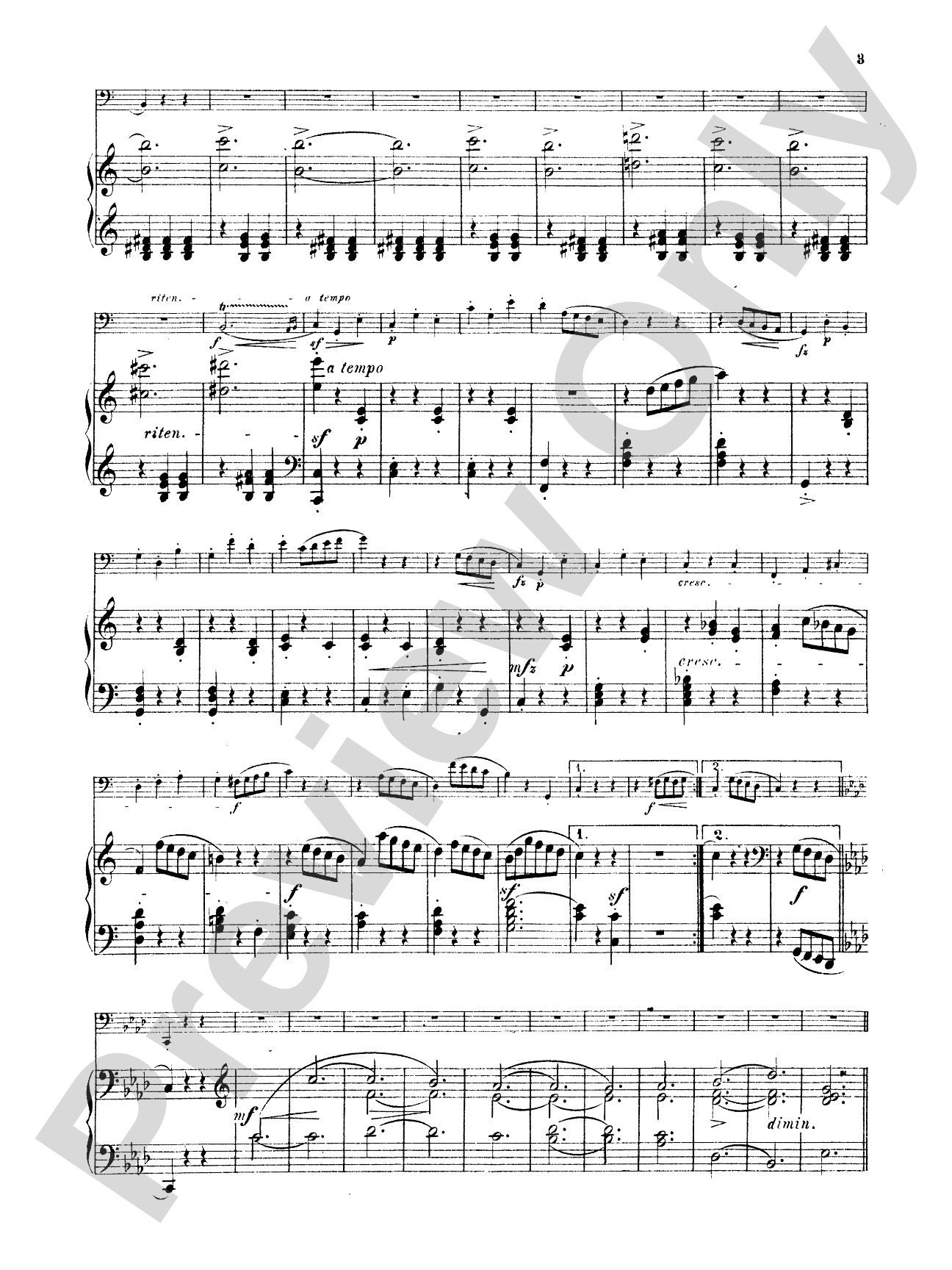
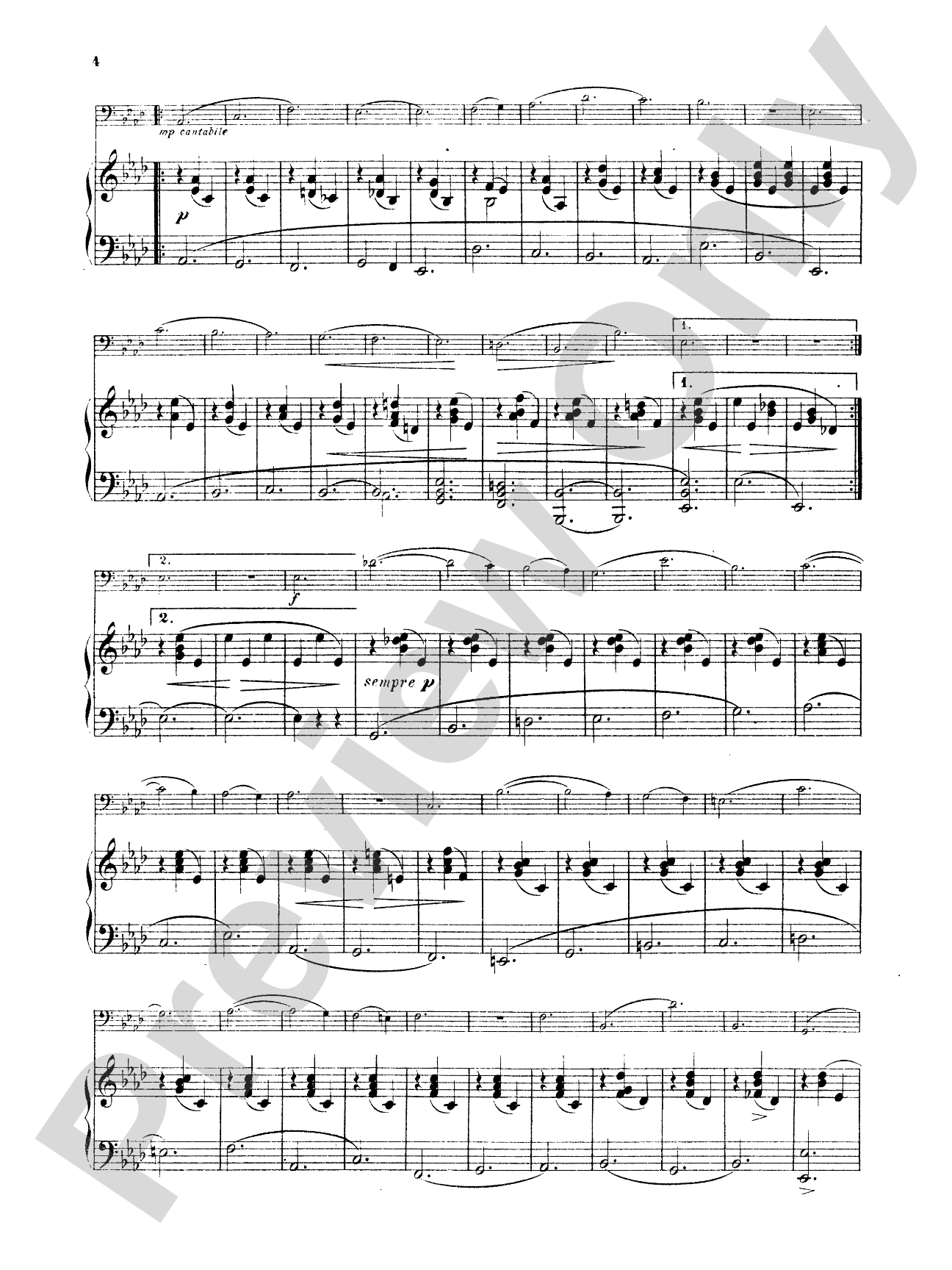
Weissenborn: Capriccio, Op. 14 Sheet Music Preview

Weissenborn: Capriccio, Op. 14

By Julius Weissenborn

Item: 00-PC-0009916

Digital Download
$7.99
Description
A Bassoon Solo, composed by Julius Weissenborn.

Don't just read it, hear it, play along with it, and watch your students grow with it. In MakeMusic Cloud, Weissenborn: Capriccio, Op. 14 comes alive with professional accompaniment, adjustable tempo, and built-in practice tools that turn solo practice into real progress.

Sample Audio
No sample audio found.
Sample Video
Additional Details
Series: Kalmus Edition
Publisher: Alfred Music
Page Count: 20
SKU: 00-PC-0009916
Instrumentation: Bassoon & Piano

More about this title

About the Composer: Julius Weissenborn

Julius Weissenborn (1837-1888) was a German bassoonist and composer whose works remain central to the bassoon solo repertoire. Active during the late Romantic period, he wrote extensively for his own instrument, combining technical brilliance with genuine musical substance. His compositions reflect both the virtuosic demands of the concert hall and the pedagogical needs of serious students.

Why we love this

Weissenborn's Capriccio sits in that rare space where contest appeal and genuine artistry converge. The writing showcases the bassoon's lyrical warmth and agility without resorting to empty display, making it equally rewarding for adjudicators and audiences.

What to expect

The Capriccio balances Romantic lyricism with character and wit. Moments of songful warmth alternate with passages of spirited figuration, all grounded in Weissenborn's understanding of the bassoon's particular voice. The piece feels conversational rather than bombastic, inviting the listener into intimate musical discourse.

Who it's for

This work suits advanced high school students preparing for solo competitions or serious undergraduate bassoonists building a recital repertoire. It also serves well-prepared community ensemble soloists and professionals seeking reliable Romantic-era material for concert programming.

How to get the most out of it

  • Shape the melodic phrases with a singer's approach to phrasing and vibrato; the Romantic context demands expressive breathing that supports the bassoon's natural cantabile character.
  • Balance carefully with the piano throughout. The accompaniment often carries harmonic weight that needs to breathe without overwhelming the solo line, especially in the gentler sections.
  • Work the rhythmic coordination closely with your pianist early on. Weissenborn's writing sometimes places independent figuration in both parts that requires precise ensemble awareness.
  • Attend to the full range of dynamics and articulation markings. They define the piece's emotional arc and prevent the performance from flattening into uniform virtuosity.

How to use it

Place this alongside other Romantic woodwind concertante works to anchor a contemporary classics portion of a recital, or feature it as the centerpiece of a solo competition program. Its twenty pages make it substantial enough to hold its own on a concert while remaining digestible for audiences unfamiliar with bassoon repertoire.

Skills your students will build

  • Lyrical phrasing across extended melodic passages
  • Balancing technical figures with musical intent
  • Ensemble coordination with piano accompaniment
  • Expressive use of vibrato and dynamic shaping
  • Navigating the full bassoon range with consistency

You May Also Like