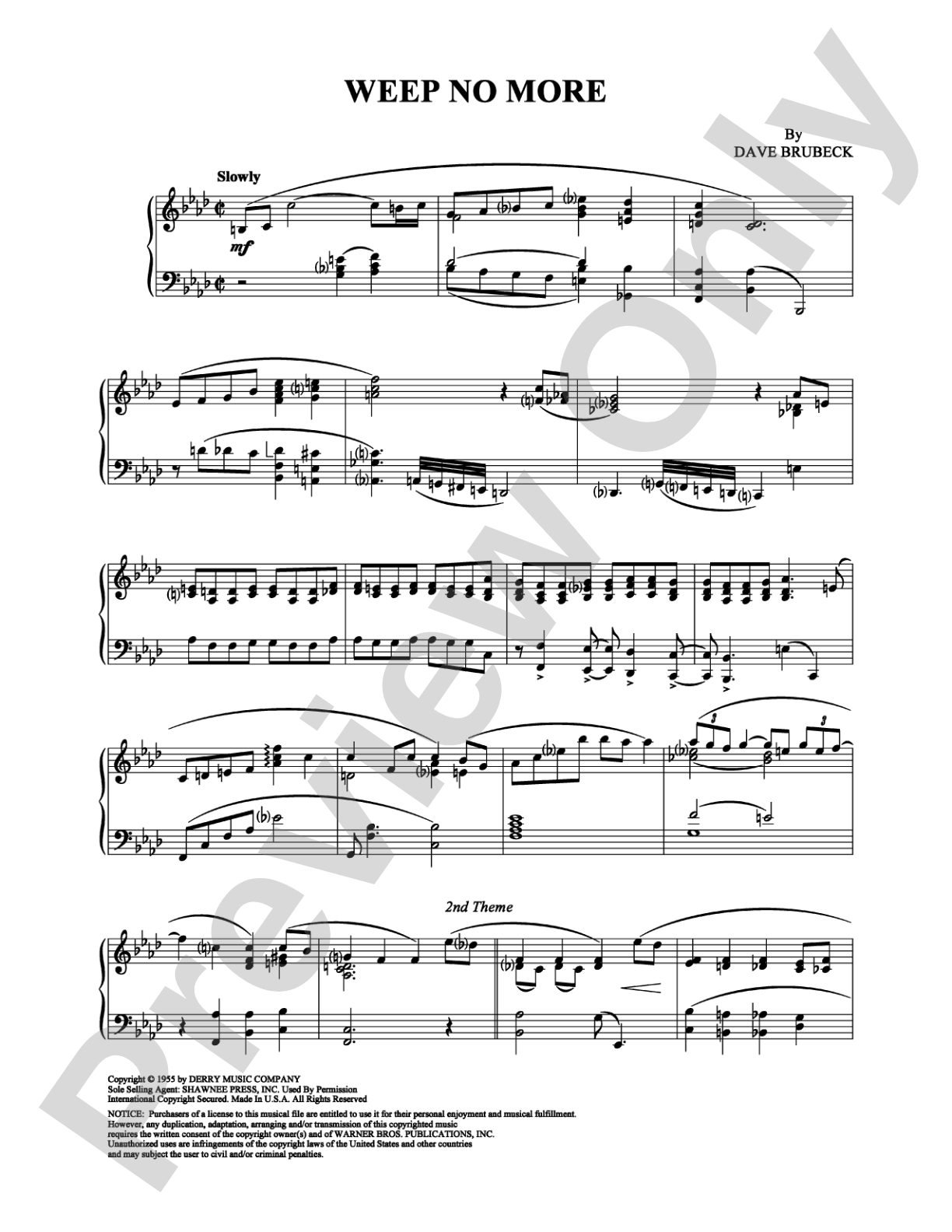
Weep No More: Piano Digital Sheet Music

Weep No More: Piano Digital Sheet Music

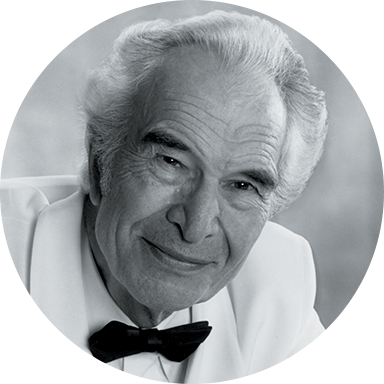
Dave Brubeck

Item: 00-PS-0000804

Digital Download
$3.99
Description

Weep No More: Piano Digital Sheet Music isn't in MakeMusic Cloud just yet...but it could be. Let us know you'd like to see it, and you'll help shape what comes next. In the meantime, start a free trial and dive into thousands of interactive titles your students can play along with today.

Sample Audio
No sample audio found.
Sample Video
Additional Details
SKU: 00-PS-0000804

More about this title

About the Artist: Dave Brubeck

Dave Brubeck

Dave Brubeck stands as one of jazz's most significant figures, equally at home composing intricate classical works as he was leading his legendary quartet. His improvisational mastery shaped modern jazz, while his compositional output spanned symphonies, chamber music, choral pieces, and intimate solo works that drew freely from both jazz vernacular and European concert traditions. After studying with Darius Milhaud at Mills College following World War II, Brubeck absorbed his mentor's philosophy of blending multiple musical languages, resulting in a catalog that refuses easy categorization.

Beyond the recording studio and concert hall, Brubeck used his platform to challenge racial segregation during the 1950s and 1960s, touring integrated ensembles when doing so carried real professional risk. His album Time Out became the first jazz record to sell over a million copies, while works like To Hope! and the Pange Lingua Variations earned performances by major orchestras and choirs worldwide. The breadth of his recognition—from Grammy Lifetime Achievement Award to induction into the American Classical Music Hall of Fame—reflects a career that fundamentally expanded what jazz pianists could accomplish as both interpreters and creators.

Why we love this

Brubeck's solo piano writing captures the conversational ease of his legendary quartet style but demands intimate technical control from the performer. This piece offers pianists a chance to inhabit music shaped by one of the 20th century's most distinctive ears, complete with the harmonic sophistication and rhythmic clarity that made Brubeck's compositions concert staples rather than mere vehicles for improvisation.

What to expect

The piece carries the unhurried poignancy its title suggests, inviting reflection through harmonic depth and lyrical melody rather than virtuosic display. Brubeck's touch is introspective yet grounded, offering emotional directness without sentimentality.

Who it's for

Pianists with intermediate to advanced technique who want to explore jazz composition beyond standards and lead sheets. Solo recitalists building programs that showcase the classical sophistication within Brubeck's jazz-informed aesthetic will find substantial material here.

How to get the most out of it

  • Balance transparency of touch with the piece's emotional weight; Brubeck's piano writing rewards clarity without rigidity, so let the harmonic language breathe rather than pushing for dramatic volume.
  • Listen closely to how melody and accompaniment interact, particularly if the piece features Brubeck's characteristic use of displaced phrases or polyrhythmic underpinnings common to his compositions.
  • Consider the recording's tempo and phrasing as a reference point, but trust your own interpretive instincts; Brubeck's notated works expect thoughtful musicality, not mechanical fidelity to a single recorded version.

How to use it

Include this in a solo recital or pianist spotlight concert where you want to represent the intersection of American jazz and concert music. It pairs naturally with other twentieth-century American composers, or stand alone as a moment of contemplative beauty between more energetic works.

Skills your students will build

  • Jazz harmonic language and seventh chord voicings
  • Balancing melodic lyricism with underlying rhythmic complexity
  • Interpretive choices within a fully notated score
  • Pedaling technique that preserves harmonic clarity across jazz progressions

You May Also Like