Wee Willie Winkie Sheet Music Preview

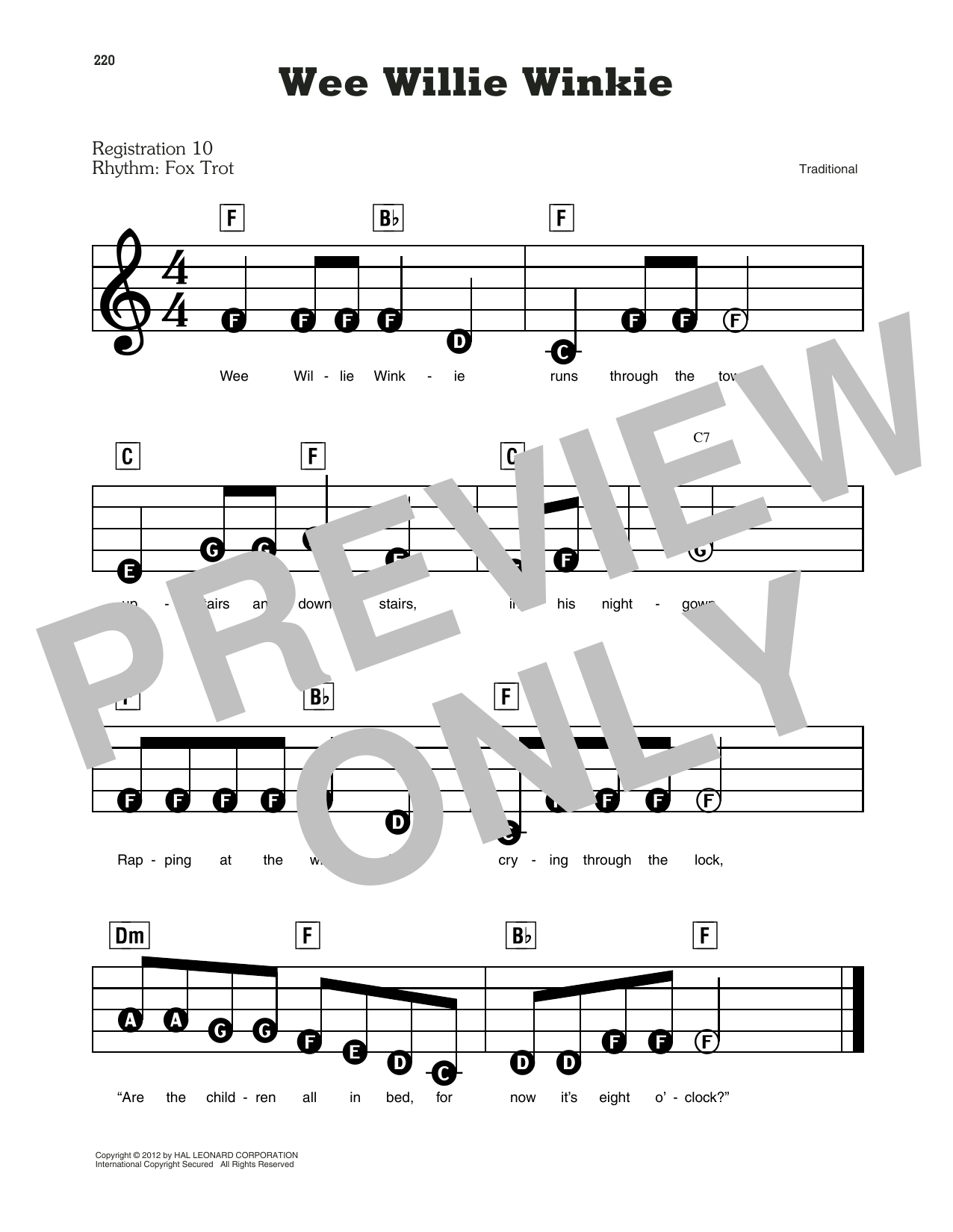
Wee Willie Winkie: E-Z Play Today

Item: 35-DS00506257

Digital Download
$4.99
Description

Wee Willie Winkie: E-Z Play Today isn't in MakeMusic Cloud just yet...but it could be. Let us know you'd like to see it, and you'll help shape what comes next. In the meantime, start a free trial and dive into thousands of interactive titles your students can play along with today.

Sample Audio
No sample audio found.
Sample Video
Additional Details
Publisher: Hal Leonard
Page Count: 1
SKU: 35-DS00506257

More about this title

Why we love this

E-Z Play Today's arrangement strips away unnecessary complexity while keeping the tune immediately recognizable, making it ideal for young students who need immediate success. A single page means students can master it in a few practice sessions rather than months, freeing up lesson time for technique work or other repertoire.

What to expect

Gentle and intimate, like a parent settling a child down to sleep. The familiar melody invites listeners in immediately, while the simple accompaniment lets young players feel like they're making real music from the start.

Who it's for

Beginning pianists who are ready to tackle complete pieces rather than isolated exercises. This works well for young students in their first or second year of lessons, or for those preparing for their first recital.

How to get the most out of it

  • Keep the tempo steady and conversational; this is a lullaby, not a march. Resist the urge to rush through it.
  • Shape the melody gently by bringing out the right hand while keeping the left hand accompaniment unobtrusive.
  • Pay attention to any dynamic markings that help convey the cozy, bedtime mood of the text.

How to use it

Perfect as an encore piece in a student recital or as part of a children's program where performers range widely in age and ability. Its brevity makes it an ideal opener to build confidence before longer works.

Skills your students will build

  • Playing a complete melody from start to finish without stopping
  • Coordinating both hands in a simple accompaniment pattern
  • Shaping a phrase with attention to musical character rather than technical difficulty
  • Building confidence through achievable repertoire goals

You May Also Like