
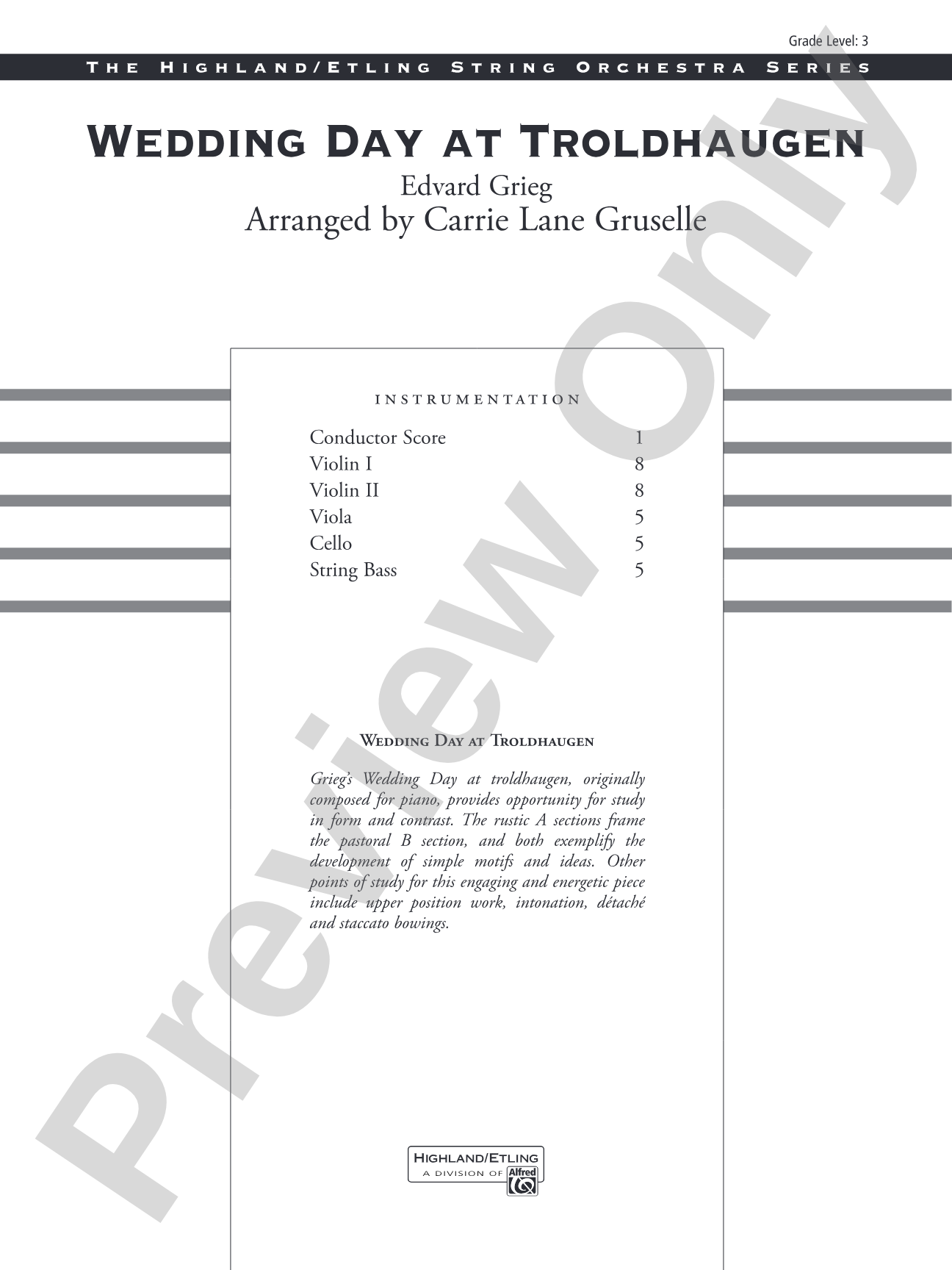
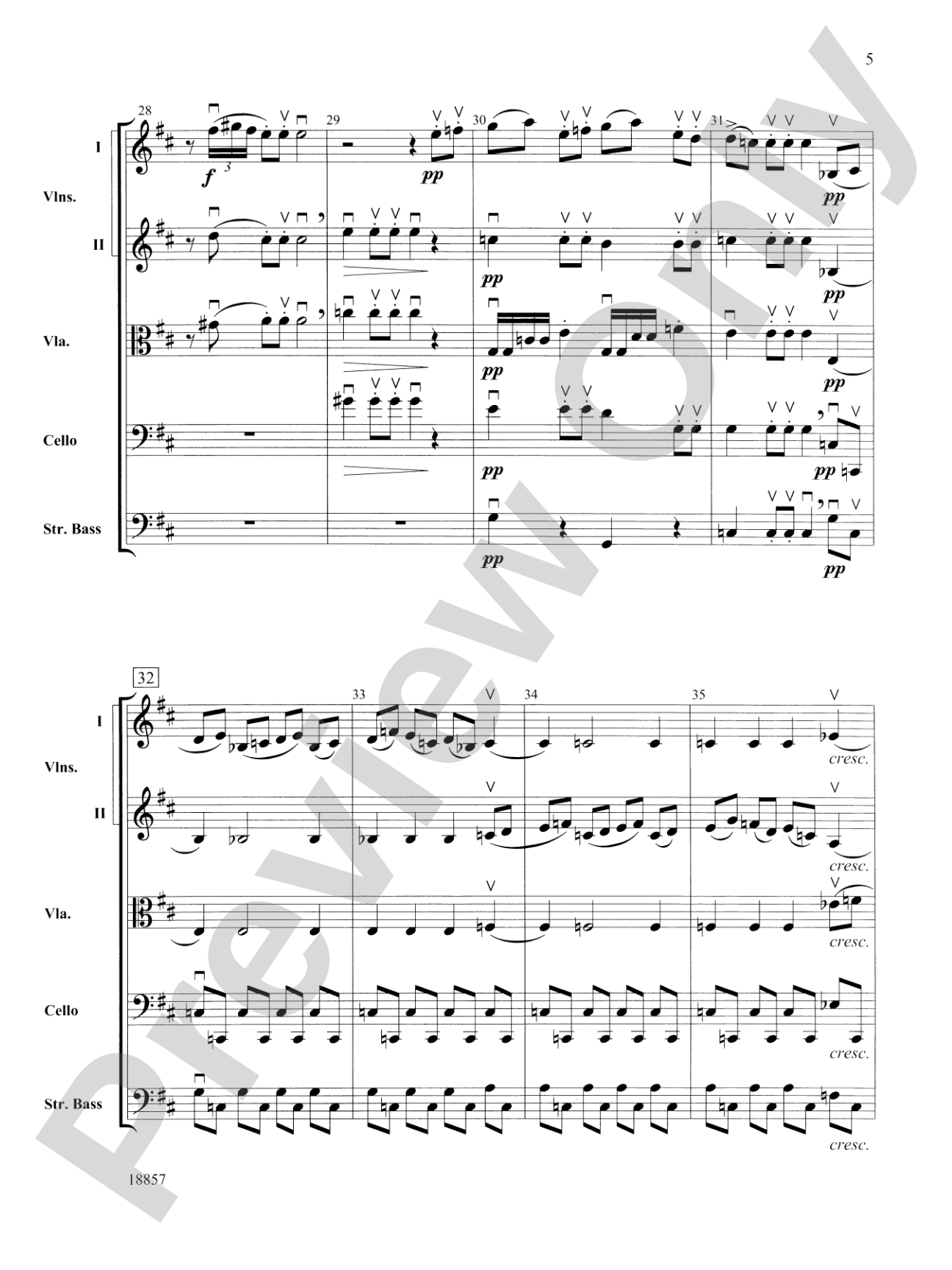
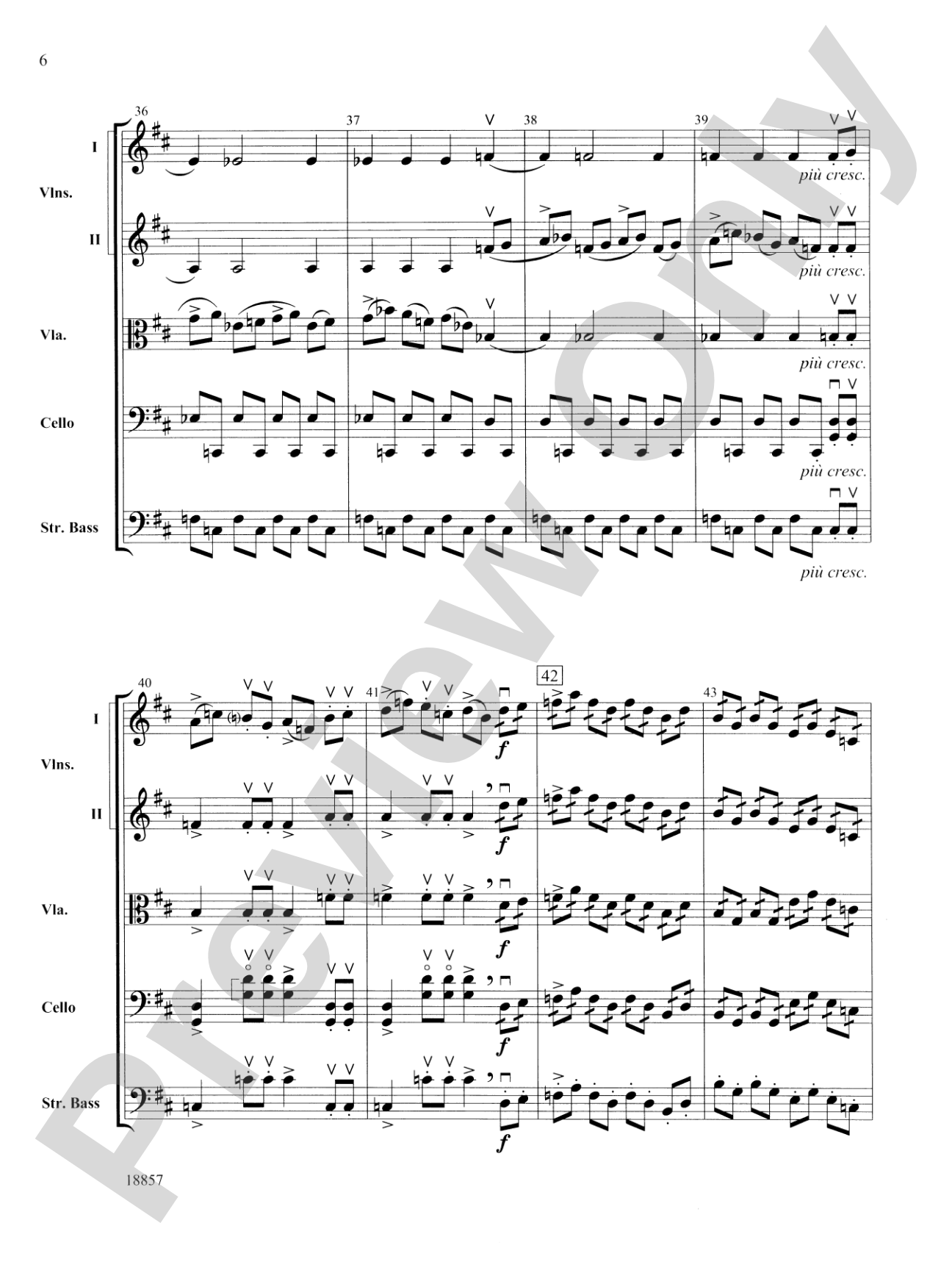
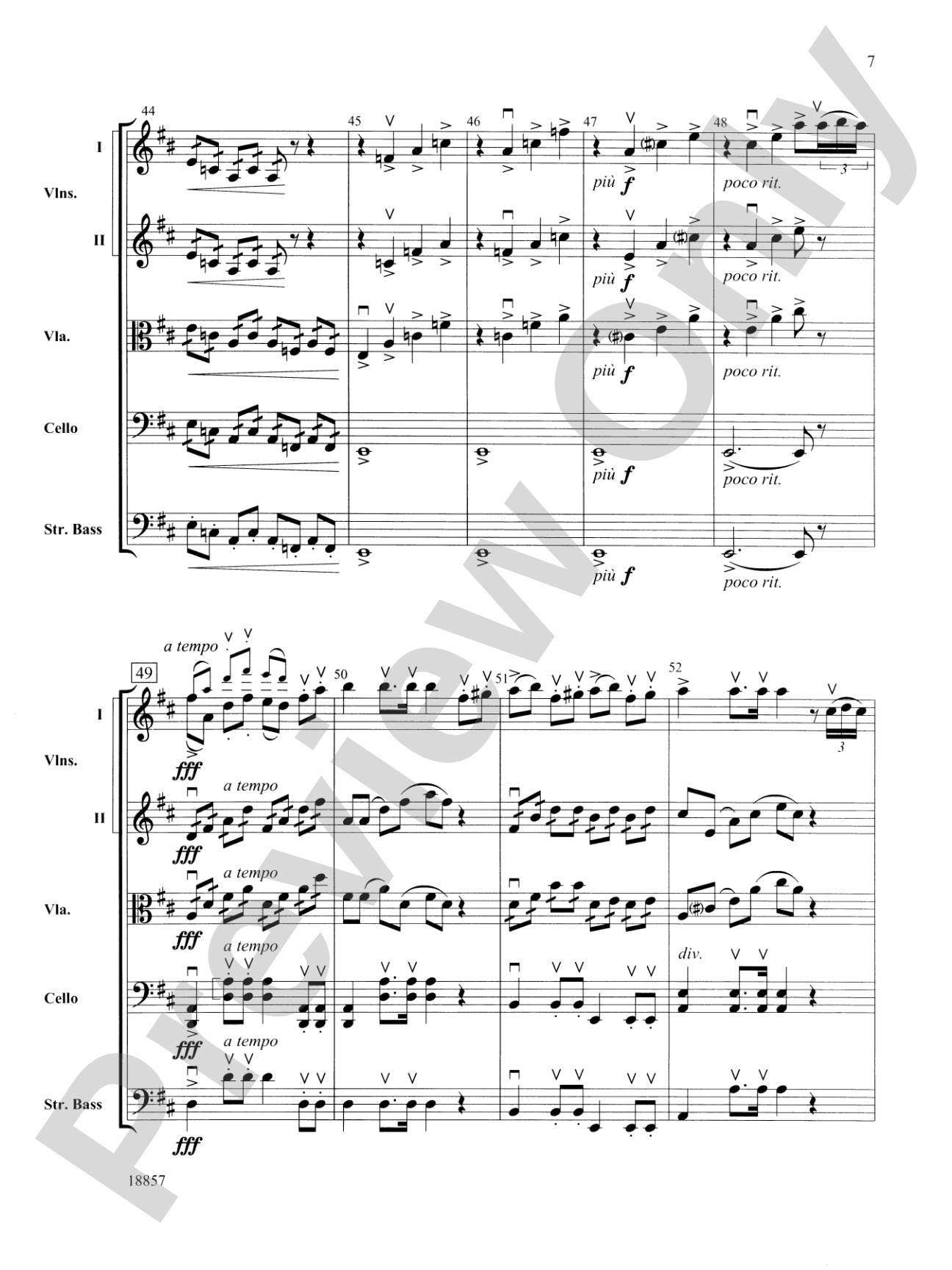
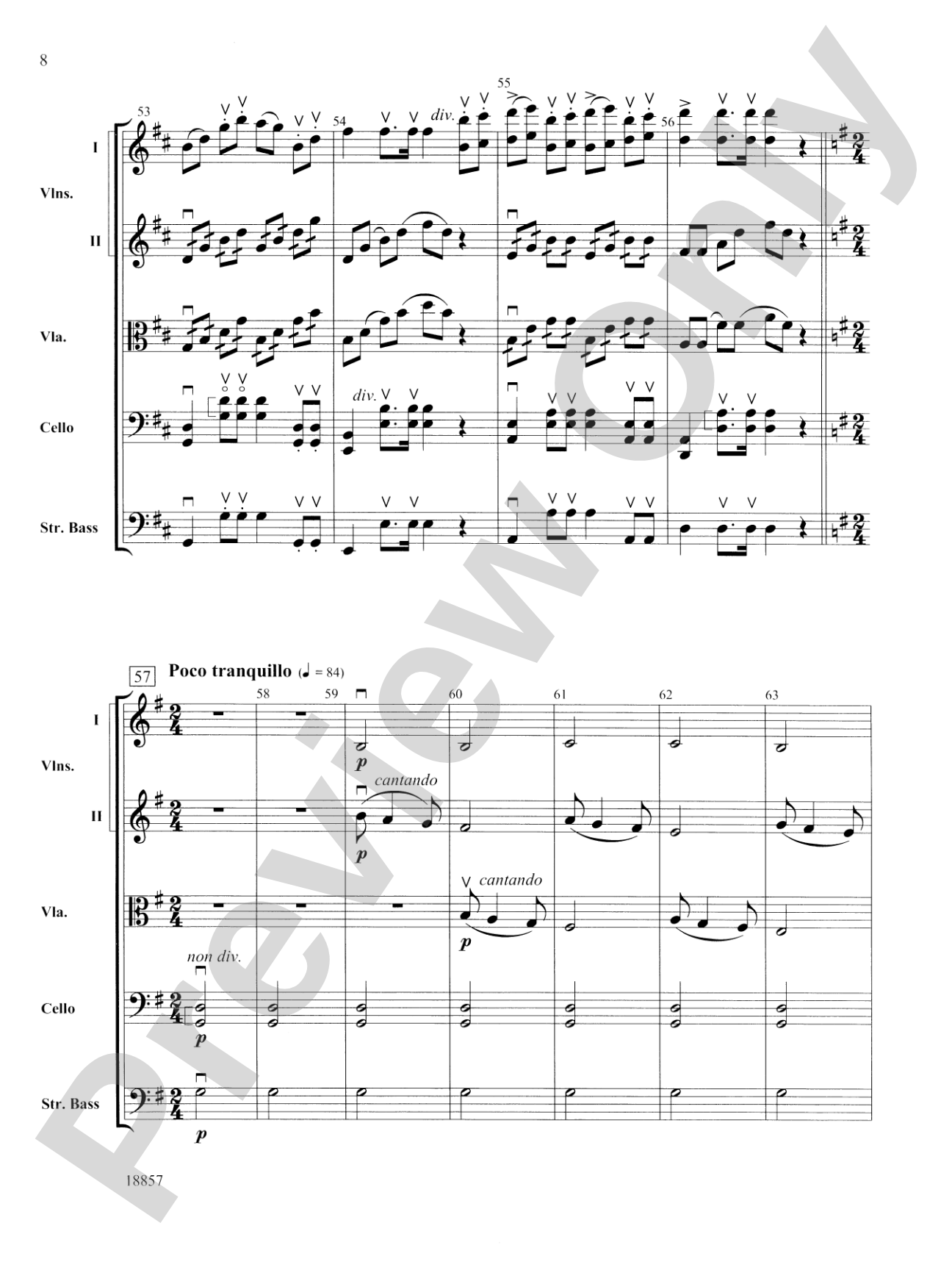
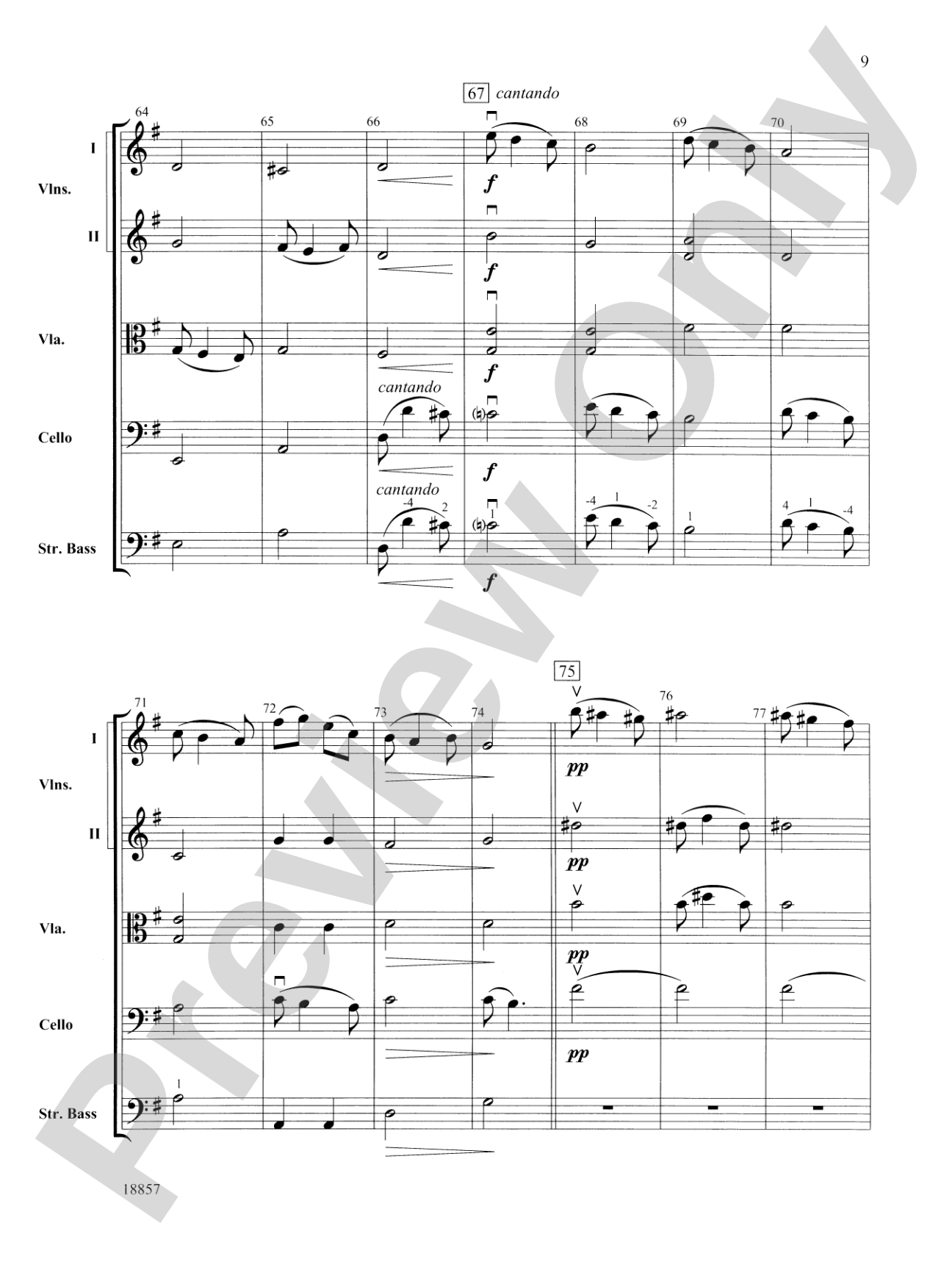
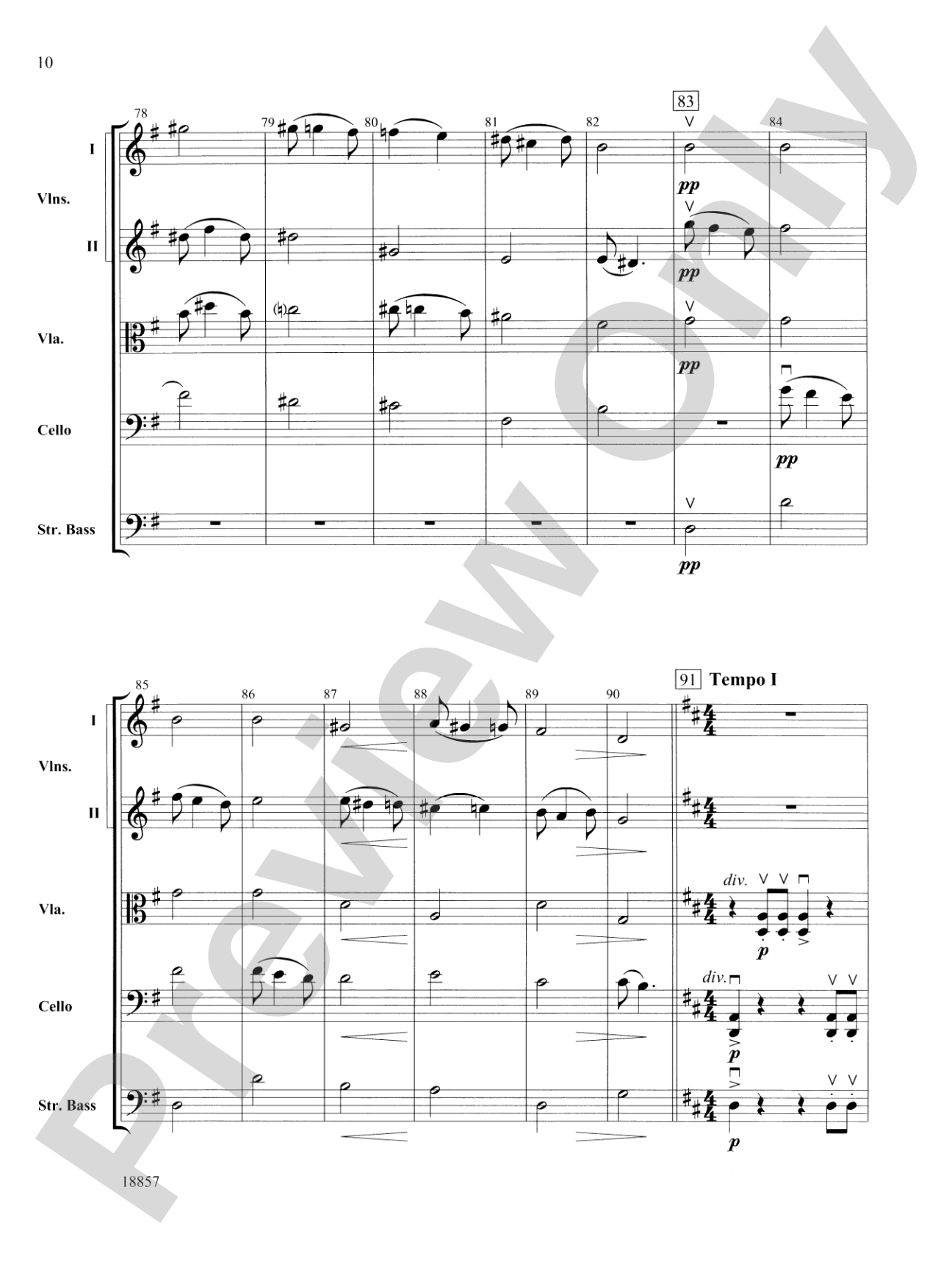
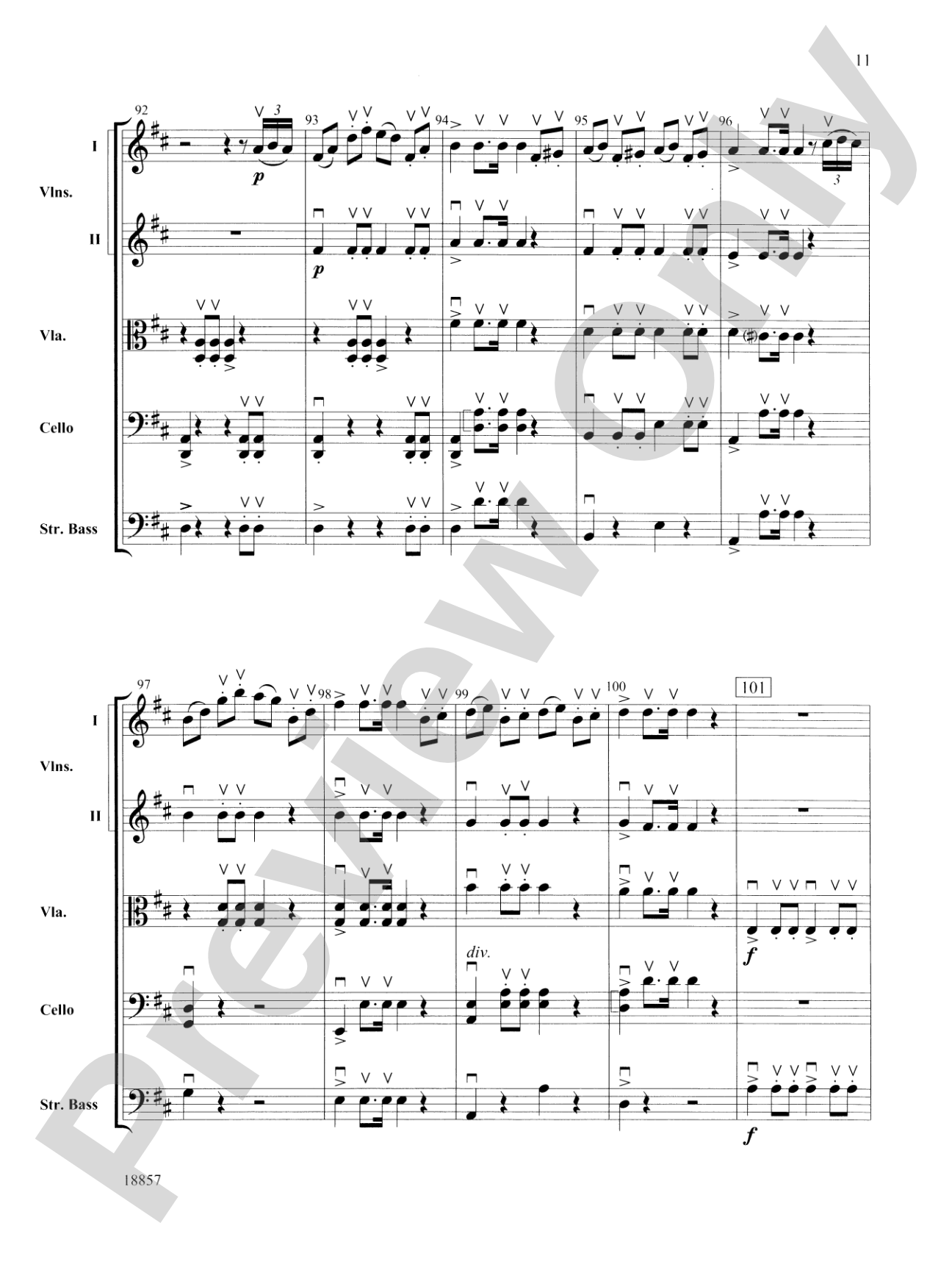
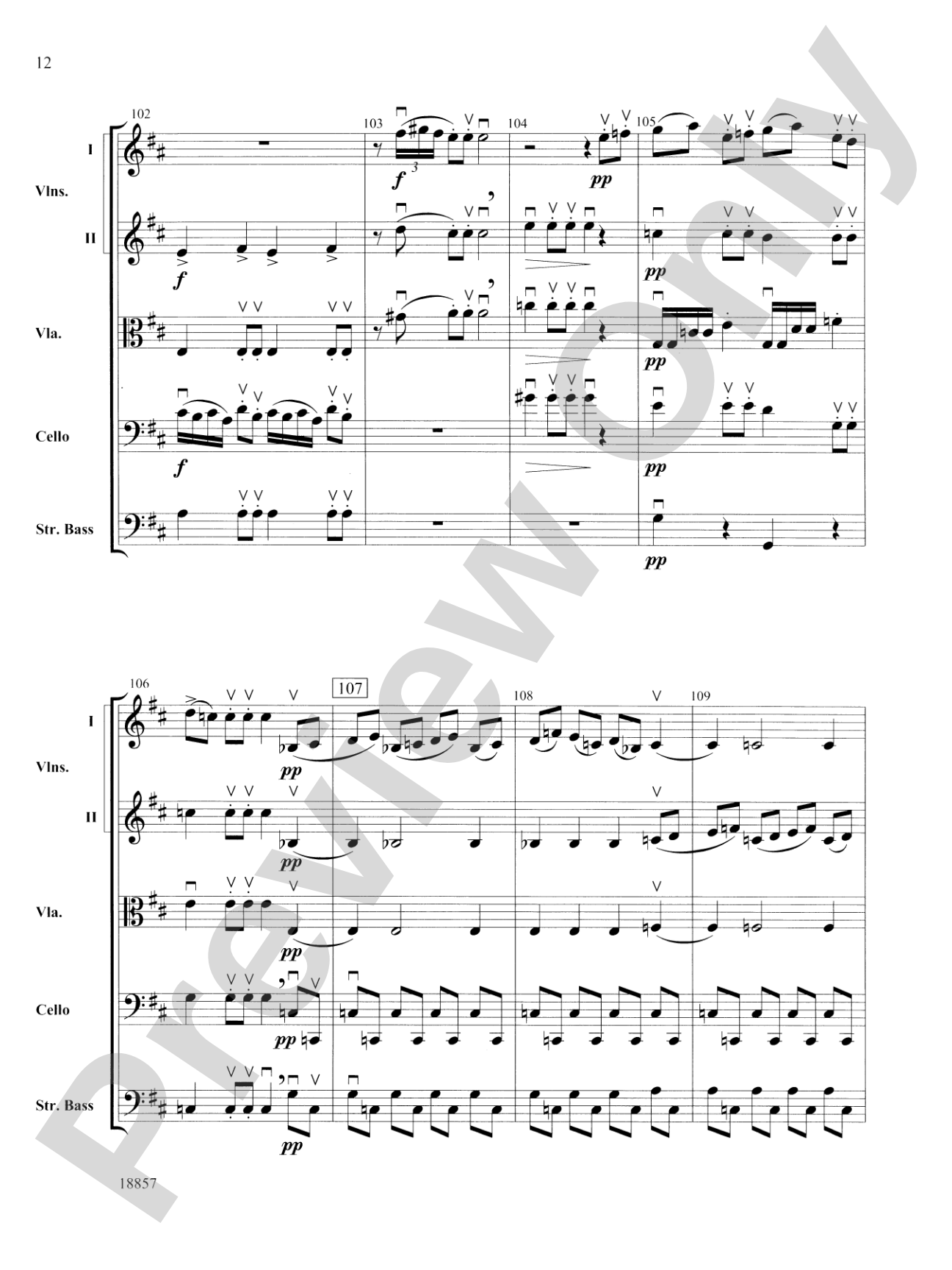
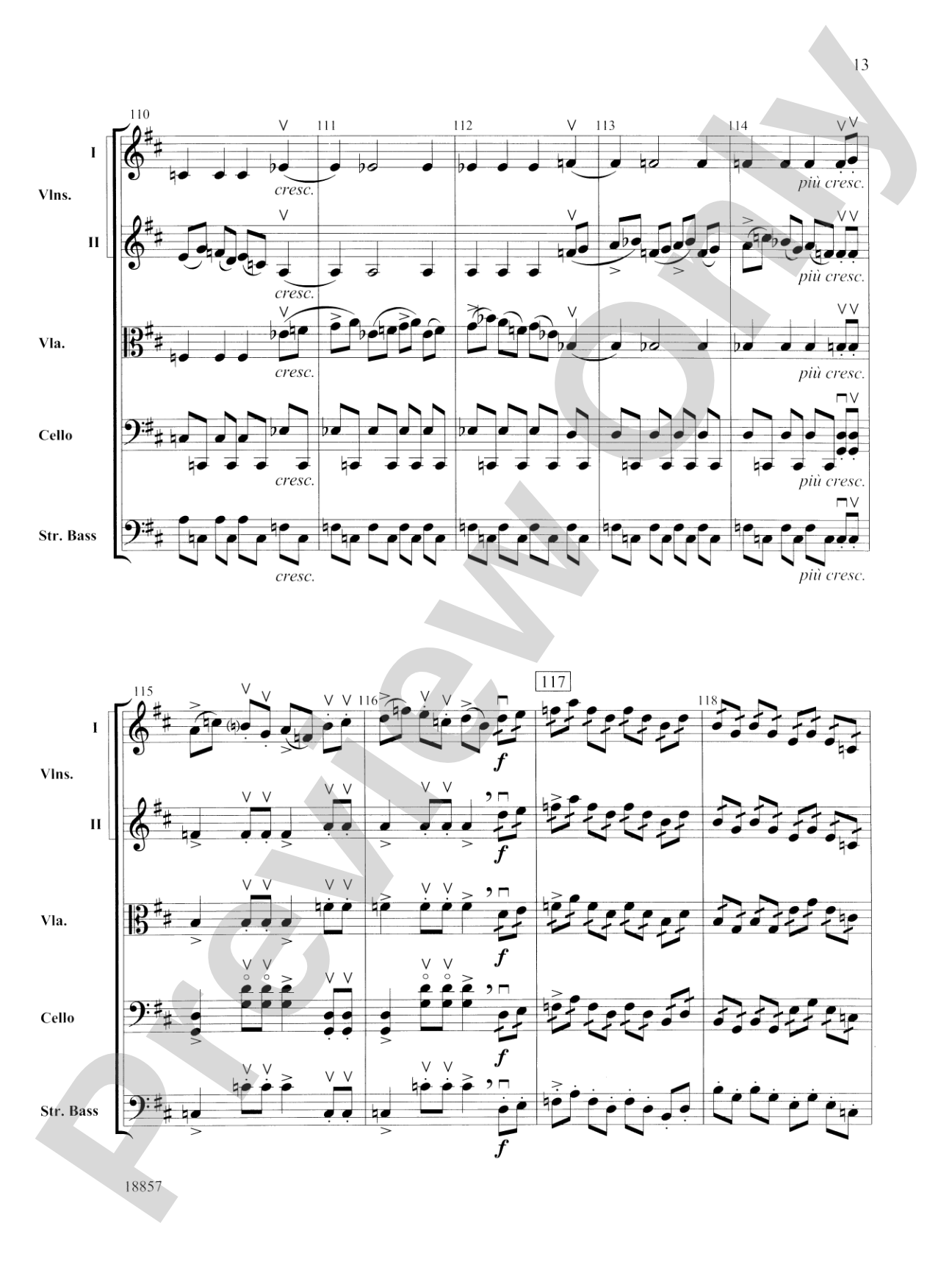
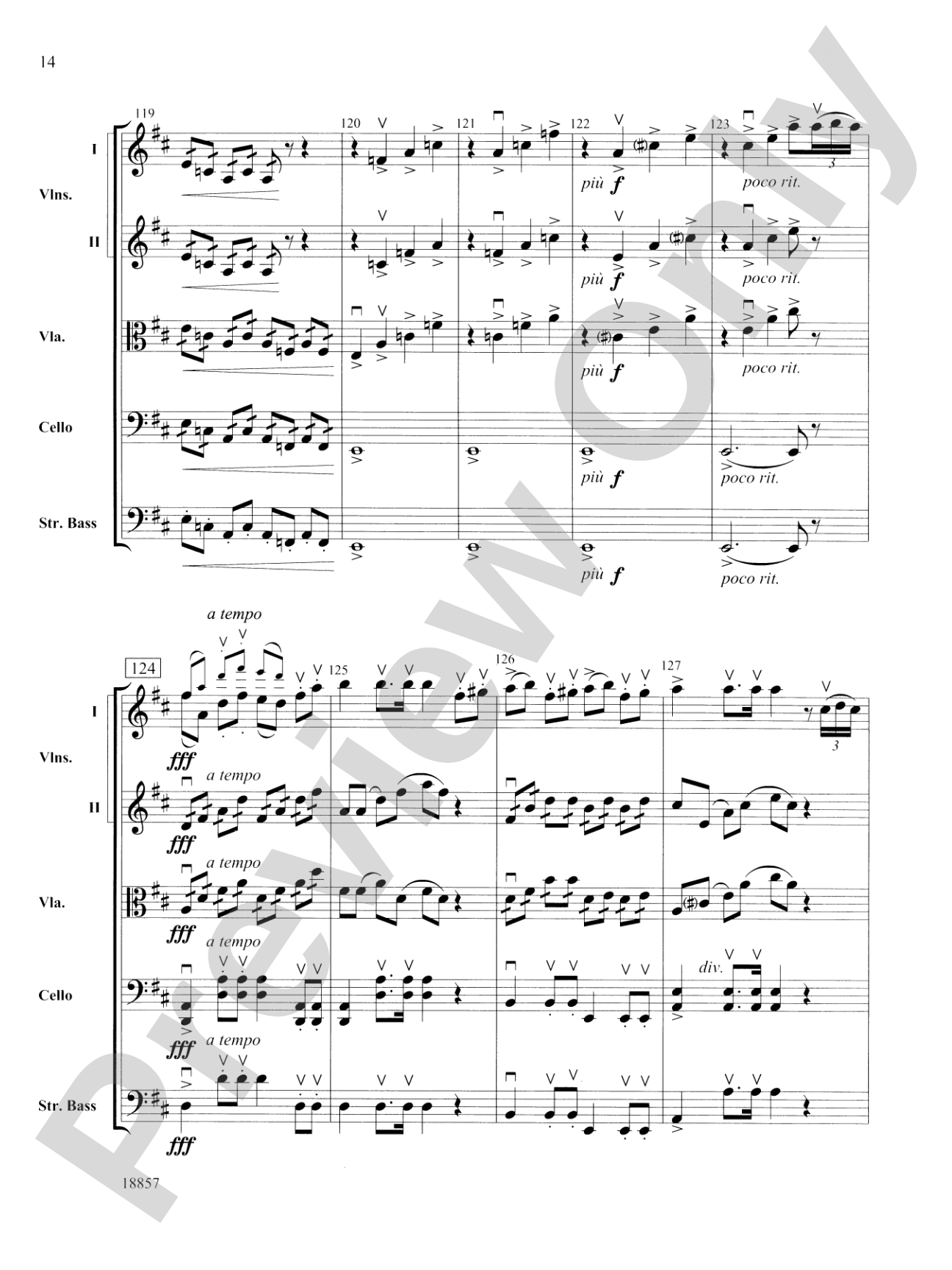
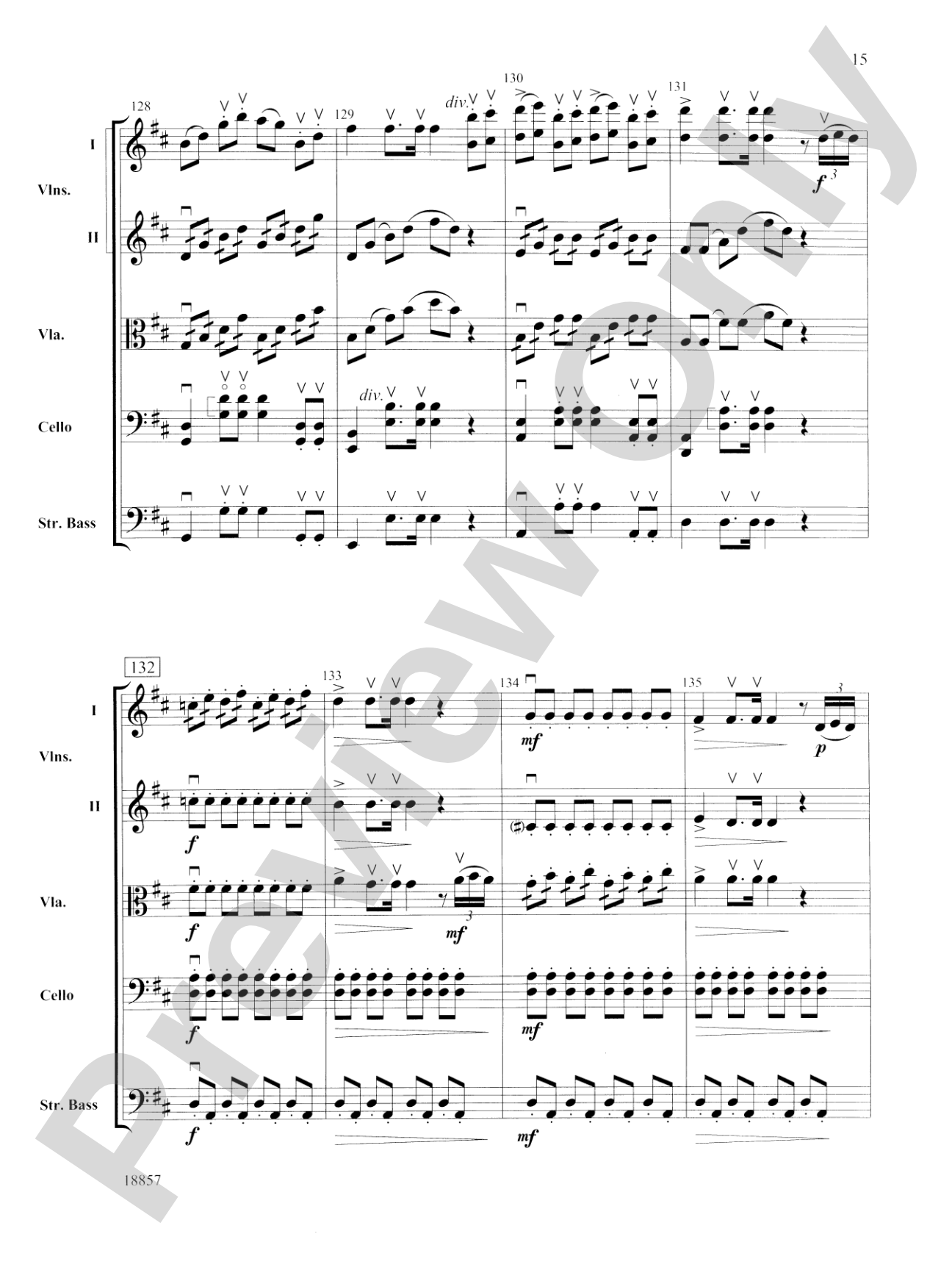
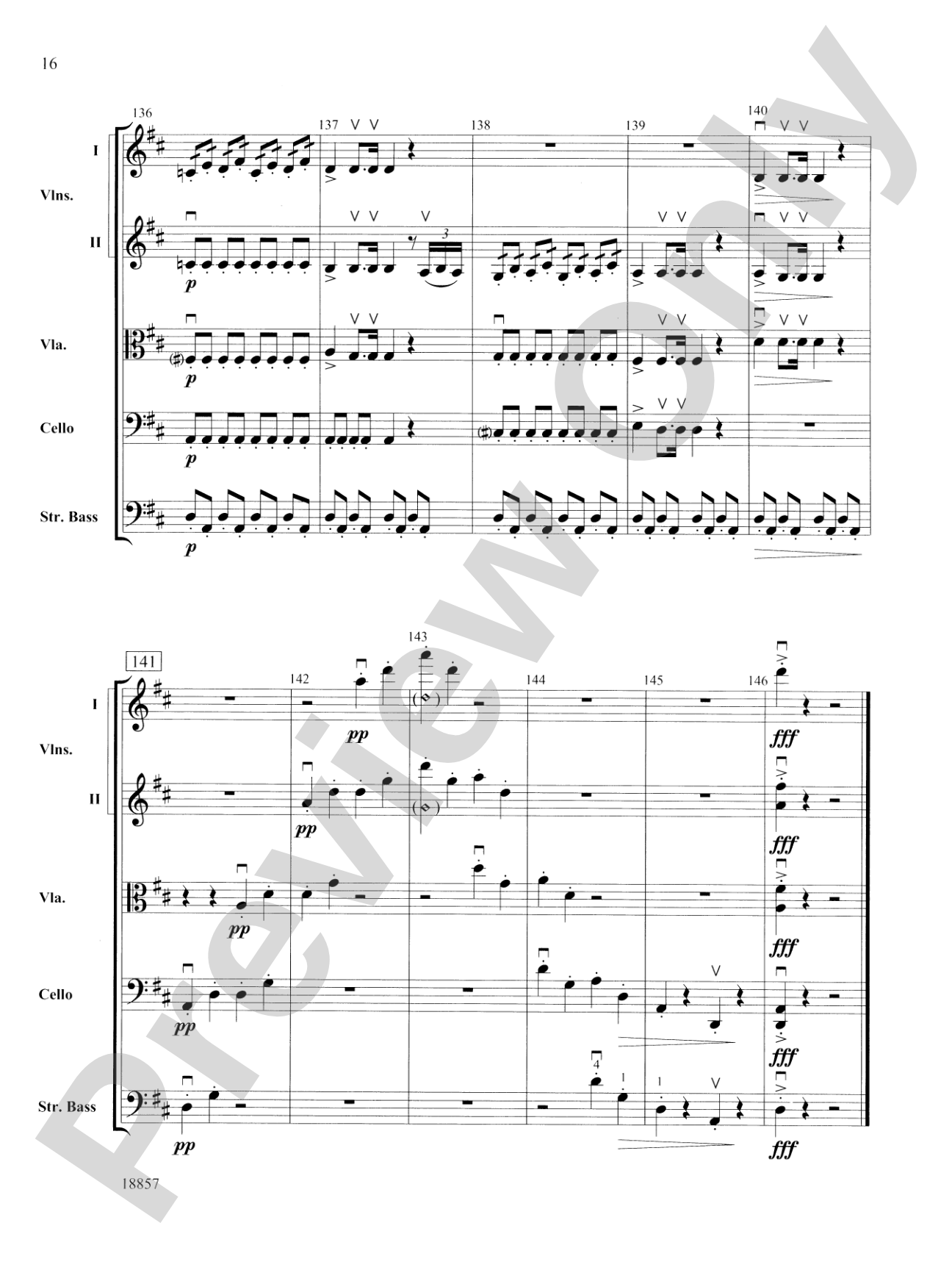

Wedding Day at Troldhaugen: String Orchestra Conductor Score & Parts
By Edvard Grieg / arr. Carrie Lane Gruselle
Grade: 3
Item: 00-PK-0000305

$56.00
Pickup currently not available
Buy Extra Parts (Digital PDF Download)
| Product | Price | Quantity |
|---|---|---|
| Wedding Day at Troldhaugen: Score | $9.00 | |
| Wedding Day at Troldhaugen: 1st Violin | $5.99 | |
| Wedding Day at Troldhaugen: 2nd Violin | $5.99 | |
| Wedding Day at Troldhaugen: Viola | $5.99 | |
| Wedding Day at Troldhaugen: Cello | $5.99 | |
| Wedding Day at Troldhaugen: String Bass | $5.99 |
Parts Added to Cart!
Description
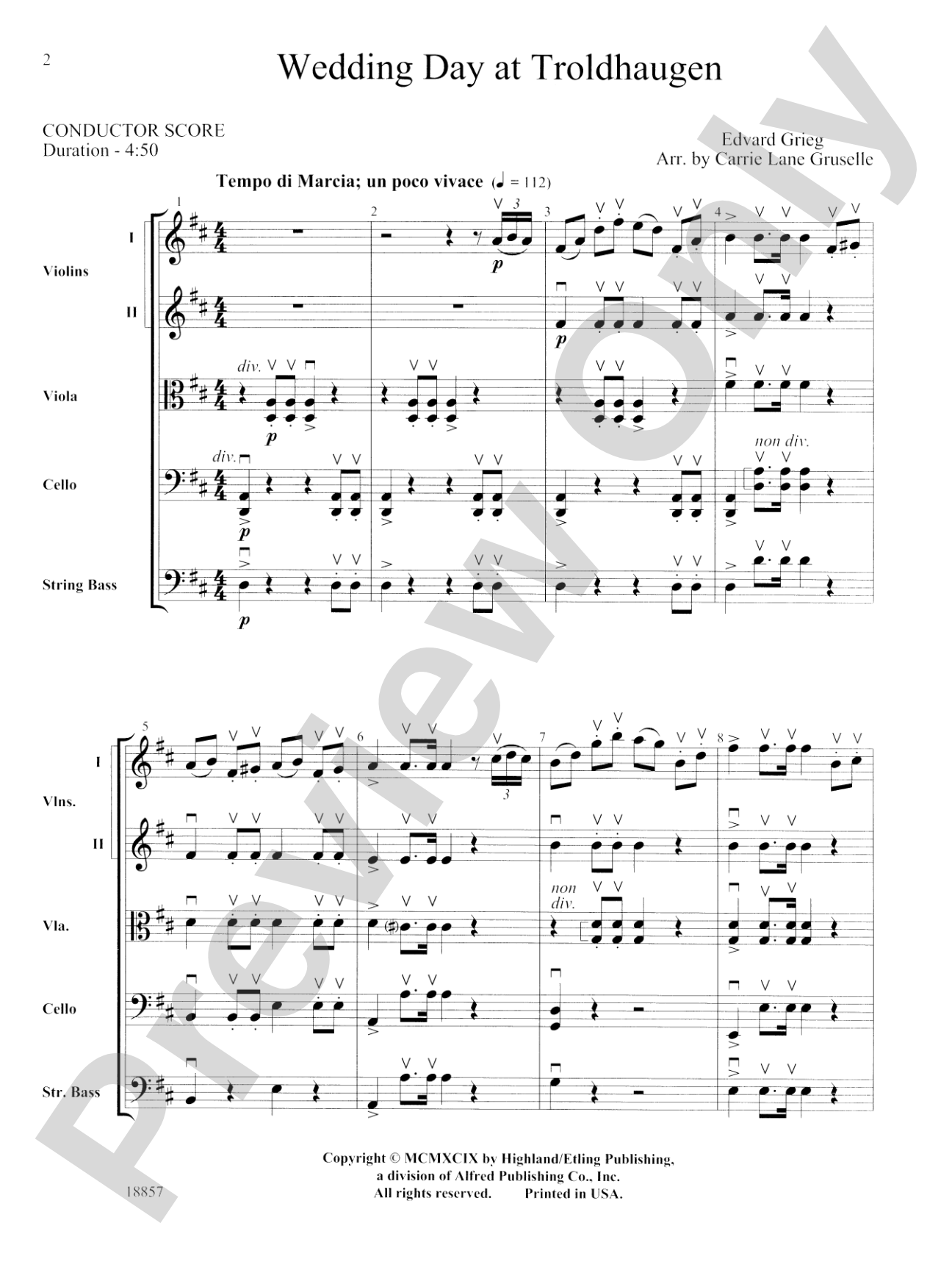
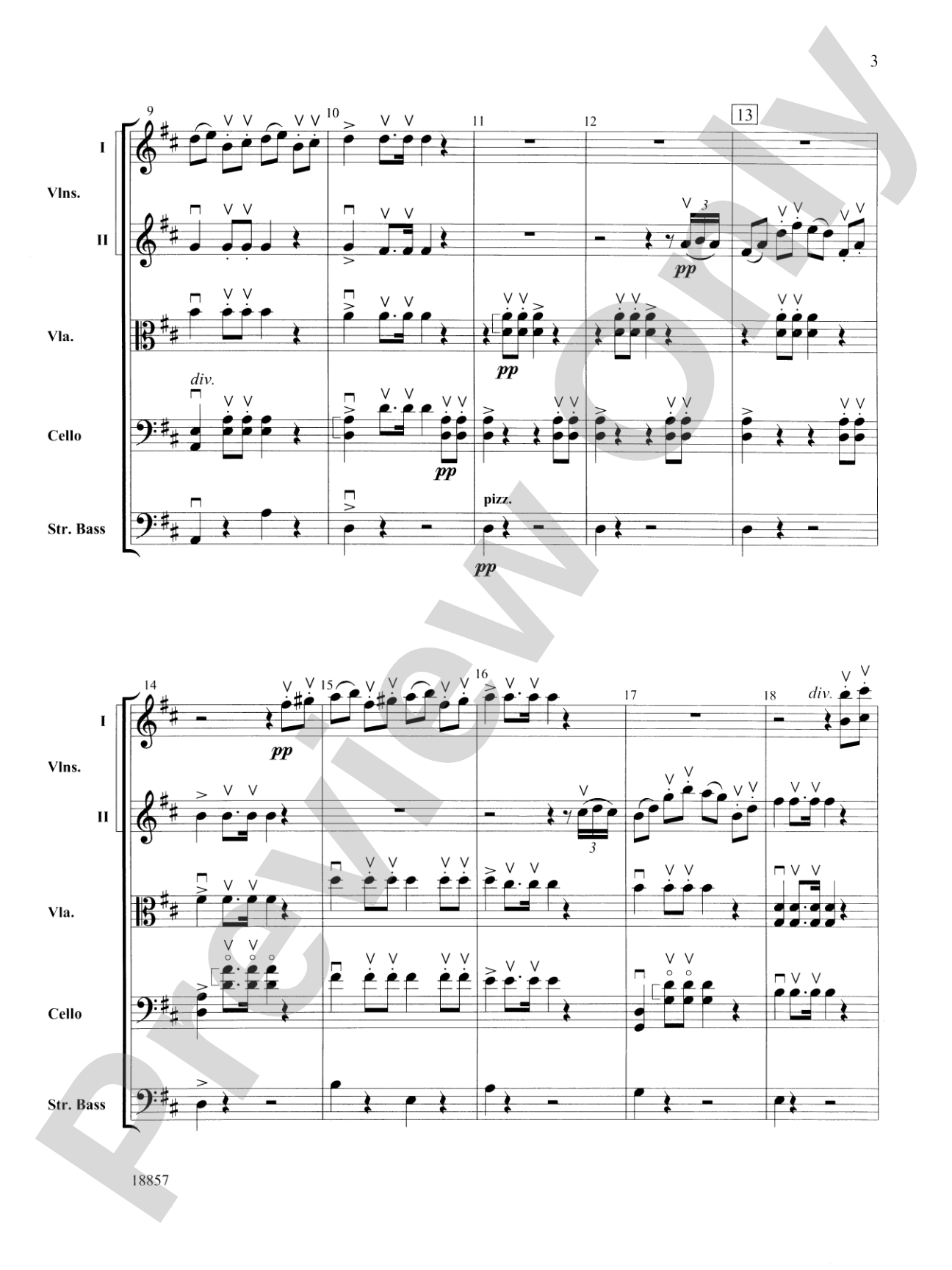
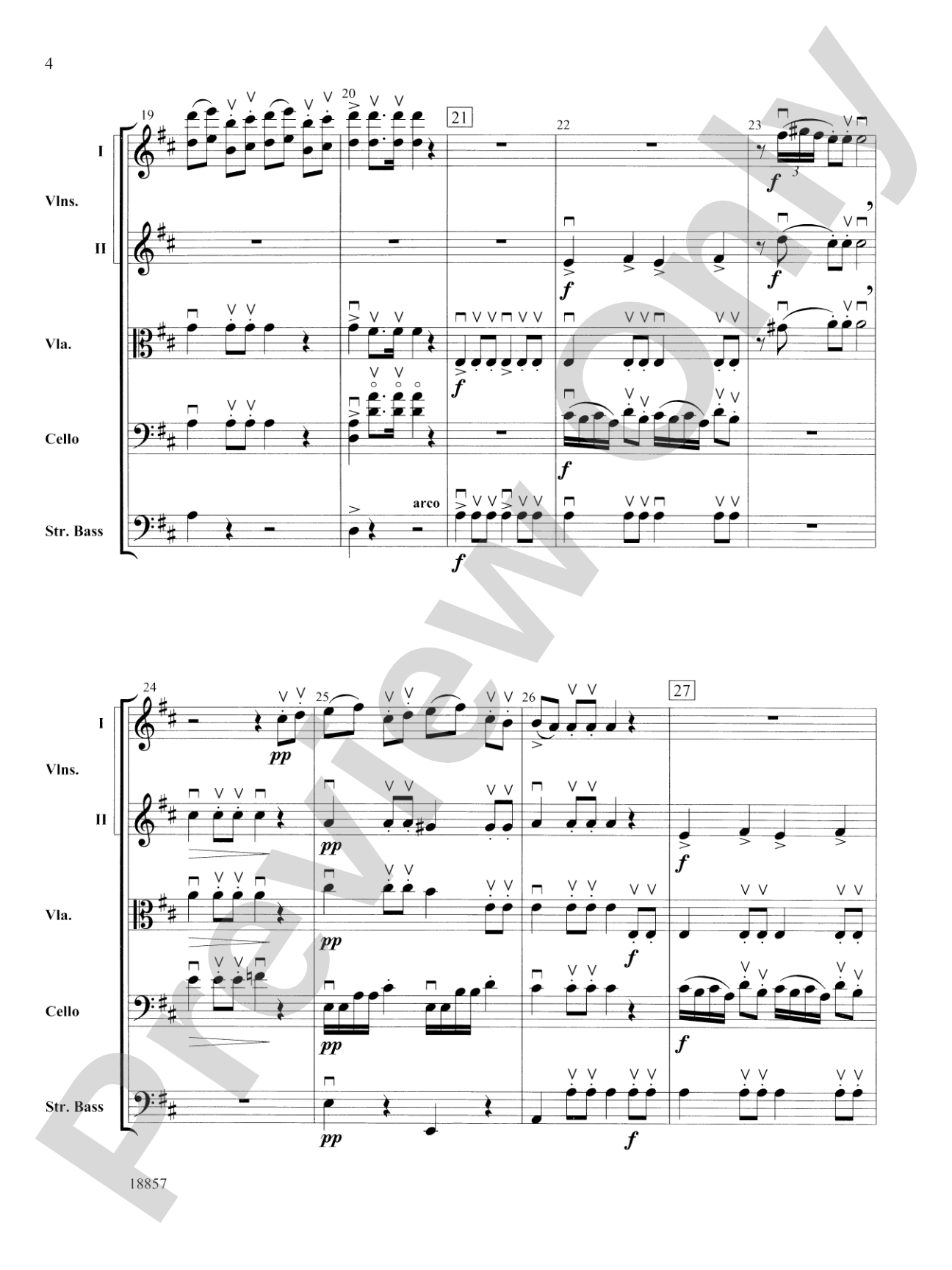
Originally composed for piano, this engaging and energetic piece will provide your students with the opportunity to develop several playing techniques, including upper position work, intonation, and detachè and staccato bowings. The contrasting rustic and pastoral sections make this an ideal way to teach form and style. This title is available in MakeMusic Cloud.


Don't just read it, hear it, play along with it, and watch your students grow with it. In MakeMusic Cloud, Wedding Day at Troldhaugen: String Orchestra Conductor Score & Parts comes alive with professional accompaniment, adjustable tempo, and built-in practice tools that turn solo practice into real progress.
Open in the Player
Jump straight in and assign it today.
Start Your Free Trial
Open this title and explore the full library in minutes.
Sample Audio
1
Audio File
--:--
0:00
0:00
Sample Video
No sample videos found.
Additional Details
Series:
Highland/Etling String Orchestra
Publisher:
Alfred Music
Page Count:
124
SKU:
00-PK-0000305
More about this title
About the Composer: Edvard Grieg
Edvard Grieg (1843, 1907) shaped the sound of Romantic music by drawing deeply from Norwegian folk traditions and landscapes. His gift for melody and harmonic color made him one of the era's most performed composers, yet his work remained accessible to developing musicians. In the classroom, Grieg's pieces consistently engage students because they balance technical challenge with immediate musical reward.
Wedding Day at Troldhaugen comes from Grieg's ten-volume "Lyric Pieces" for solo piano, autobiographical sketches written over four decades. The piece commemorates his own wedding in 1867 and captures both the joy and the pastoral character of his Norwegian home. Arranging Grieg for strings reveals why his melodies endure; they sing naturally on any instrument.
Why we love this
Grieg's original piano work translates beautifully to strings, and Carrie Lane Gruselle's arrangement preserves the piece's lyrical warmth while creating genuine orchestral challenges at a Grade 3 level. The contrasting sections give you clear teaching moments for style differentiation and form, while the technical demands in upper positions and bowing variety keep your players engaged without overwhelming them. It's a piece that feels like a genuine composition, not a simplified version, which your ensemble will sense immediately.
What to expect
The piece opens with rhythmic energy and rustic character, then shifts into serene, pastoral territory before returning to its spirited opening. There's a sense of storytelling and place throughout; you can almost see the Norwegian landscape that inspired Grieg's original conception. The contrasts feel organic, not forced, which makes them all the more effective for teaching students how form and character work together.
Who it's for
String orchestra directors working at the Grade 3 level who want to program a Romantic masterwork with pedagogical substance. Your students need to be comfortable with upper position playing and mixed articulations, but the piece rewards their effort with music that feels fully realized rather than simplified.
How to get the most out of it
- Balance the pastoral sections by restraining vibrato in the sustained passages; this allows the harmonic movement to emerge without muddiness.
- Work the staccato bowings separately from the detachè passages; the distinction between them shapes the character of the rustic sections.
- Lock the intonation of double stops and divisi voicings before adding tempo; upper position work demands precision that tempo will only expose if it's shaky.
- Shape the dynamic contours in longer phrases rather than playing a single dynamic for an entire section; Grieg's melodies breathe.
How to use it
Consider pairing this with other Grieg works or Romantic miniatures to create a cohesive concert theme. It works equally well as a contest or festival selection, where its combination of charm and technical substance will impress adjudicators. Alternatively, program it as a bridge between more contemporary repertoire and classical works, demonstrating to your ensemble how a Romantic sensibility can speak to modern ears.
Skills your students will build
- Upper position work on all instruments
- Intonation in double stops and divisi passages
- Distinction between detachè and staccato bowings
- Phrasing and dynamic shaping in lyrical passages
- Recognition and execution of contrasting form and style