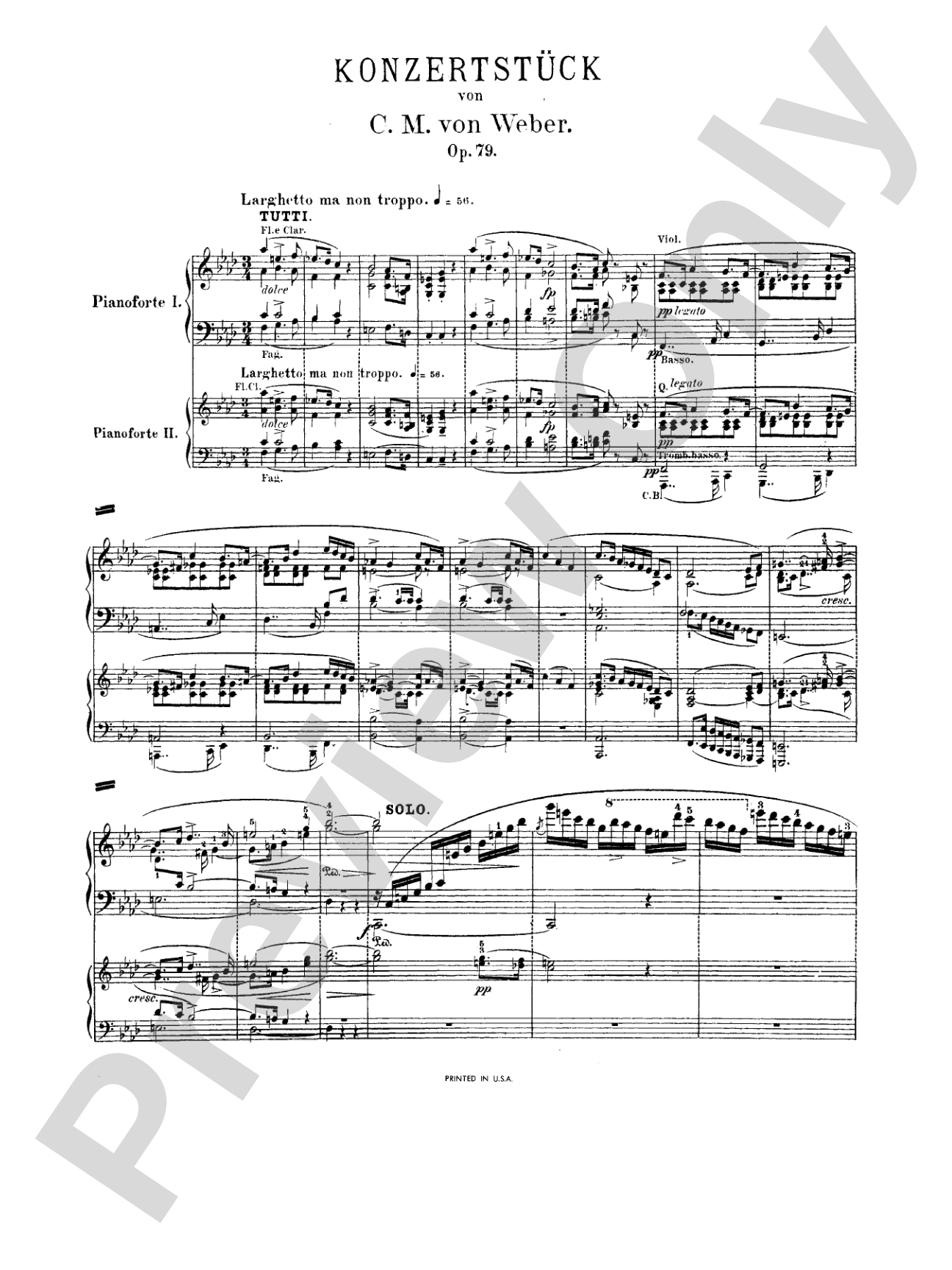
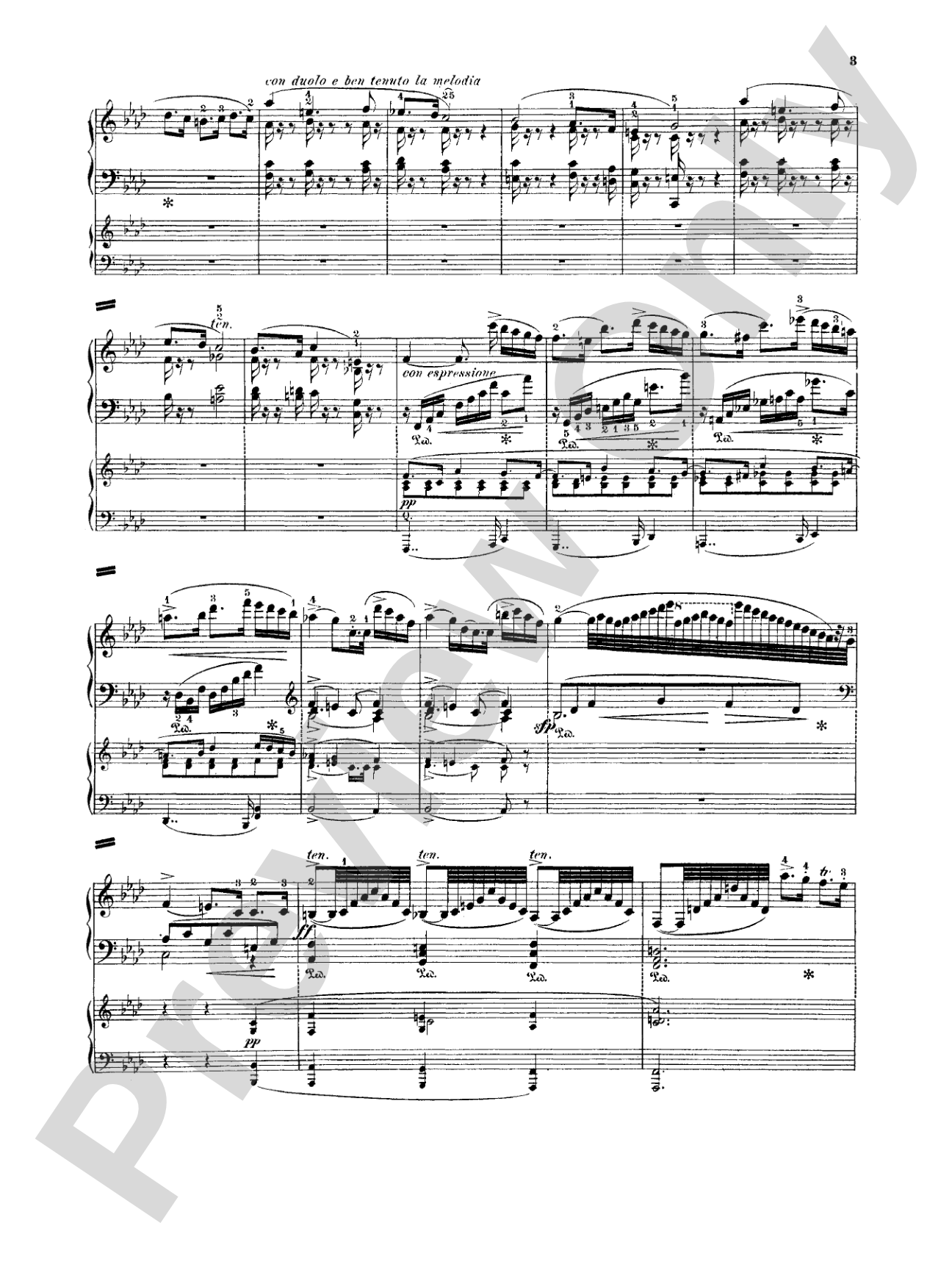
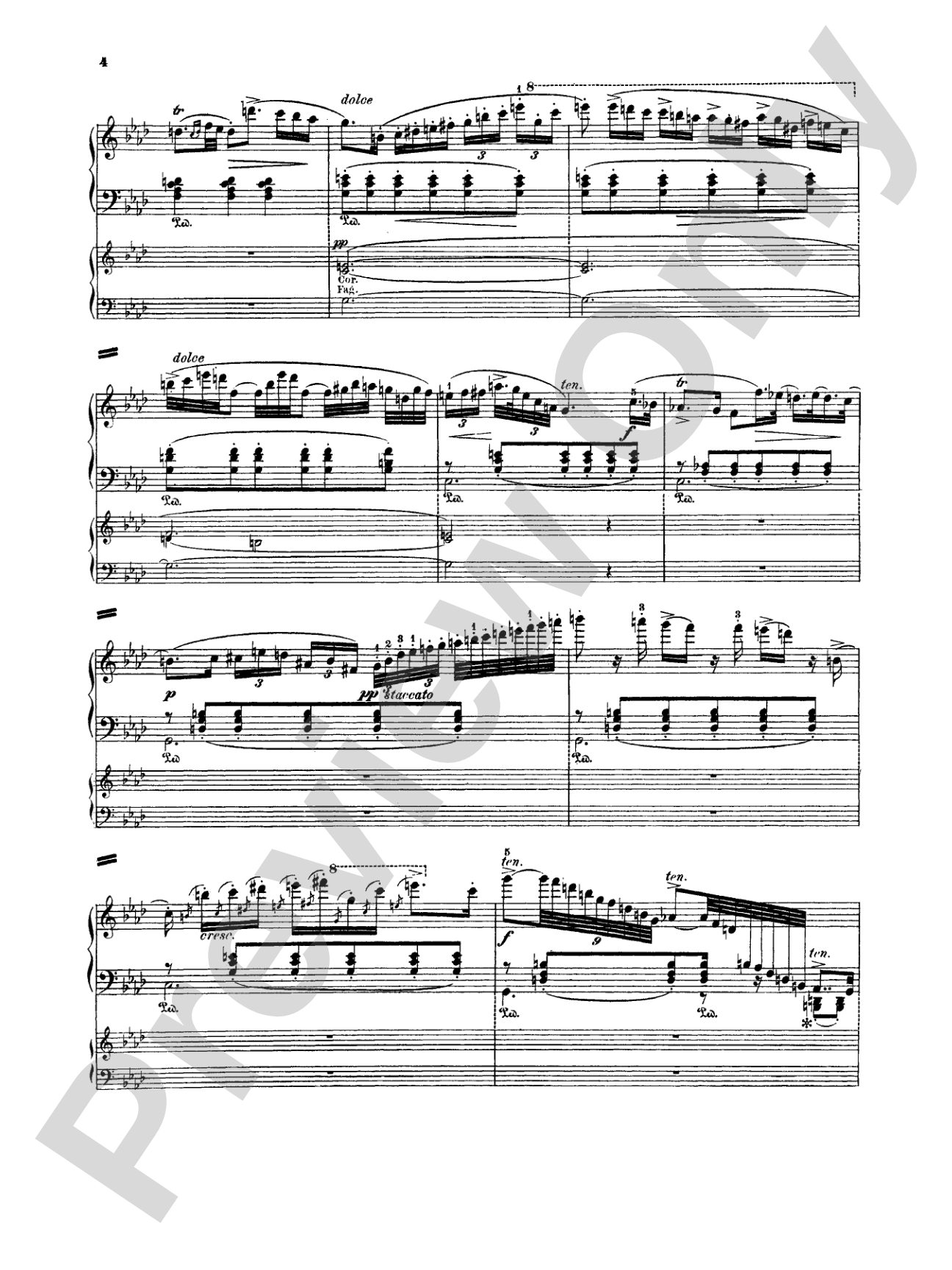
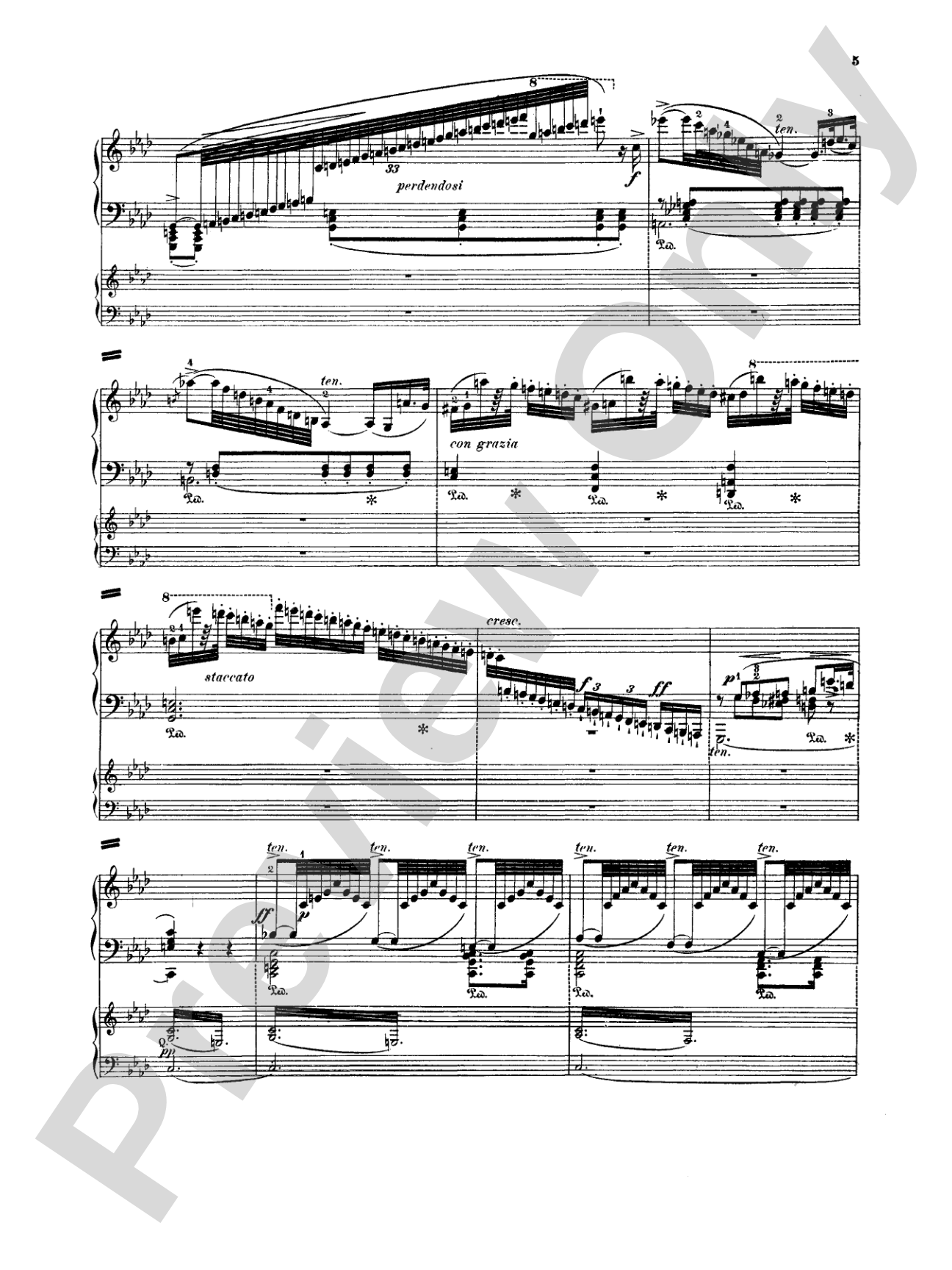
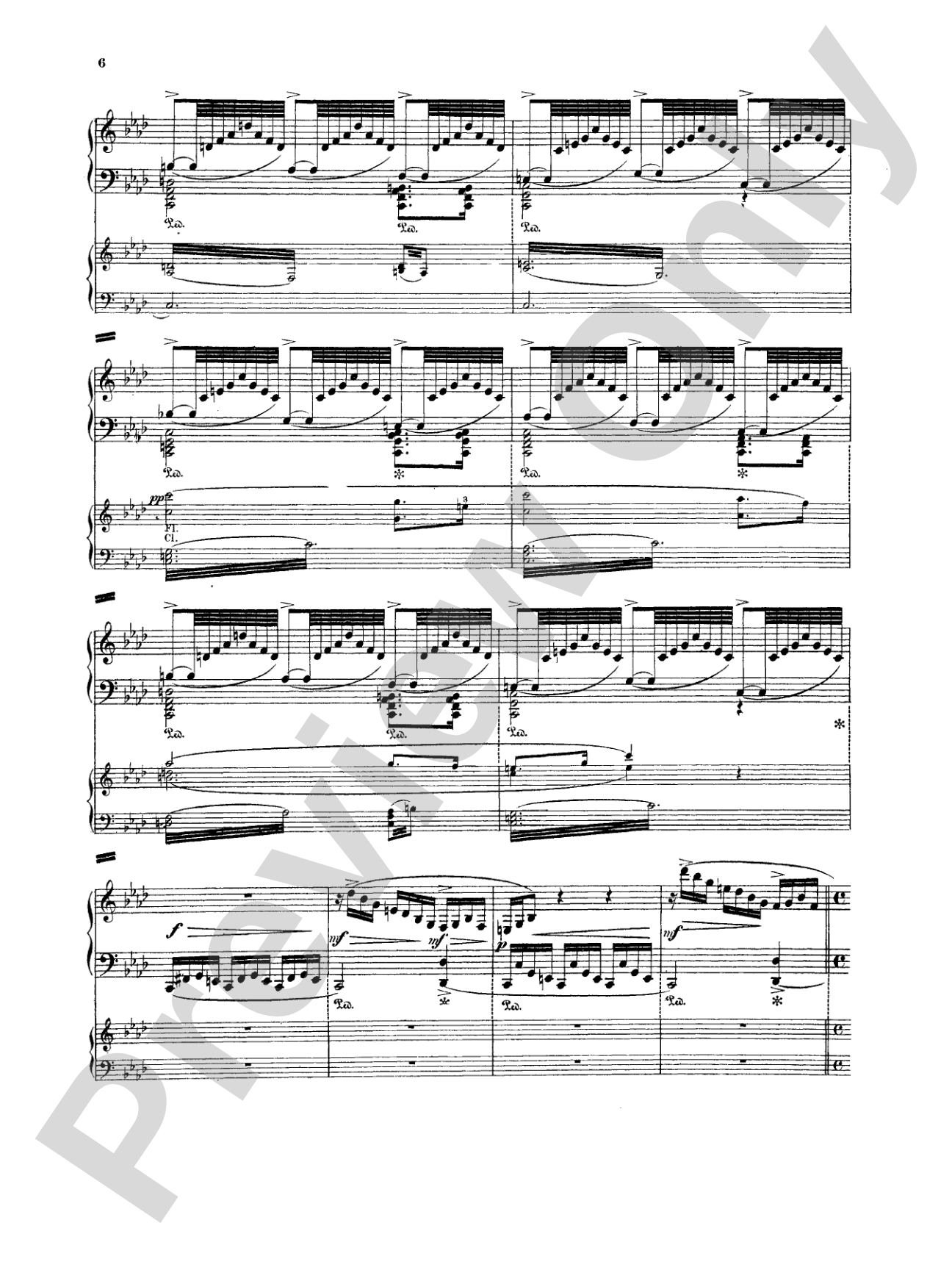
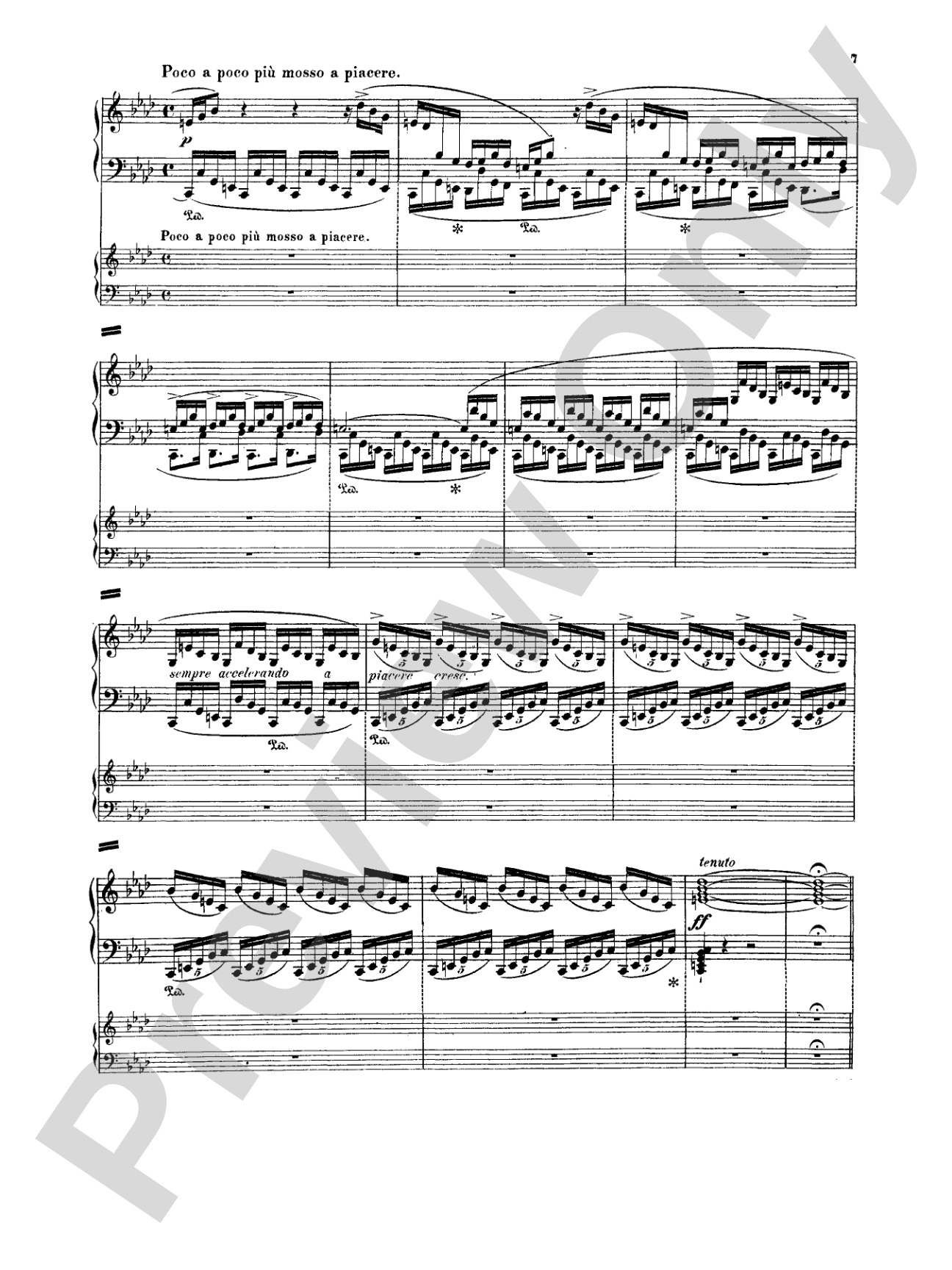
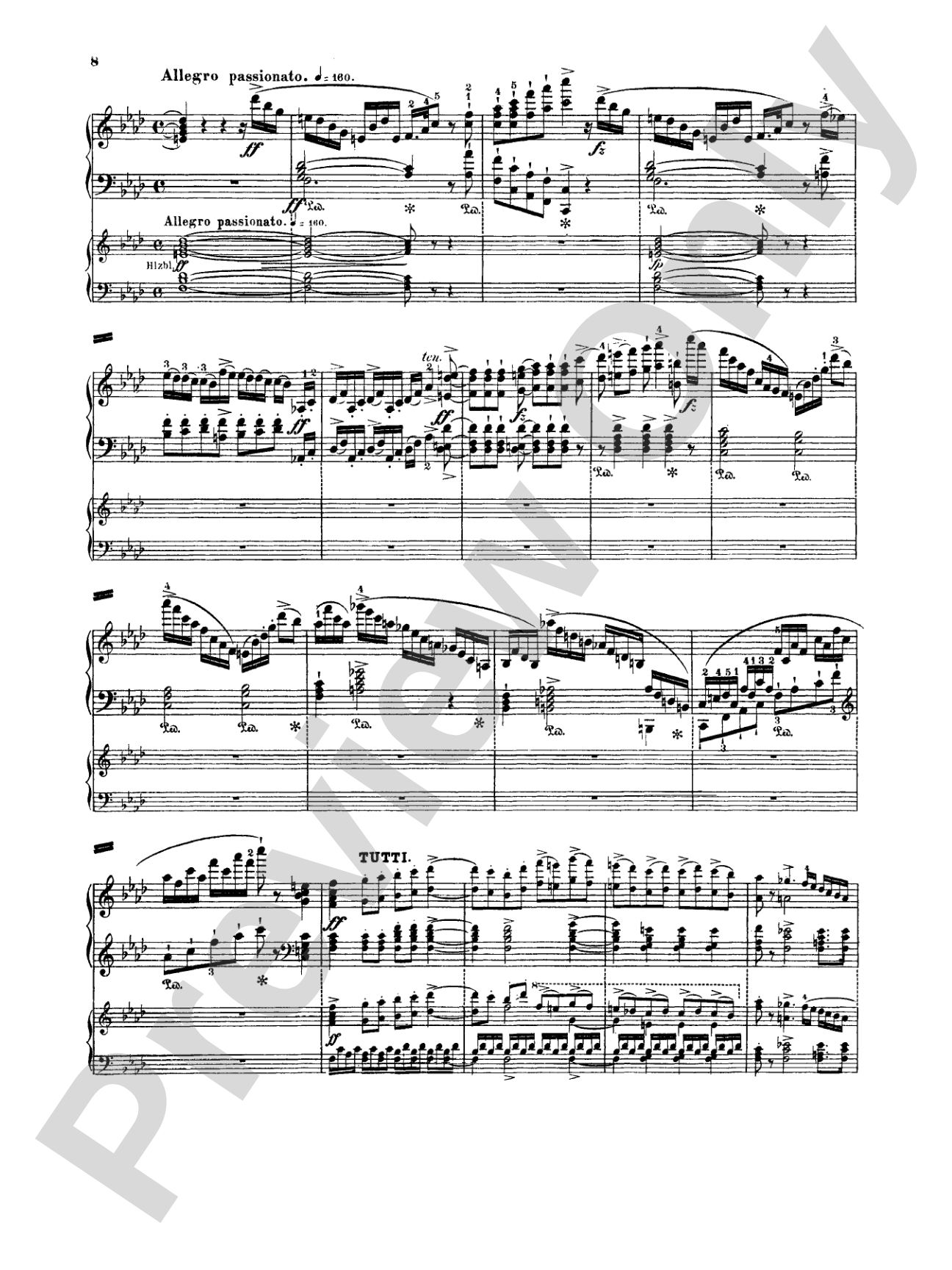
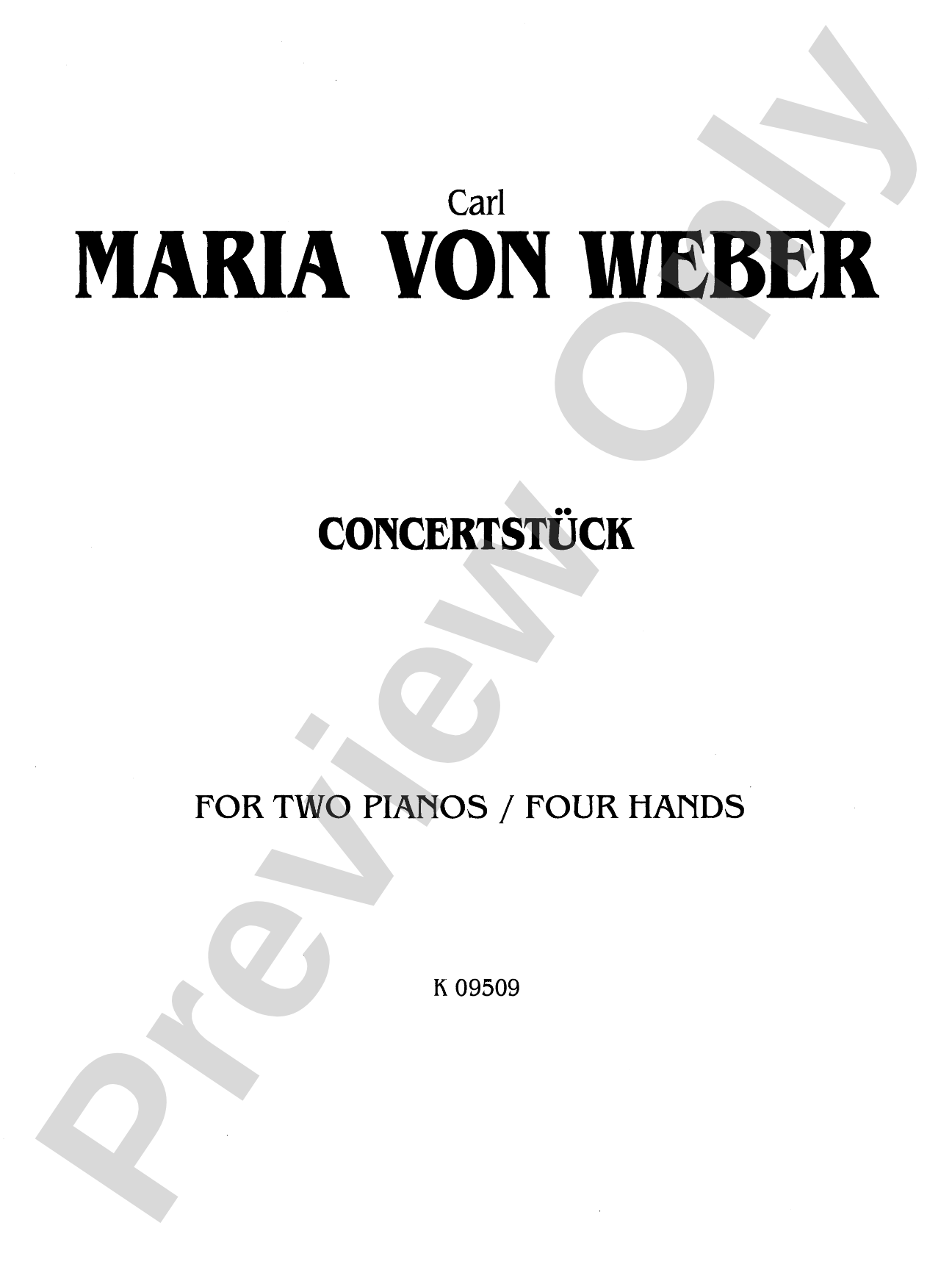
Weber: Concertstück Sheet Music Preview

Weber: Concertstück

By Carl Maria von Weber

Item: 00-PC-0012725

Digital Download
$8.95
Description
A Piano Duet for 2 Pianos, 4 hands, composed by Carl Maria von Weber. Two copies are required for performance.

Don't just read it, hear it, play along with it, and watch your students grow with it. In MakeMusic Cloud, Weber: Concertstück comes alive with professional accompaniment, adjustable tempo, and built-in practice tools that turn solo practice into real progress.

Sample Audio
No sample audio found.
Sample Video
Additional Details
Series: Kalmus Edition
Publisher: Alfred Music
Page Count: 36
SKU: 00-PC-0012725

More about this title

About the Composer: Carl Maria von Weber

Carl Maria von Weber (1786-1826) shaped the Romantic era as a composer, conductor, and pianist who bridged Classical and Romantic idioms. His operas, symphonies, and virtuosic solo works influenced generations of composers, and his keyboard writing demands both technical brilliance and musical sophistication. Weber's works remain central to the piano duet repertoire because they showcase orchestral color and dramatic gesture adapted idiomatically for multiple hands at the keyboard.

Why we love this

The Concertstück sits at a sweet spot: it's ambitious enough to hold the interest of accomplished pianists yet structured to reward careful ensemble work without requiring years of chamber music experience. Weber's orchestration translated into piano writing means both players stay engaged throughout, and the piece rewards attention to balance, phrasing, and the interplay between parts.

What to expect

The piece unfolds with Romantic grandeur and virtuosic flair, alternating between lyrical passages that float across both keyboards and moments of brilliant, almost orchestral display. Weber's writing sparkles and gestures dramatically, evoking operatic intensity while maintaining the intimacy that comes from two pianists sharing the same instrument setup.

Who it's for

Advanced pianists preparing for duet recitals or biennial competitions will find the technical and musical demands substantial without being prohibitive. Teachers looking for repertoire that develops ensemble sensitivity in accomplished students should consider this a core offering.

How to get the most out of it

  • Establish a clear hierarchy between primo and secondo early in rehearsal, then test whether switching roles sharpens both players' awareness of the full texture and their ensemble listening.
  • Synchronize pedal changes before you lock in tempo; Weber's harmonic transitions often call for subtle overlap or release that sounds muddy if both players operate independently.
  • Shape phrases across the two instruments as if they were a single melodic voice, resisting the urge to let each player finish their own ideas in isolation.

How to use it

Program this alongside other Romantic-era duet literature to create a recital section devoted to piano ensemble writing at its most appealing. It works equally well as a show-stopping closer on a mixed solo and chamber recital, or as a centerpiece for a program exploring Weber's influence on later Romantic composers.

Skills your students will build

  • Ensemble balance and listening between two independent pianists
  • Phrase shaping across two instruments as a unified line
  • Quick pedal coordination in shared harmonic space
  • Virtuosic passagework with clarity and control at tempo
  • Interpretation of Romantic-era orchestration idioms on the keyboard

You May Also Like