
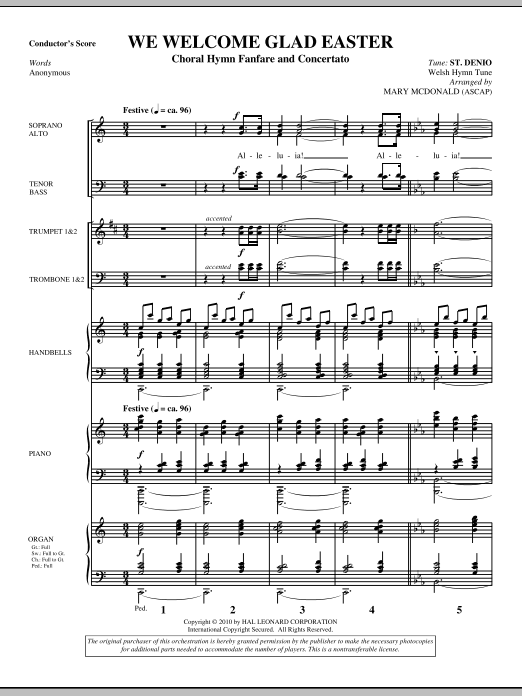

We Welcome Glad Easter: Choral Instrumental Pak
By Traditional Welsh Melody / Arranged by Mary McDonald
Item: 35-PK00165974
$30.00
Pickup currently not available
Buy Extra Parts (Digital PDF Download)
Parts Added to Cart!
Description
A classic Easter hymn is transformed into a glorious anthem celebrating the joy of Christ's resurrection. Include the piano, organ, congregation, brass and handbells for an unforgettable worship moment. The ST. DENIO melody is rich with jubilant spirit and this arrangement maximizes its effervescence. The enduring acclamation of faith is an ideal call to worship!


We Welcome Glad Easter: Choral Instrumental Pak isn't in MakeMusic Cloud just yet...but it could be. Let us know you'd like to see it, and you'll help shape what comes next. In the meantime, start a free trial and dive into thousands of interactive titles your students can play along with today.
Request This Title
Tell us you want it.
Start Your Free Trial
Explore everything that's ready to play right now.
Sample Audio
No sample audio found.
Sample Video
No sample videos found.
Additional Details
Publisher:
Hal Leonard
SKU:
35-PK00165974
More about this title
About the Composer: Traditional Welsh Melody
Welsh hymn melodies have shaped congregational singing across the English-speaking world for centuries. The ST. DENIO tune, originating from Wales, carries the distinctive character of its cultural tradition: sturdy harmonic progressions, singable melodic contours, and an inherent sense of communal purpose. These melodies were built to sustain faith across generations, and their resilience in worship settings speaks to their compositional integrity.
Why we love this
Mary McDonald's arrangement honors the hymn's congregational roots while unleashing its full jubilant potential across multiple forces. The orchestration balances accessibility with richness, letting brass and handbells amplify the tune without overwhelming singers or organists. This is the kind of Easter anthem that feels both substantial and singable, serving equally well as a processional opener or reflective moment of celebration.
What to expect
From the first phrases, ST. DENIO radiates confidence and forward momentum. The hymn's natural dignity pairs beautifully with the bright affirmation of Easter morning, and McDonald's orchestration captures both the reverent gratitude and uninhibited joy that belong in resurrection music. You'll hear the melody soar, supported by shimmering handbells and grounded by warm brass harmonies.
Who it's for
This arrangement works beautifully for churches with developed choral programs, brass sections, and the resources to include handbells and dual keyboard accompaniment. It also serves ensembles wanting to involve their congregation in a polished, memorable Easter experience. Whether your church has a full complement of musicians or you're building toward this kind of integration, the flexibility of the instrumentation lets you scale up or down without compromising the piece.
How to get the most out of it
- Balance the organ and piano accompaniment to create a supportive but not dominating foundation; the melody line should float above the harmonic cushion rather than fight for space.
- Coordinate brass entrances with the conductor's cues to ensure they land on significant harmonic points where they can reinforce rather than overshadow the choir.
- Shape the congregational moments with clear, spacious conducting; allow the assembly time to find their footing on the familiar melody without rushing.
- Let handbells articulate the text's joy through rhythmic precision; their brightness lifts the final sections and creates textural variety.
How to use it
This anthem functions exceptionally well as a processional or opening movement in an Easter service, setting a tone of celebration from the outset. It also works as a benediction or recessional, sending the congregation out with the melody fresh in their voices. Consider pairing it with a more introspective communion anthem earlier in the service to create dynamic contrast.
Skills your students will build
- Balancing ensemble voices with instrumental accompaniment
- Phrasing hymn-based melodies for both congregational familiarity and choral artistry
- Coordinating multiple instrumental sections (brass, handbells, keyboards)
- Sustaining vibrato and tone quality in celebratory contexts