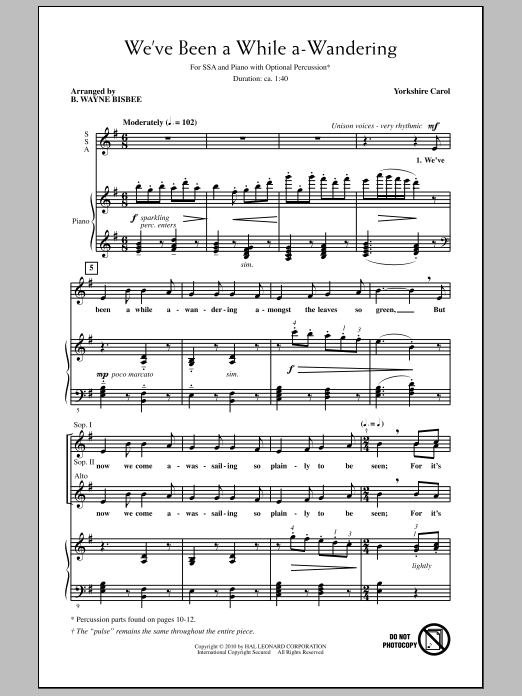
B. Wayne Bisbee has built a reputation as a thoughtful arranger of choral music, with a particular sensitivity to the demands of school and community choirs. His arrangements balance musical substance with accessibility, creating pieces that singers find rewarding to learn and audiences find genuinely moving.
Why we love this
Bisbee's setting captures the contemplative warmth of this traditional text without resorting to sentimentality. The three-part voicing accommodates developing singers while offering enough harmonic interest to engage more advanced ensembles, and the piece has genuine concert presence without demanding a large choir.
What to expect
The piece carries a reflective quality, inviting singers and listeners to sit with the text rather than rushing through it. There's comfort in the harmonic language and a sense of gentle forward motion, making it feel both traditional and fresh.
Who it's for
This arrangement serves choirs with sufficient numbers to split voices confidently but doesn't demand advanced vocal technique. It works equally well for high school choirs, college community ensembles, and adult singers looking for holiday repertoire with substance.
How to get the most out of it
Balance the upper voices carefully in passages where the melody splits; SSA voicing means no tenor line to anchor the sound, so the second soprano needs independence without overshadowing the first soprano.
Shape the harmonic progressions by thinking about breath and phrase architecture rather than strictly metronomic pulse; this carol rewards a slightly flexible approach.
Let the text inform your dynamic choices. The word setting should guide singers toward natural speech rhythms within the musical line.
How to use it
Pair this with more upbeat carol arrangements to create programming variety within a holiday concert, or use it as a contemplative centerpiece that gives audiences a moment to absorb the text. At eleven pages, it anchors a diverse set without overwhelming rehearsal time.
Skills your students will build
Voice independence in three-part writing
Singing sustained lines with phrasing and breath management
Interpreting text expression through harmonic context
Balancing blend when dividing into multiple voice parts
You May Also Like
Scan to Complete Your Purchase
Use your phone's camera to scan the code below
You'll log in on your phone and the order will be added to your account