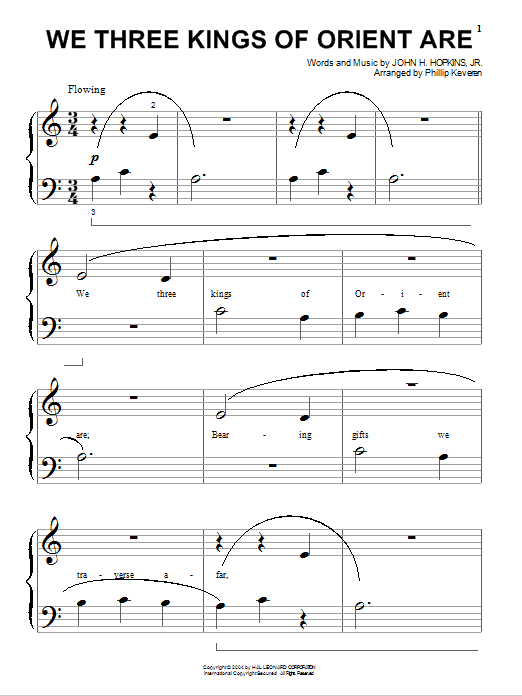
John H. Hopkins, Jr. wrote "We Three Kings of Orient Are" in 1857, creating one of the most enduring melodies in the Christmas repertoire. His gift for crafting singable, memorable lines has made this carol a staple across denominations and secular settings alike, performed by everyone from church choirs to concert bands.
Why we love this
Keveren's arrangement respects the carol's dignity while opening it up for young pianists. The three-page format gives students room to grow into the piece without overwhelming them, and the straightforward harmonic language lets the melody shine without sacrificing musical interest.
What to expect
The piece carries the reverent, processional quality of its source melody while remaining grounded in beginner-friendly voicing. There's warmth in the harmonic support and a sense of gentle forward motion that invites both performer and listener into quiet reflection.
Who it's for
Beginning pianists working on fundamental reading skills and basic hand independence will find this arrangement accessible and rewarding. It's equally valuable for church musicians preparing seasonal programming or for teachers seeking quality material that connects students to the carol tradition.
How to get the most out of it
Shape the melody with gentle dynamic swells on longer note values to avoid a flat, mechanical feel.
Balance the accompaniment so it supports rather than competes with the tune; this carol's strength comes from its memorable line.
Take time with fermatas and phrase endings to let the listener absorb each section before moving forward.
How to use it
Slot this into a winter or holiday concert as a bridge between secular selections and more formal sacred music. It also works beautifully as a pre-service or post-service offering in worship settings where pianists rotate repertoire responsibility throughout the season.
Skills your students will build
Reading treble clef with confidence across the middle and upper staff registers
Coordinating melody and accompaniment with independent hands
Sustaining musical line through longer note values and phrase arcs
Interpreting dynamic and articulation markings in a traditional context
You May Also Like
Scan to Complete Your Purchase
Use your phone's camera to scan the code below
You'll log in on your phone and the order will be added to your account