
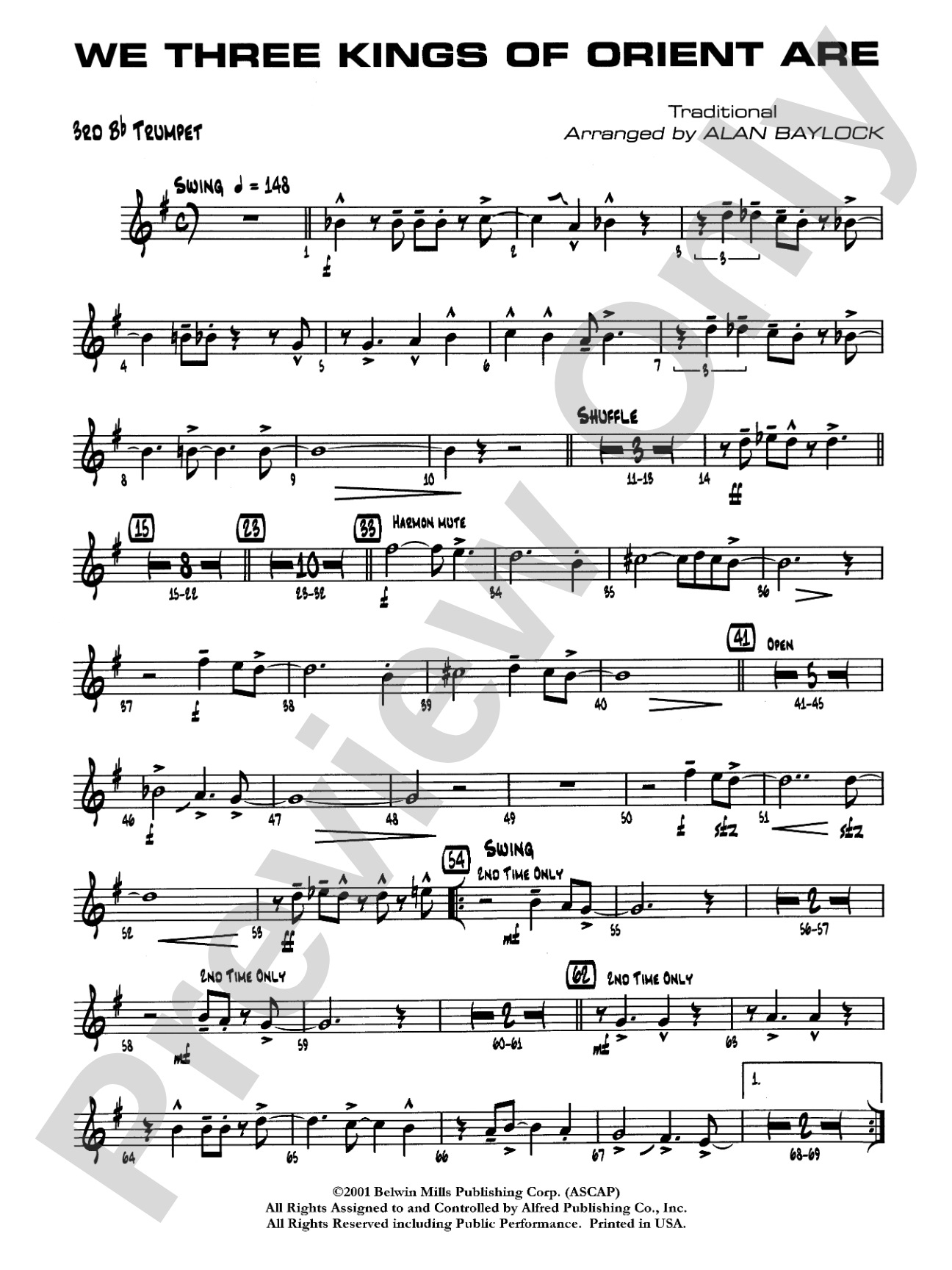

We Three Kings of Orient Are: 3rd B-flat Trumpet
Words and music by John Henry Hopkins / arr. Alan Baylock
Grade: 4.5 (Medium Advanced / Difficult)
Item: 00-PC-0002441_T3
$3.00
Pickup currently not available
Description
This is a superb chart by an outstanding arranger, Alan Baylock. We Three Kings of Orient Are is your first choice for holiday jazz---hip, contemporary, and swinging all the way. The band will dig into the independent lines and big ensemble sound all built around the melody stated by five horns. Alan provides ample solo space for tenor sax, alto sax, trumpet, trombone, drums, and baritone sax and the brass ranges are modest. A powerful treatment of a traditional holiday favorite, this is first class writing. Highly recommended!


Don't just read it, hear it, play along with it, and watch your students grow with it. In MakeMusic Cloud, We Three Kings of Orient Are: 3rd B-flat Trumpet comes alive with professional accompaniment, adjustable tempo, and built-in practice tools that turn solo practice into real progress.
Open in the Player
Jump straight in and assign it today.
Start Your Free Trial
Open this title and explore the full library in minutes.
Sample Audio
1
Audio File
--:--
0:00
0:00
Sample Video
No sample videos found.
Additional Details
Series:
Premier Jazz Series
Publisher:
Alfred Music
Page Count:
98
SKU:
00-PC-0002441_T3
More about this title
About the Arranger: John Henry Hopkins
John Henry Hopkins composed "We Three Kings of Orient Are" in 1857, creating one of the most enduring melodies in the Christmas canon. His gift for singable, memorable lines has kept this carol alive for over 160 years across countless musical settings and arrangements.
Alan Baylock's arrangement brings Hopkins' traditional melody into the modern jazz idiom with sophistication and swing. Baylock is known for writing charts that respect the integrity of familiar material while opening it up to contemporary harmonic and rhythmic interpretation, making him a trusted voice in jazz education.
Why we love this
Baylock's approach to this standard holiday carol strips away the reverent slowness you might expect and replaces it with genuine swing and contemporary jazz language. The five-horn melody statement gives the arrangement an immediate sense of ensemble strength, while the generous solo space for tenor, alto, trumpet, trombone, baritone, and drums ensures every section gets a moment to shine. This is the kind of chart that energizes rehearsal and makes musicians excited to play jazz.
What to expect
A crisp, modern take on a familiar melody; the five-horn opening lands with authority and sophistication. The energy stays high and swinging throughout, with plenty of space for individual voices to emerge and converse. This is jazz that feels both accessible and genuinely contemporary.
Who it's for
Jazz ensemble directors seeking contemporary holiday repertoire that respects the traditional carol while demanding strong improvisation and section reading from advanced players. This works for skilled high school ensembles and college jazz groups looking to program something festive that doesn't feel nostalgic or simplified.
How to get the most out of it
- Lock the ensemble hits that frame the five-horn melody statement; these create the backbone of the arrangement, so precision in the sectionalism matters as much as the swing feel.
- Balance the solo voices carefully so each one projects clearly without overwhelming the ensemble during background figures. The baritone sax solo in particular benefits from a warm, supported tone.
- Work the rhythm section as a unit early on. The drums and bass lock the groove first; horns and reeds layer into that foundation rather than over it.
- Give soloists a full section or two to find their voice. Baylock's solo spaces are earned, and rushing them shortchanges the chart's swing and narrative arc.
How to use it
Program this in December concerts for ensembles with solid jazz chops and disciplined soloists. It works well sandwiched between more straightforward holiday fare, offering audiences a smart, energetic contrast while still honoring the season's musical traditions.
Skills your students will build
- Reading complex jazz articulations and dynamic shaping across ensemble sections
- Listening to background ensemble figures while soloing independently
- Balancing swing feel with precise rhythmic alignment in ensemble hits
- Understanding how contemporary reharmonization preserves melodic identity
- Developing solo phrasing over changes (improvisation opportunities for six voices)