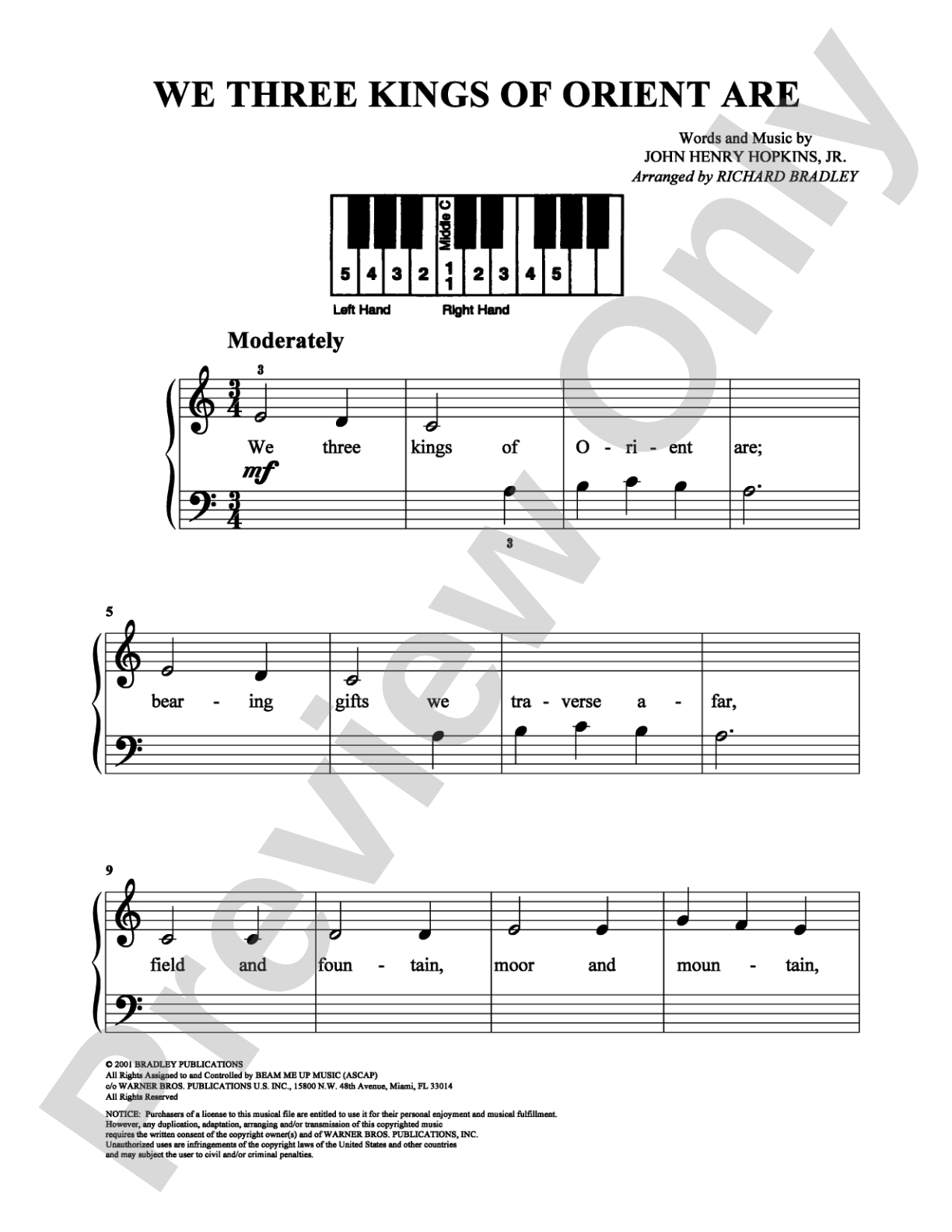
We Three Kings of Orient Are: Easy Piano Digital Sheet Music

We Three Kings of Orient Are: Easy Piano Digital Sheet Music

John Henry Hopkins, Jr.

Item: 00-PS-0006878

Digital Download
$3.99
Description

We Three Kings of Orient Are: Easy Piano Digital Sheet Music isn't in MakeMusic Cloud just yet...but it could be. Let us know you'd like to see it, and you'll help shape what comes next. In the meantime, start a free trial and dive into thousands of interactive titles your students can play along with today.

Sample Audio
No sample audio found.
Sample Video
Additional Details
SKU: 00-PS-0006878

More about this title

About the Creator: John Henry Hopkins Jr.

John Henry Hopkins Jr. (1820, 1891) wrote "We Three Kings" in 1857, crafting one of the most enduring carols in the American Christmas tradition. His gift for melody and storytelling made this piece accessible to singers and players of all levels, which is why it remains a staple in holiday performances more than 160 years later.

Why we love this

This arrangement strips away unnecessary complexity while keeping the carol's distinctive melodic arc and harmonic character intact. Young pianists get to play a piece they actually recognize, which builds genuine confidence and makes practice feel purposeful rather than abstract.

What to expect

Stately and reverent, with an unhurried quality that invites listeners into a moment of reflection. The straightforward harmonies and clear melody create warmth and immediacy rather than drama, making it feel both timeless and approachable.

Who it's for

This edition serves pianists in the early-intermediate stages who are ready for recognizable repertoire with modest technical demands. It works equally well in private lessons, classroom music settings, or holiday recitals where accessibility and familiarity matter.

How to get the most out of it

  • Maintain a steady, walking tempo; resist the urge to rush through the melody. The carol's strength lies in its processional dignity.
  • Let the left hand sit quietly in the background. The melody should always sing forward without the accompaniment competing for attention.
  • Mark phrase endings gently with a slight breath or diminuendo. The song divides naturally into four lines that benefit from subtle articulation.
  • Pedal sparingly and lift it before chord changes to keep the harmony clear and prevent muddiness in the lower register.

How to use it

Position this early in a holiday concert program to set a warm, inviting tone. It also works as a prelude to a choral arrangement of the same carol or as a solo bridge between more elaborate ensemble pieces.

Skills your students will build

  • Reading and performing simple accompanimental patterns in the left hand
  • Maintaining independence between melody and harmony
  • Phrase shaping and pedal control in a diatonic harmonic context
  • Building sight-reading fluency with familiar melodic material

You May Also Like