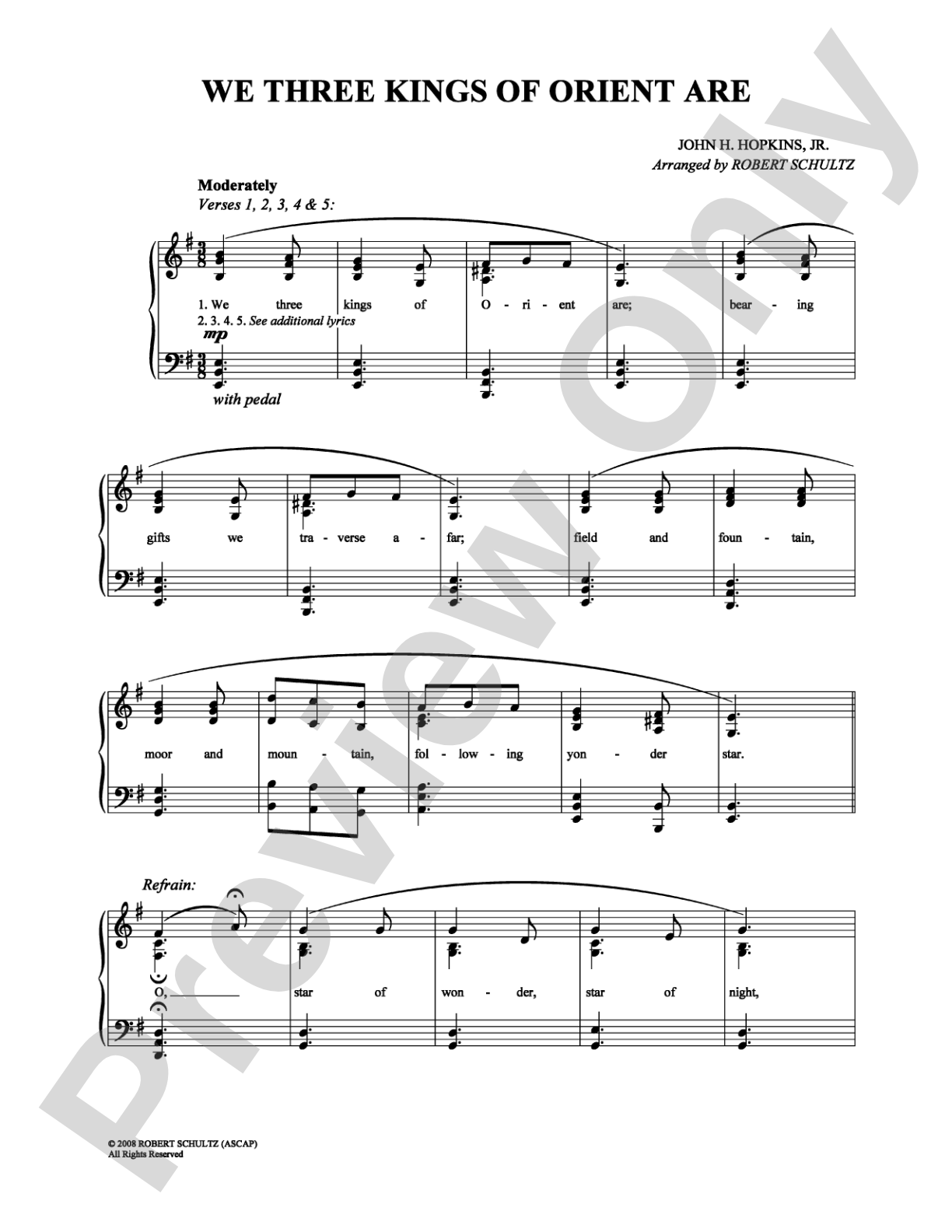
We Three Kings of Orient Are: Piano/Vocal/Chords Digital Sheet Music

We Three Kings of Orient Are: Piano/Vocal/Chords Digital Sheet Music

John Henry Hopkins, Jr.

Item: 00-PS-0000415

Digital Download
$3.99
Description

We Three Kings of Orient Are: Piano/Vocal/Chords Digital Sheet Music isn't in MakeMusic Cloud just yet...but it could be. Let us know you'd like to see it, and you'll help shape what comes next. In the meantime, start a free trial and dive into thousands of interactive titles your students can play along with today.

Sample Audio
No sample audio found.
Sample Video
Additional Details
SKU: 00-PS-0000415

More about this title

About the Creator: John Henry Hopkins Jr.

John Henry Hopkins Jr. composed "We Three Kings of Orient Are" in 1857, and the carol quickly became a cornerstone of American Christmas repertoire. Hopkins was a clergyman and musician whose gift for melody created one of the most recognizable and singable holiday tunes in existence.

Why we love this

This carol works equally well as a solo vehicle or in ensemble settings, giving you flexibility depending on your performance context and available singers. The piano/vocal/chord format lets accompanists play from the same page as vocalists, streamlining rehearsal and reducing page-turn logistics.

What to expect

A stately, reverent processional with warmth beneath its formal structure. The harmonic language unfolds with deliberate grace, inviting singers and players to shape phrases with intention rather than speed.

Who it's for

Pianists accompanying singers in church services, holiday concerts, or studio recitals will find this format practical and complete. Vocalists preparing solo arrangements or small ensemble versions of this beloved carol benefit from having melody, harmony, and accompaniment cues all visible at once.

How to get the most out of it

  • Let the piano intro establish the processional character before the voice enters; resist rushing the harmonic progression in those opening measures.
  • Use the chord symbols to shade accompaniment with dynamic variation across verses; soften on familiar repeats to keep listener attention focused on textual nuance.
  • Balance the vocal line so the melody sits naturally above the harmonic bed rather than fighting against the piano part for clarity.

How to use it

Position this as a reflective moment within a longer holiday concert, allowing it to serve as a contrast to faster, more celebratory carols. It also suits sacred music programs, Christmas services, and recitals where traditional carols anchor the repertoire.

Skills your students will build

  • Reading piano/vocal score layout with independent vocal and accompaniment lines
  • Using chord symbols for harmonic awareness and flexible accompaniment
  • Sustaining legato phrasing across a full verse without rhythmic rushing
  • Balancing vocal projection with piano accompaniment in smaller performance spaces

You May Also Like