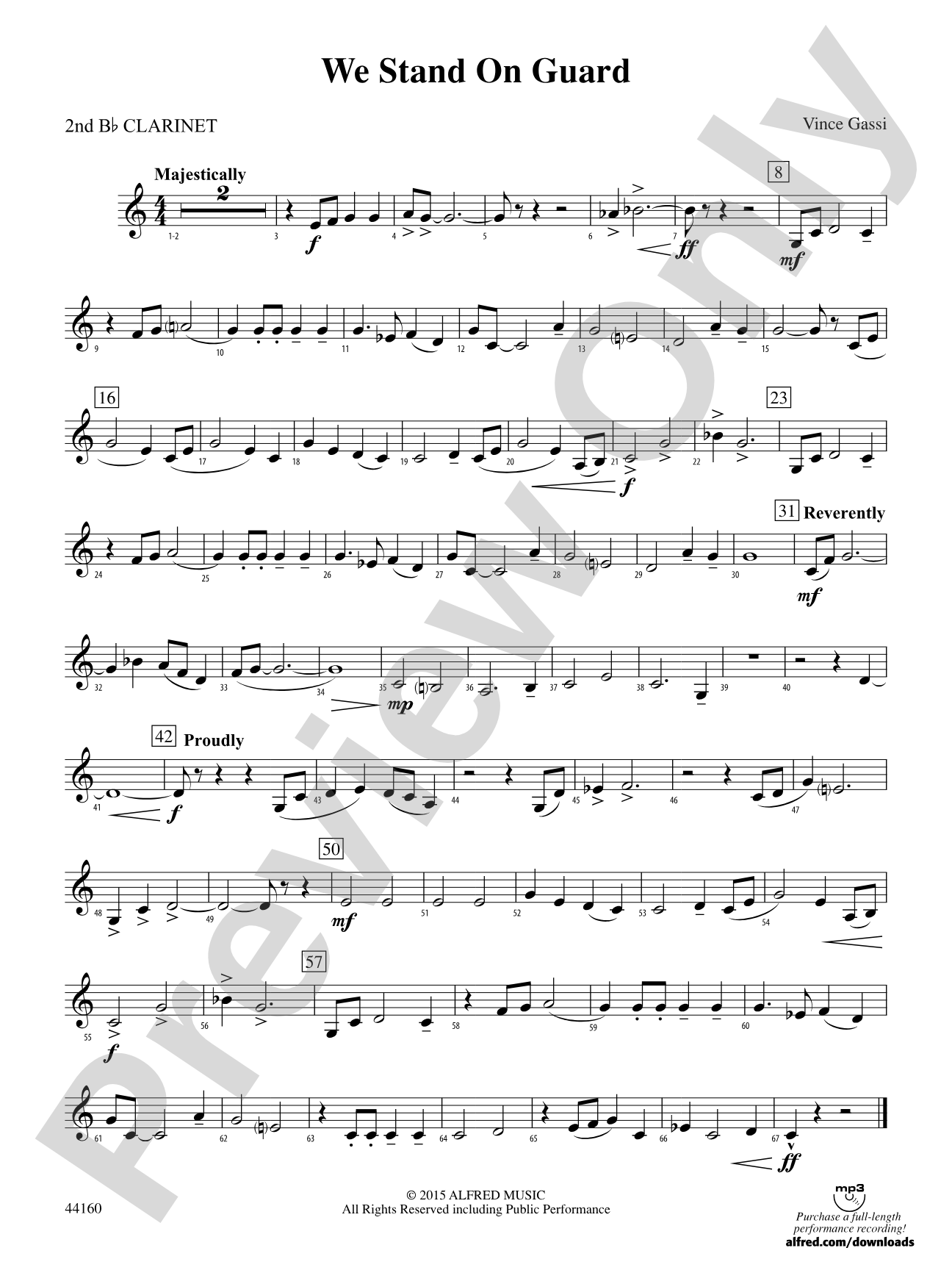
We Stand on Guard: 2nd B-flat Clarinet Sheet Music Preview

We Stand on Guard: 2nd B-flat Clarinet

By Vince Gassi

Grade: 1.5 (Easy)

Item: 00-PC-0017010_C2

Digital Download
$3.00
Description
Strong themes contrast with gentler statements, expressive of reverence, courage, and pride. Open your next concert with this easy concert march inspired by the bravery and honor of all those who stand on guard for our safety. (2:40)

Don't just read it, hear it, play along with it, and watch your students grow with it. In MakeMusic Cloud, We Stand on Guard: 2nd B-flat Clarinet comes alive with professional accompaniment, adjustable tempo, and built-in practice tools that turn solo practice into real progress.

Sample Audio
0:00
0:00
Sample Video
Additional Details
Series: Challenger Band Series
Publisher: Alfred Music
Page Count: 120
SKU: 00-PC-0017010_C2

More about this title

About the Composer: Vince Gassi

Vince Gassi

Vince Gassi has built a distinctive voice in band composition over more than two decades of classroom teaching and professional writing. Educated at the University of Western Ontario and the Dick Grove School of Music in Los Angeles, Gassi later earned his Ph.D. from York University in Toronto. His catalog now exceeds 100 published works, many of which have become fixtures on concert and contest programs across North America, Europe, and Japan.

As a conductor, clinician, and adjudicator, Gassi remains deeply connected to the practical needs of school music programs. His seminars on creative engagement and digital workflows for music directors reflect his commitment to helping educators and students thrive. His pieces perform frequently at major venues including the Midwest Clinic in Chicago, and he continues to receive commissions from ensembles at all levels.

Why we love this

This march opens with unmistakable melodic strength while creating space for gentle, introspective moments, giving your players genuine expressive territory to explore right away. At Grade 1.5, it demands clean fundamentals and careful dynamic control without overwhelming early high school or advanced middle school bands. The patriotic character and modest length make it a natural concert opener that audiences will remember.

What to expect

Stately and proud without pomp, with moments of quiet reflection that ground the celebration in something deeper. The music conveys honor and bravery not through bombast, but through careful juxtaposition of strength and gentleness, creating a sense of reverence throughout.

Who it's for

Grade 1.5 concert bands ready to tackle a piece with genuine emotional range and clear structural purpose. This works equally well for high school groups seeking accessible material with substance and for advanced middle school ensembles looking to build confidence with a concert-quality march.

How to get the most out of it

  • Balance the strong opening theme against the ensemble; resist the urge to let the melody dominate. The contrast between bold statements and reverent passages is what makes this piece distinctive.
  • Shape the gentler sections with a sense of dignity rather than pulling back too far dynamically. Reverence need not mean soft.
  • Lock the brass sectional rhythm in the march figures before polishing the ensemble; young players often rush the downbeats in confident passages.
  • Attend carefully to the score's dynamic markings. The swells and releases define the emotional arc and prevent the piece from flattening into a single mood.

How to use it

Open your concert with this piece and immediately signal seriousness of purpose to your audience. Its modest length and strong identity make it an ideal complement to longer or more complex works later in the program, or pair it with lighter fare to showcase your band's dynamic range. The patriotic character suits commemorative concerts or programs honoring service and leadership.

Skills your students will build

  • Dynamic contrast and expressive shaping across contrasting thematic material
  • Secure march rhythms and ensemble alignment in bold passages
  • Restraint and tone control in gentle, reverent sections
  • Phrase continuity and musical storytelling across shifts in character

You May Also Like