
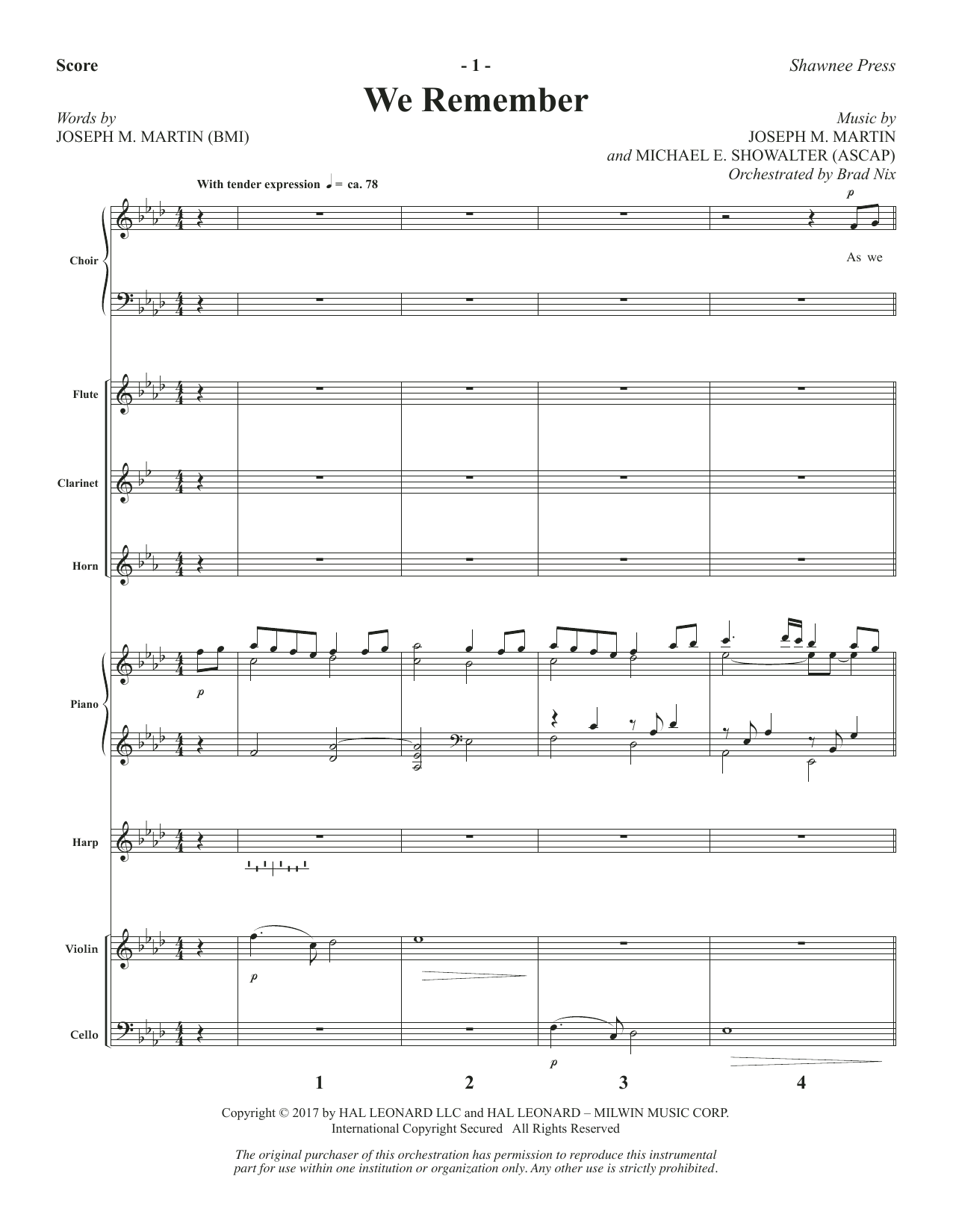

We Remember: Choral Instrumental Pak
By Joseph M. Martin and Michael E. Showalter / By Joseph M. Martin / By Michael E. Showalter
Item: 35-PK00502562
$40.00
Pickup currently not available
Buy Extra Parts (Digital PDF Download)
Parts Added to Cart!
Description
Drawing upon the biblical admonition to "remember" whenever communion is celebrated, this anthem from the cantata "Portraits in Grace" is a call to the table of grace. A beautiful melodic design, simply presented in minor, brings a sacred hush to the expressive text. The refrain of "We will remember" opens to full harmonies and offers an opportunity for a moving worship moment. Score and Parts (fl, cl, hn, pno, hp, vn, vc) available as a digital download.


We Remember: Choral Instrumental Pak isn't in MakeMusic Cloud just yet...but it could be. Let us know you'd like to see it, and you'll help shape what comes next. In the meantime, start a free trial and dive into thousands of interactive titles your students can play along with today.
Request This Title
Tell us you want it.
Start Your Free Trial
Explore everything that's ready to play right now.
Sample Audio
No sample audio found.
Sample Video
No sample videos found.
Additional Details
Publisher:
Hal Leonard
SKU:
35-PK00502562
More about this title
About the Composer: Joseph M. Martin and Michael E. Showalter
Joseph M. Martin is a prolific composer and arranger whose sacred music dominates the choral landscape across denominations. His gift for memorable melody paired with accessible harmonic language has made him a staple in worship settings and concert halls alike, with particular strength in creating moments of genuine spiritual reflection without sacrificing musical substance.
Michael E. Showalter brings complementary compositional sensibilities to collaborative work, with expertise in crafting texts and musical settings that serve both liturgical function and artistic integrity. Together, Martin and Showalter have created works that bridge the gap between congregational accessibility and sophisticated choral writing.
Why we love this
The refrain structure gives you built-in moments to shape genuine liturgical meaning rather than merely delivering text. The minor key and simple melodic contour create natural space for the instruments to enhance rather than compete, making this work equally effective in intimate sanctuary settings or larger concert venues.
What to expect
The minor tonality creates a contemplative, almost hushed quality even as the text calls to remembrance. There is an undertone of solemnity paired with invitation; the refrain swells with an almost gentle affirmation rather than proclamatory force, like a community gathering around something sacred.
Who it's for
This works for choirs seeking a theologically grounded anthem with real musical sophistication at a moderate difficulty level. Directors programming around communion services, Maundy Thursday observances, or general worship settings will find the length and expressive scope ideal.
How to get the most out of it
- Allow the opening statements to breathe; the melodic line's power comes from restraint and clarity, so resist the urge to over-drive the dynamics in early phrases.
- Balance the choir and instrumental parts so that the flute, clarinet, and strings serve as emotional deepeners rather than harmonic fill. The harp and piano should anchor without obscuring the vocal line.
- Shape the refrain's fullness by bringing ensemble parts in gradually; let the harmonies bloom rather than arriving at full texture all at once.
- Consider the tempo flexibility around the refrain sections; a slight broadening of the pulse can amplify the reflective weight of 'We will remember.'
How to use it
Program this as a centerpiece for worship services centered on communion theology, or use it as a quieting moment in a mixed concert when you need to shift the room's energy from celebration to reflection. The instrumentation makes it flexible enough for both traditional services and contemporary worship spaces.
Skills your students will build
- Shaping minor key passages with emotional nuance rather than darkness
- Balancing choir and instrumental textures in supported anthem settings
- Responding to liturgical text with appropriate pacing and weight
- Sustaining focused tone in extended unison or small ensemble passages