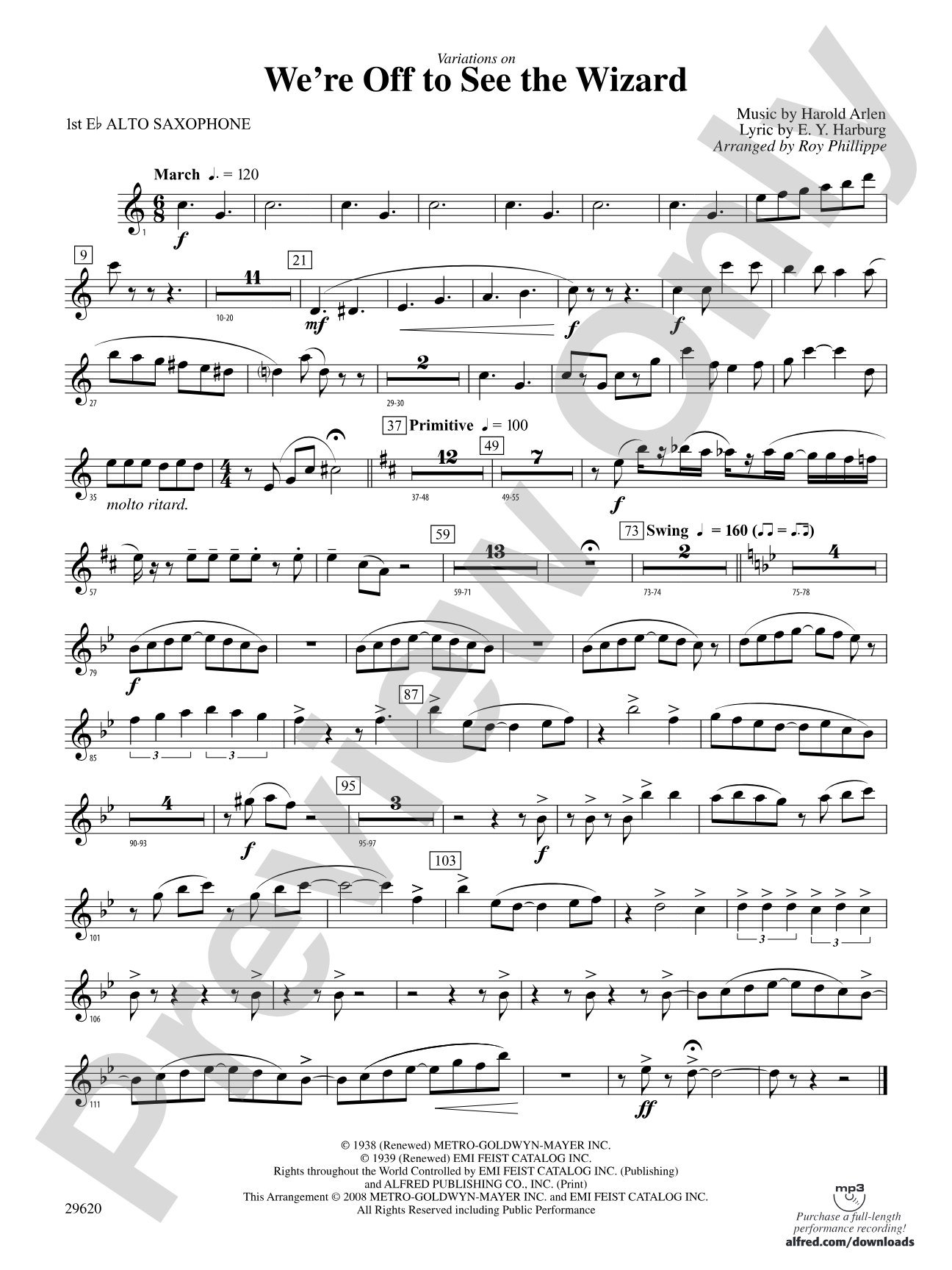
We're Off to See the Wizard, Variations on: E-flat Alto Saxophone Sheet Music Preview

We're Off to See the Wizard, Variations on: E-flat Alto Saxophone

Music by Harold Arlen, lyrics by E. Y. Harburg / arr. Roy Phillippe

Grade: 3 (Medium Easy)

Item: 00-PC-0001505_AX1

Digital Download
$3.00
Description
This bold melody is introduced in a traditional up-beat march, then developed through several distinct styles, closing in a big-band swing. Great fun! (3:14)

Don't just read it, hear it, play along with it, and watch your students grow with it. In MakeMusic Cloud, We're Off to See the Wizard, Variations on: E-flat Alto Saxophone comes alive with professional accompaniment, adjustable tempo, and built-in practice tools that turn solo practice into real progress.

Sample Audio
0:00
0:00
Sample Video
Additional Details
Series: Pop Concert Band
Publisher: Alfred Music
Page Count: 230
SKU: 00-PC-0001505_AX1

More about this title

About the Composer: Harold Arlen

Harold Arlen (1905-1986) composed some of the most enduring melodies in American popular music, with a gift for writing songs that bridge classical sophistication and immediate accessibility. His work for film and stage, including "The Wizard of Oz," established him as a master of melody whose themes have become part of the cultural vocabulary that musicians encounter throughout their careers.

For music educators, Arlen's output represents a valuable bridge between concert music and the popular idiom. His melodies reward careful musicianship while remaining instantly recognizable to audiences, making them ideal repertoire for building student engagement and demonstrating how strong compositional craft transcends genre.

Why we love this

This arrangement transforms a beloved melody into a genuine concert work without losing its character or accessibility. Roy Phillippe's orchestration showcases different ensemble colors and styles, giving every section meaningful moments while maintaining the energy that makes this tune instantly recognizable. The progression from march through swing creates natural pacing for a concert program and holds audience attention from start to finish.

What to expect

The piece opens with the characteristic brightness of a concert march, then playfully reimagines the melody through different musical lenses before landing in the sophisticated swing idiom that Arlen knew so well. Each variation feels fresh rather than repetitive, and the big-band closer brings the work home with energy and polish.

Who it's for

This is ideal for Grade 3 bands looking for repertoire that entertains both players and audiences without sacrificing musicianship. The variety of styles and the balanced demands across sections make it accessible for developing ensembles while remaining engaging for stronger groups.

How to get the most out of it

  • Balance the melody carefully during the march section; the supporting voices need clarity, but the main theme must sing above the texture without the band forcing tone.
  • Attack the swing section with precision and a lighter articulation style. The shift in feel requires a genuine rhythmic reset, not just a tempo change.
  • Pay close attention to style markers and dynamic context as the piece moves through its variations. Each section has its own character, and respecting those boundaries keeps the work from sounding like a continuous romp.
  • Lock the rhythm section (low reeds, brass bass, percussion) on the backbeat figures in the swing section. That pocket drives the whole feel.

How to use it

Program this as a pops concert centerpiece or as a bridge piece that connects a more formal concert section to lighter material. The variety of styles makes it work equally well on a spring concert, a community event, or a multimedia program featuring film music.

Skills your students will build

  • Articulation clarity and control across contrasting styles (march, swing)
  • Maintaining ensemble balance when melody shifts between instrument groups
  • Rhythmic precision in swing figures and syncopation
  • Stylistic flexibility and listening across section boundaries
  • Managing tempo and energy transitions between distinct musical sections

You May Also Like