We'll Meet Again (arr. Abi Moore) Sheet Music Preview

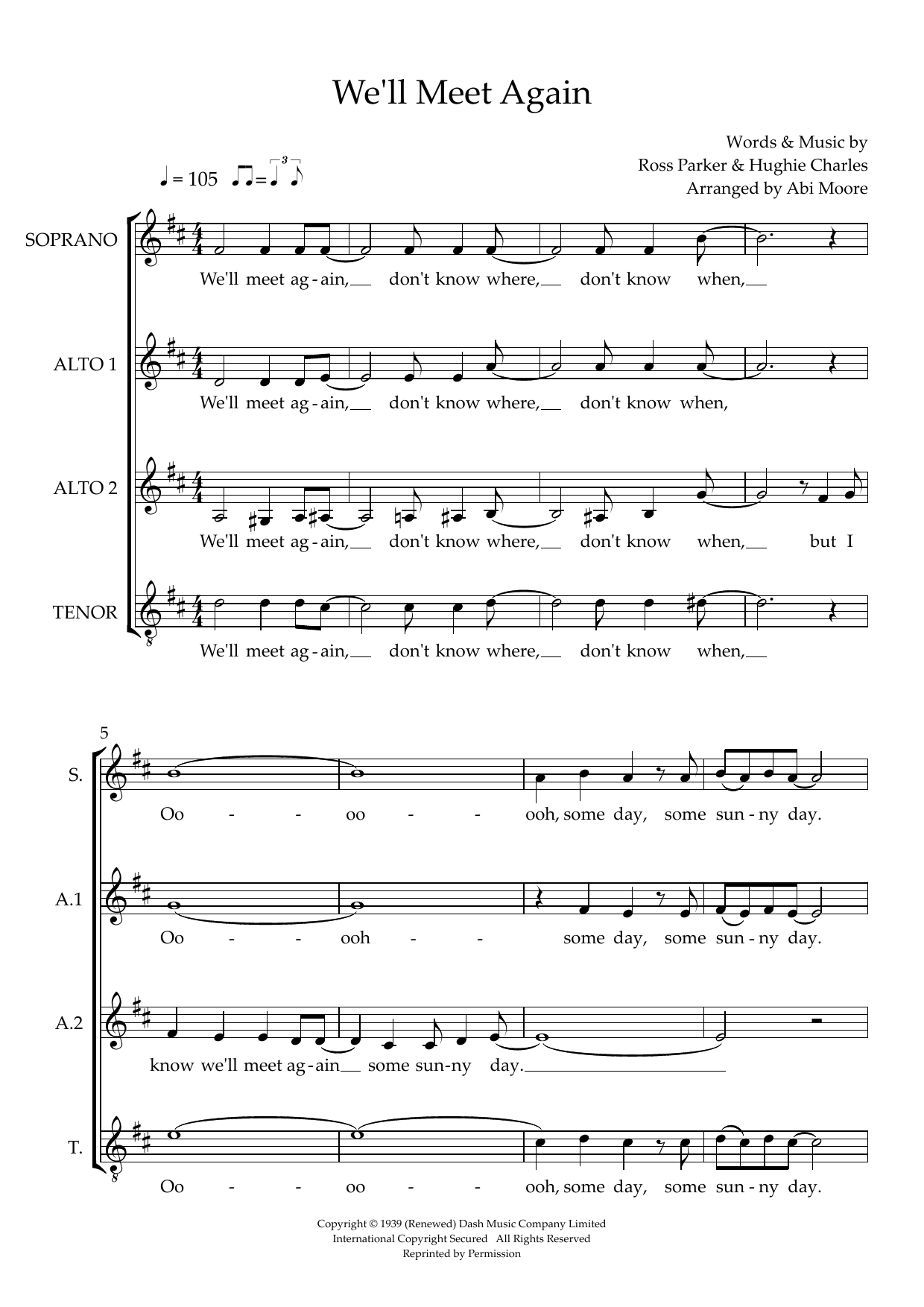
We'll Meet Again (arr. Abi Moore): SAATB Choral Octavo

As performed by Vera Lynn / Arranged by Abi Moore

Item: 35-DS00473190

Digital Download
$1.99
Description

We'll Meet Again (arr. Abi Moore): SAATB Choral Octavo isn't in MakeMusic Cloud just yet...but it could be. Let us know you'd like to see it, and you'll help shape what comes next. In the meantime, start a free trial and dive into thousands of interactive titles your students can play along with today.

Sample Audio
No sample audio found.
Sample Video
Additional Details
Publisher: Hal Leonard
Page Count: 6
SKU: 35-DS00473190

More about this title

About the Artist: Vera Lynn

Vera Lynn became a cultural icon during World War II as the voice of hope for British servicemen and their families. Her recordings of patriotic and sentimental songs reached soldiers across Europe and Asia, earning her the lasting title "The Forces' Sweetheart." Lynn's vocal warmth and emotional directness made her one of the most recognizable British entertainers of her generation, and her legacy extends well beyond her era into the standard repertoire that choirs continue to treasure.

Why we love this

Abi Moore's arrangement captures the emotional authenticity of this wartime standard while making it genuinely singable across five voices. The harmonies sit naturally in the choir's range, and the piece carries real emotional weight without demanding virtuosic technique. It's the kind of arrangement that reminds audiences why certain songs endure; it honors the original while giving your singers room to connect with the text.

What to expect

A tender, hopeful moment suspended in time. The melody carries the quiet strength of someone saying farewell without despair; it's introspective and intimate even when sung by a full choir. Moore's harmonies add warmth and complexity, turning a simple promise into something that feels both personal and universal.

Who it's for

Choirs performing concert repertoire that includes standards and popular classics. This works equally well for community choirs, school choirs seeking accessible material with substance, and directors building programs that appeal to audiences across generations.

How to get the most out of it

  • Balance the soprano line without letting it overshadow the rich harmonic support beneath it. The melody should float, not dominate.
  • Shape each phrase around the lyrical arc rather than treating measures as isolated units. Let the text guide your phrasing choices.
  • Clarify the relationship between sections by adjusting the ensemble's energy subtly. The arrangement likely has moments of reflection and moments of forward motion; find those transitions through your conducting.
  • Use the recorded accompaniment as a reference for tempo and style, but encourage your singers to hear themselves as the primary storytellers.

How to use it

Pair this with other standards from the same era to create a programming block that explores mid-20th-century popular song. It also serves beautifully as a reflective piece between more energetic selections, offering your audience a chance to settle into genuine emotion. Consider programming it as a tribute concert piece or as part of a retrospective on songs that defined cultural moments.

Skills your students will build

  • Balancing individual voice parts within four-part vertical harmony
  • Connecting lyrical content to phrasing and expression
  • Sustaining tone quality across longer melodic lines
  • Listening to harmonic support while maintaining pitch accuracy
  • Performing with emotional authenticity in a secular context

You May Also Like