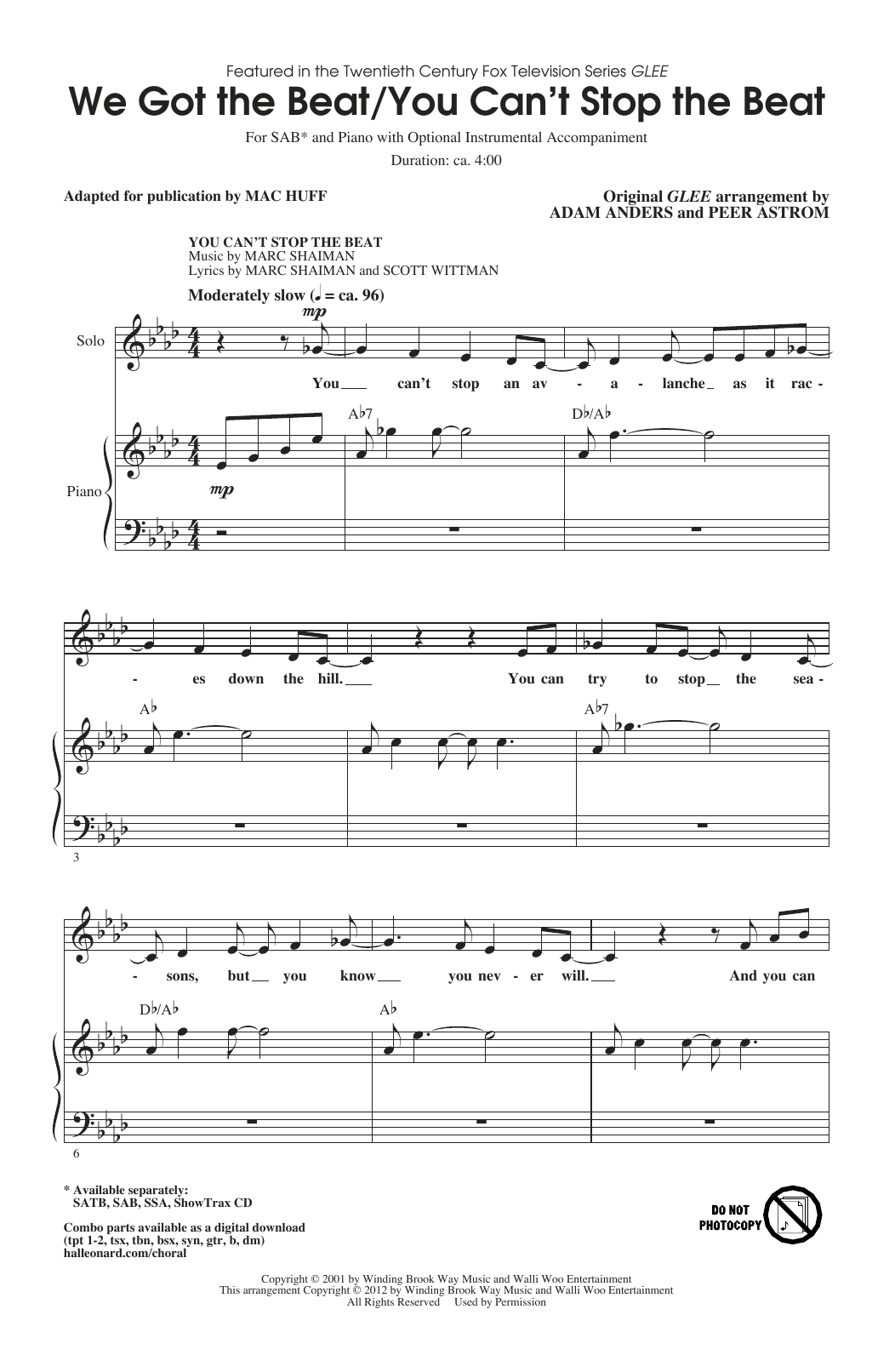
We Got The Beat / You Can't Stop The Beat (ed. Mac Huff) Sheet Music Preview

We Got The Beat / You Can't Stop The Beat (ed. Mac Huff): SAB Choral Octavo

As performed by Glee Cast / As performed by The Go Go's / Arranged by Adam Anders / Arranged by Peer Astrom / Edited by Mac Huff

Item: 35-DS01558037

Digital Download
$3.25
Description

We Got The Beat / You Can't Stop The Beat (ed. Mac Huff): SAB Choral Octavo isn't in MakeMusic Cloud just yet...but it could be. Let us know you'd like to see it, and you'll help shape what comes next. In the meantime, start a free trial and dive into thousands of interactive titles your students can play along with today.

Sample Audio
No sample audio found.
Sample Video
Additional Details
Publisher: Hal Leonard
Page Count: 19
SKU: 35-DS01558037

More about this title

About the Artist: Glee Cast

Glee brought musical theater into the mainstream conversation during its 2009-2015 run, creating a cultural phenomenon that made choral singing aspirational for millions of viewers. The show's cast recordings became legitimate chart hits, introducing contemporary arrangements and pop standards to audiences who might never have encountered choral music otherwise.

The Glee Cast's influence on choral music education cannot be overstated. Their performances demonstrated that choir could be cool, energetic, and directly connected to the music students already loved. This arrangement showcases exactly why the show resonated with young singers: it takes songs they know and gives them vocal parts that are satisfying to perform.

Why we love this

This pairing gives you two songs that live in the same energetic universe, both built on infectious rhythms and pop sensibility. Mac Huff's arrangement (with Anders and Astrom's input) strips the arrangements to their essentials while keeping them radio-ready, which means your singers get to feel the drive of these songs without drowning in complexity. Students recognize these melodies instantly, which removes a barrier to engagement and lets you focus on ensemble cohesion and rhythmic precision.

What to expect

Driving, propulsive, and built on the kind of rhythmic confidence that makes singers feel powerful when they're locked in. There's a celebratory quality here—both songs are essentially victory laps—that translates into genuine joy in the ensemble when the parts come together.

Who it's for

Choirs that want to program contemporary pop with legitimate musical substance. This works for high school choirs looking to appeal to student singers without sacrificing musicianship, as well as community and collegiate groups seeking material that connects to cultural moments their audiences actually remember.

How to get the most out of it

  • Nail the rhythmic grid first. Both songs rely on pocket accuracy more than they do on sustained legit tone, so spend rehearsal time locking the pulse across all three parts before worrying about blend or vibrato.
  • Record a rough mix with just the soprano and alto lines, then have basses learn against that. This removes the temptation to lean on full chord sound and builds independence in the lowest part.
  • Mark every entrance clearly in your scores. The arrangement likely uses staggered entries to build momentum, and confusion here kills the energy faster than anything else.
  • Keep the vowels forward and the consonants sharp. Pop music lives in clarity and articulation, not rounded, classical tone production.

How to use it

Slot this into a pop or medley set where it can anchor a segment around fun, high-energy repertoire. These songs also work beautifully as an emotional shift in a longer concert; if you're programming classical or art song early in your show, this pairing gives you a natural moment to let loose and remind the audience why your singers chose to be in choir.

Skills your students will build

  • Rhythmic independence across three independent voice parts
  • Maintaining groove and pocket against complex rhythmic figures
  • Articulation and diction clarity in pop and rock styles
  • Part-independence when sections enter at different times
  • Building and sustaining energy through choreographed or static performance

You May Also Like