We Crossed the Rhine: Piano/Vocal/Chords Digital Sheet Music

We Crossed the Rhine: Piano/Vocal/Chords Digital Sheet Music

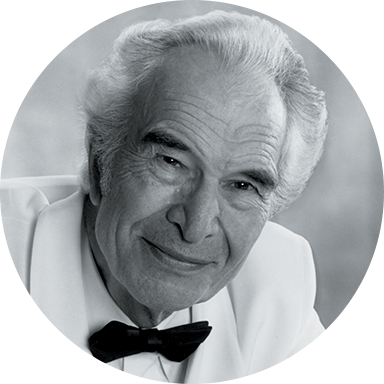
Dave Brubeck

Item: 00-PS-0000955

Digital Download
$3.99
Description

We Crossed the Rhine: Piano/Vocal/Chords Digital Sheet Music isn't in MakeMusic Cloud just yet...but it could be. Let us know you'd like to see it, and you'll help shape what comes next. In the meantime, start a free trial and dive into thousands of interactive titles your students can play along with today.

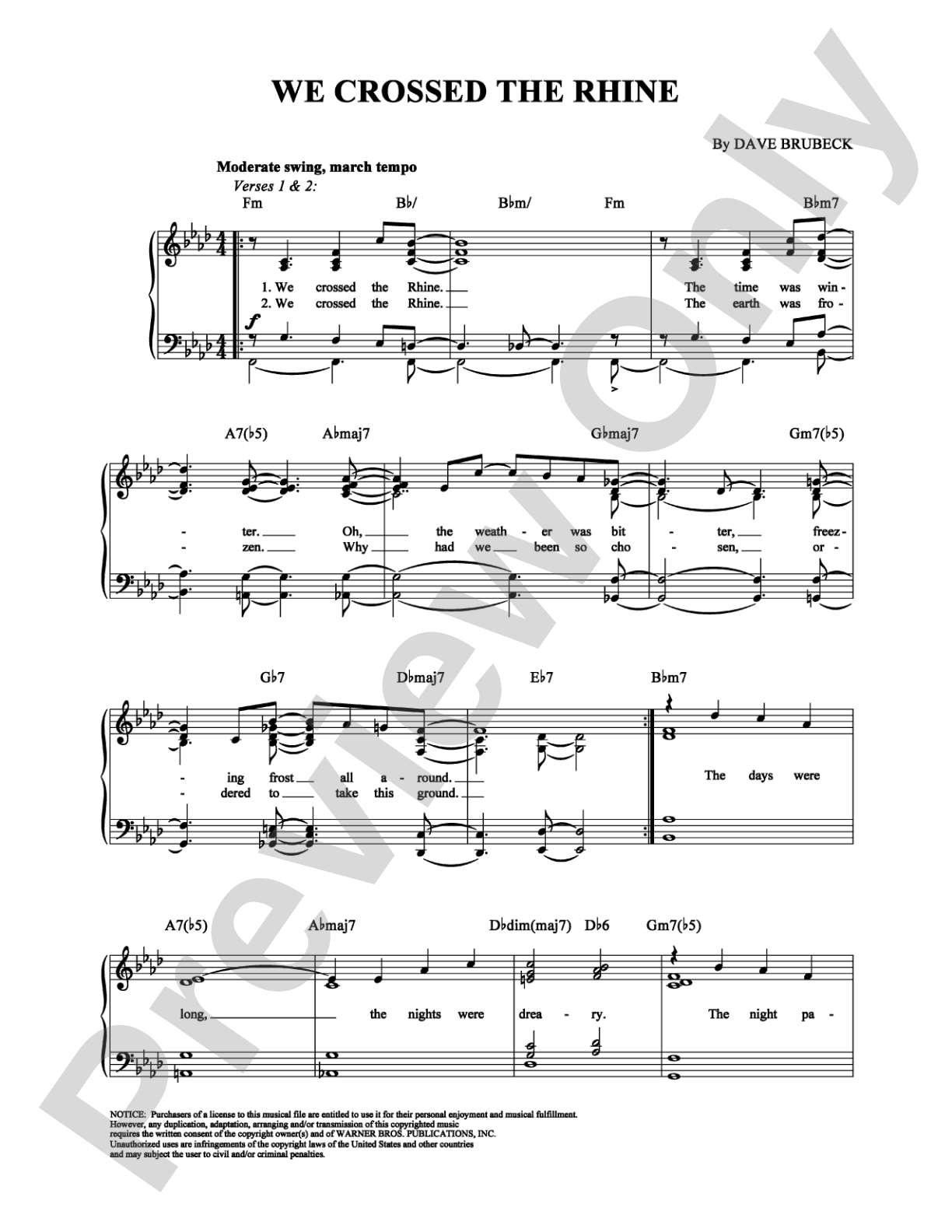
Sample Audio
No sample audio found.
Sample Video
Additional Details
SKU: 00-PS-0000955

More about this title

About the Artist: Dave Brubeck

Dave Brubeck

Dave Brubeck built his reputation as a pianist and composer who moved fluidly between jazz improvisation and formal classical composition. His studies with Darius Milhaud at Mills College after World War II shaped a distinctive voice that blended bebop language with symphonic ambition. Over decades of performing and writing, he created works spanning solo piano pieces, chamber music, choral compositions, ballets, and large-scale orchestral pieces. His album Time Out became the first jazz recording to sell over a million copies, anchored by the now-canonical "Take Five."

Beyond the concert hall, Brubeck was a pioneering figure in racial integration during the mid-20th century, consistently championing ensemble diversity when it carried real professional risk. His sacred works, including the mass To Hope!, have circled the globe in performance and recording. Late in life, he was honored with a Grammy Lifetime Achievement Award, election to the American Classical Music Hall of Fame, and recognition from institutions including the London Symphony Orchestra and the U.S. government.

Why we love this

This song captures Brubeck's gift for writing melody that swings naturally without losing harmonic sophistication. The piano/vocal/chords format gives singers and pianists room to interpret within a clear harmonic framework, making it equally suitable for a concert setting or a jazz history unit. Programming a Brubeck composition signals to audiences that jazz deserves the same thoughtful presentation as any other art music.

What to expect

The song unfolds with the unhurried confidence of someone who knows exactly where the melody wants to land. There's a lyrical warmth to the writing that suggests introspection without sentimentality, and the harmonic landscape invites the kind of gentle wandering that characterizes Brubeck's best work.

Who it's for

Singers with jazz sensibility and pianists comfortable with harmonic realization will find this accessible and rewarding. The piece works for advanced high school singers, college jazz ensembles, and professional performers looking for an authoritative Brubeck composition beyond the standard repertoire.

How to get the most out of it

  • Read the chord symbols as suggestions for reharmonization rather than prescriptions; Brubeck's own interpretations often depart from the written chords, so experiment with voicings that sit comfortably under the melody.
  • Balance the swing feel against the notated rhythms. The interplay between what's written and what swings comes alive when neither dominates.
  • Use rubato in the vocal line to follow the lyrical shape, then lock into a steady groove with the piano to anchor harmonic movement.

How to use it

Pair this with other Brubeck compositions or with jazz standards to build a set that showcases his compositional depth alongside his role in jazz history. It works equally well in a vocal recital with jazz content or as the centerpiece of a unit exploring how American composers have drawn from vernacular music.

Skills your students will build

  • Reading and interpreting chord symbols over a melody
  • Balancing notated rhythms with swing phrasing
  • Harmonic voice-leading through Brubeck's characteristic progressions
  • Understanding the relationship between classical form and jazz reharmonization

You May Also Like