

We Be Jammin': Concert Band Conductor Score & Parts
By Steve Hodges
Grade: 1.5 (Easy)
Item: 00-PK-0007592

$48.00
Pickup currently not available
Buy Extra Parts (Digital PDF Download)
| Product | Price | Quantity |
|---|---|---|
| We Be Jammin': Score | $7.00 | |
| We Be Jammin': Flute | $3.00 | |
| We Be Jammin': Oboe | $3.00 | |
| We Be Jammin': 1st B-flat Clarinet | $3.00 | |
| We Be Jammin': 2nd B-flat Clarinet | $3.00 | |
| We Be Jammin': B-flat Bass Clarinet | $3.00 | |
| We Be Jammin': E-flat Alto Saxophone | $3.00 | |
| We Be Jammin': 2nd E-flat Alto Saxophone | $3.00 | |
| We Be Jammin': B-flat Tenor Saxophone | $3.00 | |
| We Be Jammin': E-flat Baritone Saxophone | $3.00 | |
| We Be Jammin': 1st B-flat Trumpet | $3.00 | |
| We Be Jammin': 2nd B-flat Trumpet | $3.00 | |
| We Be Jammin': 1st F Horn | $3.00 | |
| We Be Jammin': 1st Trombone | $3.00 | |
| We Be Jammin': Baritone T.C. | $3.00 | |
| We Be Jammin': Tuba | $3.00 | |
| We Be Jammin': Mallets | $3.00 | |
| We Be Jammin': 1st Percussion | $3.00 | |
| We Be Jammin': 2nd Percussion | $3.00 |
Parts Added to Cart!
Description
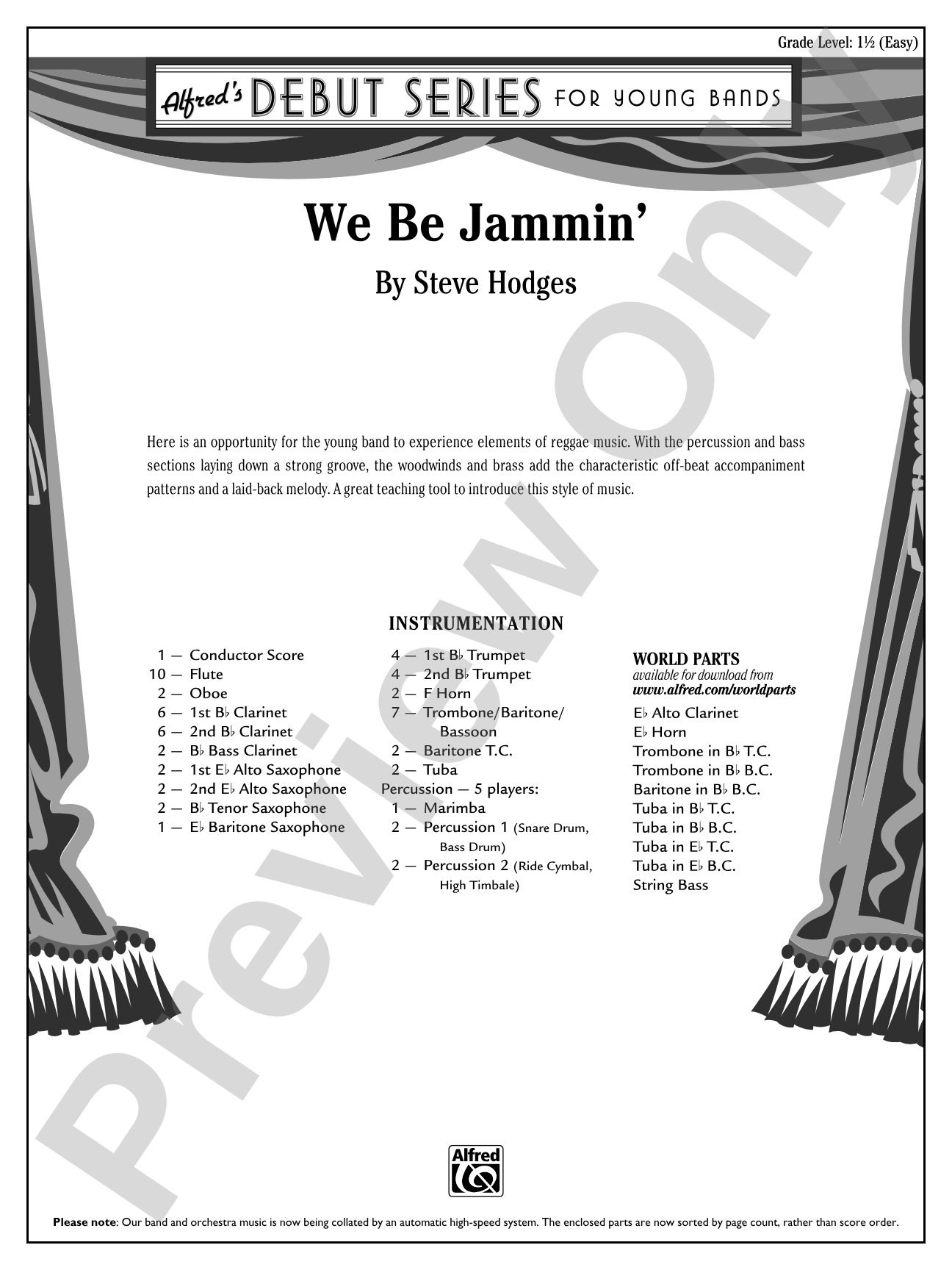
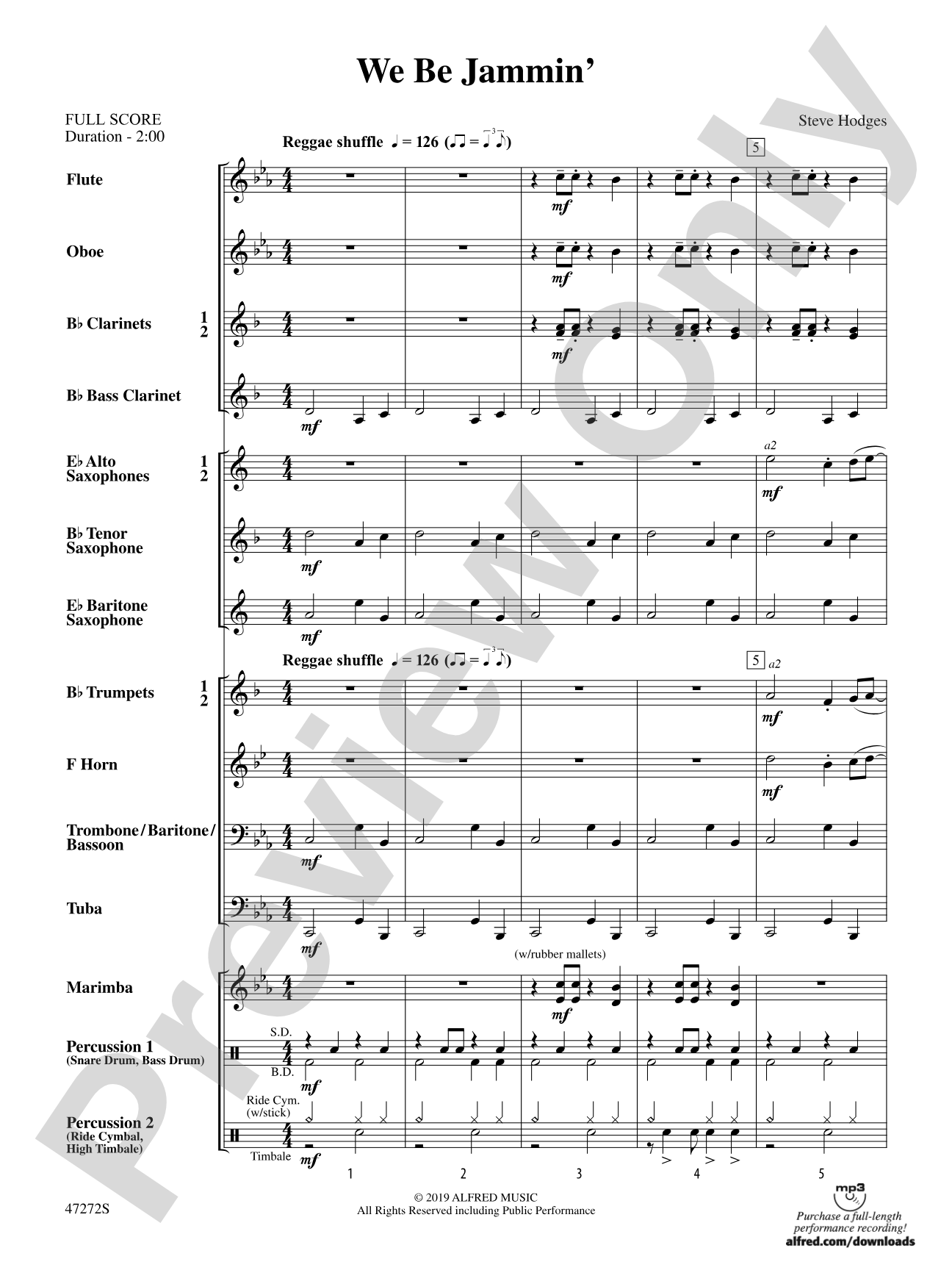
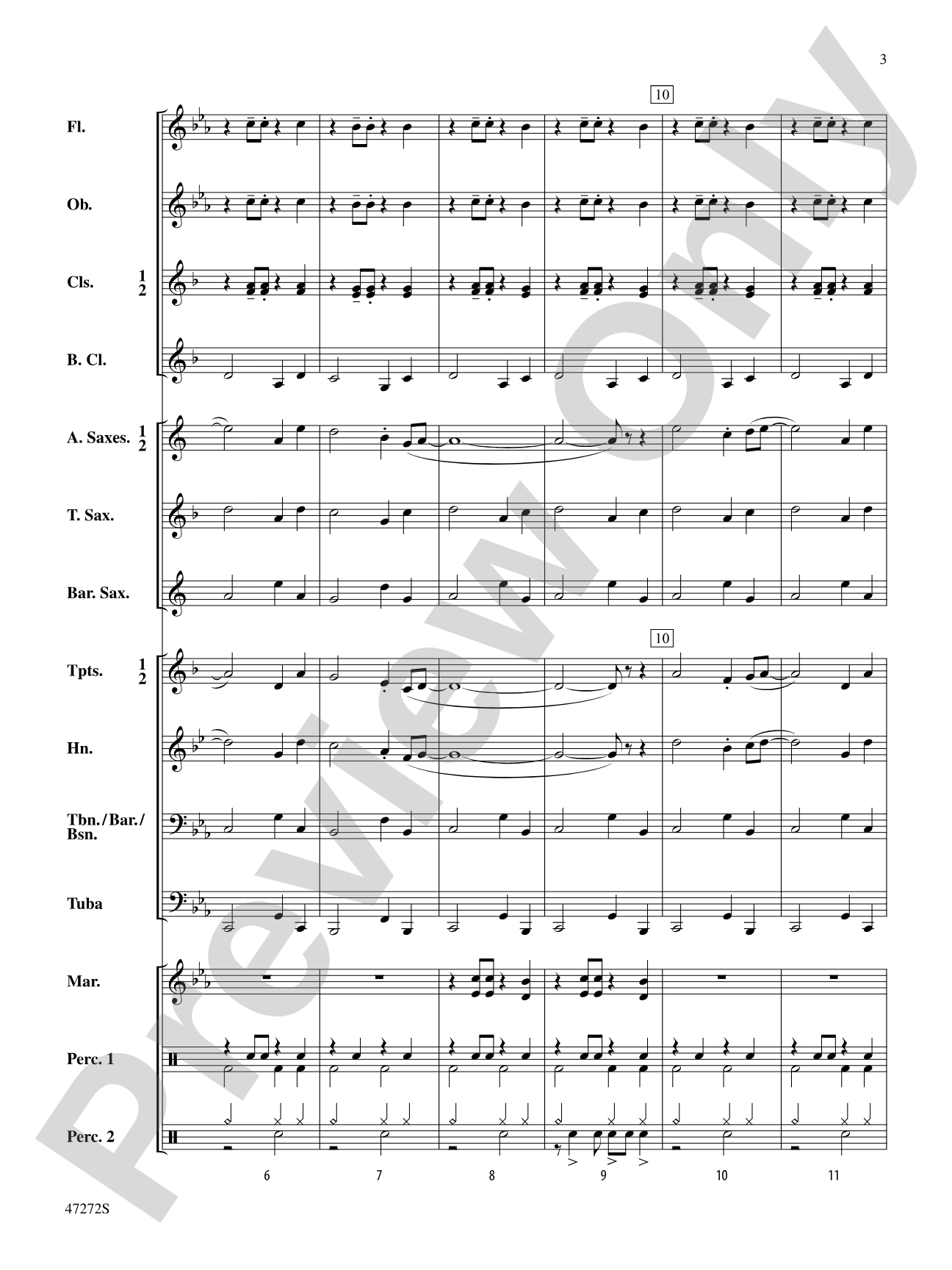
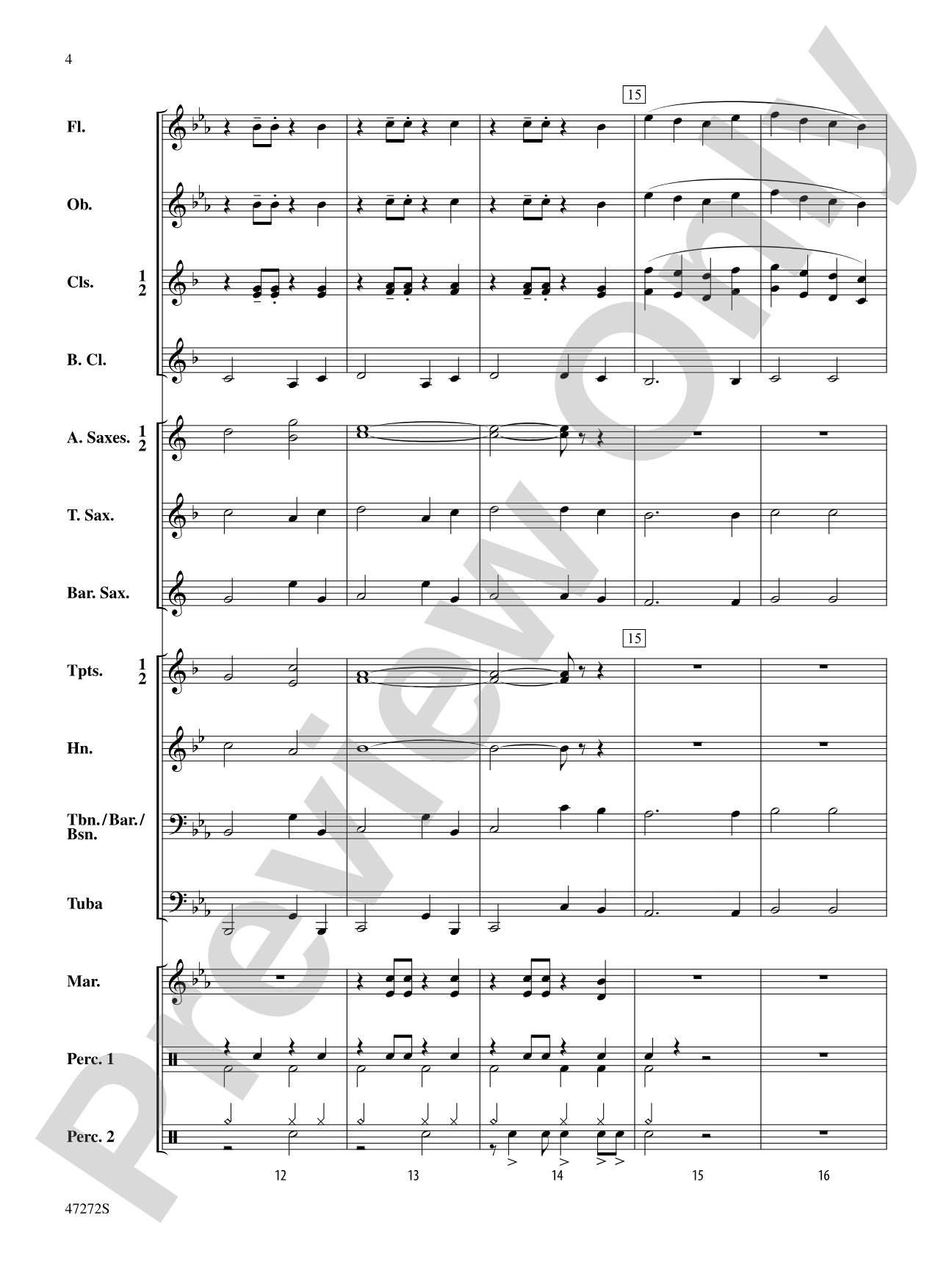
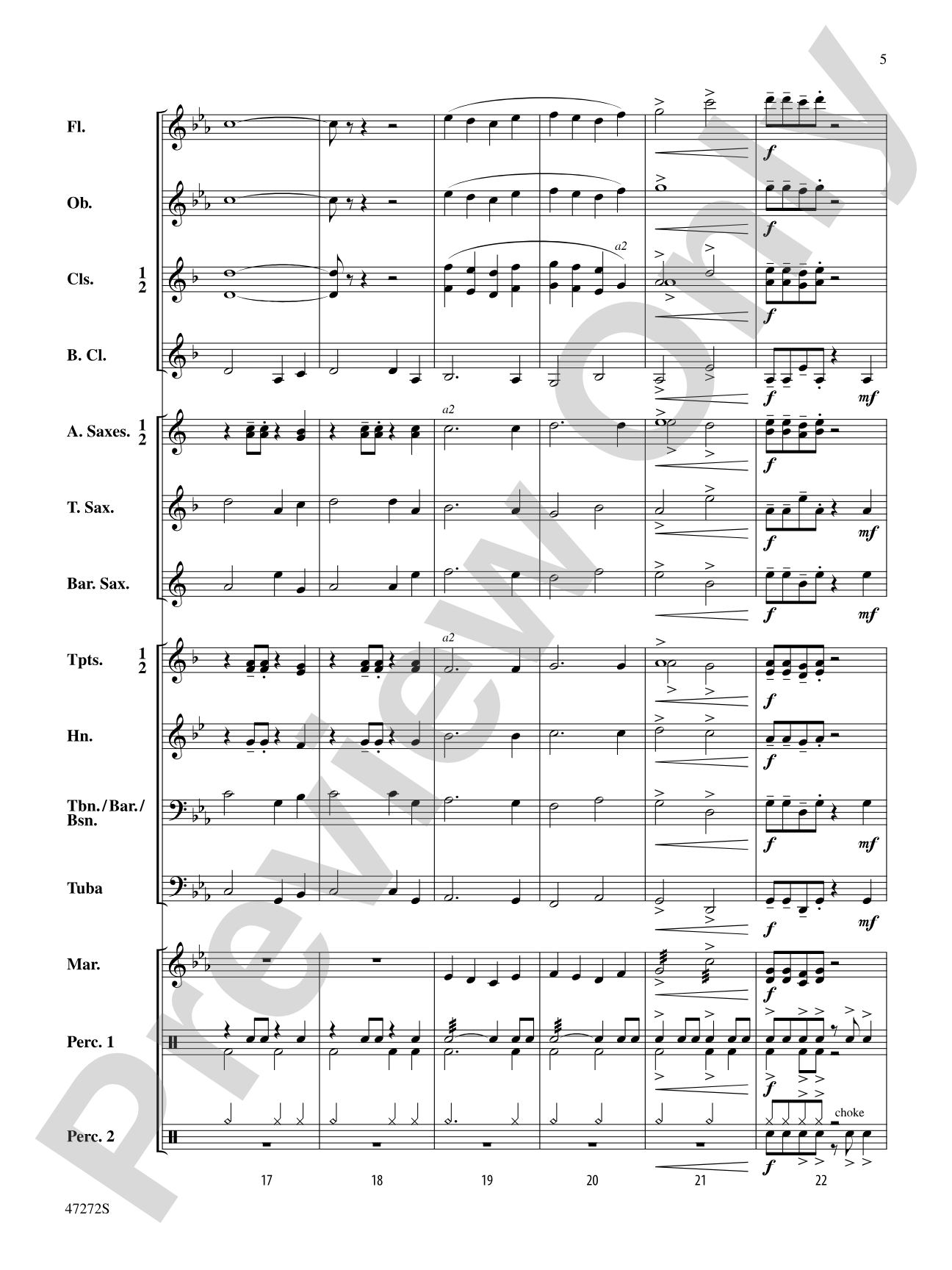
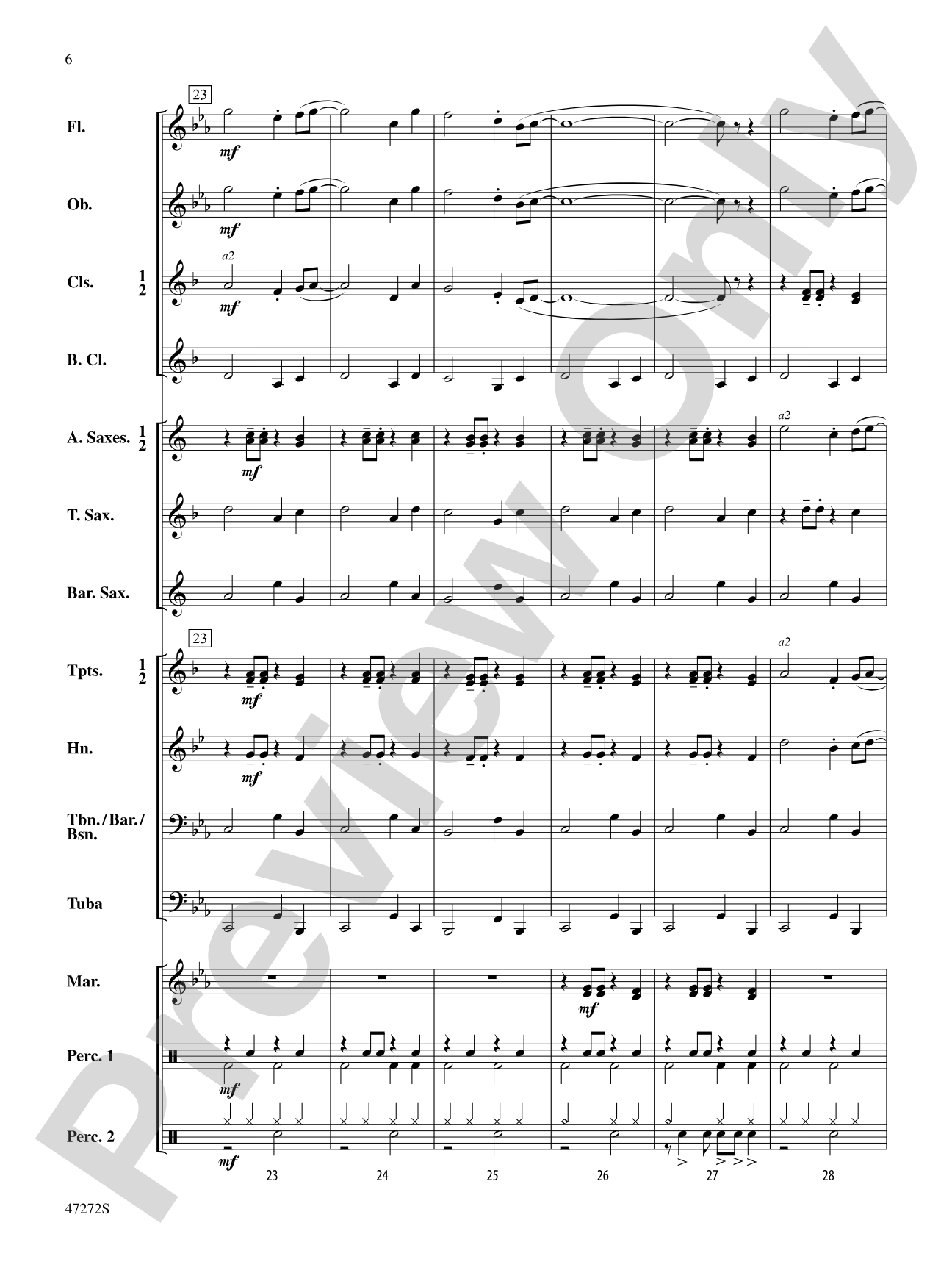
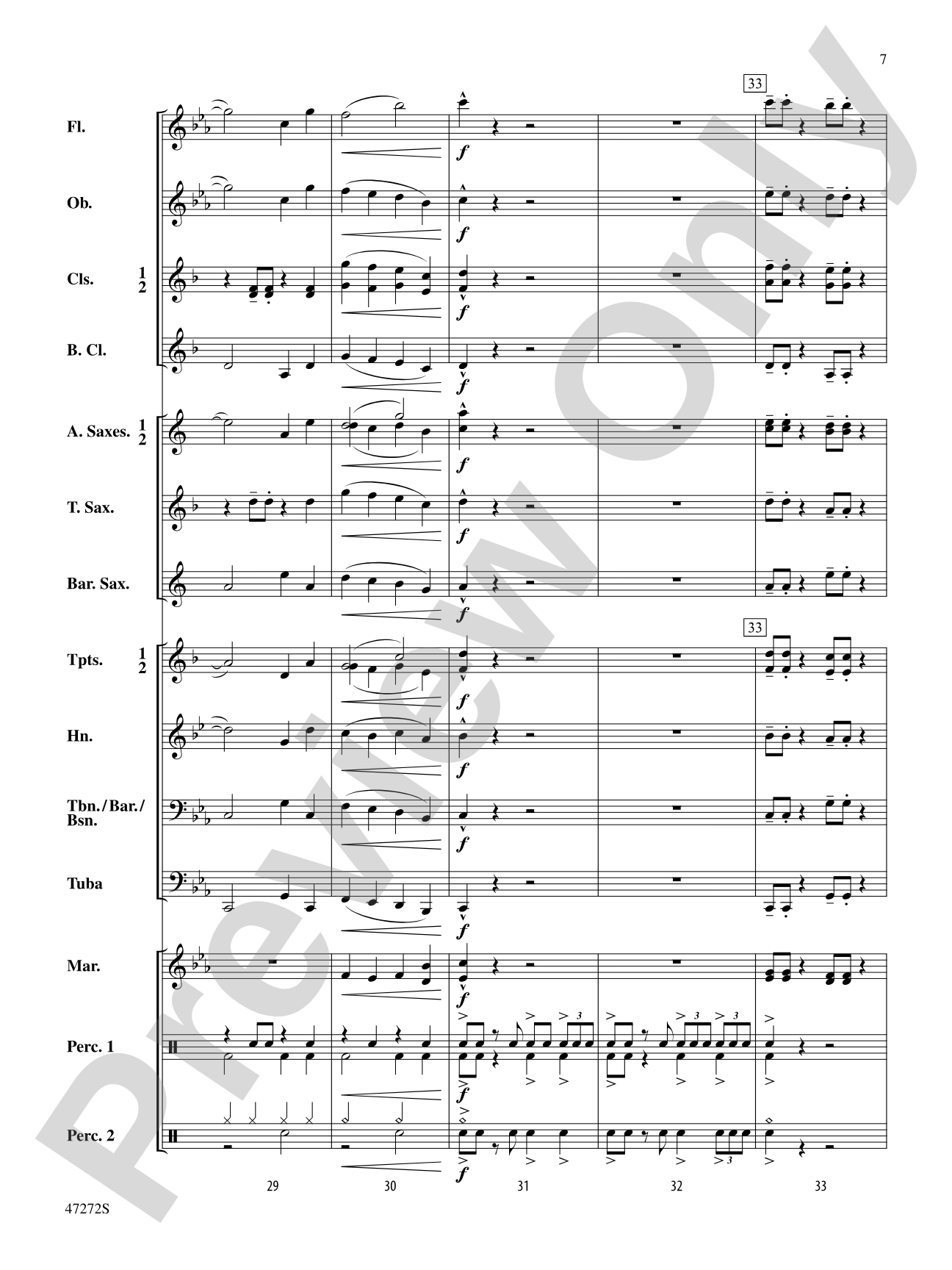
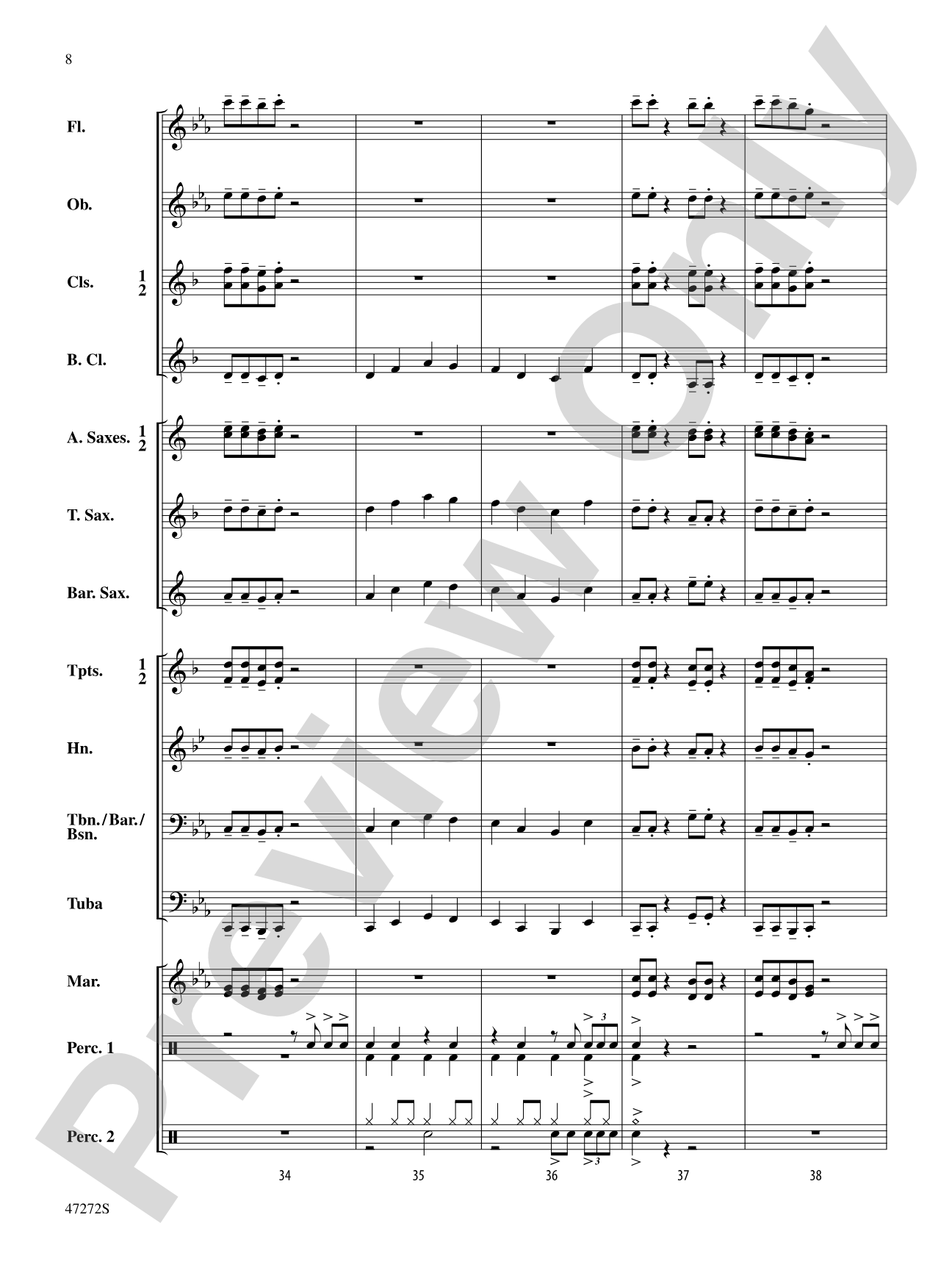
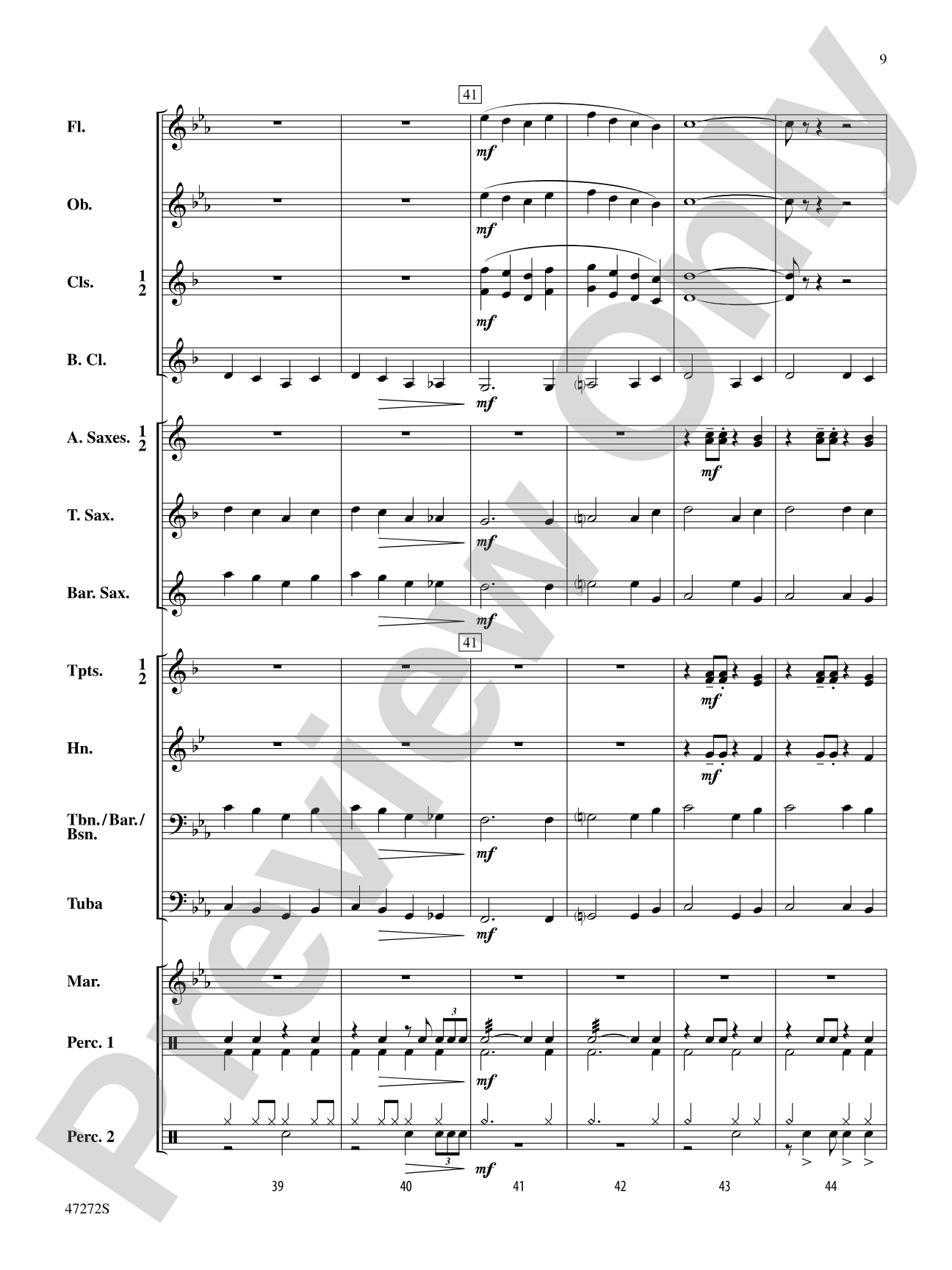
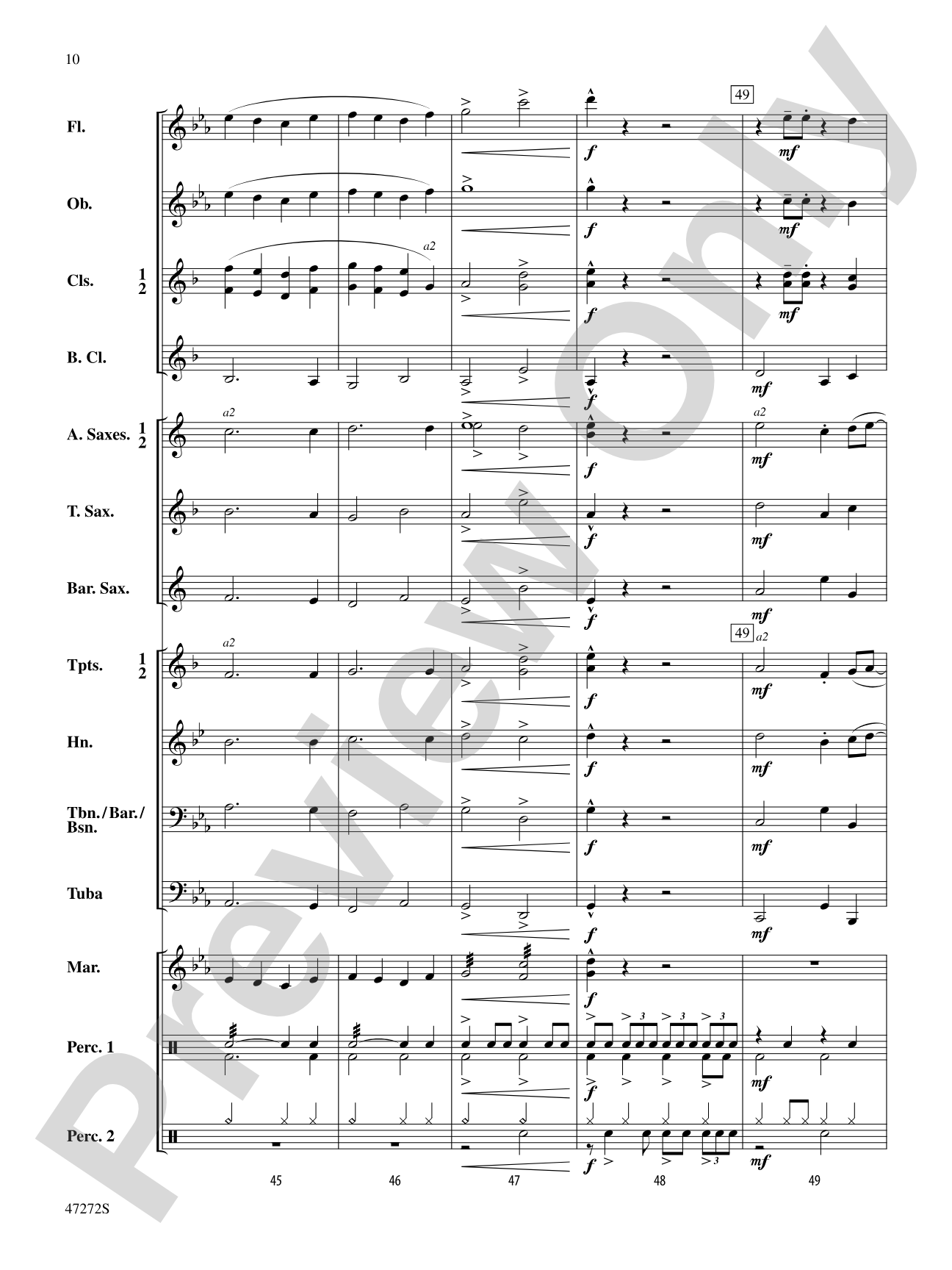
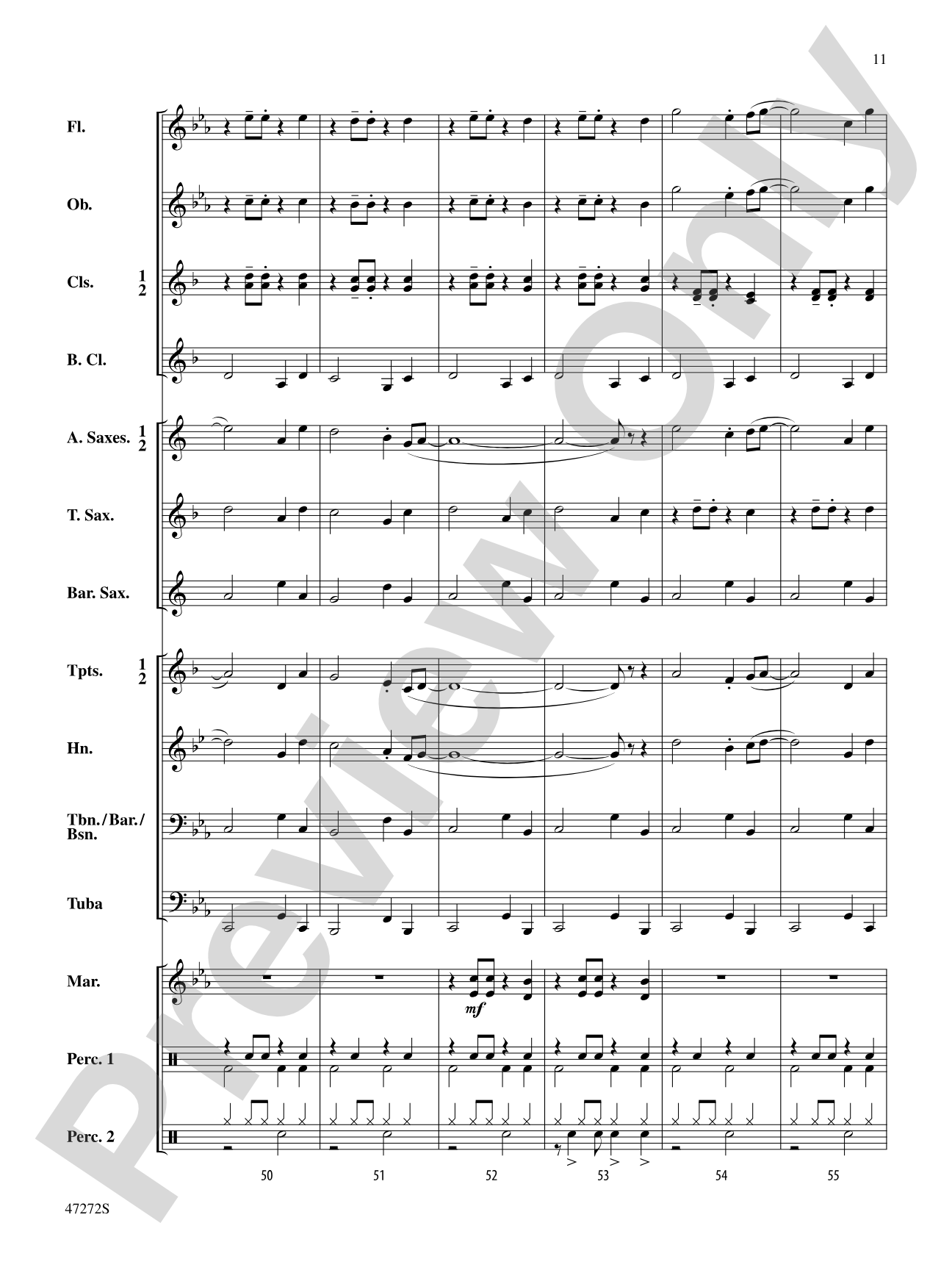
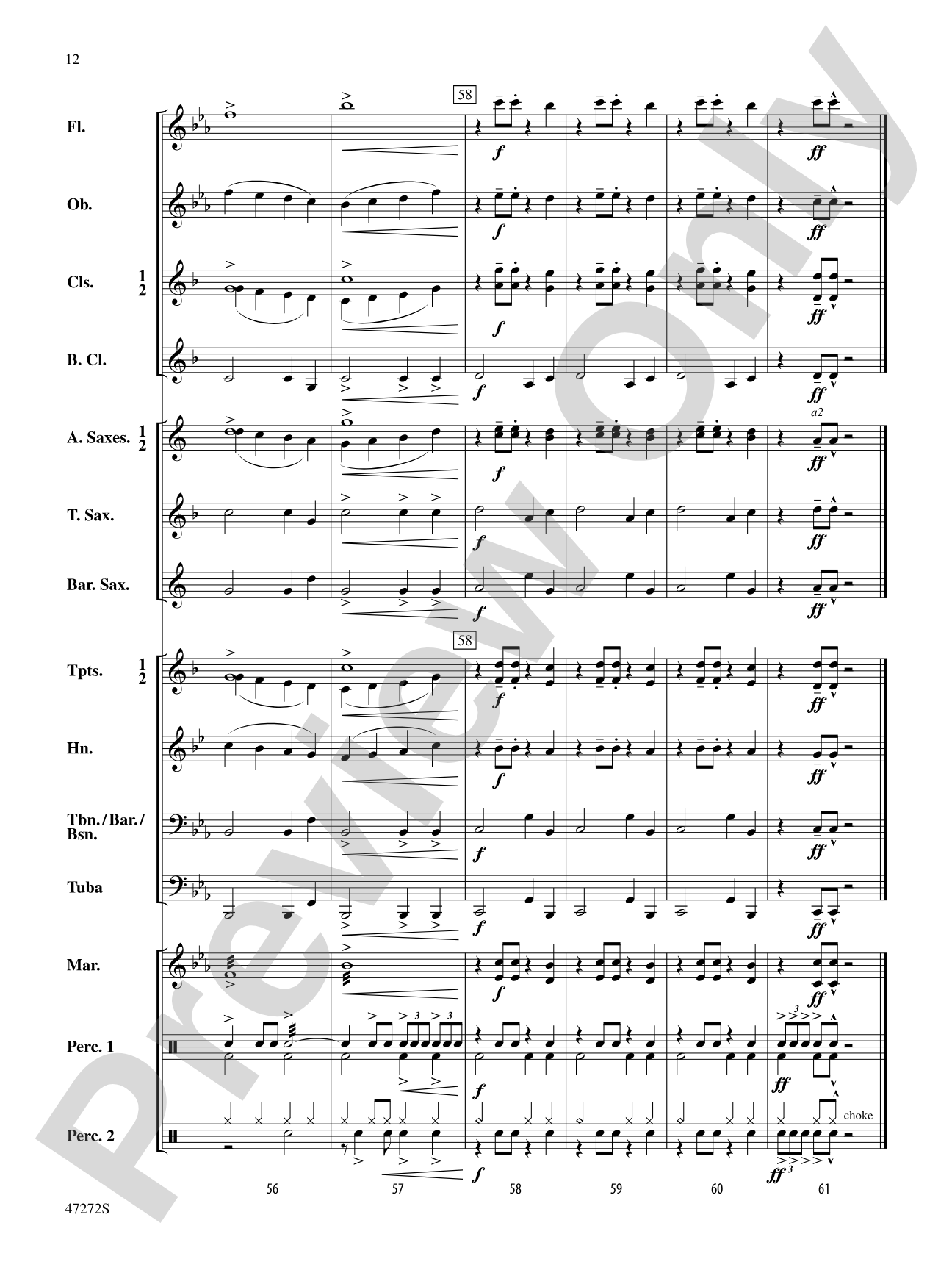
Here is an opportunity for the young band to experience elements of reggae music. Percussion and bass sections lay down a strong groove while woodwinds and brass add characteristic off-beat accompaniment patterns and a laid-back melody. A great teaching tool to introduce this style of music.


Don't just read it, hear it, play along with it, and watch your students grow with it. In MakeMusic Cloud, We Be Jammin': Concert Band Conductor Score & Parts comes alive with professional accompaniment, adjustable tempo, and built-in practice tools that turn solo practice into real progress.
Open in the Player
Jump straight in and assign it today.
Start Your Free Trial
Open this title and explore the full library in minutes.
Sample Audio
1
Audio File
--:--
0:00
0:00
Sample Video
Additional Details
Series:
Alfred Debut Series
Publisher:
Alfred Music
Page Count:
118
SKU:
00-PK-0007592
More about this title
About the Composer: Steve Hodges

Steve Hodges holds degrees from Western Oregon University (Bachelor of Science) and Central Washington University (Master of Music Education). He spent four decades in public school music education, directing concert bands, choirs, and chamber ensembles at all levels before retiring from the classroom.
Since 1986, Hodges has composed more than 120 concert band works published by Alfred Music, along with choral arrangements through Staff Music and Shawnee Press. His compositions have appeared at festivals and conventions internationally, commissioned by honor bands and schools across the United States and Canada. His music has also been licensed for broadcast use by TBS and ESPN. A member of ASCAP, Hodges remains active in community music in The Dalles, Oregon, where he continues to enjoy hearing his compositions performed by student musicians, including his own grandchildren.
Why we love this
Hodges brings authentic reggae flavor to early-grade repertoire without oversimplifying the style. The deliberate separation of roles—anchoring the groove in percussion and bass while giving woodwinds and brass their own rhythmic identity—creates a teaching moment that helps young musicians understand how different sections build a single musical idea.
What to expect
The music breathes with an easy, island-influenced rhythm that feels both fresh and accessible. Steady percussion and bass create a foundation that feels inevitable while the melody floats above with a relaxed, conversational quality.
Who it's for
Early-grade concert bands ready to explore style beyond traditional march and classical forms. This score works for ensembles with balanced instrumentation and rhythm sections confident enough to anchor a groove-based arrangement.
How to get the most out of it
- Lock in the rhythm section early. Have percussion and bass play alone for a few measures in rehearsal so they establish the steady, relaxed pulse that defines reggae feel.
- Emphasize the off-beat patterns in woodwinds and brass as a conversation with the bass line, not as competing with it. Record a rehearsal where only the rhythm section plays, then layer the melody and accompaniment on top.
- Shape the laid-back melody with gentle dynamics and phrasing rather than strict articulation. Let the groove carry the musical line forward.
How to use it
Program this as a change-of-pace moment in a concert, especially effective after a march or traditional overture. It opens doors for directors planning a world-music or popular-styles unit later in the year.
Skills your students will build
- Understanding reggae rhythmic conventions and off-beat accompaniment patterns
- Maintaining steady groove while playing contrasting rhythmic figures
- Balancing section independence with unified ensemble cohesion
- Performing syncopated rhythms with appropriate relaxed phrasing
- Reading and executing rhythmic patterns across different instrumental families